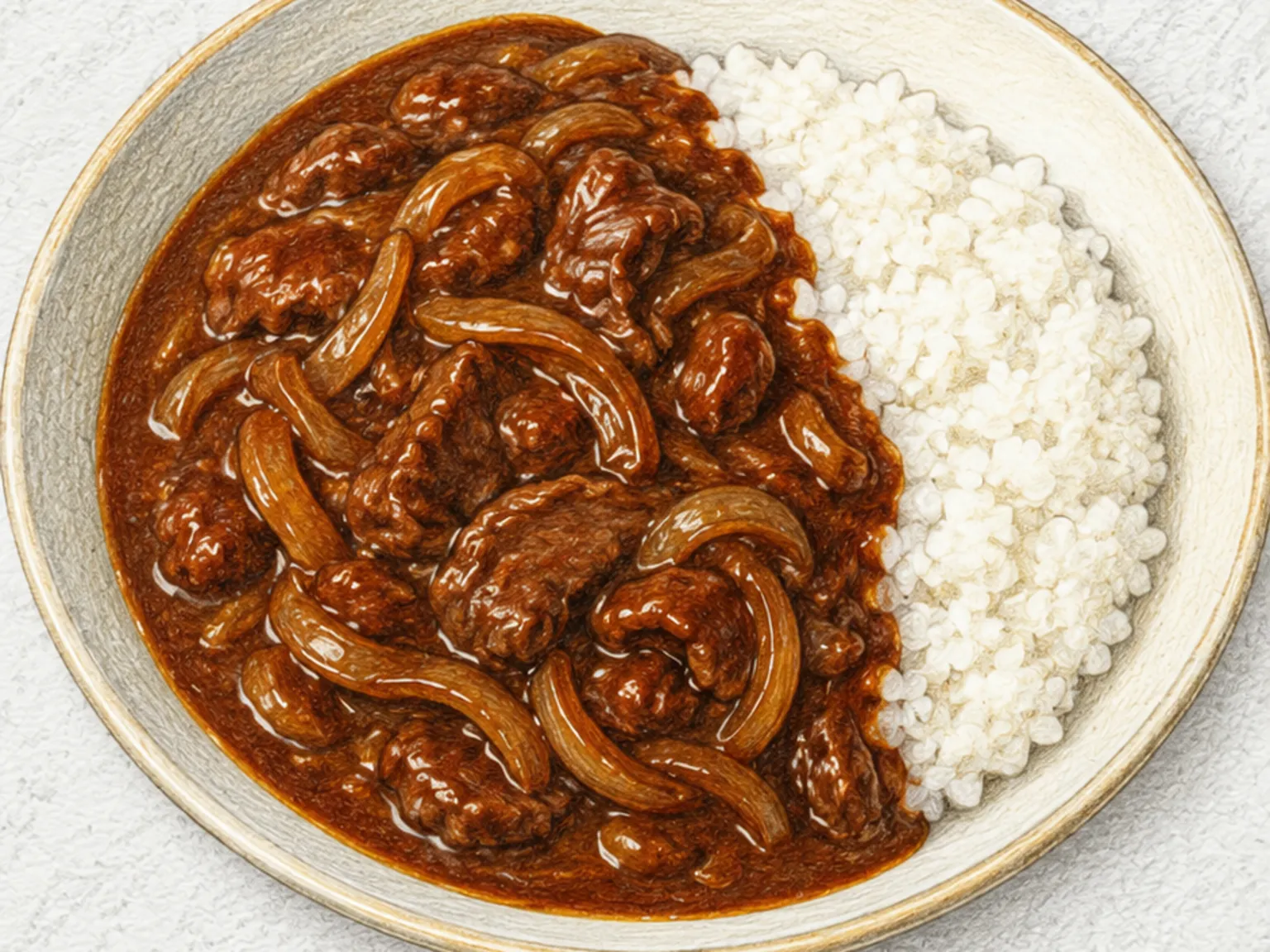
Hayashi Rice (Japanese Beef and Onion Brown Sauce Rice)
Rice Easy

Hayashi Rice (Japanese Beef and Onion Brown Sauce Rice)

Quick answer

Hayashi rice is a Japanese home-cooking dish in which thinly sliced onions are caramelized in butter for at least eight minutes until deeply golden, then simmered with th...

What makes this special

  • Butter-caramelized onions simmered in tomato-beef sauce draw deep sweetness for this hayashi rice.
  • Onions browned over 8 minutes; their caramel sweetness determines the whole sauce character
  • Worcestershire's complex spice depth layers with tomato paste acidity
Total time
40 min
Level
Easy
Servings
2 servings
Ingredients
8
Calories
670 kcal
Protein
30 g

Key ingredients

cooked ricethinly sliced beefonionbutterflour

Core cooking flow

  1. 1 Slice 250 g onion thinly, separating the strands so they cook evenly.
  2. 2 Melt 1 tablespoon butter in a wide pan over medium-low heat.
  3. 3 Add the beef and raise the heat to medium just until the outside changes color.

Hayashi rice is a Japanese home-cooking dish in which thinly sliced onions are caramelized in butter for at least eight minutes until deeply golden, then simmered with thin-cut beef, tomato paste, Worcestershire sauce, and flour into a glossy, thick brown sauce served over warm rice. The caramelization of the onions is the single most important step in the recipe. Rushing this stage produces onions that have lost moisture but not developed sweetness, resulting in a flat sauce with no depth. Extended browning converts the onion's natural sugars into a rich, almost candy-like sweetness that forms the foundation of the entire dish and cannot be replicated by any shortcut. Tomato paste adds acidity and deepens the color, Worcestershire sauce contributes a layered spice complexity, and flour gives the sauce enough body to sit on top of the rice without running. The sauce is spooned generously over one side of the rice in the same manner as curry rice, and the complete absence of spicy heat makes it a mild, accessible dish that appeals to both children and adults.

Prep 15min Cook 25min 2 servings

Instructions

Read the steps as a cooking flow: prep, heat, seasoning, doneness control, and finish.

6 steps
  1. 1
    Finish

    Slice 250 g onion thinly, separating the strands so they cook evenly.

    Loosen 180 g thinly sliced beef into bite-size pieces, and keep 2 cups cooked rice warm so the finished sauce can be served immediately.

  2. 2
    Control

    Melt 1 tablespoon butter in a wide pan over medium-low heat.

    Add the onion and cook for 8 to 10 minutes, stirring often, until the edges turn caramel brown without scorching.

  3. 3
    Step

    Add the beef and raise the heat to medium just until the outside changes color.

    Sprinkle in 1 tablespoon flour evenly, then stir for 1 minute so it coats the onion and beef without forming lumps.

  4. 4
    Control

    Stir in 1 tablespoon tomato paste and 1.5 tablespoons Worcestershire sauce.

    Cook over medium-low heat for 1 to 2 minutes, until the paste darkens slightly and the sharp acidity softens.

  5. 5
    Control

    Pour in a small splash of the 350 ml water first and scrape the browned bits from the pan.

    Add the remaining water, simmer on low for 10 minutes, and loosen with a little water if it thickens too much.

  6. 6
    Finish

    Turn off the heat when the sauce looks glossy, coats a spoon, and the beef and onion feel tender.

    Spoon it generously over one side of the warm rice and serve while the sauce is hot.

After the steps

Pick a recipe that fits this dish.

Continue with shared ingredients, meal pairings, or a similar method.

Recipes That Go Well With This

More Rice →

Based on shared ingredients and meal pairing

Katsu Curry
Shared ingredient: cooked short-grain rice Asian

Katsu Curry

Katsu curry is a Japanese single-plate meal of crisp deep-fried pork cutlet served beside a thick, glossy curry sauce over steamed rice. The pork loin is pounded to an even thickness, seasoned with salt and pepper, then coated in three layers: flour, beaten egg, and panko. Panko breadcrumbs have a coarser, more jagged texture than standard breadcrumbs, which creates more air pockets in the crust and produces a crunch that stays crisp longer after frying. The breaded cutlet is lowered into oil heated to 170 degrees Celsius and fried for four to five minutes until deep golden brown, then lifted onto a wire rack to rest for two minutes. The resting period allows the residual heat to finish cooking the center while the juices redistribute and the crust firms up. The curry sauce is built separately: onion and carrot are sauteed until their natural sweetness develops fully, then water is added and everything simmers until the vegetables are tender. The curry roux blocks are added and dissolved over low heat until the sauce reaches a thick, velvety consistency. Resting the curry overnight deepens its flavor as the vegetables continue to release sugars and the spices meld together. At the table, the curry fills one side of the plate and the sliced katsu occupies the other so the crust stays dry until deliberately pushed into the sauce, preserving the contrast between the two textures.

Chicken and Egg Rice Bowl
Shared ingredient: cooked short-grain rice Rice

Chicken and Egg Rice Bowl

Oyakodon simmers bite-size chicken thigh and sliced onion in a soy-mirin broth, then binds everything with a soft-set egg before sliding it over steamed rice. The name means 'parent and child,' referring to the chicken and egg sharing the same bowl. Onion goes into the broth first to release its natural sweetness, followed by the chicken, which cooks just until tender. Beaten eggs are poured in a circular motion and the lid goes on briefly, leaving the egg custardy rather than fully set. That half-cooked egg absorbs the savory-sweet broth and coats each grain of rice. Despite using only a handful of ingredients, the layered umami from soy sauce and mirin gives the dish a satisfying depth.

Korean Mung Bean Jelly Soup
Serve together Soups

Korean Mung Bean Jelly Soup

Cheongpo-muk-guk is a traditional Korean soup built on a clear beef brisket broth, with thick-cut strips of mung bean jelly as the main ingredient. The jelly, set from mung bean starch, has a slippery yet springy texture that sets it apart from any noodle or dumpling -- it glides over the tongue while offering a gentle, elastic resistance. Cutting the jelly into thick strips and rinsing briefly in cold water removes surface starch, and simmering for only three minutes keeps the pieces intact; a longer cook dissolves the jelly into the broth and makes it cloudy. Beaten egg drizzled in thin streams forms delicate floating ribbons throughout the pot, adding color against the pale jelly and clear broth. Roasted seaweed flakes scattered on top contribute a toasty, oceanic fragrance, and a seasoning of soup soy sauce with a small amount of minced garlic keeps the bowl from tasting flat.

Japanese Rice Soup Porridge
Similar recipe Rice

Japanese Rice Soup Porridge

Zosui is a Japanese rice porridge made by simmering leftover cooked rice in dashi broth and finishing with beaten egg. The broth soaks into the rice grains, giving the porridge a deep umami base, while the egg sets into soft ribbons throughout. Enoki mushrooms add thin, delicate strands of texture, and chopped scallions contribute a fresh finish. Seasoning is kept minimal with just soy sauce and salt to let the broth flavor come forward. It is often served as the closing dish after a nabe hot pot, using the remaining broth as the cooking liquid.

Serve with this

Korean Crispy Glazed Tofu Bites
Side dishes Medium

Korean Crispy Glazed Tofu Bites

Dubu gangjeong applies the double-coating logic of Korean fried chicken to tofu, pressing each cube dry before dredging in potato starch, frying until the shell turns shattering crisp, then tossing in a concentrated sticky glaze. The dish originated in temple cuisine as a meatless adaptation of gangjeong and has since become a staple anju in Korean bars. Pressing the tofu is non-negotiable: at least twenty minutes under a heavy weight wrapped in paper towels removes enough moisture to prevent oil from splattering and allows the starch coating to adhere evenly. Potato starch produces a noticeably thinner and more translucent crust than wheat flour, which cracks cleanly rather than bending when bitten. The glaze is made by boiling gochujang, soy sauce, sugar, and rice syrup together until large bubbles break on the surface, signaling that the mixture has concentrated and will cling rather than pool. Pouring the hot glaze over the fried tofu and tossing quickly coats every surface in an even, lacquer-like finish. The defining quality of a well-made dubu gangjeong is the contrast between the caramelized shell with its slight chew and the soft, almost custard-like interior. Once made, it must be eaten within ten minutes before the coating absorbs moisture and goes soft.

🏠 Everyday 🧒 Kid-Friendly
Prep 18min Cook 15min 2 servings
Korean Beef Cabbage Leaf Stew
Stews Medium

Korean Beef Cabbage Leaf Stew

This comforting Korean stew features tender beef brisket and blanched napa cabbage outer leaves simmered in doenjang stock. Thinly sliced brisket is first seared in perilla oil, then stir-fried with doenjang and gochugaru for a minute to bloom the aromas. Water and the cabbage leaves are added, and the pot is simmered over medium-low heat for twenty-five minutes. This slow cooking allows the rich meat broth to permeate the fibrous leaves, making them tender. The perilla oil adds a nutty finish that balances the salty notes of the fermented soybean paste. Slicing the beef against the grain ensures the meat remains soft and easy to chew. Blanching the greens beforehand reduces grassy flavors and yields a cleaner soup. The stew is seasoned with soup soy sauce and finished with sliced green onions before being served hot.

🏠 Everyday
Prep 20min Cook 35min 4 servings
Korean Salt-Fermented Tiny Shrimp
Kimchi Medium

Korean Salt-Fermented Tiny Shrimp

Saeujeot is a Korean salt-fermented tiny shrimp condiment made by mixing small shrimp evenly with sea salt, packing the mixture tightly into a sterilized jar, and fermenting under refrigeration for a minimum of two weeks. Salt draws moisture from the shrimp and initiates enzymatic breakdown of the proteins, gradually transforming the raw fishiness into concentrated amino acids and the deep, savory umami that forms the backbone of kimchi seasoning and Korean stew bases. Rice wine and ginger juice are added to suppress the off-flavors that develop during the early, volatile stages of fermentation before the lactic acid bacteria have established dominance. A small amount of chili flakes contributes a faint background warmth. The most critical step before salting is removing as much surface moisture as possible after rinsing the shrimp, since excess water dilutes the brine concentration and creates conditions for spoilage bacteria. The salt ratio should fall between 20 and 25 percent of the shrimp's weight: too high and the result is harsh and one-dimensional, too low and safety becomes a concern during the long cure. Only clean, dry utensils should ever touch the jar to prevent contamination that would undermine months of careful fermentation. Saeujeot fermented for six months or longer develops a rounded complexity absent in younger batches. In Korea, the harvest season determines the name and character of the product: ojot from May, yukjeot from June, and chujeot from autumn each carry a distinct flavor profile suited to different culinary uses.

🍱 Lunchbox ⚡ Quick
Prep 20min 4 servings

Similar recipes

Yakitori Rice Bowl (Soy-Mirin Glazed Grilled Chicken over Rice)
Rice Medium

Yakitori Rice Bowl (Soy-Mirin Glazed Grilled Chicken over Rice)

Direct heat and a repetitive glazing process define the preparation of this chicken skewer bowl. Small pieces of chicken thigh are secured onto skewers and grilled over a flame while a mixture of soy sauce, mirin, and sugar is applied in thin, sequential layers. This technique builds a lacquered surface through caramelization, which directs the sweet and salty flavors to the exterior of the meat. Applying the sauce too heavily in a single pass often leads to burning and an uneven crust. Because chicken thigh contains natural fats, the meat remains moist and tender even under high temperatures. When the cooked pieces are removed from the skewers and placed onto the rice, the excess glaze permeates the grains to provide sufficient seasoning. Sprinkling shichimi togarashi or sansho powder introduces a sharp or citrus-like contrast to the sweetness of the chicken. While chicken breast serves as a leaner alternative, it requires a longer marinating period and a shorter time on the grill to prevent the meat from drying out. The tare sauce can be prepared in advance and stored in the refrigerator for several weeks. Adding a halved soft-boiled egg or sliced scallions provides different textures and prevents the meal from feeling repetitive.

🏠 Everyday 🍺 Bar Snacks
Prep 20min Cook 15min 2 servings
Pork Rice Bowl (Sweet-Salty Glazed Pork over Rice)
Rice Easy

Pork Rice Bowl (Sweet-Salty Glazed Pork over Rice)

Butadon is a Japanese pork rice bowl that originated in Obihiro, Hokkaido, where thin slices of pork belly or shoulder are simmered with onion in a glaze of soy sauce, mirin, and sugar, then laid over a bowl of steamed rice. The soy salt and sugar sweetness balance precisely as the meat absorbs the sauce, while the onion dissolves gradually into the cooking liquid, contributing a natural sweetness that deepens the glaze. Where the pork meets the pan, the edges caramelize into a slightly charred coating that adds a roasted dimension to the otherwise clean, saucy topping. Hokkaido pork, with its firm texture and higher fat content, is traditional, though any well-marbled cut works. The preparation is genuinely simple - one pan, one sauce, no elaborate knife work - which is exactly why it became a staple weeknight meal across Japan.

🏠 Everyday ⚡ Quick
Prep 15min Cook 15min 2 servings
Japanese Simmered Yellowtail and Daikon
Steamed Medium

Japanese Simmered Yellowtail and Daikon

Yellowtail and daikon are simmered in a dashi broth seasoned with soy sauce, mirin, and sake until the braising liquid concentrates around the fish. The daikon absorbs the rich stock as it cooks, turning tender and translucent with a deep savory flavor throughout. Sliced ginger added to the pot neutralizes the fishiness without masking the yellowtail's natural richness. Sugar tempers the salt in the soy, producing a glaze that coats the skin and clings to the daikon. The dish is best from December through January, when yellowtail carries its peak fat content and yields the most flavorful braising stock.

🎉 Special Occasion 🍱 Lunchbox
Prep 20min Cook 40min 4 servings

Tips

Well-caramelized onions are key to classic hayashi sweetness.
If the sauce gets too thick, loosen it with small splashes of water.

Nutrition (per serving)

Calories
670
kcal
Protein
30
g
Carbs
82
g
Fat
24
g