Korean Black Sesame Porridge
Rice Easy

Korean Black Sesame Porridge

Quick answer

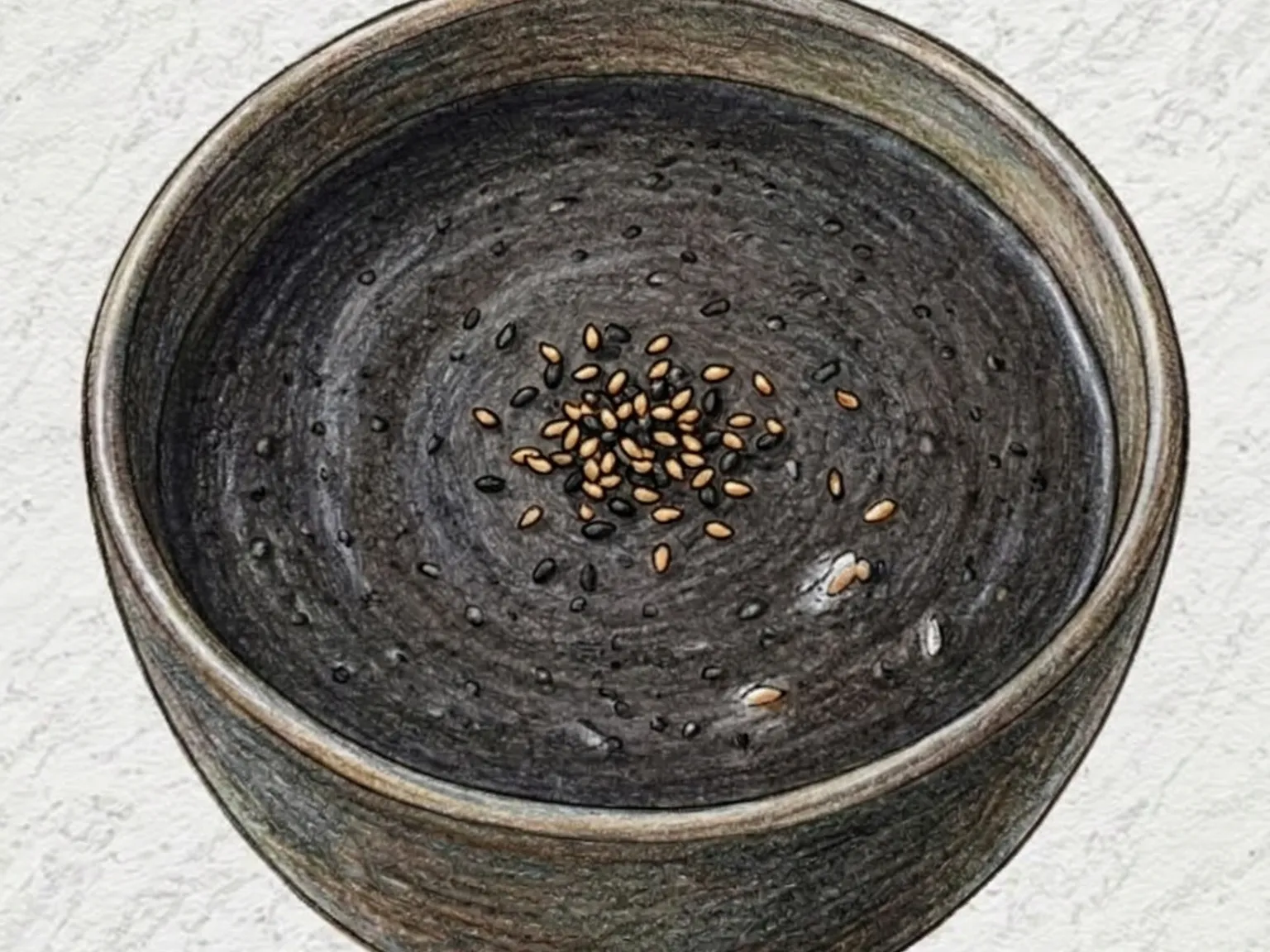
Black sesame seeds are blended smooth with water to form a dark, fragrant paste, which is stirred into softened soaked rice over low heat until the porridge turns a deep...

What makes this special

  • Heugimja juk incorporates toasted black sesame seeds blended into a dark paste and simmered with rice.
  • Pre-toasting the sesame doubles its nuttiness into a grain-and-nut complex aroma
  • Sesame liquid added after rice fully blooms for easier consistency control
Total time
40 min
Level
Easy
Servings
2 servings
Ingredients
5
Calories
310 kcal
Protein
9 g

Key ingredients

RiceBlack sesame seedsWaterSaltSugar

Core cooking flow

  1. 1 Rinse 150 g rice until the water runs mostly clear, then soak it for 30 minutes.
  2. 2 Put 60 g black sesame seeds in a dry pan and toast over low heat for 2 to 3 minutes.
  3. 3 Blend the cooled sesame seeds with the reserved water, adding it in portions so the blades catch well.

Black sesame seeds are blended smooth with water to form a dark, fragrant paste, which is stirred into softened soaked rice over low heat until the porridge turns a deep charcoal color. Pre-toasting the sesame seeds before blending amplifies their nutty intensity, producing a layered flavor that sits between toasted grain and roasted nut. Adding the sesame liquid after the rice has already softened makes it easier to dial in the final consistency, and a measured amount of sugar introduces a quiet sweetness beneath the nuttiness without masking it. Black sesame is naturally dense in anthocyanins and unsaturated fats, which is why this porridge has long served as a restorative meal during recovery or as a nourishing breakfast. Among Korean rice porridges, it stands apart for its dark color and particularly pronounced aroma.

Prep 10min Cook 30min 2 servings
Recipes by ingredient → short grain rice

Instructions

Read the steps as a cooking flow: prep, heat, seasoning, doneness control, and finish.

6 steps
  1. 1
    Finish

    Rinse 150 g rice until the water runs mostly clear, then soak it for 30 minutes.

    Drain it in a sieve, and reserve part of the 1200 ml water for blending the sesame seeds.

  2. 2
    Control

    Put 60 g black sesame seeds in a dry pan and toast over low heat for 2 to 3 minutes.

    When the aroma turns nutty, remove them right away and cool them to prevent bitterness.

  3. 3
    Finish

    Blend the cooled sesame seeds with the reserved water, adding it in portions so the blades catch well.

    Blend until very smooth, because visible grains will make the porridge feel gritty.

  4. 4
    Control

    Place the soaked rice and remaining water in a pot and bring it to a boil over medium heat.

    Once it starts bubbling, lower the heat and stir along the bottom so the rice does not stick.

  5. 5
    Control

    Simmer over low heat for about 20 minutes, until the rice grains open up and the liquid thickens.

    If the porridge becomes too dense before the rice softens, add a little water.

  6. 6
    Finish

    Stir in the black sesame liquid and cook over low heat for 5 more minutes, mixing until the color is even.

    Season with 0.5 tsp salt and 1 tsp sugar, then serve warm.

After the steps

Pick a recipe that fits this dish.

Continue with shared ingredients, meal pairings, or a similar method.

Recipes That Go Well With This

More Rice →

Based on shared ingredients and meal pairing

Korean Perilla Seed Porridge
Shared ingredient: short grain rice Rice

Korean Perilla Seed Porridge

Deulkkae juk is a traditional Korean porridge made by blending toasted perilla seeds into a smooth liquid and simmering it with soaked rice. Toasting the seeds beforehand unlocks a deep, earthy nuttiness that defines every spoonful of the finished porridge. The rice is first stir-fried briefly in sesame oil, then the perilla liquid is poured in and the mixture is stirred over low heat until the starch from the rice and the natural oils from the seeds combine into a thick, creamy consistency. Salt is the only seasoning needed - the perilla carries enough flavor on its own to make the bowl complete. The porridge is easy to digest and coats the stomach gently, making it suitable as a morning meal or a restorative dish during illness. In Korean tradition, deulkkae juk has long served as a warming winter food, valued for its ability to nourish without burdening the body.

Korean Butterfish Porridge
Shared ingredient: short grain rice Rice

Korean Butterfish Porridge

Byeongeo (butterfish) is cut into pieces and placed in a pot with rice and water, then cooked slowly over low heat until the fish flesh breaks apart and dissolves into the porridge. This lean white fish carries minimal fat, and as it simmers, it gradually releases a gentle sweetness and clean savoriness that enriches the rice without making it heavy. Thorough bone removal before cooking is essential because the soft flesh disperses through the porridge and bones become difficult to pick out later. Seasoning is kept to a minimum: salt only, with a drop of sesame oil stirred in at the end. With so few ingredients, the freshness of the fish determines the quality of the finished bowl. This is a traditional Korean restorative dish, long favored when the stomach needs something soothing, when recovering from illness, or whenever something nourishing but easy to digest is called for. Stirring occasionally as the rice swells and thickens keeps the porridge from catching on the bottom.

Honghap-tang (Korean Mussel Garlic Broth)
Serve together Soups

Honghap-tang (Korean Mussel Garlic Broth)

Honghap-tang is a Korean mussel soup that proves how much flavor a single shellfish can deliver with almost no help. Shell-on mussels are placed in water with sliced green onion, garlic, and a light dusting of gochugaru, then brought to a boil. As the shells open, they release a briny, faintly sweet liquor that becomes the broth itself, clear in appearance but surprisingly concentrated in taste. The entire process takes about fifteen minutes. Timing matters here: once the shells have opened and the flesh has puffed, the pot comes off the heat immediately or the meat turns rubbery. In Korea, honghap-tang is a standard drinking companion, sipped between shots of soju while the mussel meat is pulled from the shells and dipped in vinegary chojang sauce. The combination of the bold, oceanic broth and the chilled sauce creates a cycle that is hard to stop. Mussels caught during the colder months, when they are fatter and richer, produce the most intensely flavored broth.

Korean Kimchi Porridge (Fermented Kimchi Pork Rice Porridge)
Similar recipe Rice

Korean Kimchi Porridge (Fermented Kimchi Pork Rice Porridge)

Well-fermented napa kimchi is chopped into small pieces and stir-fried with ground pork in sesame oil first, building a savory, aromatic base before the soaked rice and water go in for a slow, gentle simmer of thirty minutes. The extended cooking time is what fundamentally changes the character of the dish: the raw, sharp edge of the chili fades and the fermentation tang disperses through the porridge evenly, becoming deep and mellow rather than assertive, while the pork contributes a rich savory backbone that plain kimchi alone could not provide. Soup soy sauce is added toward the end to adjust the salt, and sesame seeds scattered over the finished bowl add a final nutty aroma. The more sour and deeply fermented the kimchi used, the more complex and layered the finished juk becomes -- bright red in color and bold in flavor. This is a traditional Korean porridge associated with recovery and comfort, eaten warm when the stomach is unsettled, appetite has gone quiet, or the cold calls for something deeply nourishing. Diced silken tofu added during the last few minutes of simmering introduces a new texture and adds protein without disrupting the clean, porridge-like consistency.

Serve with this

Korean Squid Stew
Stews Easy

Korean Squid Stew

Ojingeo jjigae simmers a whole cleaned squid in an anchovy broth enriched with gochujang and chili flakes, producing a sweet-spicy stew that pairs directly with steamed rice. The squid body is scored with diagonal cuts before going into the pot, which lets the bold red pepper paste seasoning penetrate the flesh so that each bite carries the full flavor of the broth. Tofu and zucchini cook alongside, absorbing the spicy liquid while softening enough to contrast with the firm, chewy squid. The natural sweetness of gochujang is well matched to the mild, clean flavor of squid, keeping the stew from tasting one-dimensional despite its deep red color. Timing matters: squid added too early toughens quickly, so it goes in during the final five minutes and cooks just until opaque. Cheongyang chili peppers can be added for extra heat, and a handful of sliced green onion stirred in at the end provides a fresh aromatic note. The braising liquid, spiced and slightly thickened from the vegetables, is rich enough to spoon over rice and eat on its own.

🏠 Everyday 🍺 Bar Snacks
Prep 15min Cook 20min 2 servings
Korean Young Radish Kimchi
Side dishes Medium

Korean Young Radish Kimchi

Young radish greens and their slender stems are salted briefly, dressed in a gochugaru-based paste, and fermented into a kimchi that defines Korean summer eating. The greens are more delicate than mature radish, absorbing the seasoning quickly while retaining a refreshing crunch that lasts well into fermentation. Gochugaru and anchovy fish sauce form the backbone of the paste, delivering heat and deep umami in equal measure, while garlic lends a pungent undercurrent that mellows as the fermentation progresses. Once dressed, the radish greens release their own moisture, creating a naturally occurring brine that becomes the hallmark of yeolmu kimchi: a tangy, chili-flecked liquid that can be spooned over cold noodles or rice. Even half a day at room temperature kicks off the fermentation, introducing a sharp, fizzy acidity that signals the kimchi is alive. Transferring it to the refrigerator slows the process and stabilizes the flavor at a bright, appetizing sourness. Draped over bibim-guksu or naengmyeon, it brings a cooling, spicy bite that defines the Korean summer table.

🏠 Everyday 🥗 Light & Healthy
Prep 30min 4 servings
Korean Crown Daisy Soy Pickle
Kimchi Easy

Korean Crown Daisy Soy Pickle

Ssukgat jangajji is a soy-brined pickle made with crown daisy greens, capturing the herb's distinctively bitter, aromatic character in a quick-cured form. A boiling mixture of soy sauce, vinegar, and sugar is poured directly over the trimmed greens, which wilts them just enough to expel raw grassiness while locking in the clean, herbal fragrance underneath. Thin slices of lemon layered between the greens as they steep introduce a citrus brightness that cuts through the saltiness of the soy and keeps the brine from tasting flat. Whole black peppercorns contribute a gentle background heat that tidies up the finish. The jar goes into the refrigerator once cooled, and the pickle is ready to eat after just twenty-four hours, making it one of the most practical options when a side dish is needed on short notice. The herbal fragrance is at its sharpest within the first week of refrigeration, after which the aroma gradually fades. It pairs well as a rice topping or served alongside grilled pork or beef.

🍱 Lunchbox 🏠 Everyday
Prep 15min Cook 10min 4 servings

Similar recipes

Korean Black Rice (Purple Anthocyanin-Rich Grain Bowl)
Rice Easy

Korean Black Rice (Purple Anthocyanin-Rich Grain Bowl)

Black rice mixed with white rice and cooked together turns the entire pot a deep, vivid purple from the anthocyanin pigments concentrated in the black grain's outer bran layer. Because black rice absorbs water significantly more slowly than white rice, it must be soaked for at least one hour before cooking so that both types finish at the same time. Skipping the soak reliably leaves hard, undercooked black kernels scattered through otherwise done white rice, and no amount of additional cooking fully corrects the problem once it happens. When properly cooked, the black grains contribute a glutinous chewiness similar to sweet rice and a roasted, nutty grain aroma that white rice alone does not produce. The standard ratio is roughly twenty percent black to eighty percent white, which produces clear color without making the overall texture too dense. Increasing the black rice proportion makes the color darker and the flavor more assertive, but the rice becomes noticeably heavier on the palate. The purple-tinted soaking water should be added directly to the pot rather than discarded, as it deepens the final color of the finished rice.

🥗 Light & Healthy 🏠 Everyday
Prep 30min Cook 25min 2 servings
Korean Black Sesame Latte
Drinks Easy

Korean Black Sesame Latte

Heugimja latte is a Korean roasted black sesame drink made by finely grinding toasted sesame seeds and warming them slowly with milk over low heat. Toasting the sesame beforehand draws the oils to the surface, intensifying the deep, nutty character that defines the drink. The finer the grind, the more evenly the sesame disperses through the liquid, creating a smooth, uniform texture rather than a gritty one. Adding sweet rice flour dissolved in a small amount of water gives the latte a natural thickness that sets it apart from commercial nut milks or grain beverages. A tiny amount of salt sharpens the sesame flavor without adding any perceptible saltiness, and sugar should be added with restraint since too much sweetness masks the roasted depth that makes this drink distinctive. Served warm, the toasted aroma rises steadily from the cup. Chilled versions retain the same nuttiness, making the drink work in both seasons. The drink draws on a long Korean tradition of using ground sesame as a nutrient-dense base for beverages and porridges.

🍺 Bar Snacks ⚡ Quick
Prep 8min Cook 7min 2 servings
Gamjaguk (Potato Doenjang Anchovy Soup)
Soups Easy

Gamjaguk (Potato Doenjang Anchovy Soup)

Gamjaguk is a clear, mild Korean soup built on a foundation of anchovy stock with potatoes as the main ingredient, seasoned with either doenjang or plain salt. As the potatoes cook through, they release starch gradually into the broth, giving it a subtle body that makes each spoonful feel substantial without turning the liquid cloudy. When doenjang is used, the fermented paste contributes a layered, earthy savoriness that wraps around the gentle sweetness of the potato. Seasoning with salt alone lets the potato's natural, unadorned flavor stand at the center without competition. Garlic and green onion are added as the aromatic base, providing a mild, savory fragrance that keeps the broth from tasting flat. A handful of zucchini slices added midway through cooking introduces a soft, yielding texture and a touch of pale green color. The potatoes need to be pulled from heat at the point when a chopstick slides through without resistance, because overcooking breaks them apart and muddies the broth. With only a few ingredients required, this soup comes together quickly even when the refrigerator is nearly empty, which is part of why it appears on Korean tables more consistently than almost any other soup.

🏠 Everyday 🥗 Light & Healthy
Prep 10min Cook 25min 3 servings

Tips

Pre-toasting the sesame seeds intensifies their nutty flavor.

Nutrition (per serving)

Calories
310
kcal
Protein
9
g
Carbs
49
g
Fat
9
g