Chilled Wakame Seaweed Salad
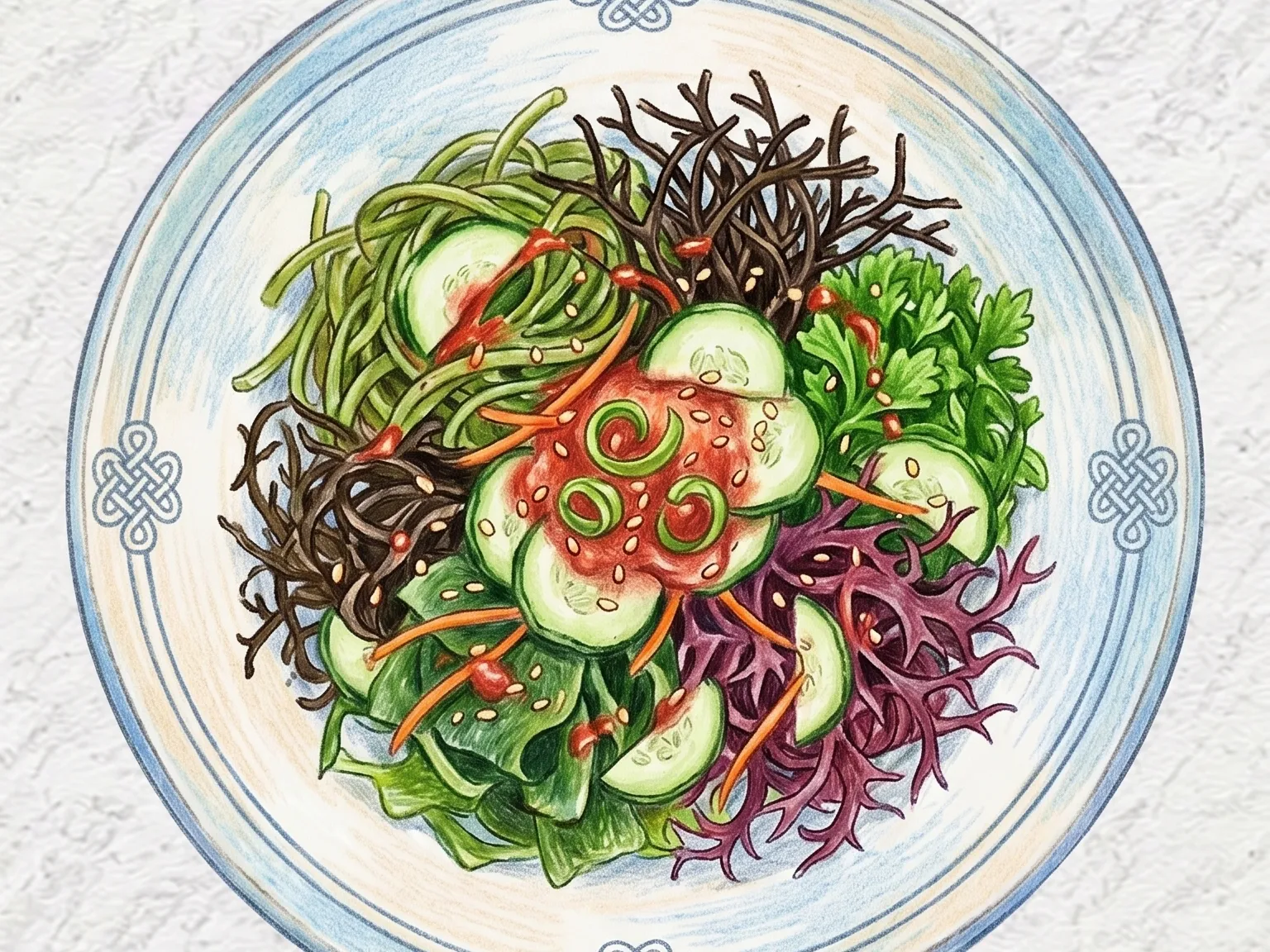
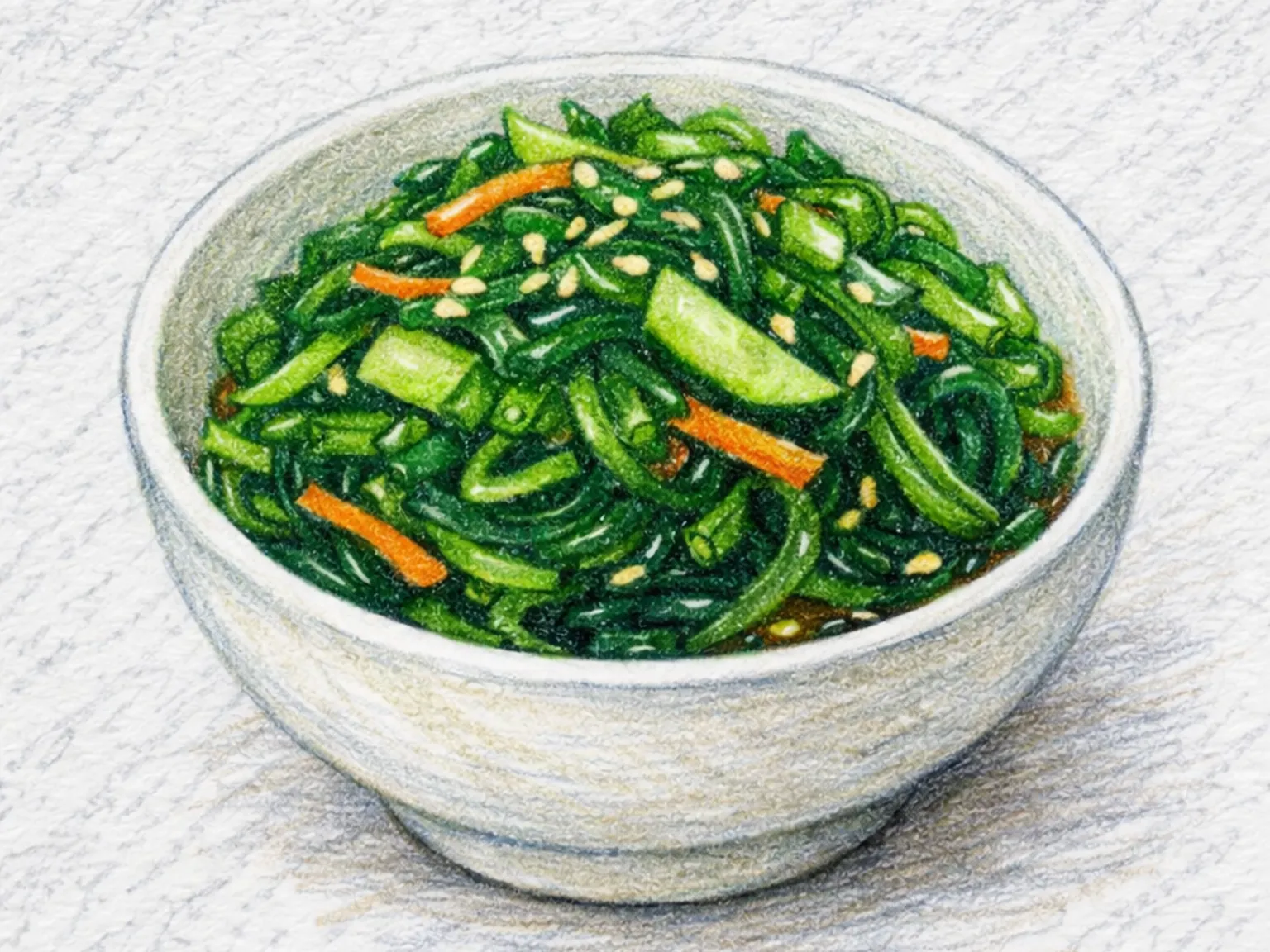
Hiyashi wakame is a chilled Japanese seaweed salad that rehydrates dried wakame in cold water, blanches it for just twenty seconds, then rinses and squeezes it dry before tossing with salt-wilted cucumber slices in a soy-vinegar dressing. The brief blanch is critical - anything longer turns the wakame limp and rubbery, while twenty seconds keeps it smooth and springy. The dressing mixes soy sauce, rice vinegar, sugar, and sesame oil, building a salty umami base sharpened by vinegar's acidity, which highlights the seaweed's natural ocean character. Salting the cucumber for five minutes and pressing out the moisture prevents the dressing from becoming diluted. A final sprinkle of toasted sesame seeds adds a warm, nutty aroma over the cold, clean textures.
Adjust Servings
Instructions
- 1
Soak wakame for 8 minutes, blanch for 20 seconds, then rinse cold and squeeze dry.
- 2
Slice cucumber thinly, lightly salt for 5 minutes, then squeeze out moisture.
- 3
Mix soy sauce, vinegar, sugar, and sesame oil to make dressing.
- 4
Combine wakame and cucumber, then toss with dressing.
- 5
Sprinkle sesame seeds and serve well chilled.
As an Amazon Associate, we may earn from qualifying purchases.
Tips
Nutrition (per serving)
More Recipes

Sunomono Cucumber Salad (Japanese Sweet Vinegar Cucumber Slices)
Sunomono cucumber salad slices cucumber paper-thin, salts the slices for five minutes to draw out excess moisture, then squeezes them dry and dresses them in a mixture of rice vinegar, sugar, and a touch of soy sauce along with rehydrated wakame. Salting and squeezing the cucumber first is what keeps the vinegar dressing sharp and concentrated rather than watered down. The crisp, snappy cucumber and the slippery, silky wakame create a textural contrast in every bite, and a scattering of sesame seeds adds a toasted nuttiness to the clean finish. The entire preparation requires no cooking and takes under fifteen minutes, making it a practical side dish for summer meals or alongside grilled meats.

Cold Ramen Salad
Hiyashi chuka is a Japanese chilled noodle dish where cold ramen noodles are topped with colorful garnishes and drizzled with a tangy soy-vinegar dressing. The sauce balances soy sauce saltiness with vinegar's sharpness and a touch of sugar, finished by sesame oil's toasty richness. Thin strips of egg crepe, ham, cucumber, and tomato are arranged on top, creating a vibrant presentation and a mix of textures in every bite. The noodles must be thoroughly cooled in ice water after boiling to achieve the firm, springy chew that stands up to the dressing.

Buckwheat Noodle Salad
Buckwheat noodle salad rinses boiled soba noodles several times in cold water to strip away surface starch and firm their texture, then tosses them with leaf lettuce, cucumber, and shredded red cabbage in a tsuyu-based dressing. The cold rinse sharpens the soba's characteristic coarse, chewy bite, and the vegetables weave crisp moisture between the noodle strands. Tsuyu's concentrated savory depth balanced by rice vinegar's acidity creates a dressing that finishes clean on the palate. Shredded roasted seaweed scattered over the top adds a toasted ocean note that carries through each bite. The red cabbage contributes a purple accent that contrasts visually with the muted brown of the buckwheat noodles.

Soba Sesame Salad (Chilled Buckwheat Noodle Sesame Dressing)
Soba sesame salad cooks buckwheat noodles, rinses them multiple times in cold water to wash away surface starch, and tosses them with julienned cucumber, carrot, and red cabbage in a dressing of soy sauce, rice vinegar, sesame oil, and sesame seeds. The earthy, nutty flavor of buckwheat pairs naturally with toasted sesame, and the vinegar's light acidity prevents the noodles from feeling heavy. Crisp cucumber and red cabbage interrupt the springy noodle texture with a fresh crunch, while julienned carrot threads a gentle sweetness through the bowl. Rinsing the noodles thoroughly in cold water is critical - skipping this step leaves residual starch that dilutes the dressing and causes the strands to clump together.

Grapefruit Shiso Shrimp Salad
Grapefruit shiso shrimp salad tosses ice-chilled blanched shrimp, membrane-free grapefruit segments, shredded shiso leaves, and thinly sliced cucumber and radish in a yuja marmalade dressing. Blanching shrimp for just two minutes and shocking them in ice water locks in a firm, springy texture by rapidly contracting the protein. Removing all white pith from the grapefruit eliminates bitterness, leaving only the clean, tart juice of the flesh. The dressing - yuja marmalade, rice vinegar, olive oil, and pepper - doubles down on citrus aroma, while the mint-like herbal note of shiso leaves neutralizes any hint of fishiness. Serving the salad well chilled keeps every texture and fragrance sharp and distinct.

Gyoza
Gyoza are Japanese pan-fried dumplings that evolved from Chinese jiaozi, brought back to Japan by soldiers and civilians returning from Manchuria after World War II, who recreated the dumplings they had eaten abroad. A thin wheat-flour wrapper encloses a filling of ground pork, napa cabbage (or regular cabbage), garlic chives, garlic, and ginger, pleated into a crescent shape. The dumplings are placed flat-side down in an oiled skillet, seared until golden, then water - sometimes mixed with a touch of flour - is added and the lid goes on to steam them through; as the water evaporates, the bottoms re-crisp and form the thin, lacy skirt called hanetsuki that connects all the dumplings in the pan. Each piece delivers three textures in one bite: the chewy steamed top, the crackling golden base, and the juicy meat filling inside. A dipping sauce of soy sauce, rice vinegar, and la-yu (chili oil) adds sharpness, salt, and heat atop the dumpling's savory richness. Gyoza are served as a ramen-shop side dish, an izakaya beer snack, and a weekend home-cooking staple - one of the most versatile foods in the Japanese repertoire.