Charim

2686 Korean & World Recipes

2686+ Korean recipes, clean and organized. Ingredients to instructions, all at a glance.

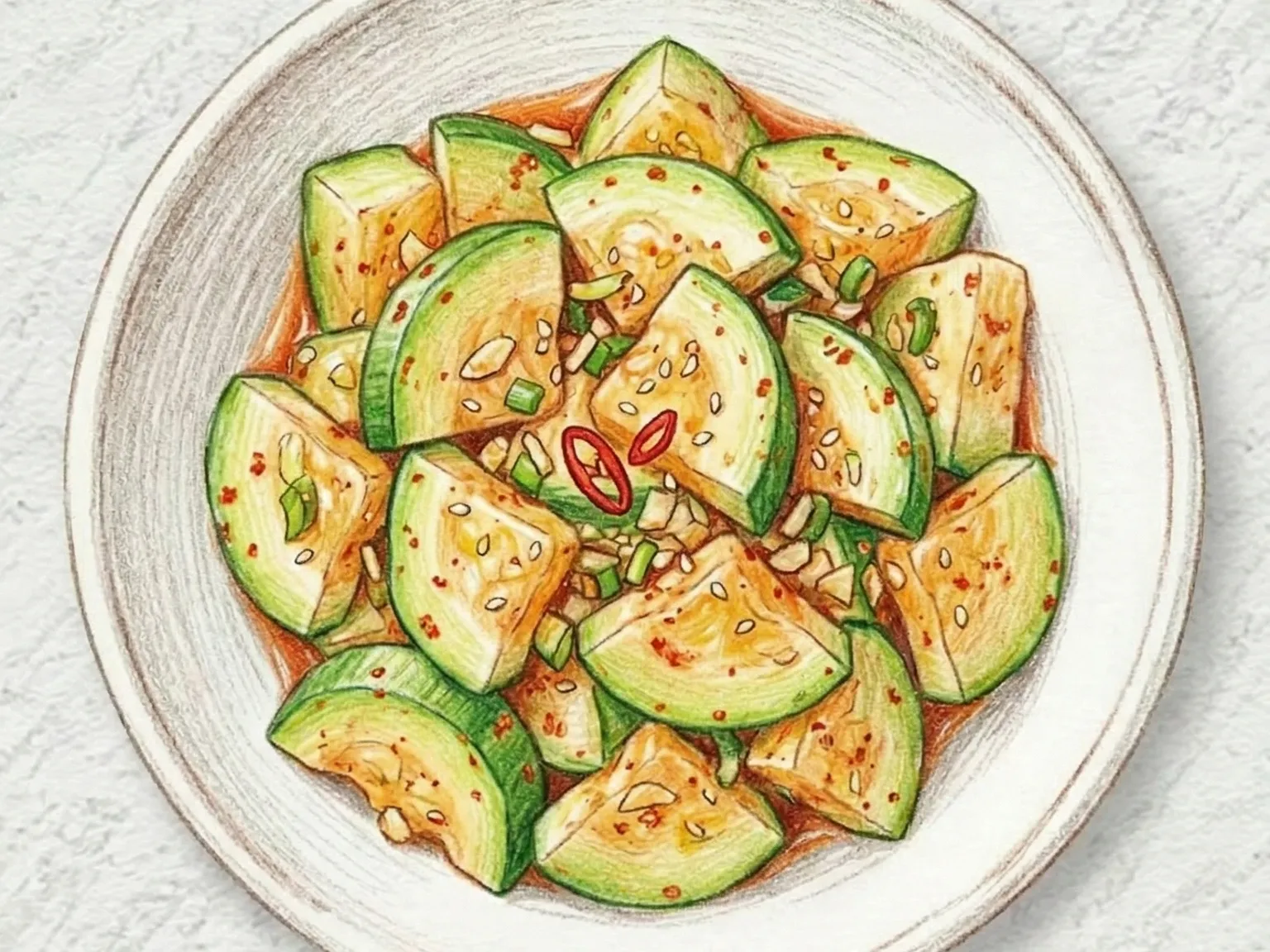
Korean Zucchini Kimchi (Summer Fresh Gochugaru Quick)
KimchiEasy

Korean Zucchini Kimchi (Summer Fresh Gochugaru Quick)

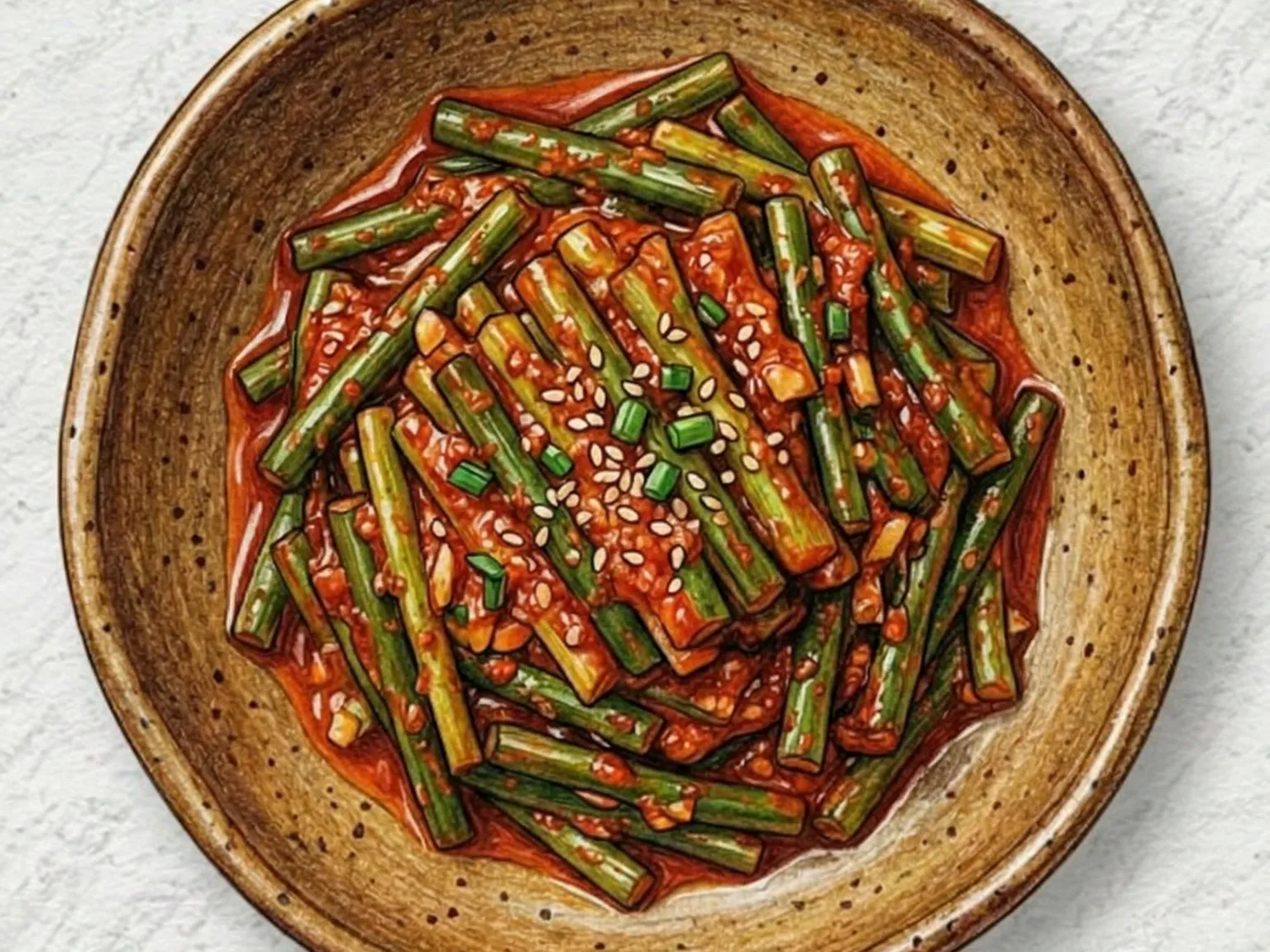
Hobak kimchi is a Korean summer zucchini kimchi where half-moon or thin-cut slices are lightly salted, then tossed with gochugaru, fish sauce, garlic, garlic chives, and plum extract. Minimal salting preserves the zucchini's natural crunch and gentle sweetness, and plum extract provides a rounded sweetness without added sugar. Garlic chives tie the flavors together with their aromatic, grassy note, and onion adds an extra layer of savory depth. This is a no-fermentation kimchi meant to be eaten immediately after preparation, making it an efficient seasonal banchan when fresh summer zucchini is at its peak.

Prep 22minCook 5min2 servings

Adjust Servings

2servings
servings

Instructions

  1. 1

    Slice zucchini into half-moons, salt, and brine for 15 minutes.

  2. 2

    Quickly rinse and drain the zucchini.

  3. 3

    Slice onion and cut chives into 3 cm lengths.

  4. 4

    Mix chili flakes, fish sauce, garlic, and plum syrup.

  5. 5

    Toss zucchini, onion, and chives in seasoning and pack into a container.

  6. 6

    Chill and ferment lightly for 1 day before serving.

🛒Shop Ingredients on Amazon

As an Amazon Associate, we may earn from qualifying purchases.

Tips

Slightly thicker slices keep better texture.
Best within 2-3 days, as zucchini releases more water over time.

Nutrition (per serving)

Calories
66
kcal
Protein
3
g
Carbs
11
g
Fat
2
g

More Recipes

Korean Fresh Eggplant Kimchi
KimchiEasy

Korean Fresh Eggplant Kimchi

Gaji kimchi is a fresh, no-fermentation eggplant kimchi made by steaming eggplant until soft, tearing it along the grain, and tossing it with gochugaru, fish sauce, garlic, and sesame oil. Tearing rather than cutting exposes the fibrous interior so the seasoning reaches deep into every strand. Scallions add a fresh, sharp lift, and sesame seeds provide a nutty finish. Since no fermentation is required, this kimchi can be eaten immediately after preparation, making it especially useful in summer when a quick banchan is needed. Mixed into a bowl of cold leftover rice, the seasoning soaks into the grains for a satisfying one-bowl meal.

🍱 Lunchbox
Prep 20minCook 10min2 servings
Korean Cabbage Kimchi (Crunchy Green Cabbage Kimchi)
KimchiEasy

Korean Cabbage Kimchi (Crunchy Green Cabbage Kimchi)

Yangbaechu kimchi is a Korean cabbage kimchi made by salting green cabbage and tossing it with chili flakes, fish sauce, and minced garlic. The thicker leaves and lower moisture content of green cabbage compared to napa cabbage result in a noticeably crunchier texture that persists through fermentation. The natural sweetness of cabbage softens the heat from the chili seasoning, while carrot and scallion pieces add color and freshness. Six hours of fermentation at room temperature followed by refrigeration lets the tanginess develop gradually. It serves as a lighter alternative when traditional napa kimchi feels too heavy.

🏠 Everyday🍱 Lunchbox
Prep 30minCook 10min4 servings
Korean Stuffed Cucumber Kimchi
KimchiMedium

Korean Stuffed Cucumber Kimchi

Oi sobagi is a Korean stuffed cucumber kimchi where salted cucumbers are slit crosswise - base left intact - and packed with a filling of chopped garlic chives, onion, gochugaru, anchovy fish sauce, and plum syrup. Each bite releases the cucumber's cool juice together with the spicy, fragrant stuffing, and the firm flesh contrasts with the softer chive filling inside. Salting for exactly thirty minutes is critical - any longer softens the cucumber past the point where it can hold its shape and crunch. Four hours of room-temperature fermentation followed by refrigeration allows lactic acid to develop overnight, bringing a tangy depth that peaks by the second day. Cutting into three-centimeter pieces just before serving minimizes juice loss from the stuffed interior.

🍱 Lunchbox
Prep 35min4 servings
Korean Lettuce Kimchi (Quick Leaf Gochugaru Dressed)
KimchiEasy

Korean Lettuce Kimchi (Quick Leaf Gochugaru Dressed)

Sangchu kimchi is a quick Korean lettuce kimchi made by tearing leaf lettuce into bite-sized pieces, lightly salting for ten minutes to wilt the leaves just enough, then tossing them in a dressing of gochugaru, sand lance fish sauce, minced garlic, vinegar, and sugar. The lettuce absorbs the seasoning and softens, but eating it before it fully collapses preserves a slight crispness at the leaf edges. Fish sauce's fermented depth adds weight to the lettuce's otherwise mild green flavor, and vinegar leaves a clean, tangy finish. Sesame seeds contribute a toasted accent with each chew. Thorough drying after salting is essential - residual water dilutes the seasoning rapidly, turning the kimchi bland within hours.

🍱 Lunchbox Quick
Prep 20min2 servings
Korean Pan-fried Zucchini Jeon
GrilledEasy

Korean Pan-fried Zucchini Jeon

Hobak-jeon is a Korean pan-fried zucchini pancake made by slicing Korean zucchini into even half-centimeter rounds, salting them for five minutes to draw out excess moisture, then dusting in flour, dipping in beaten egg, and frying over medium heat for two to three minutes per side. The salting step is essential-it removes water that would otherwise make the jeon soggy, and it simultaneously concentrates the zucchini's mild natural sweetness into a more pronounced flavor. The egg coating acts as a gentle heat buffer, keeping the interior soft and moist while the exterior develops a pale golden crust with a subtle nuttiness from the cooked egg. It is one of the most versatile banchan in Korean cooking, equally at home in a child's lunchbox, on an everyday dinner table alongside soup or stew, or stacked on a holiday platter.

🍺 Bar Snacks🏠 Everyday
Prep 10minCook 12min2 servings
Korean Zucchini Namul (Sesame-Dressed Bibimbap Topping)
Side dishesEasy

Korean Zucchini Namul (Sesame-Dressed Bibimbap Topping)

Hobak namul is julienned zucchini stir-fried with sesame oil and garlic - a foundational Korean namul that appears as one of the five-color toppings in bibimbap. Though it looks similar to hobak-bokkeum, the cut makes the difference: namul uses thin julienne strips rather than half-moons, so the strands integrate seamlessly with rice grains when mixed. Salting and thoroughly squeezing out moisture is essential; leftover water makes the pan soggy and turns bibimbap rice gummy. Seasoning stays minimal - salt and sesame oil - with garlic gently sauteed first to lay down an aromatic base without burning. Three minutes over medium heat is enough, and the cooked strands hold their shape well even after cooling, which makes this a reliable lunchbox option.

🏠 Everyday🍱 Lunchbox
Prep 10minCook 10min4 servings
More Kimchi