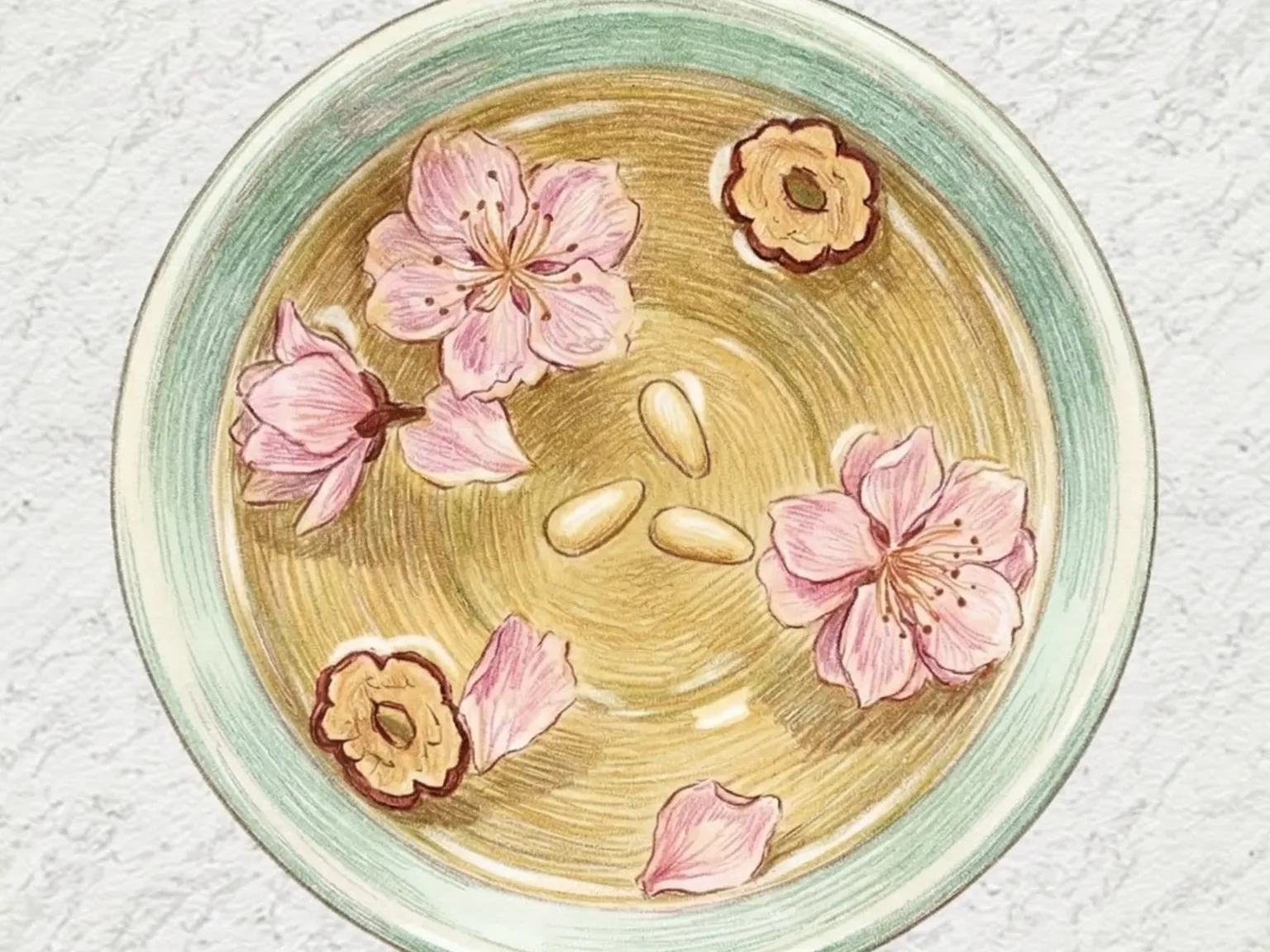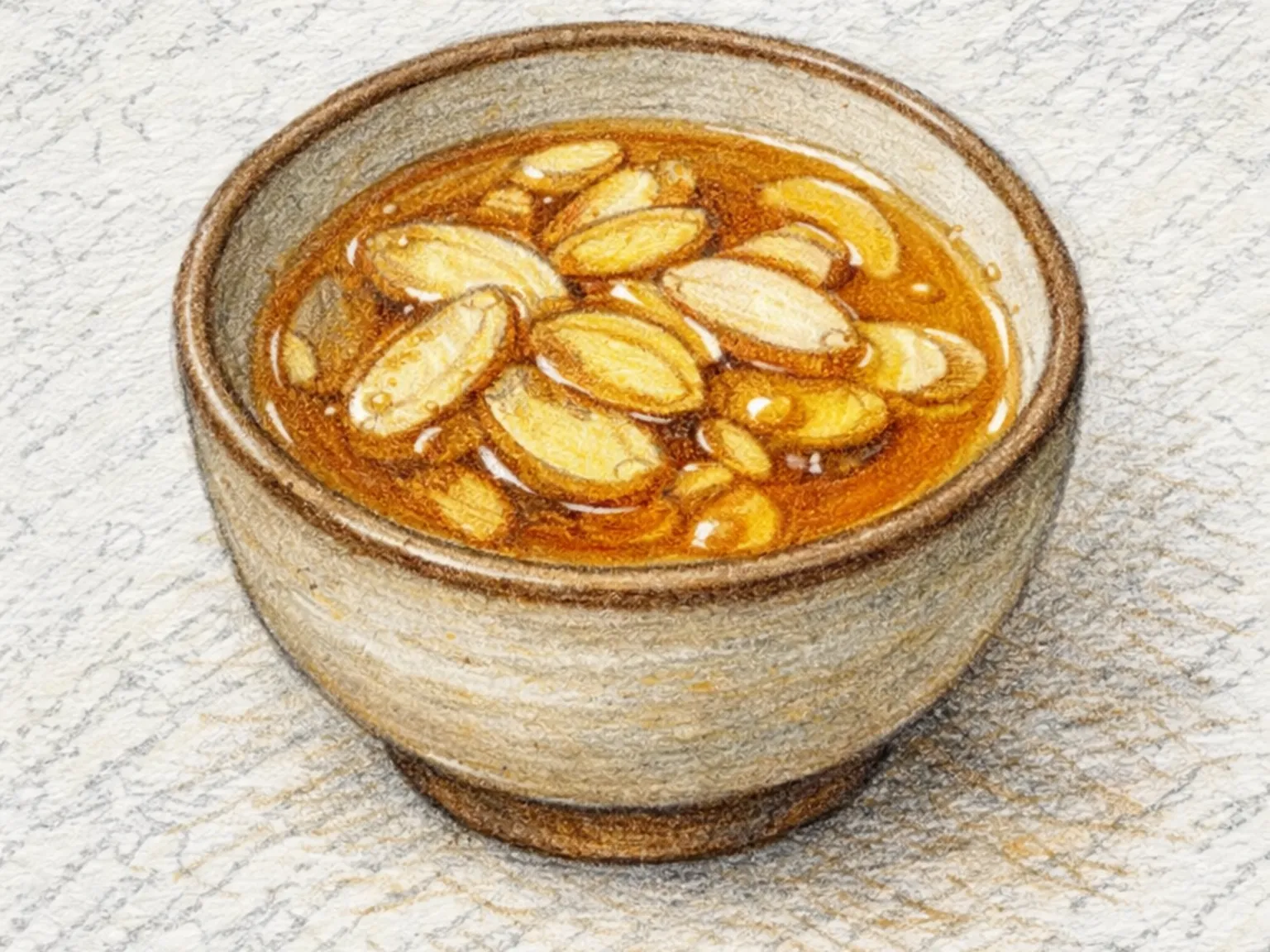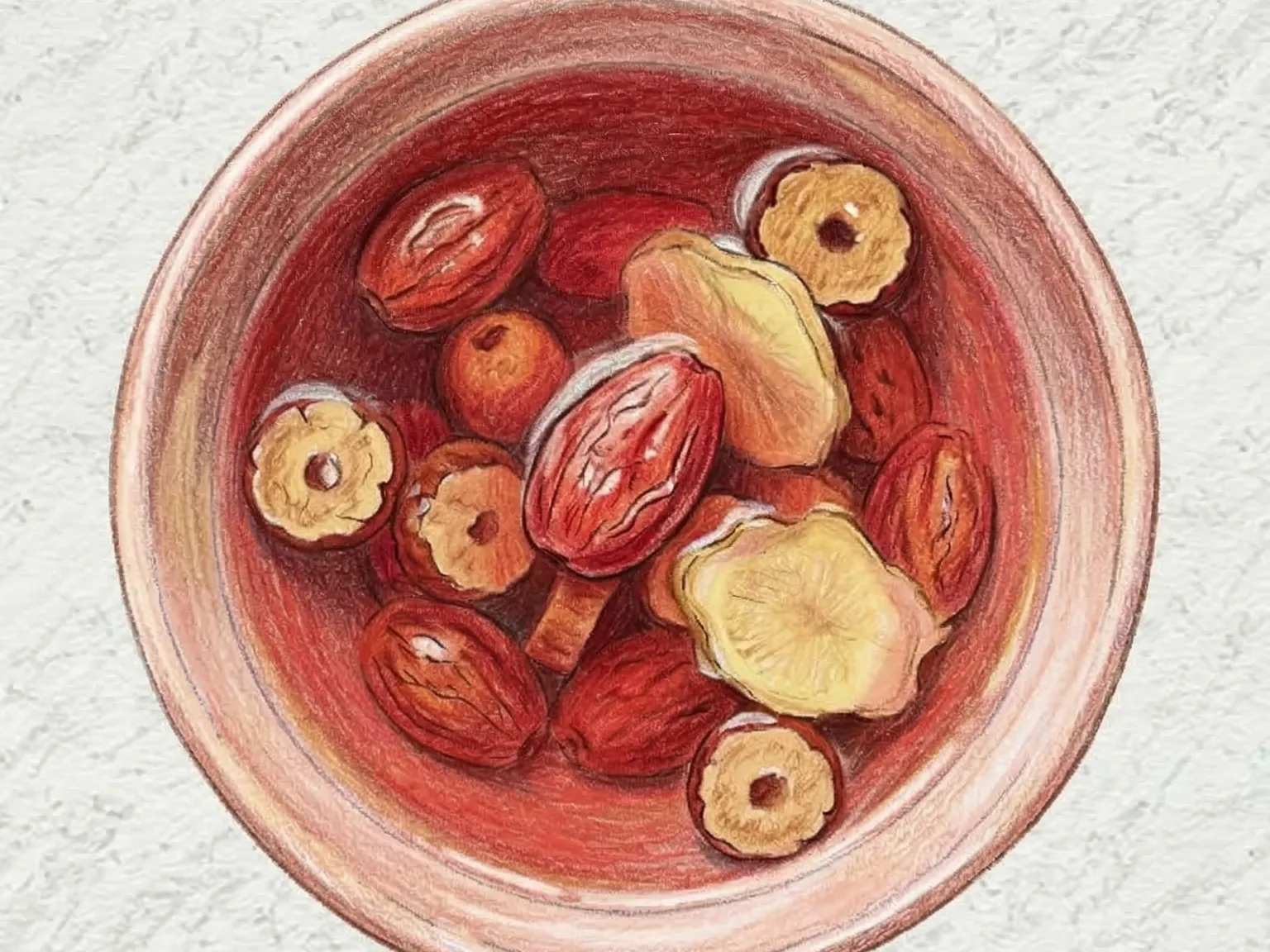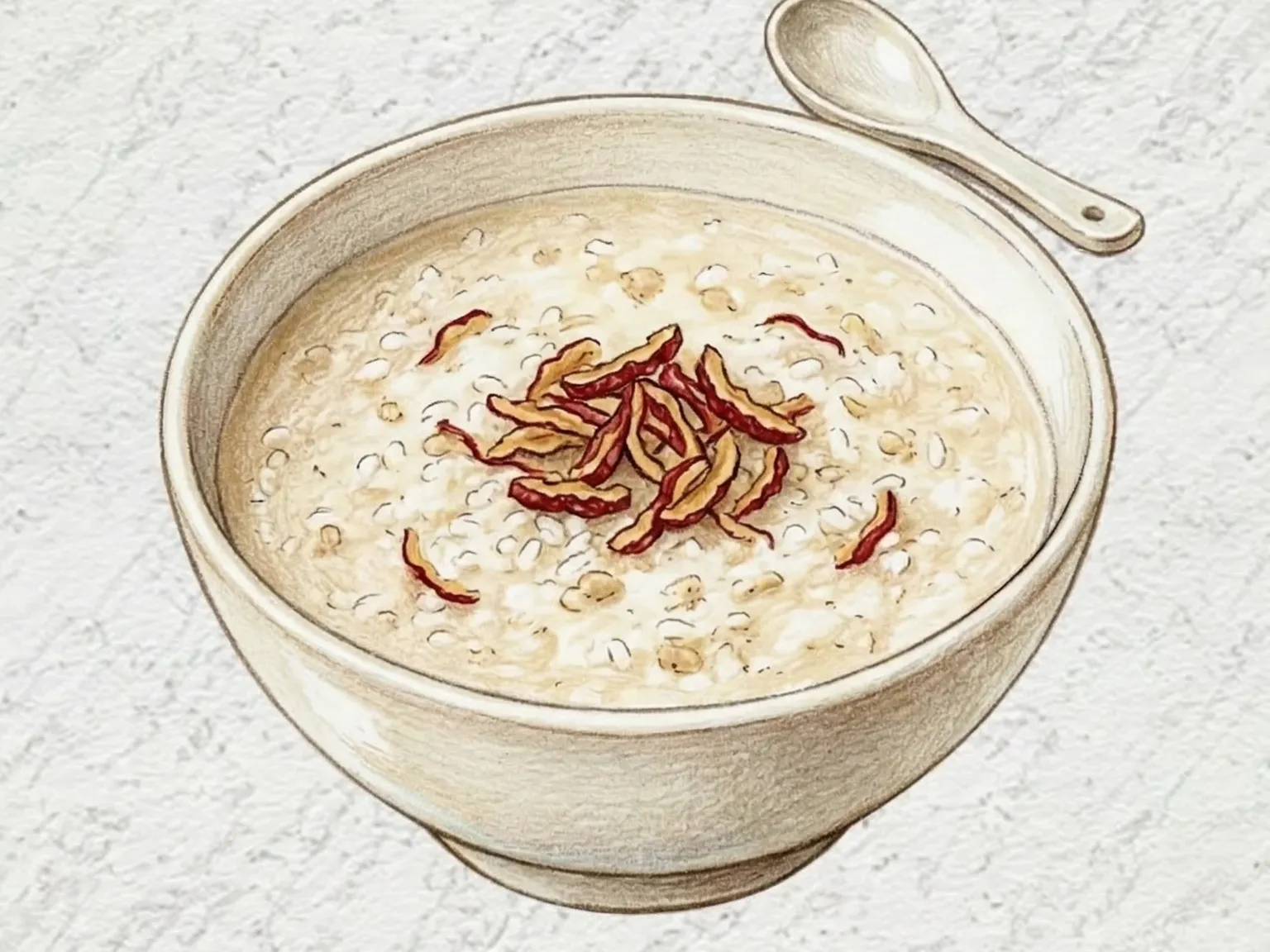
Korean Pine Nut Porridge (Creamy Nutty Nourishing Rice Porridge)
Pine nuts are blended with water into a smooth milk, then stirred into soaked rice that has been sauteed in sesame oil to bring out its starch aroma. The pine nut milk is added after the rice has already simmered for ten minutes, because prolonged boiling diminishes the nuts' volatile fragrance. The finished porridge has a pale cream hue and leaves a lingering resinous pine-nut note on the palate. Thinly sliced jujube garnish adds a pop of red color and gentle natural sweetness that complements the nuttiness.
Adjust Servings
Instructions
- 1
Soak rice for 30 minutes and drain; gently blot pine nuts with a paper towel.
- 2
Blend pine nuts with 200 ml water into a smooth pine nut milk.
- 3
Sauté soaked rice in sesame oil for 2 minutes to release starch aroma.
- 4
Add remaining water and simmer gently for 10 minutes, stirring often.
- 5
Pour in pine nut milk and cook 6 more minutes, stirring continuously.
- 6
Season with salt and garnish with sliced jujube.
As an Amazon Associate, we may earn from qualifying purchases.
Tips
Nutrition (per serving)
More Recipes

Korean Napa Cabbage Doenjang Porridge
Baechu doenjang juk is a Korean porridge where soaked rice is first toasted in sesame oil to build a nutty base, then simmered slowly in anchovy stock with dissolved doenjang, napa cabbage, and onion. Toasting the rice grains in oil before adding liquid gives the finished porridge a roasted depth that plain boiled rice cannot achieve. The doenjang is strained through a sieve into the stock so the porridge remains smooth without grainy bits. Finely chopped onion melts into the broth as it cooks, contributing a quiet sweetness, while the napa cabbage softens until it nearly dissolves into the texture of the porridge. Stirring frequently over medium-low heat for at least twenty minutes ensures the rice breaks down evenly. A drop of sesame oil and a seasoning adjustment with guk-ganjang finishes the dish. The result is a bowl that feels gentle on the stomach while carrying the full fermented complexity of doenjang.

Korean Radish Greens Shrimp Porridge
This porridge combines blanched radish greens and minced shrimp in a perilla-oil base for a nutty, ocean-tinged bowl. The radish greens are blanched first to soften their tough fibers, then chopped fine so they meld seamlessly into the porridge. Lightly crushing the shrimp with the flat of a knife releases more umami throughout the pot. Perilla oil provides a distinctive nutty aroma as the foundation, and soup soy sauce seasons the porridge gently without overpowering the clean flavors.

Korean Potato Cheese Porridge
Finely diced potato and onion are sauteed in butter to draw out their sweetness, then simmered with soaked rice, water, and milk until the potato starch thickens the base naturally. Cheddar cheese is melted in at the end, contributing salt and richness so little additional seasoning is needed. Partially mashing the potato while cooking produces an even creamier consistency, and adjusting salt last accounts for the varying saltiness of different cheeses. The mild, velvety result is gentle enough for young children and comforting as a light morning meal.

Korean Pollock Roe Egg Porridge
Rice is simmered in anchovy stock until the grains soften, then finished with pollock roe and beaten egg for a silky, umami-rich porridge. The roe dissolves into the broth and spreads its briny saltiness throughout, while the egg forms soft curds that thicken the texture. Because the roe is already quite salty, soup soy sauce is added sparingly at the end for fine-tuning. Streaming the egg in at a gentle simmer rather than a rolling boil produces delicate, smooth curds instead of tough clumps.

Korean Milk Rice Porridge
Tarakjuk is a traditional Korean milk rice porridge made by coarsely blending soaked rice, simmering it in water first, then gradually stirring in milk over medium-low heat. The milk is added in two or three portions over 10 minutes of constant stirring to prevent curdling and achieve a velvety consistency. Seasoning with a small amount of salt and sugar ties together the toasty grain flavor and the mild dairy sweetness, and an additional three minutes of simmering brings the porridge to a thickness that flows slowly off a spoon. Pine nuts on top provide a rich, oily nuttiness, and a pinch of ground cinnamon adds a warm spiced note that rounds out the bowl.

Korean Pine Nut Job's Tears Shake
Jat-yulmu shake blends boiled job's tears and pine nuts with milk, honey, and ice into a thick grain-based shake. The job's tears must be cooked until fully soft to eliminate any gritty texture and blend smoothly, while the pine nuts - high in natural oils - create a creamy emulsion that gives the shake its rich body. Honey provides a clear sweetness over the mild grain base, and vanilla extract adds aromatic depth. A pinch of salt brings forward the nutty pine flavor and the toasty character of the job's tears, and blending with ice cubes makes the final drink cold and thick.