Charim

2686 Korean & World Recipes

2686+ Korean recipes, clean and organized. Ingredients to instructions, all at a glance.

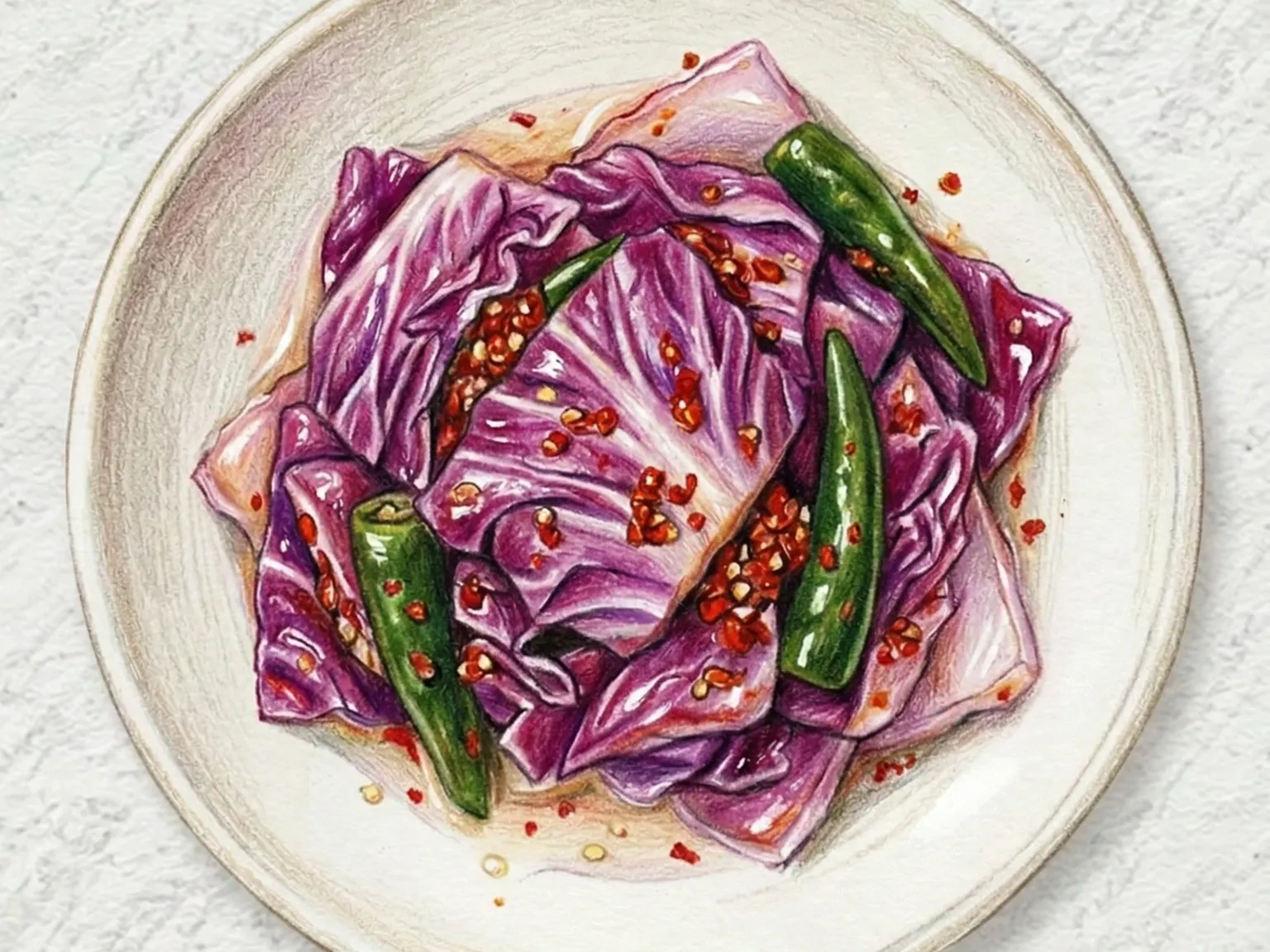
Korean Red Cabbage Kimchi
KimchiEasy

Korean Red Cabbage Kimchi

Jeokchae kimchi is a Korean kimchi made with red cabbage that is salted, then dressed in gochugaru, sand lance fish sauce, garlic, and Korean pear juice for a short fermentation. Red cabbage leaves are thicker and denser than napa, maintaining a pronounced crunch even after brining, and their anthocyanin pigment merges with the red chili seasoning to produce a striking purple hue. Pear juice provides a gentle fruit sweetness beneath the spice, and sand lance fish sauce ensures deep umami despite the abbreviated aging. Scallions add a fresh finish, and the vivid color makes this a visually distinctive kimchi on any table.

Prep 30min02 servings

Adjust Servings

2servings
servings

Instructions

  1. 1

    Slice red cabbage into 2 cm strips, salt it, and brine for 20 minutes.

  2. 2

    Rinse lightly and drain the brined cabbage well.

  3. 3

    Julienne onion and cut scallions into 3 cm pieces.

  4. 4

    Combine chili flakes, fish sauce, garlic, and pear juice for seasoning.

  5. 5

    Mix cabbage and aromatics evenly with the seasoning.

  6. 6

    Pack tightly in a container and refrigerate for half a day before serving.

🛒Shop Ingredients on Amazon

As an Amazon Associate, we may earn from qualifying purchases.

Tips

Do not over-brine red cabbage; 20 minutes keeps it crisp.
Apple juice works well as a clean substitute for pear juice.

Nutrition (per serving)

Calories
92
kcal
Protein
4
g
Carbs
16
g
Fat
2
g

More Recipes

Korean Cabbage Kimchi (Crunchy Green Cabbage Kimchi)
KimchiEasy

Korean Cabbage Kimchi (Crunchy Green Cabbage Kimchi)

Yangbaechu kimchi is a Korean cabbage kimchi made by salting green cabbage and tossing it with chili flakes, fish sauce, and minced garlic. The thicker leaves and lower moisture content of green cabbage compared to napa cabbage result in a noticeably crunchier texture that persists through fermentation. The natural sweetness of cabbage softens the heat from the chili seasoning, while carrot and scallion pieces add color and freshness. Six hours of fermentation at room temperature followed by refrigeration lets the tanginess develop gradually. It serves as a lighter alternative when traditional napa kimchi feels too heavy.

🏠 Everyday🍱 Lunchbox
Prep 30minCook 10min4 servings
Korean Napa Cabbage Kimchi
KimchiMedium

Korean Napa Cabbage Kimchi

Baechu kimchi is Korea's defining fermented food, made by salting napa cabbage and layering it with a paste of gochugaru, anchovy fish sauce, garlic, ginger, and glutinous rice paste. The cabbage is salted with coarse sea salt for six to eight hours until the stems become flexible but retain their crunch; under-salting leads to mushy kimchi, while over-salting masks the seasoning flavors. The glutinous rice paste serves a dual purpose: it acts as a glue that helps the seasoning adhere to each leaf, and it provides sugars that feed lactobacillus during fermentation. Julienned radish mixed into the filling adds textural contrast, and scallions contribute another layer of savory depth. After one day at room temperature to kick-start fermentation, the kimchi moves to the refrigerator where acidity develops slowly. At two to three weeks, the heat from gochugaru, the umami from fish sauce, and the tang from lactic acid reach their optimal balance.

🍱 Lunchbox
Prep 50min4 servings
Korean Bok Choy Kimchi (Gochugaru Fermented Quick)
KimchiMedium

Korean Bok Choy Kimchi (Gochugaru Fermented Quick)

Cheonggyeongchae kimchi is a bok choy kimchi prepared by halving the heads lengthwise, salting them for twenty minutes, and coating each leaf layer with a paste of gochugaru, salted shrimp, anchovy fish sauce, and sweet rice paste. Keeping the salting time short preserves the stems' crisp snap, while the leaves soften just enough to hold the seasoning. Julienned scallions and carrot add color and textural variety, and adjusting the fish sauce quantity based on the salted shrimp's salinity keeps the overall salt level balanced. After four hours of room-temperature fermentation followed by refrigeration, this kimchi is ready within a day and offers a lighter, crunchier character than traditional napa cabbage kimchi.

🍱 Lunchbox
Prep 35min4 servings
Korean-Style Cabbage Pickle
KimchiEasy

Korean-Style Cabbage Pickle

Yangbaechu pickle is a quick Korean-style vinegar pickle made by pouring a hot brine of vinegar, sugar, salt, and whole peppercorns over bite-sized cabbage and carrot pieces. The hot liquid slightly wilts the vegetables while they retain a firm, crisp crunch. Whole black peppercorns add a subtle spiced note that gives the pickle more dimension than a plain vinegar soak. Ready after just one day of refrigeration, it is commonly served alongside fried cutlets, burgers, or other rich dishes to cut through greasiness. Best consumed within a week for peak crunchiness.

🍱 Lunchbox
Prep 15minCook 8min4 servings
Korean Restaurant-Style Kkakdugi
Side dishesMedium

Korean Restaurant-Style Kkakdugi

Sikdang-style kkakdugi is the cubed radish kimchi served free at virtually every Korean restaurant, standing alongside baechu-kimchi as a non-negotiable table banchan. Cutting the Korean radish into chunky 2 cm cubes ensures the interior stays crunchy even after salting and fermentation. Twenty minutes in coarse salt draws moisture, then the cubes are dressed with gochugaru, myeolchi-aekjeot (anchovy fish sauce), garlic, ginger, and sugar. The fish sauce provides the umami backbone that deepens during fermentation, while ginger suppresses off-flavors and sharpens the finish. One day at room temperature triggers lactic acid production - the signature tingle that signals active fermentation - followed by refrigeration where the flavor matures over two to three weeks. Winter radish carries more natural sugar, so the added sugar can be reduced; in summer, cutting the room-temperature rest to half a day prevents over-fermentation.

🏠 Everyday🍱 Lunchbox
Prep 25minCook 5min4 servings
Korean Fresh Cabbage Kimchi
Side dishesEasy

Korean Fresh Cabbage Kimchi

Geotjeori is kimchi's unfermented cousin - raw napa cabbage dressed in gochugaru seasoning and eaten immediately. The leaves are tossed with red pepper flakes, anchovy fish sauce, garlic, and sugar, drawing out just enough moisture to form a light, spicy brine. Unlike aged kimchi, geotjeori tastes bright and vegetal with the clean crunch of fresh cabbage intact. Koreans pair it with grilled pork belly or doenjang-jjigae.

🏠 Everyday🍱 Lunchbox
Prep 20min6 servings
More Kimchi