Korean Abalone Porridge (Jeonbok Juk)
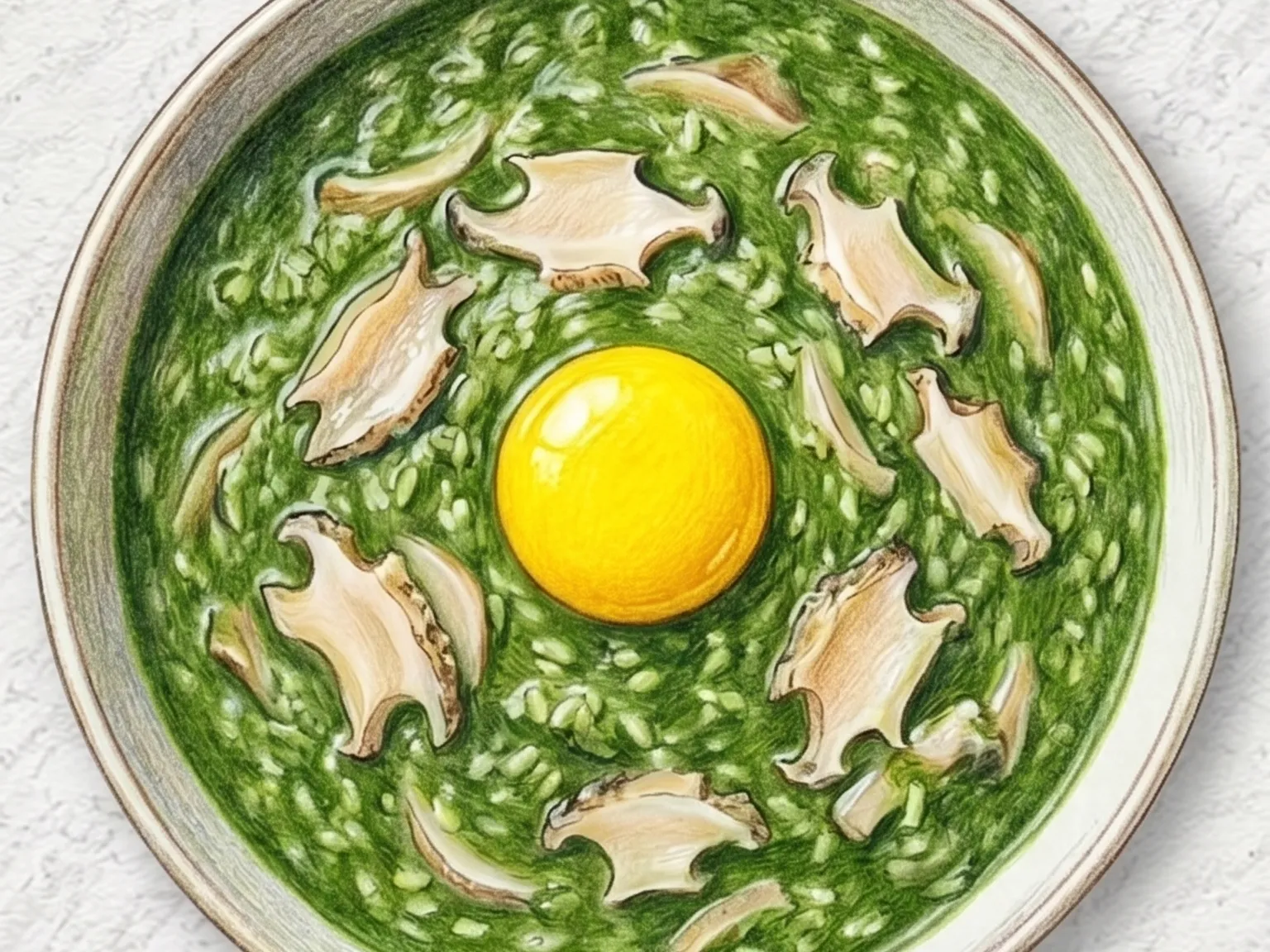
Abalone innards are sauteed in sesame oil until they release a green tint and briny aroma, then simmered with soaked rice on low heat for over 30 minutes into a nourishing porridge. The freshness of the innards dictates both the porridge's color and depth of flavor, with vivid green being the sign of quality. Thinly sliced abalone meat goes in near the end so it stays chewy rather than turning rubbery, and frequent stirring throughout prevents the bottom from scorching. An egg yolk placed on top creates a visual contrast against the greenish porridge and, once broken and mixed in, adds a layer of richness.
Adjust Servings
Instructions
- 1
Scrub abalone clean and separate the flesh from the innards.
- 2
Slice abalone flesh thinly and finely chop the innards.
- 3
Saute soaked rice and abalone innards in sesame oil until rice becomes translucent.
- 4
Add water, bring to a boil, then simmer on low heat for 30 minutes, stirring occasionally.
- 5
Add sliced abalone and diced carrot, cook 5 more minutes.
- 6
Season with salt and soup soy sauce.
- 7
Serve in a bowl and top with an egg yolk.
As an Amazon Associate, we may earn from qualifying purchases.
Tips
Nutrition (per serving)
More Recipes

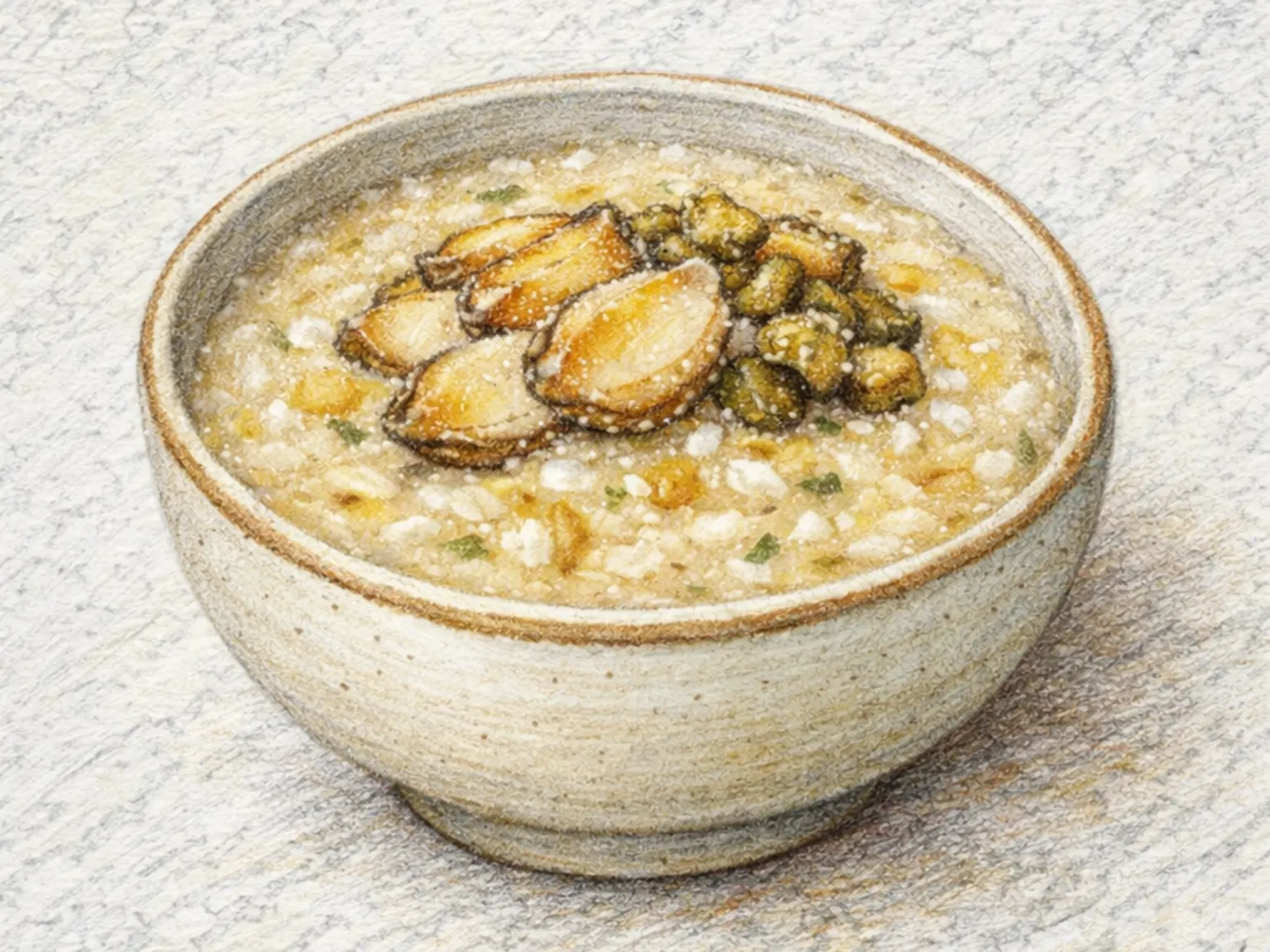
Korean Sesame Oil Abalone Porridge
Both abalone flesh and innards are used together with a generous two tablespoons of sesame oil to maximize nuttiness in this porridge. Sauteing the minced innards with garlic in the sesame oil infuses the fat with both marine and roasted flavors, forming the aromatic foundation for the entire pot. Soaked rice is stirred in the same oil until translucent, then water is added and the mixture simmers for 25 minutes as the grains release starch into a naturally thick consistency. Soup soy sauce and salt sharpen the finish, and chopped chives provide both color and a light onion fragrance.

Korean Abalone Mugwort Porridge
Mugwort is added to abalone porridge for a spring-season variation where herbal and ocean aromas converge. The abalone innards are sauteed in sesame oil to establish an umami base, then soaked rice simmers in kelp stock until soft, and the mugwort goes in only during the final minute to preserve its gentle bitterness without letting it turn harsh. Extended cooking would draw out the herb's more aggressive bitter compounds, so brief contact is essential. Black pepper finishes the bowl with a warm, peppery note that complements the green, vegetal fragrance of the mugwort.

Korean Taro Porridge (Perilla Oil-Toasted Rice with Taro Root)
Soaked rice is toasted in perilla oil until fragrant, then simmered with peeled taro in a generous amount of water until the porridge reaches a thick, flowing consistency. Some taro pieces dissolve into the liquid and naturally thicken it, while others hold their shape and offer a starchy, crumbly bite. The gentle nuttiness of perilla oil and the mild earthiness of taro create a soothing combination with no sharp flavors. Seasoning with just salt preserves the delicate taste of the taro without masking it.

Korean Beef Porridge (Sesame Oil-Toasted Rice with Minced Beef)
Sogogi-juk is a Korean beef porridge that begins by stir-frying minced beef and soaked rice together in sesame oil, building a savory, nutty foundation before water is added. As the beef renders in the oil, its umami dissolves into the fat, and the rice grains pick up that flavor as they toast alongside the meat. Slow simmering over low heat allows the rice to break down gradually into a thick, silky porridge while the beef broth permeates every spoonful. Finely diced carrot and onion can be added for a touch of natural sweetness that softens the overall flavor profile. Widely relied on as a recovery food after illness and as a warming breakfast, this porridge is gentle on the stomach yet deeply satisfying in its quiet, meaty richness.

Korean Steamed Abalone (Whole Shell Soy Sesame)
Jeonbok-jjim is Korean steamed abalone prepared by scrubbing the shells clean, scoring the flesh for even cooking, and steaming with green onion and ginger for 10 to 12 minutes. The gentle steam preserves the abalone's signature chewy-tender texture and briny ocean flavor. A light drizzle of soy sauce, rice wine, and sesame oil after steaming adds just enough seasoning without masking the natural taste. The separated innards can be repurposed for porridge or sauce, and the dish is often reserved for special occasions and guest-hosting due to its premium standing among Korean seafood.

Korean Pork Gochujang Jjigae
This pork-focused gochujang stew blends chili paste with a half-tablespoon of doenjang, balancing the heat with fermented soybean depth. A full tablespoon of gochugaru intensifies the color and spice level. The 180 grams of pork shoulder render their juices into 700ml of broth, while potato, zucchini, onion, and tofu ensure variety in every bite. The combination of two fermented pastes gives this version a more complex flavor than a pure gochujang stew.