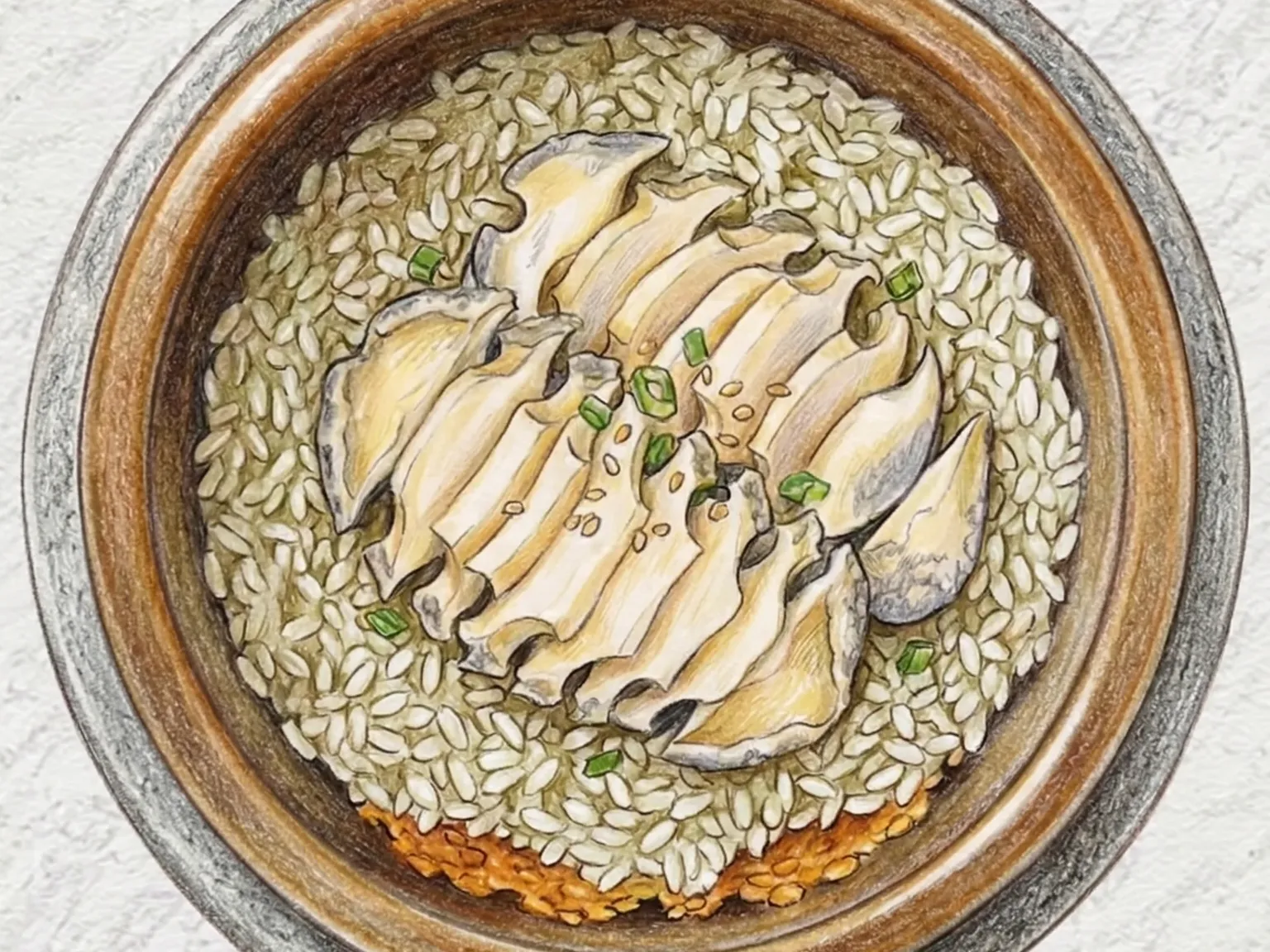
Korean Abalone Pot Rice (Ocean-Scented Sesame Base Grain Pot)
Abalone innards are sauteed in sesame oil directly in the cooking pot to build an aromatic base, then soaked rice and water are added and the rice is cooked so every grain absorbs the marine fragrance. Thinly sliced abalone meat goes on top only when the rice is nearly done, steaming for five minutes under the lid to cook gently without toughening. Extending the resting time by a couple of minutes produces a layer of crispy scorched rice at the bottom, adding textural contrast. A seasoning sauce of soy sauce, chives, garlic, and sesame seeds is mixed into each serving, amplifying the abalone's subtle flavor with salt and nuttiness.
Adjust Servings
Instructions
- 1
Soak rice for 30 minutes, then drain well.
- 2
Scrub abalone clean, separate innards, and finely chop the innards.
- 3
Heat sesame oil in a pot and sauté chopped innards for 1 minute.
- 4
Add rice and water, bring to boil, then cook on low for 12 minutes.
- 5
Top with sliced abalone meat, cover, and steam-rest for 5 minutes.
- 6
Serve with soy-chive seasoning sauce and mix before eating.
As an Amazon Associate, we may earn from qualifying purchases.
Tips
Nutrition (per serving)
More Recipes

Korean Seaweed Roe Pot Rice
Rice is cooked in a pot with diced Korean radish and seasoned with soy sauce, then pollock roe and butter are placed on top and steamed by residual heat with the lid on. The roe pops gently between the teeth, releasing briny umami that seeps into the warm grains, while the melting butter coats everything in a thin layer of richness. Crumbled gamtae seaweed and sliced scallion are added just before serving, layering two distinct ocean aromas over the buttery rice. Cooking the roe only with carry-over heat keeps it moist and prevents it from turning dry and crumbly.

Korean Burdock Beef Pot Rice
Beef is marinated in soy sauce to build savory depth, then placed on top of rice with crisp-cut burdock root and cooked together in a heavy pot. The marinated beef releases its juices during cooking, and they soak into the rice so each grain carries flavor without any extra sauce. Burdock retains its firm texture even after pot-cooking, releasing an earthy sweetness with every chew. Adding carrot brings a gentle sweetness and color that rounds out the bowl.

Korean Truffle Mushroom Pot Rice
Shiitake and king oyster mushrooms are generously added to a pot of rice and cooked so their released moisture and earthy fragrance infuse every grain. The shiitake stays chewy while thick-sliced king oyster offers a meaty, substantial bite. Once the rice is done, a few drops of truffle oil are drizzled over the top, layering the mushrooms' natural earthiness with the truffle's deep, aromatic intensity. Mixing in a soy-seasoned sauce adds a salty edge that brings the whole bowl into balance.

Korean Herb Mushroom Pot Rice
Chamnamul beoseot sotbap is a Korean pot rice cooked with fragrant chamnamul herbs, oyster mushrooms, and shiitake mushrooms in kelp stock. The chamnamul infuses the rice with a fresh, slightly herbaceous scent, while the two types of mushroom contribute contrasting textures - the oyster mushrooms soft and springy, the shiitake firm and woodsy - along with layers of umami. Served with a soy-sesame dipping sauce drizzled over the top and mixed in, it becomes a complete, aromatic meal. Even without any meat, the combination of mushroom depth and herbal brightness makes every bowl feel substantial. The nurungji crust that forms at the bottom of the pot adds a toasty crunch that is one of the small joys of eating pot-cooked rice.

Korean Steamed Abalone (Whole Shell Soy Sesame)
Jeonbok-jjim is Korean steamed abalone prepared by scrubbing the shells clean, scoring the flesh for even cooking, and steaming with green onion and ginger for 10 to 12 minutes. The gentle steam preserves the abalone's signature chewy-tender texture and briny ocean flavor. A light drizzle of soy sauce, rice wine, and sesame oil after steaming adds just enough seasoning without masking the natural taste. The separated innards can be repurposed for porridge or sauce, and the dish is often reserved for special occasions and guest-hosting due to its premium standing among Korean seafood.

Abalone Seaweed Salad
Abalone has been gathered along Korea's Jeju coastline for centuries by haenyeo - female free-divers who harvest shellfish without oxygen tanks. This salad pairs thinly sliced abalone, blanched just 40 seconds to preserve its springy bite, with rehydrated sea mustard and crisp vegetables. A dressing of lemon juice, plum syrup, and soup soy sauce pulls the oceanic brininess into focus without overwhelming it. The combination of chewy abalone, slippery seaweed, and crunchy cucumber creates three distinct textures in every bite. It works well as a light appetizer before heavier grilled dishes or as a standalone side during hot summer months.