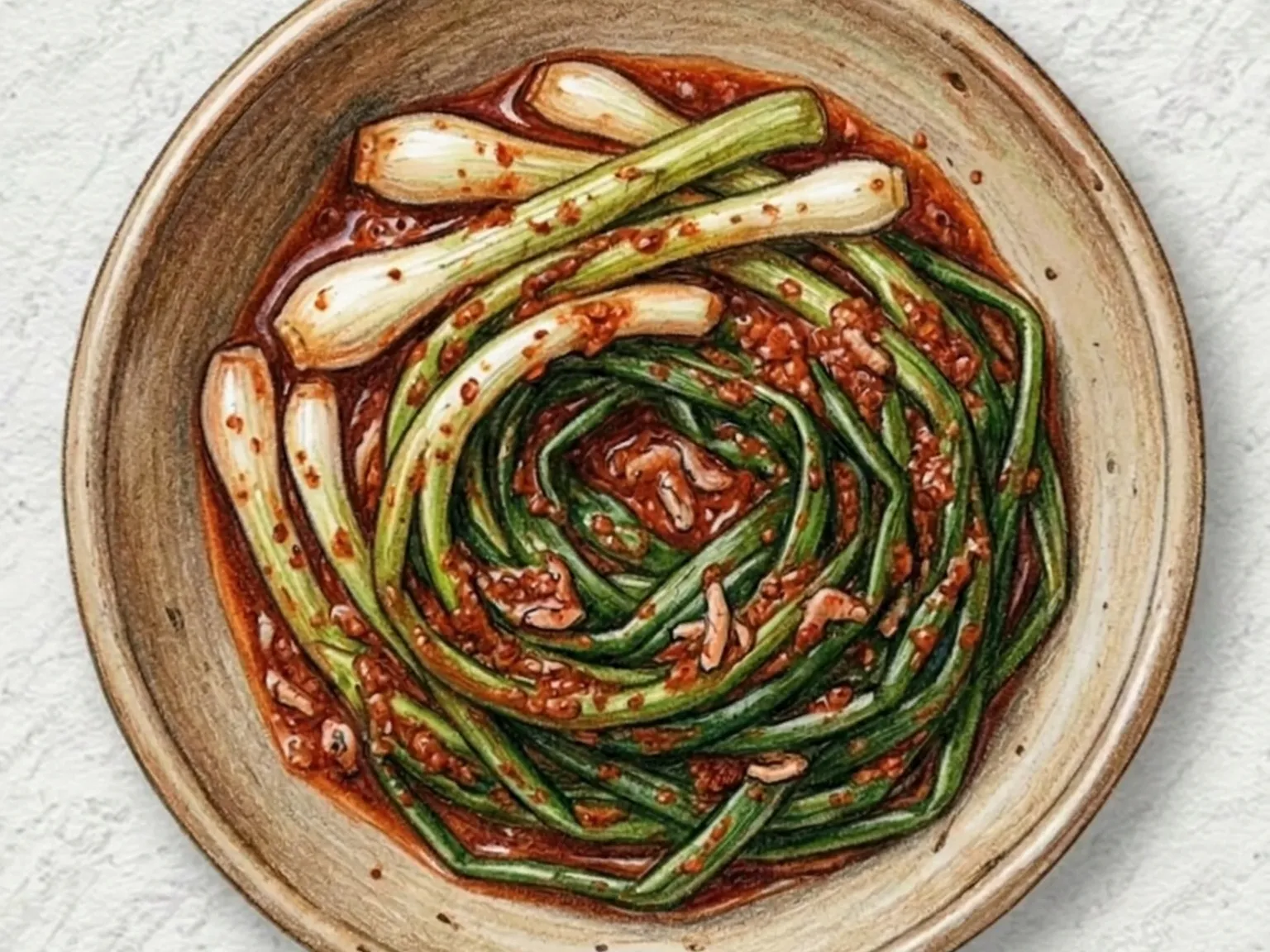
Korean Scallion Kimchi (Whole Stalk Anchovy Shrimp Paste)
Jjokpa kimchi is a traditional Korean scallion kimchi made by lightly brining whole scallions in coarse salt, then coating them from root to tip with a seasoning paste of anchovy fish sauce, salted shrimp, gochugaru, and sweet rice paste. The dual seafood condiments build a layered umami that the rice paste locks onto the scallion surface, preventing the flavor from diluting as moisture releases during fermentation. The white bulb sections stay crisp and absorb the chili heat, while the green tops wilt into a soft, pungent layer with a sharp allium bite. After six hours at room temperature followed by a day in the refrigerator, the seasoning stabilizes into a balanced, punchy side dish that works alongside steamed rice or grilled pork belly.
Adjust Servings
Instructions
- 1
Wash scallions well, especially near roots, and trim to 8-10 cm lengths.
- 2
Salt mainly the white parts for 20 minutes, then shake off excess moisture.
- 3
Mix chili flakes, fish sauce, salted shrimp, garlic, plum syrup, and rice paste.
- 4
Season scallions in small bundles, coating from root ends upward.
- 5
Pack neatly in a container, press out air pockets, and ferment 6 hours at room temp.
- 6
After 1 day in the fridge, cut into bite-size lengths and serve.
As an Amazon Associate, we may earn from qualifying purchases.
Tips
Nutrition (per serving)
More Recipes

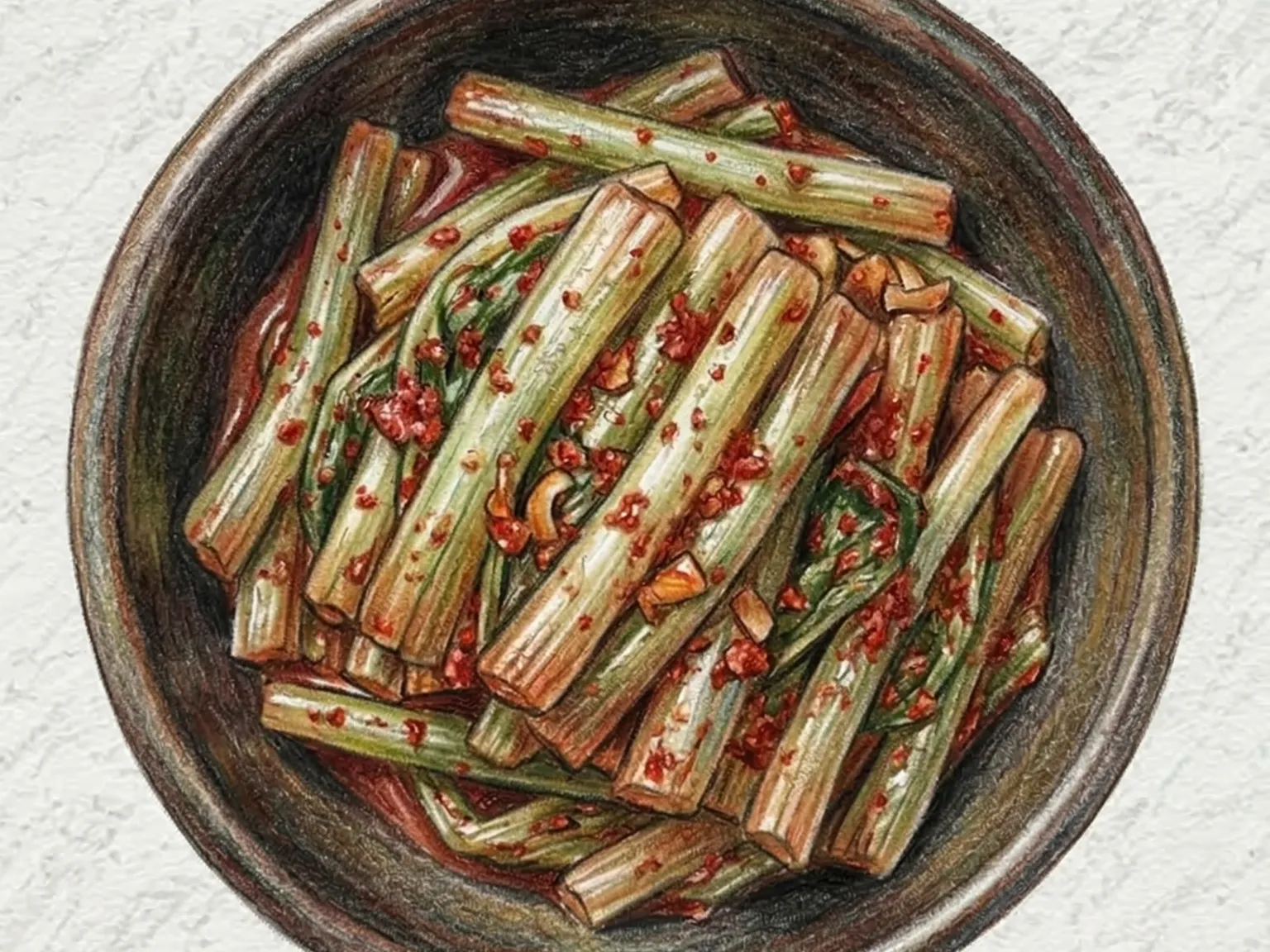
Korean Ponytail Radish Kimchi
Chonggak kimchi is a classic Korean kimchi made with whole young ponytail radishes salted for two hours, then coated in a seasoning paste of gochugaru, anchovy fish sauce, garlic, ginger, and scallions. Blooming the chili flakes in fish sauce first softens their texture and intensifies the color before garlic and ginger are added for aromatic depth. Trimming the radish tops short prevents them from turning fibrous and keeps the eating experience crisp. One day of room-temperature fermentation produces a lively carbonation and refreshing tang, after which refrigeration preserves the crunchy texture and spicy umami for weeks. This is a year-round kimchi staple in Korean households.

Korean Cubed Radish Kimchi
Kkakdugi is a staple Korean kimchi made from radish cut into 2 cm cubes, brined in coarse salt, then seasoned with gochugaru, salted shrimp, garlic, and ginger before fermentation. Salting draws out moisture from the cubes, creating a contrast between the damp interior and the snappy outer surface. Salted shrimp layers its briny seafood depth beneath the chili heat, and as fermentation progresses, the radish's natural sugars emerge to balance the spice with a clean sweetness. The accumulated brine at the bottom of the jar develops a refreshing tang that makes kkakdugi the essential companion to rich, milky soups like seolleongtang and gomtang.

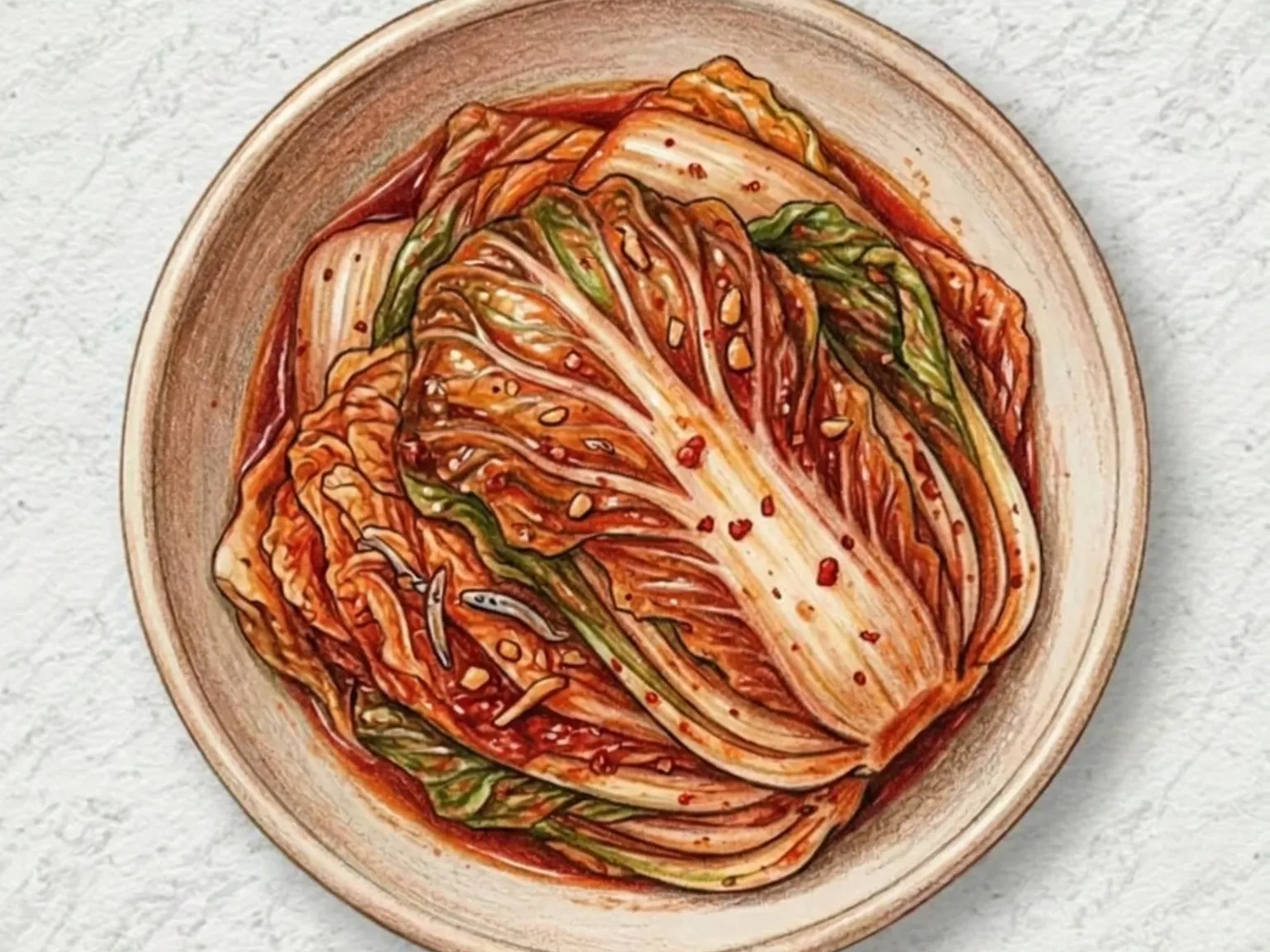
Korean Napa Cabbage Kimchi
Baechu kimchi is Korea's defining fermented food, made by salting napa cabbage and layering it with a paste of gochugaru, anchovy fish sauce, garlic, ginger, and glutinous rice paste. The cabbage is salted with coarse sea salt for six to eight hours until the stems become flexible but retain their crunch; under-salting leads to mushy kimchi, while over-salting masks the seasoning flavors. The glutinous rice paste serves a dual purpose: it acts as a glue that helps the seasoning adhere to each leaf, and it provides sugars that feed lactobacillus during fermentation. Julienned radish mixed into the filling adds textural contrast, and scallions contribute another layer of savory depth. After one day at room temperature to kick-start fermentation, the kimchi moves to the refrigerator where acidity develops slowly. At two to three weeks, the heat from gochugaru, the umami from fish sauce, and the tang from lactic acid reach their optimal balance.

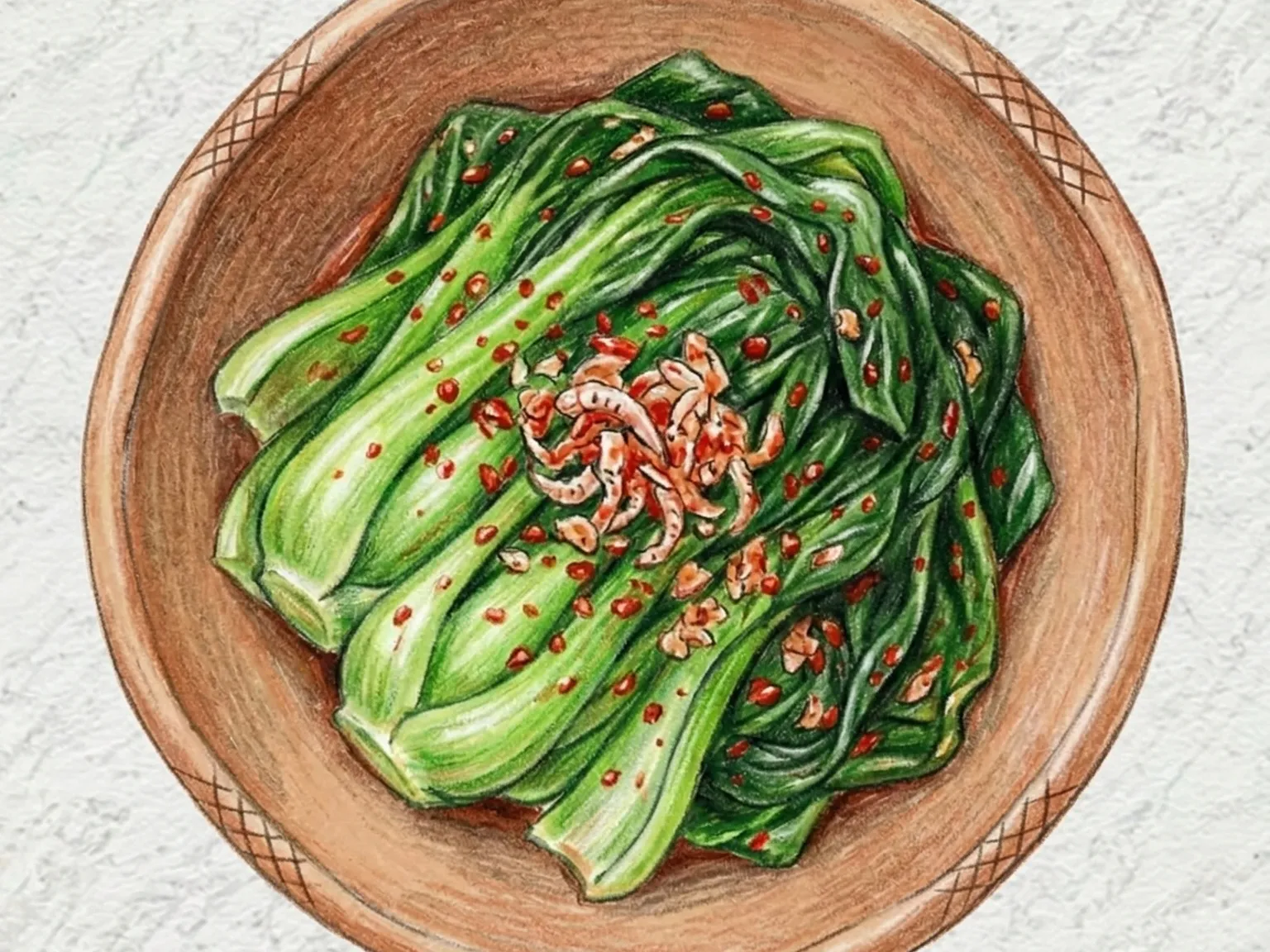
Korean Bok Choy Kimchi (Gochugaru Fermented Quick)
Cheonggyeongchae kimchi is a bok choy kimchi prepared by halving the heads lengthwise, salting them for twenty minutes, and coating each leaf layer with a paste of gochugaru, salted shrimp, anchovy fish sauce, and sweet rice paste. Keeping the salting time short preserves the stems' crisp snap, while the leaves soften just enough to hold the seasoning. Julienned scallions and carrot add color and textural variety, and adjusting the fish sauce quantity based on the salted shrimp's salinity keeps the overall salt level balanced. After four hours of room-temperature fermentation followed by refrigeration, this kimchi is ready within a day and offers a lighter, crunchier character than traditional napa cabbage kimchi.

Korean Restaurant-Style Kkakdugi
Sikdang-style kkakdugi is the cubed radish kimchi served free at virtually every Korean restaurant, standing alongside baechu-kimchi as a non-negotiable table banchan. Cutting the Korean radish into chunky 2 cm cubes ensures the interior stays crunchy even after salting and fermentation. Twenty minutes in coarse salt draws moisture, then the cubes are dressed with gochugaru, myeolchi-aekjeot (anchovy fish sauce), garlic, ginger, and sugar. The fish sauce provides the umami backbone that deepens during fermentation, while ginger suppresses off-flavors and sharpens the finish. One day at room temperature triggers lactic acid production - the signature tingle that signals active fermentation - followed by refrigeration where the flavor matures over two to three weeks. Winter radish carries more natural sugar, so the added sugar can be reduced; in summer, cutting the room-temperature rest to half a day prevents over-fermentation.

Korean Spicy Braised Tofu
Spicy dubu-jorim pan-sears firm tofu slabs cut 1.5 centimeters thick until golden on both sides, then braises them in a sauce of soy sauce, gochugaru, garlic, and sugar. Searing first firms the tofu so it holds its shape through the eight-minute simmer, during which onion and green onion cook alongside in the reducing liquid. The chili flakes deliver a direct, persistent heat that penetrates the tofu as the sauce thickens, balanced by the sugar's sweetness. A final circle of sesame oil ties the flavors together with a roasted, nutty aroma.