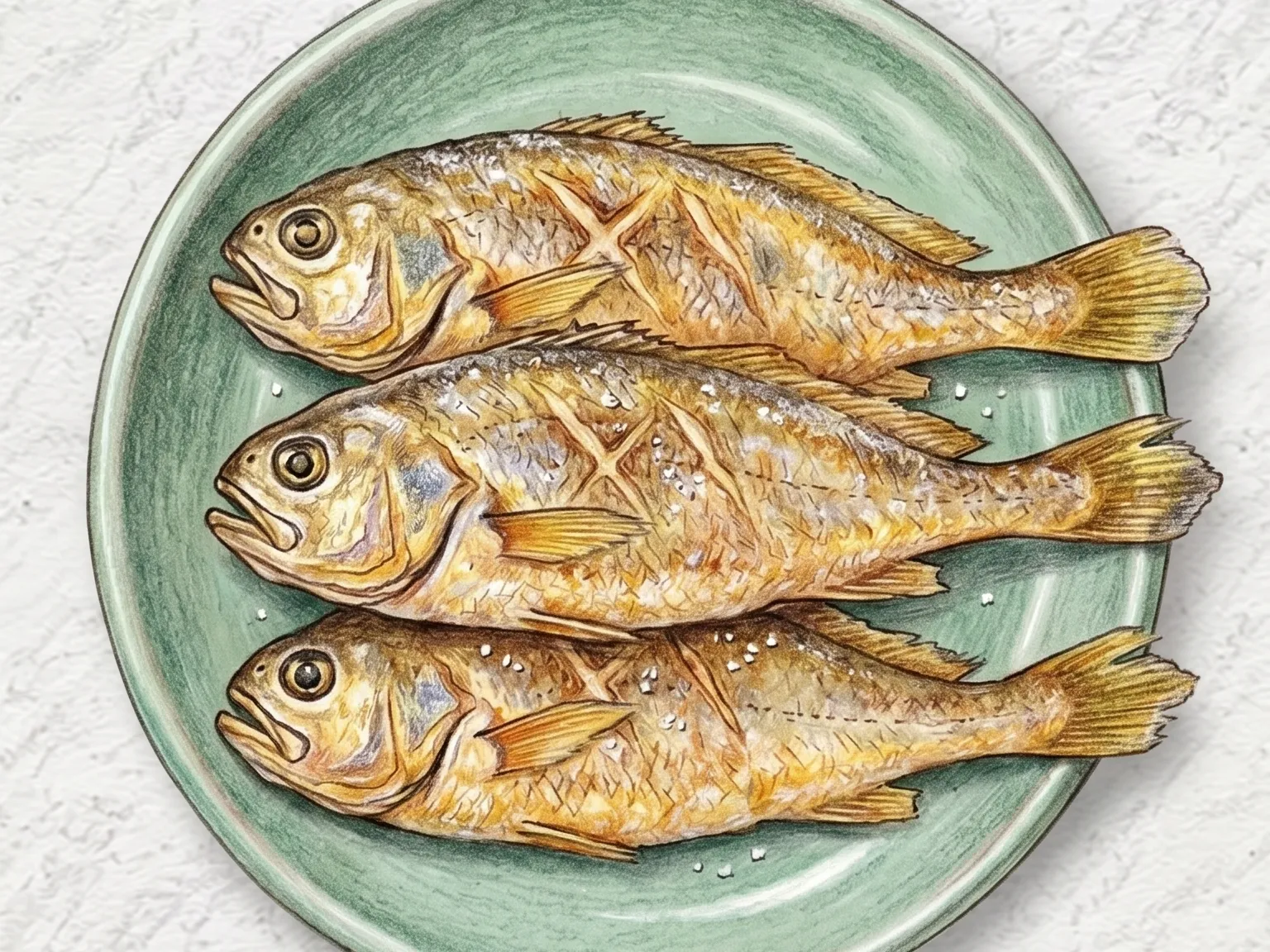
Korean Grilled Yellow Croaker
Yellow croaker is scaled and gutted, salted for ten minutes to draw out moisture and reduce odor, then lightly dusted with flour before pan-grilling on medium heat. The flour coating prevents the delicate skin from sticking and creates a thin crisp layer, while the mild white flesh retains its clean, subtle taste. Using two wide spatulas when flipping keeps the fish intact. Lemon juice squeezed over at serving adds a final bright accent.
Adjust Servings
Instructions
- 1
Scale 2 yellow croakers, remove innards, and rinse clean.
- 2
Sprinkle salt on both sides and rest 10 minutes to reduce fishiness.
- 3
Pat completely dry and dust lightly with flour.
- 4
Add 2 tbsp oil to a pan on medium heat and place the fish.
- 5
Cook one side 6-7 minutes until golden, carefully flip, and cook 5-6 more minutes.
- 6
Plate and squeeze lemon juice over the fish before serving.
As an Amazon Associate, we may earn from qualifying purchases.
Tips
Nutrition (per serving)
More Recipes

Korean Grilled Mackerel (Crispy Skin Salt-Grilled Blue Fish)
Godeungeo-gui is Korea's quintessential grilled mackerel, prepared by salting the fish for ten minutes to draw out moisture and reduce fishiness, patting the surface completely dry, then pan-frying or grilling. Cooking skin-side down first for five to six minutes renders the abundant subcutaneous fat and crisps the skin into a crackling shell, while flipping and cooking the flesh side for four to five more minutes keeps the interior moist and flaky. Mackerel's high omega-3 fat content transforms under heat into a deeply savory, naturally rich flavor that needs no marinade or seasoning beyond salt. A side of freshly grated daikon radish mixed with soy sauce provides a sharp, peppery contrast that cleanses the palate between bites of the oily fish.

Korean Grilled Spanish Mackerel
Samchi-gui is Korean grilled Spanish mackerel, a common home-style fish side dish where thick mackerel steaks are salted and peppered for ten minutes, dusted lightly with flour, and pan-fried in oil over medium heat for four minutes per side. Spanish mackerel belongs to the same family as regular mackerel but has milder odor and softer flesh, making simple salt seasoning sufficient. The thin flour coating serves two purposes: it seals in moisture during cooking and creates a crisp, golden exterior. Applying too much flour causes the fish to absorb excess oil and turn greasy, so shaking off the surplus through a sieve is an important step. A squeeze of lemon juice at the end binds with the fish oils and adds acidity that neutralizes any lingering fishy aftertaste, keeping the flavor clean when eaten over rice.

Korean Grilled Yellow Corvina (Gulbi)
Gulbi-gui is a Korean grilled dried yellow corvina, a traditional side dish made by soaking salt-preserved corvina in rice-rinse water for ten minutes to temper its salinity, patting it dry, scoring the skin, then pan-frying each side for four to five minutes until crisp. The drying process concentrates the fish's protein and umami so intensely that it needs almost no additional seasoning-just the residual salt in the flesh provides enough flavor to carry a full bowl of rice. A drizzle of sesame oil at the end coats the surface with a toasted nutty fragrance, and a scattering of chopped scallion and sesame seeds adds visual contrast along with a mild herbal note. Its compact, chewy texture and bold saltiness make it one of the most efficient banchan dishes, where a single small fish can anchor an entire meal.

Korean Grilled Atka Mackerel
Atka mackerel is seasoned with salt and pepper, wiped with diluted vinegar to tame fishiness, then pan-grilled until golden on both sides. The naturally high fat content renders during cooking, basting the flesh from within and producing a rich flavor without any added sauce. Thicker portions benefit from a brief lid-covered steam, and lemon wedges on the side provide a bright contrast.

Korean Braised Yellow Croaker
Jogi-jorim is a Korean braised yellow croaker simmered with radish and onion in a soy sauce and gochugaru seasoning. Yellow croaker has delicate flesh and mild flavor, making it well-suited for braising as the sauce penetrates the fish thoroughly. The radish absorbs the braising liquid and turns sweet-savory, while cheongyang chili adds a low, steady heat. It is a quintessential Korean rice-side dish - the sauce is so flavorful that diners inevitably mix it into their rice.

Korean Steamed Yellow Croaker
Jogi-jjim is Korean steamed yellow croaker cooked with a soy sauce, cooking wine, garlic, and ginger seasoning. The fish is scored on both sides so the sauce penetrates the flesh, then steamed in two stages - first with half the sauce, and again with the remaining sauce and sliced green onion. Cooking wine and ginger work together to eliminate fishiness, letting the croaker's naturally mild, clean flavor come forward. The delicate, flaky meat pulls away from the bone easily, making this a gentle, home-style banchan suited to everyday meals.