Korean Fermented Kale Kimchi
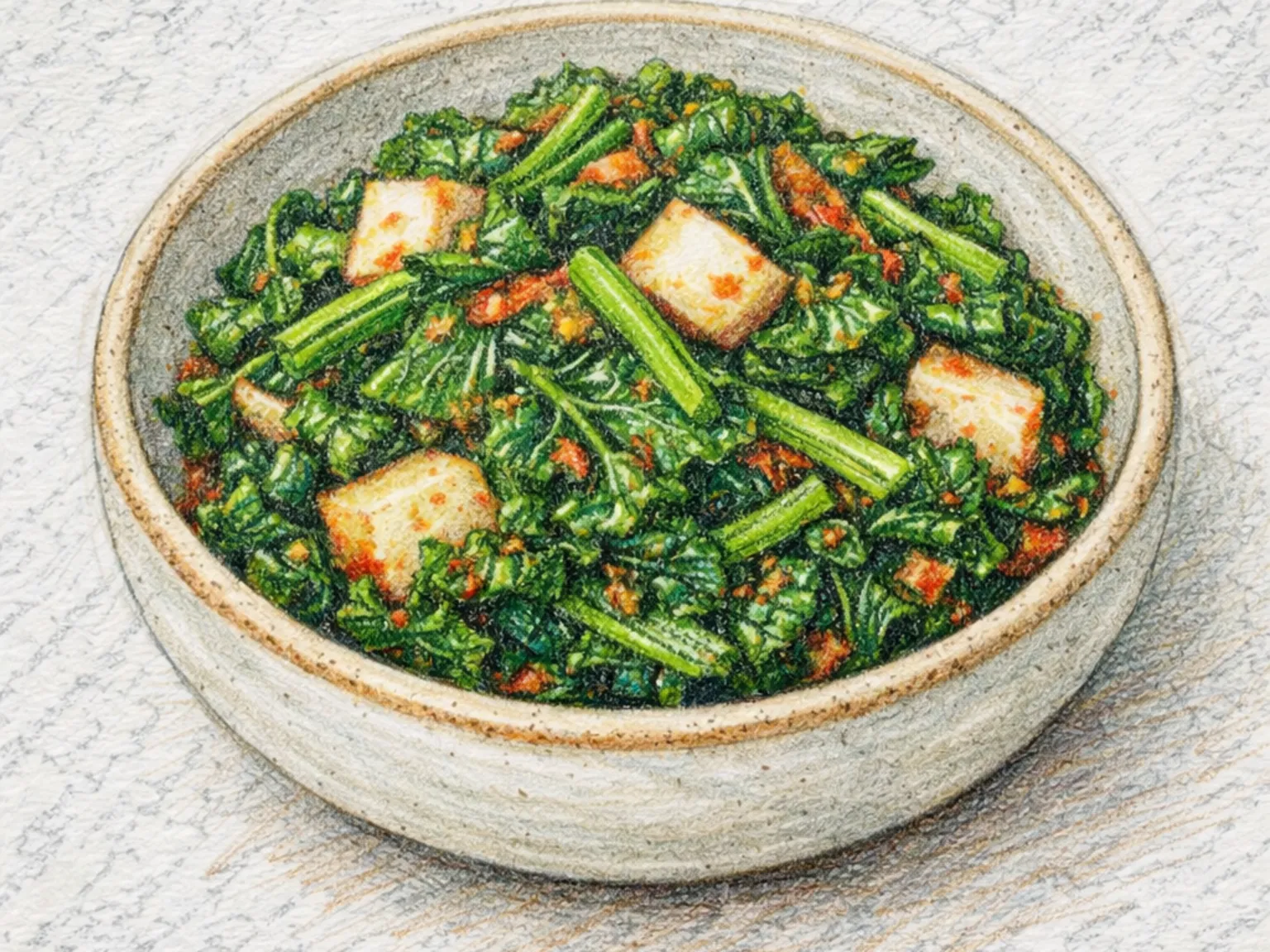
Kale kimchi is made by wilting kale leaves in coarse salt, then tossing them with julienned radish, scallions, gochugaru, soup soy sauce, and pear puree before fermenting. The kale's robust green flavor mellows during fermentation while its sturdy leaf structure maintains a satisfying chew, and the radish strips add a crisp counterpoint. Pear puree wraps around the chili heat with fruit sweetness, and soup soy sauce anchors the seasoning with a quiet umami depth. Made with the same technique as napa cabbage kimchi but carrying kale's distinctive slight bitterness, this version adds a layer of complexity and nutritional density to the traditional format.
Adjust Servings
Instructions
- 1
Tear kale into bite-size pieces, wash, and salt for 20 minutes.
- 2
Rinse lightly in cold water and drain thoroughly.
- 3
Julienne radish and cut scallions into 4 cm lengths, then combine in a bowl.
- 4
Mix chili flakes, soup soy sauce, garlic, ginger, and pear puree into a smooth paste.
- 5
Coat kale, radish, and scallions gently so leaves do not tear.
- 6
Pack firmly in a container, ferment 6 hours at room temperature, then chill for 2 days.
As an Amazon Associate, we may earn from qualifying purchases.
Tips
Nutrition (per serving)
More Recipes

Korean Radish Greens Kimchi
Mucheong kimchi is a Korean radish greens kimchi made by trimming tough parts, cutting greens into 5 cm pieces, brining in coarse salt, then dressing them in a paste of sweet rice flour, gochugaru, anchovy fish sauce, garlic, ginger, and onion. The fibrous stems absorb the seasoning deeply while retaining a substantial chew, and the rice paste acts as a binding agent that keeps the coating even throughout fermentation. Anchovy fish sauce contributes a deep seafood umami, and onion buffers the chili heat with natural sweetness. Beyond serving as a standalone side dish, this kimchi adds concentrated flavor when torn and stirred into siraegi soup or doenjang jjigae.

Korean Cubed Radish Kimchi
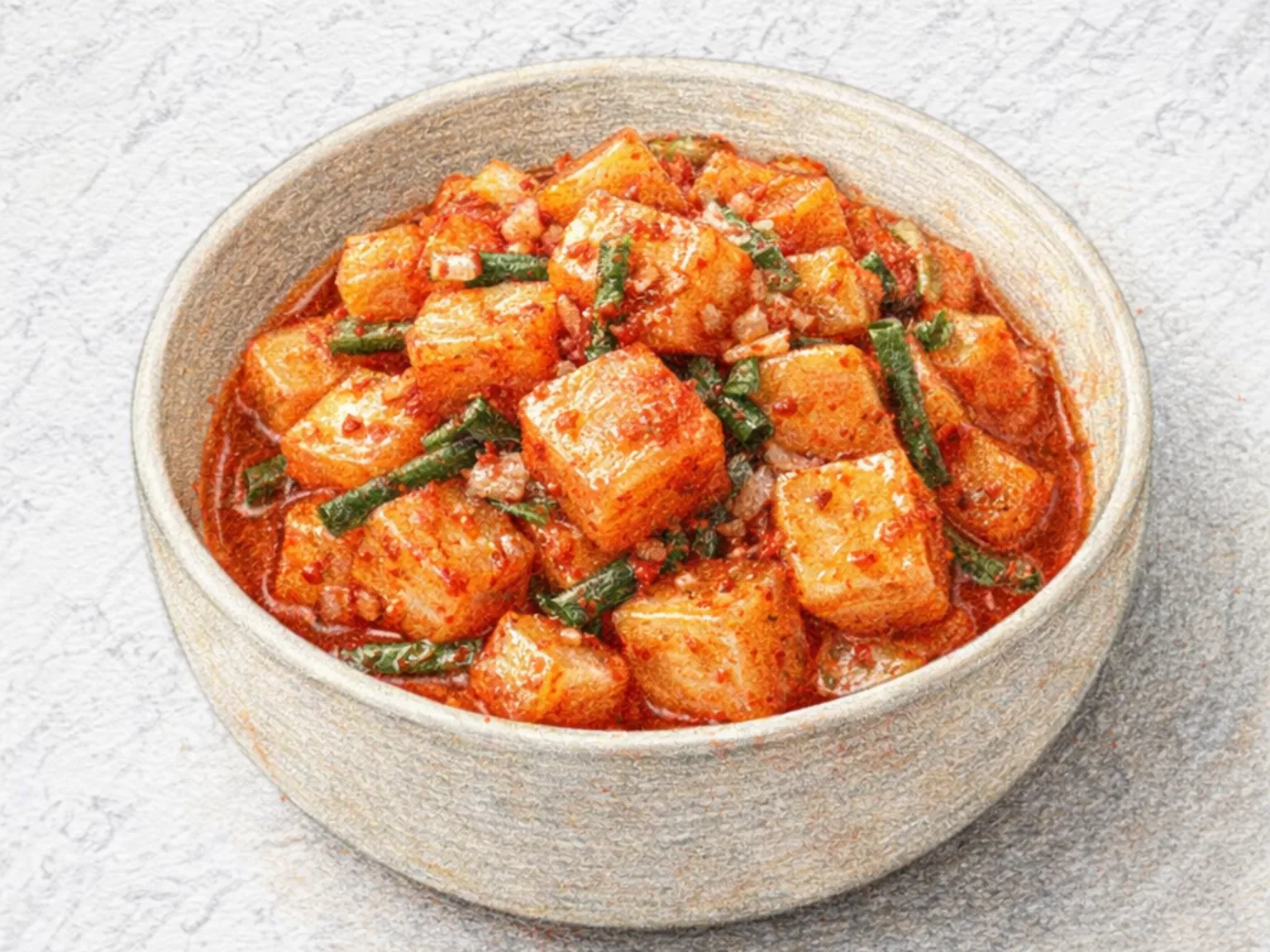
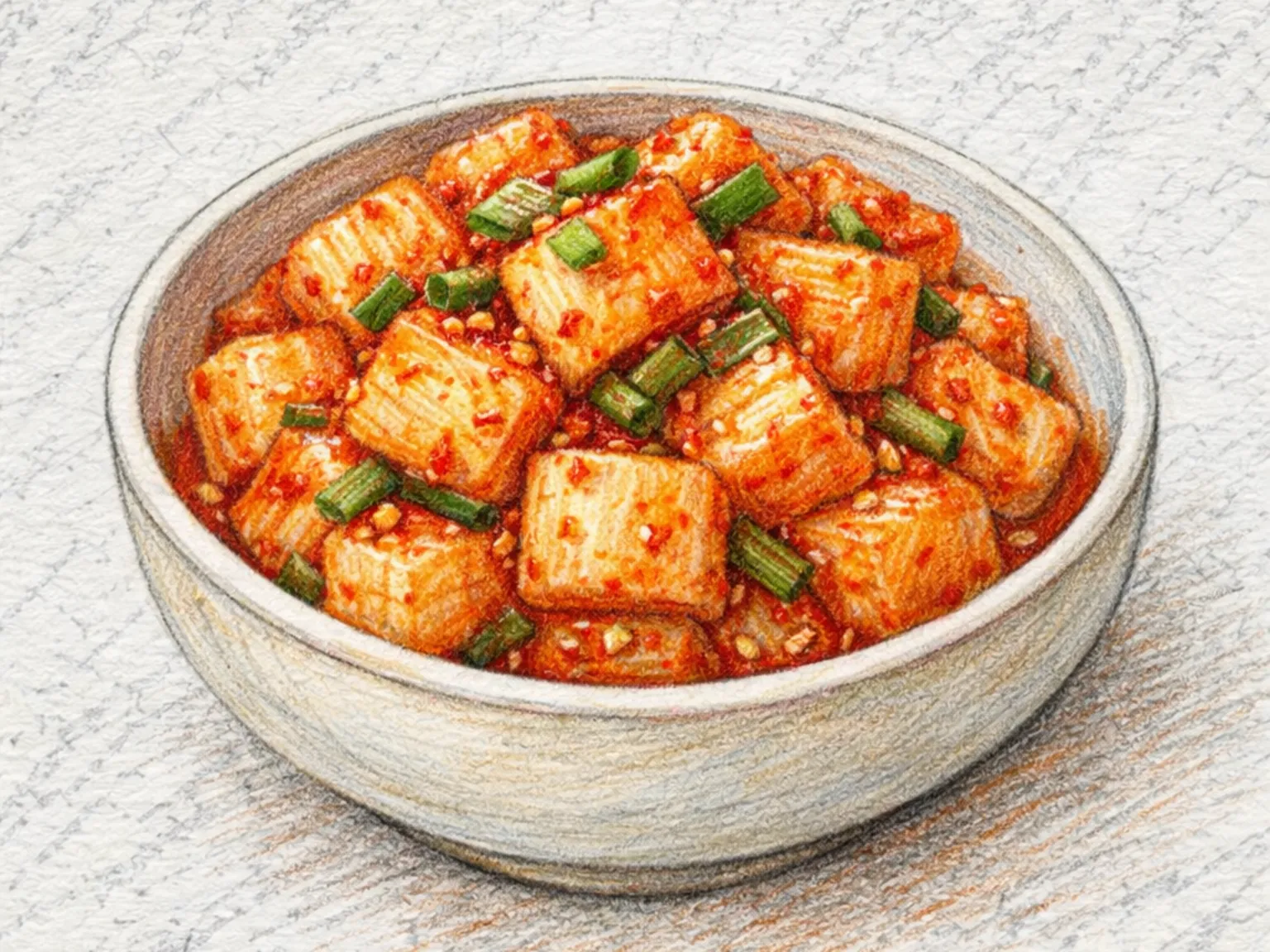
Kkakdugi is a staple Korean kimchi made from radish cut into 2 cm cubes, brined in coarse salt, then seasoned with gochugaru, salted shrimp, garlic, and ginger before fermentation. Salting draws out moisture from the cubes, creating a contrast between the damp interior and the snappy outer surface. Salted shrimp layers its briny seafood depth beneath the chili heat, and as fermentation progresses, the radish's natural sugars emerge to balance the spice with a clean sweetness. The accumulated brine at the bottom of the jar develops a refreshing tang that makes kkakdugi the essential companion to rich, milky soups like seolleongtang and gomtang.

Korean Lotus Root Kimchi (Crunchy Spiced Root Kimchi)
Yeongeun kimchi is a lotus root kimchi made by blanching sliced root in vinegar water to lock in crunch, then seasoning with chili flakes, minced garlic, anchovy fish sauce, and pear juice. The pear juice adds natural sweetness and moisture, helping the paste coat each slice evenly without drying out. The root's dense, crisp bite survives fermentation intact, releasing alternating waves of heat and umami with each chew. Scallion pieces mixed in lighten the intensity of the seasoning with their fresh, grassy note. One day of refrigeration brings the texture to its crunchiest point.

Korean Scallion Kimchi (Whole Stalk Anchovy Shrimp Paste)
Jjokpa kimchi is a traditional Korean scallion kimchi made by lightly brining whole scallions in coarse salt, then coating them from root to tip with a seasoning paste of anchovy fish sauce, salted shrimp, gochugaru, and sweet rice paste. The dual seafood condiments build a layered umami that the rice paste locks onto the scallion surface, preventing the flavor from diluting as moisture releases during fermentation. The white bulb sections stay crisp and absorb the chili heat, while the green tops wilt into a soft, pungent layer with a sharp allium bite. After six hours at room temperature followed by a day in the refrigerator, the seasoning stabilizes into a balanced, punchy side dish that works alongside steamed rice or grilled pork belly.

Korean Restaurant-Style Kkakdugi
Sikdang-style kkakdugi is the cubed radish kimchi served free at virtually every Korean restaurant, standing alongside baechu-kimchi as a non-negotiable table banchan. Cutting the Korean radish into chunky 2 cm cubes ensures the interior stays crunchy even after salting and fermentation. Twenty minutes in coarse salt draws moisture, then the cubes are dressed with gochugaru, myeolchi-aekjeot (anchovy fish sauce), garlic, ginger, and sugar. The fish sauce provides the umami backbone that deepens during fermentation, while ginger suppresses off-flavors and sharpens the finish. One day at room temperature triggers lactic acid production - the signature tingle that signals active fermentation - followed by refrigeration where the flavor matures over two to three weeks. Winter radish carries more natural sugar, so the added sugar can be reduced; in summer, cutting the room-temperature rest to half a day prevents over-fermentation.

Korean Stir-Fried Leafy Greens
Baby bok choy stir-fried with garlic - five minutes from board to table. Removing all surface water before the greens hit the pan is essential; residual moisture turns stir-frying into steaming. Garlic sautés low for twenty seconds, then greens go in over high heat. Soup soy sauce and salt season without adding liquid, and sesame oil off-heat gives a glossy finish. This mild, clean-tasting side works alongside virtually any Korean main course.