Kimchi Burrata Salad
Quick answer
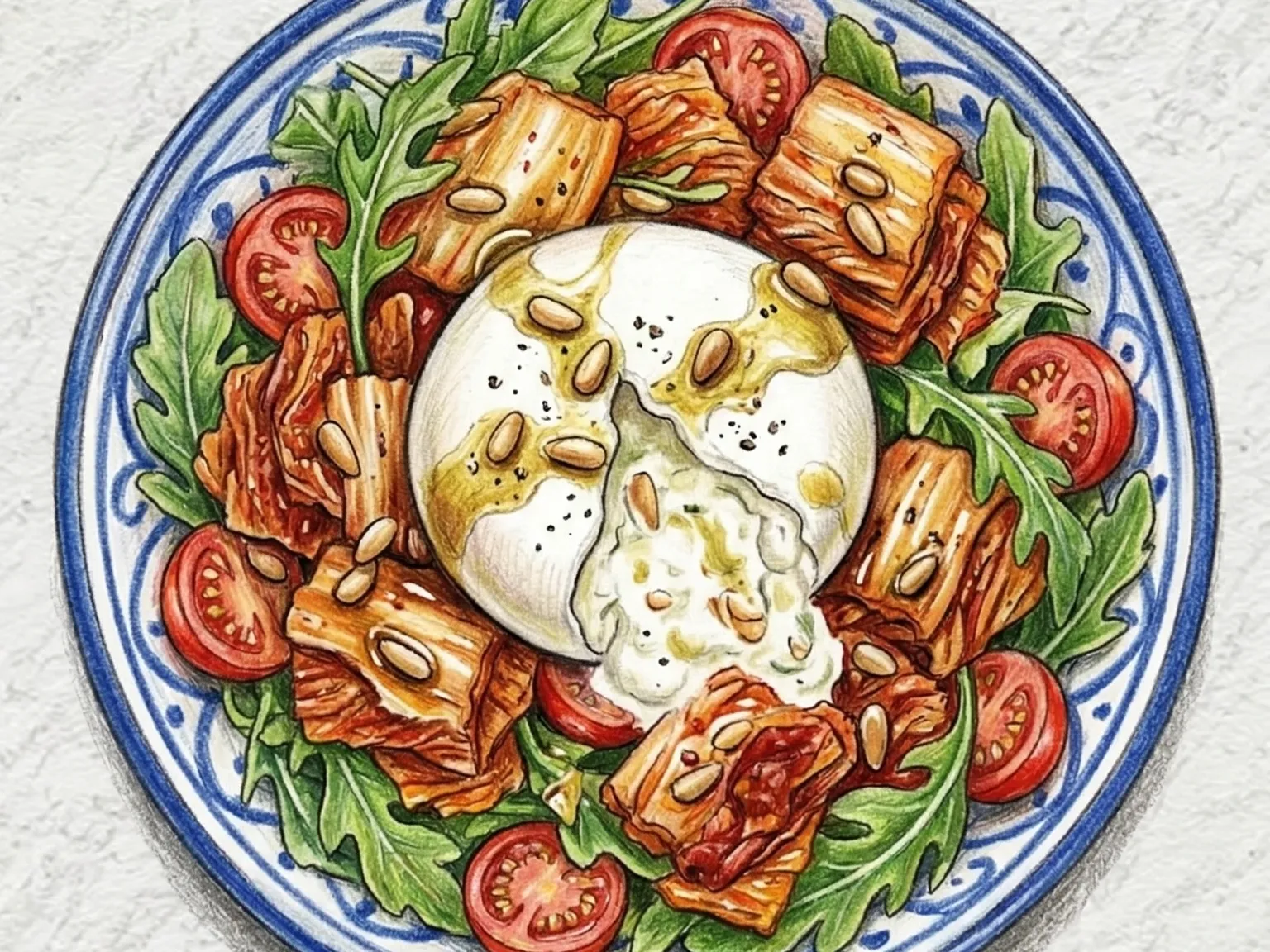
Aged napa kimchi brings fermented tang and concentrated umami that meets the mild, milky richness of fresh burrata in a pairing that achieves harmony rather than conflict.
What makes this special
- Kimchi Burrata Salad meets fermented napa cabbage tang with mild, milky stracciatella cheese.
- Tearing burrata by hand lets stracciatella mingle with kimchi brine
- Perilla oil and olive oil together build layered nutty depth
Key ingredients
Core cooking flow
- 1 Take the 200 g burrata out of the refrigerator 10 minutes before assembling.
- 2 Shake off heavy seasoning from the 120 g ripe napa kimchi, then cut it into 3 cm pieces.
- 3 Halve the 120 g cherry tomatoes so their juice can season the plate.
Aged napa kimchi brings fermented tang and concentrated umami that meets the mild, milky richness of fresh burrata in a pairing that achieves harmony rather than conflict. Peppery arugula adds a bitter counterpoint that lifts the overall weight of the dish, and halved cherry tomatoes scatter bright fruit acidity across the plate. The dressing blends perilla oil with olive oil, combining the nutty depth of Korean cuisine with the fruity character of Mediterranean cooking in a single drizzle. Pine nuts add a buttery, creamy crunch between bites that reinforces the richness of the cheese. The defining moment of this salad comes at the table, when the burrata is torn open with both hands and the soft stracciatella center spills into the surrounding ingredients. The creamy interior of the cheese mixes into the kimchi brine and perilla oil dressing, and that combination is what makes this salad more than a simple fusion exercise.
Instructions
Read the steps as a cooking flow: prep, heat, seasoning, doneness control, and finish.
- 1Finish
Take the 200 g burrata out of the refrigerator 10 minutes before assembling.
Keep it covered on a plate so it loses its chill slightly, but do not leave it out so long that the outside starts to weep.
- 2Season
Shake off heavy seasoning from the 120 g ripe napa kimchi, then cut it into 3 cm pieces.
Gently squeeze out excess brine so the salad stays glossy and seasoned, not watery or soggy.
- 3Finish
Halve the 120 g cherry tomatoes so their juice can season the plate.
Slice the 40 g red onion very thinly, and make sure the 70 g arugula is dry so the leaves do not collapse under the dressing.
- 4Season
In a small bowl, whisk 1 tablespoon each perilla oil, rice vinegar, and olive oil with 0.5 teaspoon gochugaru.
If the kimchi tastes sharply sour, add just a pinch of sugar to round out the dressing.
- 5Finish
Spread the arugula across a wide serving plate first, then scatter the kimchi, tomatoes, and red onion evenly over it.
Avoid piling the kimchi in one spot, or that bite will taste too salty and sharp.
- 6Season
Place the burrata in the center and drizzle the dressing around and over the salad.
Sprinkle with 15 g pine nuts, then tear the cheese open just before serving so the creamy center runs into the kimchi juices.
After the steps
Pick a recipe that fits this dish.
Continue with shared ingredients, meal pairings, or a similar method.
Recipes That Go Well With This
More Salads →Based on shared ingredients and meal pairing
Korean Melon Cucumber Perilla Salad
Korean melon, cucumber, and perilla seed salad uses chamae and cucumber as the main ingredients of a refreshing summer side dish. Chamae is cut into half-moons to expose the pale, sweet flesh, and cucumber is sliced on the diagonal to maximize surface area for the dressing to cling to. Red onion goes into cold water for five minutes before being added to the bowl, which draws out the sharpness while leaving the crunch. Perilla leaves are stacked, rolled tightly, and chiffonaded so their intense fragrance distributes evenly rather than concentrating in one spot. The dressing is ground perilla seed, lemon juice, olive oil, and honey. Adding the ground perilla seed just before serving preserves its toasted, nutty aroma, which fades quickly once it comes into contact with wet ingredients. After ten minutes in the refrigerator, the natural juice released from the chamae blends with the dressing into a light, pooled sauce at the bottom of the bowl. Lemon acidity and the nuttiness of perilla seed draw out the melon's clean sweetness without masking it. The salad works as a standalone side or alongside grilled meat to cut through the fat.
Kimchi Tofu Caesar Salad
Sautéing the kimchi drives off moisture and concentrates its umami into an intense, savory punch that replaces anchovies in a traditional Caesar. Pan-browned tofu cubes develop a crisp shell around their soft interior, standing in for crouton-like protein. The dressing mixes mayonnaise with plain yogurt for a lighter body than classic Caesar, sharpened with lemon juice and garlic. Grated parmesan adds the expected salty depth, and crisp romaine provides the essential crunch that holds the heavy flavors in check. Homemade bread croutons round out the textural contrast.
Caesar Salad
Caesar salad is built on romaine lettuce torn into rough, generous pieces and tossed in a dressing made from mayonnaise, lemon juice, garlic, and anchovy. The anchovy does not taste fishy in the finished dressing; it dissolves into the fat of the mayonnaise and functions as a deep umami foundation that keeps the salad interesting beyond its creamy surface. Lemon juice cuts through the richness of the mayo base, so the dressing coats the lettuce heavily without feeling cloying. Croutons are cubed bread toasted in olive oil until the outside turns crisp and golden but the inside stays slightly soft and chewy, giving them enough structure to absorb dressing without going immediately soggy. Wide, thin shavings of Parmesan add a dry, salty intensity that contrasts with the watery crunch of the romaine. With a short ingredient list, the quality of the dressing balance and the texture of the croutons determine the final outcome.
Pollock Roe Potato Crisp Salad
Potato slices are baked or pan-fried until golden and crisp, then topped with briny salted pollock roe for salt and umami in each bite. Greek yogurt mixed with mayonnaise creates a creamy base that softens the roe's intense seasoning. Romaine and cucumber provide fresh crunch contrasting with the crispy potato and popping roe granules. Lemon juice cuts through the richness, and shredded roasted seaweed deepens the seafood aroma - making this as enjoyable as a drinking snack as it is a side dish.
Serve with this
Kongguksu-Style Cold Linguine
Kongguksu-style cold linguine reinterprets Korea's chilled soy noodle soup using Italian linguine in place of traditional wheat noodles. Unsweetened soy milk is blended with toasted sesame seeds and peanut butter into a thick, nutty cold broth poured directly over the pasta at serving. The linguine is cooked al dente and immediately shocked in ice water to firm up the texture and chill it completely before the broth goes on. Julienned cucumber and halved cherry tomatoes scatter on top for fresh crunch and color. Salt and sugar are adjusted at the end to balance the broth's natural bean flavor against the richness from the peanut butter. The full preparation takes about ten minutes, with stovetop time limited strictly to boiling the pasta, which makes it one of the more practical cold dishes to assemble in summer heat. Adding more peanut butter thickens the broth further, while extra sesame seeds push the nuttiness higher.
Cantonese Steamed Fish
Cantonese steamed fish - ching jing yu - is the clearest expression of the Cantonese philosophy of letting premium ingredients speak for themselves with minimal interference. The technique requires the freshest possible whole fish - sea bass, grouper, or pomfret are the standard choices - because steaming conceals nothing. Any fish that is even slightly past its peak will betray itself the moment it comes off the heat. The fish is scored on both sides to allow even heat penetration, placed on a plate with thin ginger slices tucked underneath and inside the cavity to neutralize any fishiness, then steamed over vigorously boiling water for exactly eight to ten minutes depending on thickness. Even one minute of overcooking transforms the silky, translucent flesh into something dry and dull - timing is the entire technique. The moment the fish leaves the steamer, all accumulated liquid on the plate must be poured off immediately, because that liquid carries concentrated fishiness that would spoil the clean finish. A generous pile of julienned scallion and fresh ginger is arranged on top, then a ladle of oil heated until just beginning to smoke is poured directly over the aromatics. The sizzling releases their fragrance in a single burst that infuses the fish. Seasoned soy sauce and a few drops of sesame oil complete the dish. In Cantonese banquet culture, the steamed fish course is typically the most expensive item on the table, with guests selecting a live fish directly from the restaurant tank.
Korean Grilled Beef Brisket
Chadolbaegi-gui is Korean grilled brisket cut paper-thin across the grain and seared over maximum heat for thirty seconds to a minute per side. The defining characteristic of the cut is its alternating bands of fat and lean meat: when the fat hits the grill, it renders almost instantly, producing a savory richness and charred, slightly crispy edges at the same time. No marinade is used. The grilled slices go straight into a dipping sauce of sesame oil and coarse salt, or onto a lettuce leaf spread with doenjang ssamjang and folded into a wrap. The window between perfectly cooked and burnt is extremely narrow with this cut, so the meat requires constant attention-keeping the tongs moving and distributing heat evenly across the grate is the most reliable way to cook each slice without scorching.
Similar recipes
Chamnamul Pear Tofu Salad
Chamnamul pear tofu salad pan-sears firm tofu cubes for 6-8 minutes until the exterior turns golden and crisp while the inside stays soft. Chamnamul is cut into 5 cm lengths to preserve its fragrant mountain-herb character, and Korean pear is julienned thin so its clean juice sweetens each bite. A dressing of perilla oil, lemon juice, and soup soy sauce delivers nuttiness and umami in a single drizzle, and halved cherry tomatoes contribute a pop of acidity. Slicing the pear just before assembly minimizes browning, and toasted sesame seeds scattered on top add a final layer of warm, nutty aroma.
Kimchi Bacon Quiche (Fermented Kimchi Egg Custard Pie)
This fusion quiche traps the sharp tang of well-fermented kimchi and the smoky depth of bacon inside a silky egg custard. Squeezing the kimchi dry before adding it concentrates its fermented intensity while preventing a soggy filling. Bacon and onion are sauteed until their moisture evaporates, then combined with a custard of eggs, heavy cream, and milk. When sliced, each wedge reveals a mosaic of red kimchi shreds and bacon bits suspended in the golden custard. Melted mozzarella weaves through the filling, binding every layer, while the buttery pie crust provides a crisp, flaky foundation. A two-stage bake, starting at 190 degrees Celsius and dropping to 175, browns the surface while keeping the interior creamy rather than rubbery. Black pepper is the only seasoning needed, since the bacon and kimchi supply all the salt and heat. Served warm from the oven, a single slice makes a complete brunch plate.
Kimchi Tofu Alfredo Farfalle (Creamy Kimchi Bow-Tie Pasta)
Kimchi tofu Alfredo farfalle is a fusion pasta that counters the richness of a cream-and-Parmesan Alfredo sauce with the lactic acidity of well-fermented kimchi. Garlic bloomed in butter forms the aromatic base, then cream, milk, and Parmigiano are combined into the classic Alfredo sauce, after which chopped kimchi is folded in to introduce fermented tang and a layer of umami that a standard Alfredo lacks. Firm tofu cut into cubes and pan-fried until each side is golden provides a mild, neutral protein element with direct textural contrast against the smooth sauce. Farfalle's pinched center holds pockets of sauce against each piece of pasta, delivering a consistent hit of creaminess in every bite, and freshly ground black pepper draws a sharp line through the richness at the finish. The entire dish moves from pan to plate in about 15 minutes.