Korean Kimchi Acorn Jelly Rice Bowl
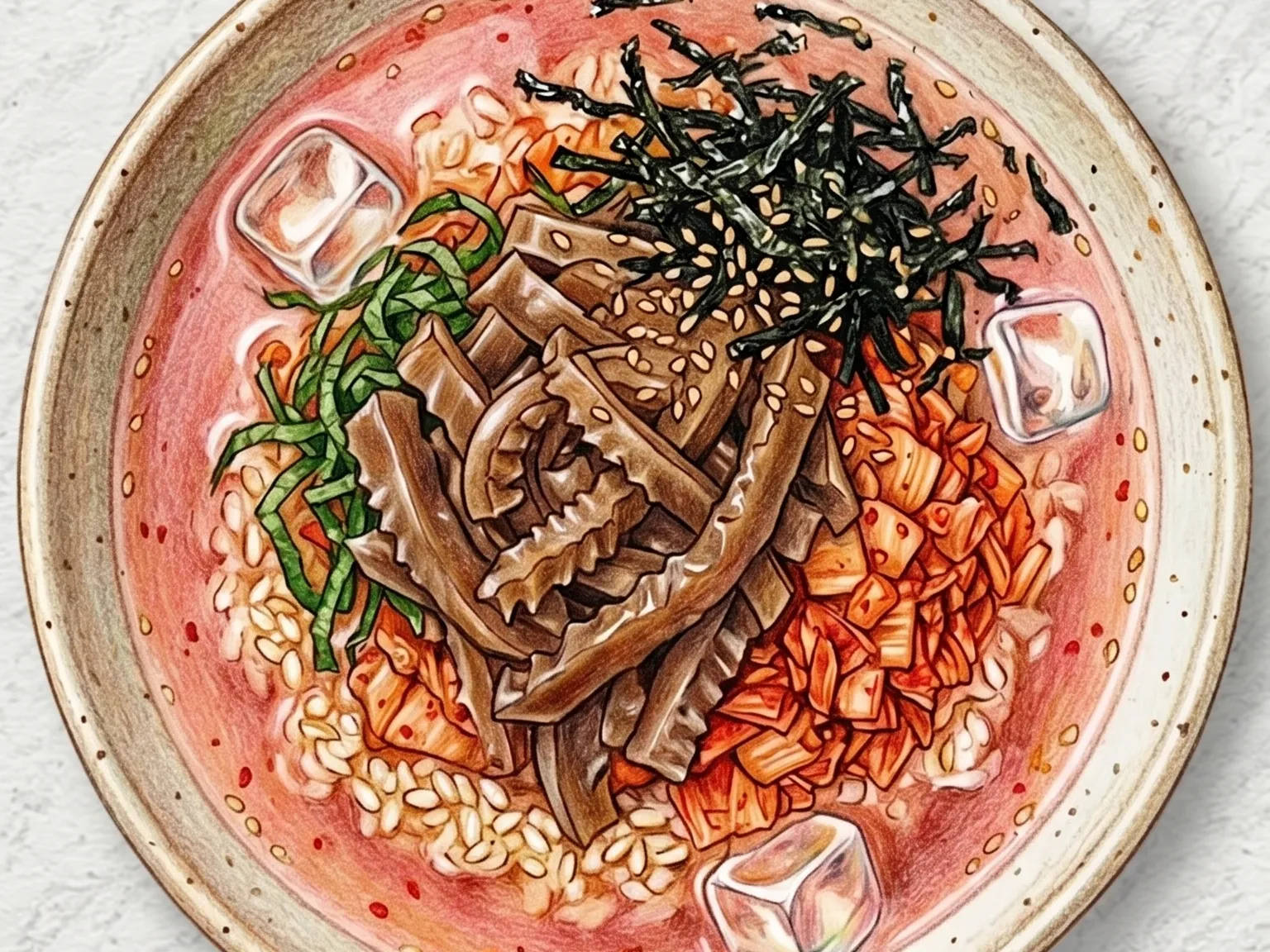
Acorn jelly (dotorimuk) is sliced into strips, placed over rice, and drenched in a chilled broth made from kimchi juice, cold water, and a touch of sugar. The jelly's slippery, bouncy texture contrasts with the crunch of chopped kimchi, while the tangy broth refreshes the palate with every spoonful. A light toss of sesame oil on the rice provides a nutty base, and roasted seaweed flakes add an ocean-like finish. Adding ice cubes makes it even more bracing - a distinctly Korean way to beat summer heat with a cold, brothy rice bowl.
Adjust Servings
Instructions
- 1
Slice acorn jelly and chop kimchi.
- 2
Mix kimchi juice, cold water, and sugar for chilled broth.
- 3
Place rice in bowls and toss lightly with sesame oil.
- 4
Top rice with acorn jelly and kimchi.
- 5
Pour in chilled kimchi broth and garnish with seaweed flakes.
- 6
Mix and serve immediately while cold.
As an Amazon Associate, we may earn from qualifying purchases.
Tips
Nutrition (per serving)
More Recipes

Korean Acorn Jelly Cold Broth Bowl
Dotori-muksabal is a chilled Korean acorn jelly broth bowl where sliced acorn jelly sits in a cold, tangy-sweet seasoned broth. Acorn jelly has a distinctly earthy, mildly astringent aftertaste and a firm, bouncy texture that becomes more pronounced when served cold. The broth - a mixture of chilled stock seasoned with soy sauce, vinegar, and sugar - must be thoroughly cold before pouring to keep the jelly's cool snap intact. Chopped kimchi adds fermented heat and julienned cucumber contributes crunch, both compensating for the jelly's neutral flavor with sharp contrasts. The dish is notably low in calories and high in fiber.

Korean Buckwheat Jelly Cold Broth Bowl
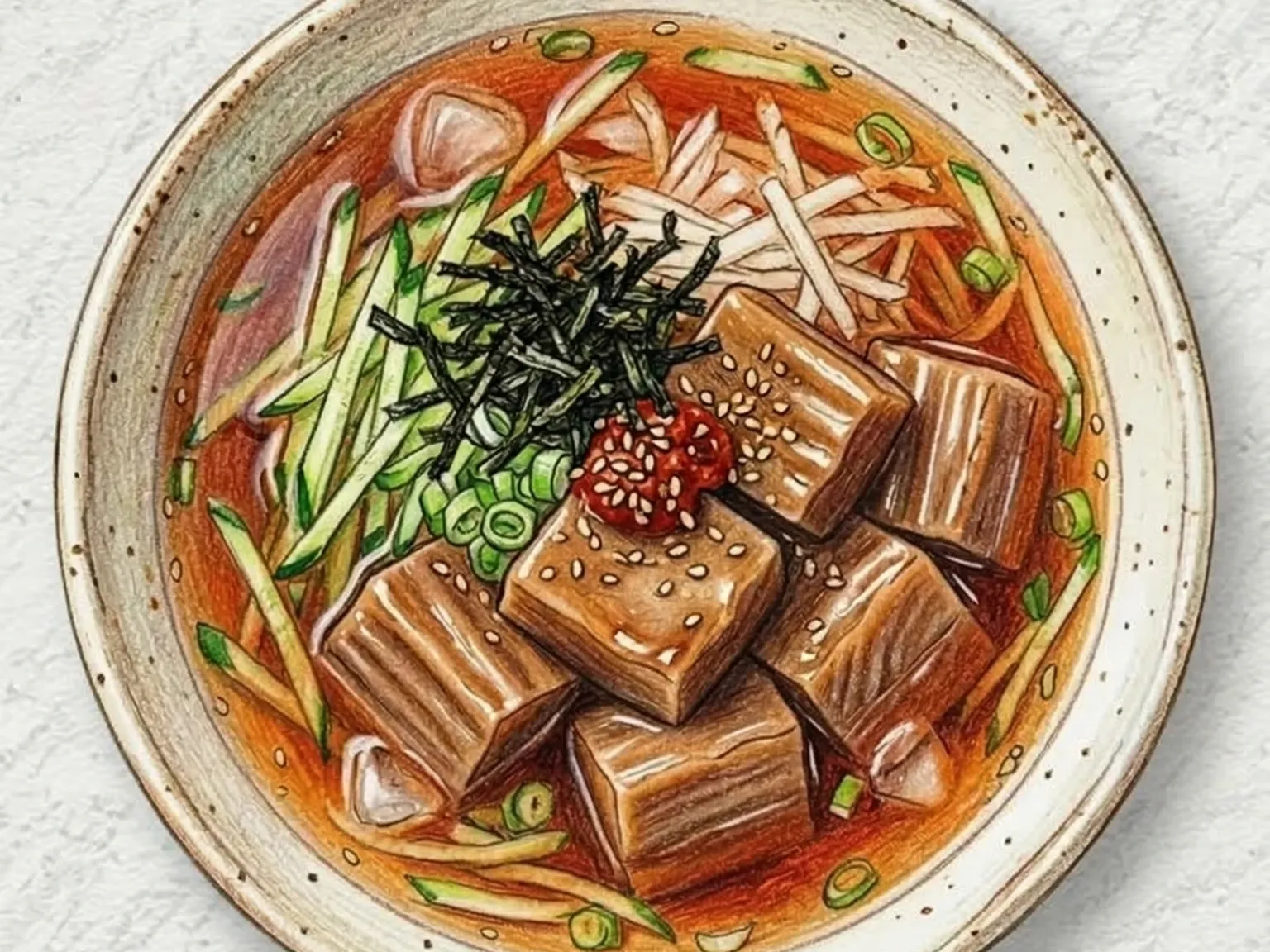
Memil-muksabal is a chilled Korean dish in which firm blocks of buckwheat jelly sit submerged in cold, seasoned broth. The broth is typically made from anchovy or beef stock, cooled to refrigerator temperature, and sharpened with soy sauce, rice vinegar, and a touch of sugar that balances the acidity. Buckwheat jelly has a neutral, slightly earthy flavor and a slippery, springy texture that absorbs the surrounding seasonings with each bite. Julienned cucumber adds crunch, crushed roasted sesame seeds contribute nuttiness, and shredded dried seaweed brings a gentle oceanic accent. The dish is almost calorie-free compared to noodle soups and digests easily, which is why it appears on Korean tables most frequently during the hottest weeks of summer. Making the jelly from scratch involves boiling buckwheat starch until thick and letting it set, but store-bought blocks simplify the process to little more than slicing and assembling. The cold broth hits the palate first, followed by the yielding texture of the jelly - a sequence that feels instantly cooling.

Korean Young Radish Barley Bibimbap
Barley-mixed rice has a hearty, popping texture and a nutty flavor that pairs naturally with the crisp, tart bite of freshly made young radish kimchi. The crunchy stems of the kimchi contrast with the chewy barley grains, and stirring in gochujang ties the tangy, spicy, and sweet elements together into a cohesive bowl. A spoonful of sesame oil folded in at the end adds a roasted fragrance that lifts the overall depth of flavor. This bibimbap is especially refreshing in the summer months as a cooling, appetite-stimulating meal.

Korean Young Radish Water Kimchi
Yeolmu mul-kimchi is a water kimchi in which salted young radish greens are submerged in a clear broth infused with garlic, ginger, scallions, and sliced radish. The garlic and ginger are squeezed through cloth rather than added directly, producing a transparent, clean-tasting liquid. Plum syrup contributes a natural sweetness and acidity that develops further during fermentation. After eight hours at room temperature and twelve more in the refrigerator, the brine becomes effervescent and refreshingly tart, making it ideal to serve cold alongside bibim guksu or steamed rice in summer. Using filtered cold water ensures the cleanest possible flavor.

Korean Bossam Kimchi Rice Bowl
Bossam kimchi deopbap is a Korean rice bowl that repurposes leftover bossam - tender boiled pork and well-fermented bossam kimchi - by stir-frying them with onion in a sweet-spicy gochujang sauce and serving it all over hot rice. The tangy crunch of the kimchi plays off the moist, savory pork, while the sauce ties every element together with warmth and depth. It is a practical and satisfying meal that needs no side dishes, making it an efficient way to transform bossam leftovers into an entirely new dish. The contrast between the soft, slow-cooked pork and the sharp acidity of fermented kimchi keeps each bite lively, and the gochujang glaze adds just enough heat to make you want more.

Korean Beef Brisket Rice Bowl
Chadol deopbap is a Korean rice bowl featuring paper-thin beef brisket slices seared in a hot pan until the edges turn crisp, then drizzled with a soy-based sauce and served over steamed rice. The marbled fat in the brisket renders out during cooking, creating a rich, buttery flavor that pairs naturally with the salty-sweet soy glaze. Garlic and sesame oil add aromatic depth without overcomplicating the dish. A raw or soft-cooked egg yolk on top is a common addition, breaking into a golden sauce that coats the rice when mixed. Despite its simplicity - just a handful of pantry staples and a few minutes at the stove - it delivers a deeply satisfying meal that works well for both lunch and dinner.