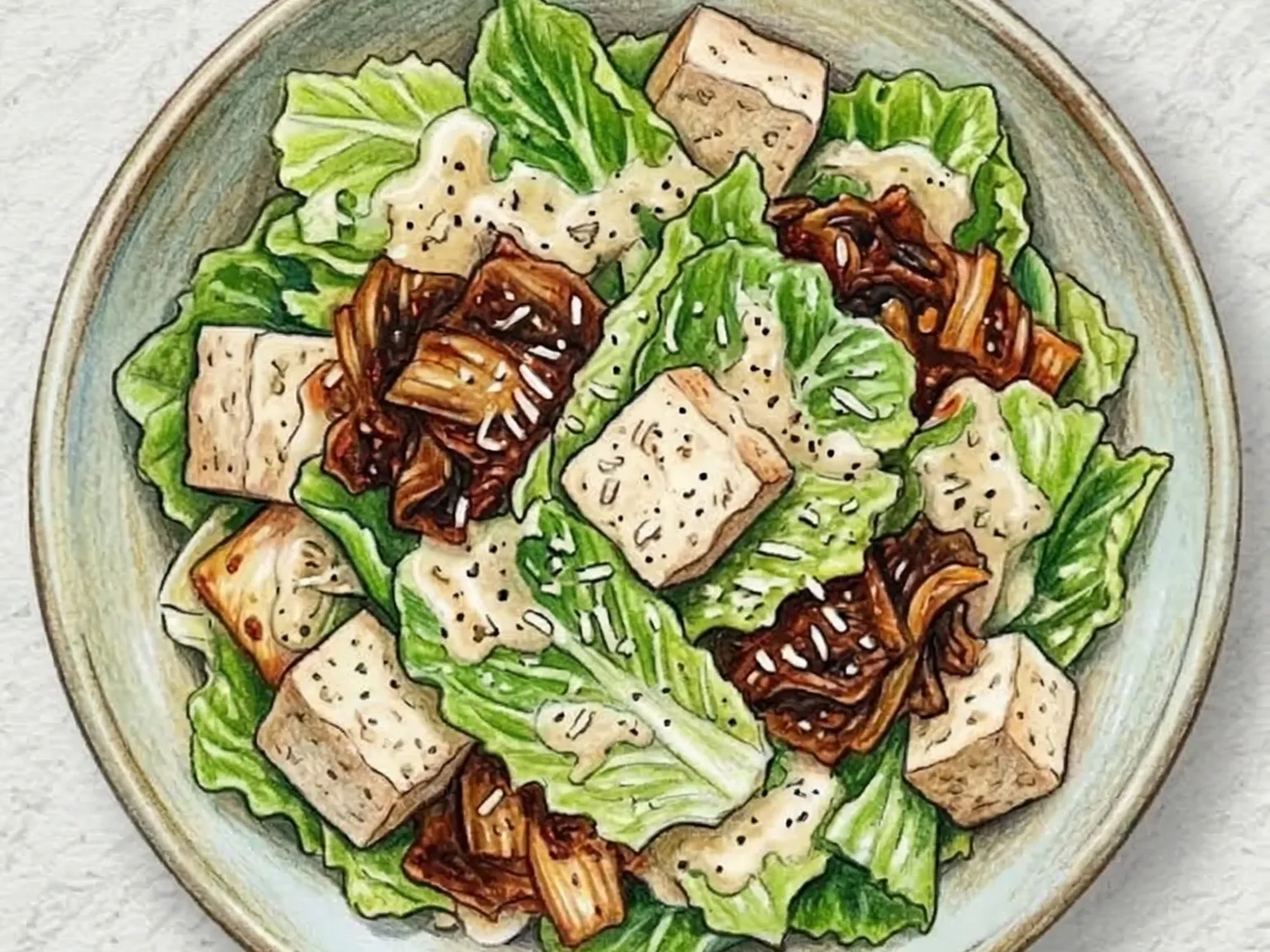
Kimchi Tofu Caesar Salad
Salads Medium

Kimchi Tofu Caesar Salad

Quick answer

Sautéing the kimchi drives off moisture and concentrates its umami into an intense, savory punch that replaces anchovies in a traditional Caesar.

What makes this special

  • Stir-fried kimchi adds a concentrated umami punch to the greens in Kimchi Tofu Caesar Salad.
  • Stir-frying kimchi 2 minutes drives off moisture and concentrates umami
  • Yogurt-lightened caesar dressing keeps richness without the weight
Total time
26 min
Level
Medium
Servings
2 servings
Ingredients
10
Calories
365 kcal
Protein
17 g

Key ingredients

romaine lettucefirm tofuaged kimchiparmesan cheesebread

Core cooking flow

  1. 1 Wash 180 g romaine, dry it thoroughly, and tear it into bite-size pieces.
  2. 2 Chop 90 g aged kimchi into small pieces and cook it in a dry pan over medium heat for about 2 minutes.
  3. 3 Cut 1 slice of bread into 1.5 cm cubes, add a little olive oil, and toast ov...

Sautéing the kimchi drives off moisture and concentrates its umami into an intense, savory punch that replaces anchovies in a traditional Caesar. Pan-browned tofu cubes develop a crisp shell around their soft interior, standing in for crouton-like protein. The dressing mixes mayonnaise with plain yogurt for a lighter body than classic Caesar, sharpened with lemon juice and garlic. Grated parmesan adds the expected salty depth, and crisp romaine provides the essential crunch that holds the heavy flavors in check. Homemade bread croutons round out the textural contrast.

Prep 18min Cook 8min 2 servings

Instructions

Read the steps as a cooking flow: prep, heat, seasoning, doneness control, and finish.

6 steps
  1. 1
    Season

    Wash 180 g romaine, dry it thoroughly, and tear it into bite-size pieces.

    Cut 220 g firm tofu into 2 cm cubes, sprinkle lightly with salt, and press with paper towels so it browns instead of steaming.

  2. 2
    Finish

    Chop 90 g aged kimchi into small pieces and cook it in a dry pan over medium heat for about 2 minutes.

    When the juices have mostly evaporated and the aroma deepens, spread it on a plate to cool.

  3. 3
    Control

    Cut 1 slice of bread into 1.5 cm cubes, add a little olive oil, and toast over medium heat for about 3 minutes.

    Remove when the edges are golden and firm, then cool so the croutons stay crisp.

  4. 4
    Control

    Add the remaining olive oil to the same pan and arrange the tofu in one layer over medium heat for about 3 minutes.

    Do not stir constantly. Turn each piece only when a side is golden to prevent breaking.

  5. 5
    Prep

    In a bowl, mix 2 tbsp mayonnaise, 2 tbsp plain yogurt, 1 tbsp lemon juice, and 0.5 tsp minced garlic until smooth.

    Stir in half of the 25 g parmesan. If the dressing feels too thick, loosen it with a little more yogurt.

  6. 6
    Finish

    Just before serving, toss the romaine lightly with the dressing, coating the leaves without weighing them down.

    Top with tofu, cooled kimchi, and croutons, then finish with the remaining parmesan and serve immediately while the textures are crisp.

After the steps

Pick a recipe that fits this dish.

Continue with shared ingredients, meal pairings, or a similar method.

Recipes That Go Well With This

More Salads →

Based on shared ingredients and meal pairing

Caesar Salad
Shared ingredient: parmesan Western

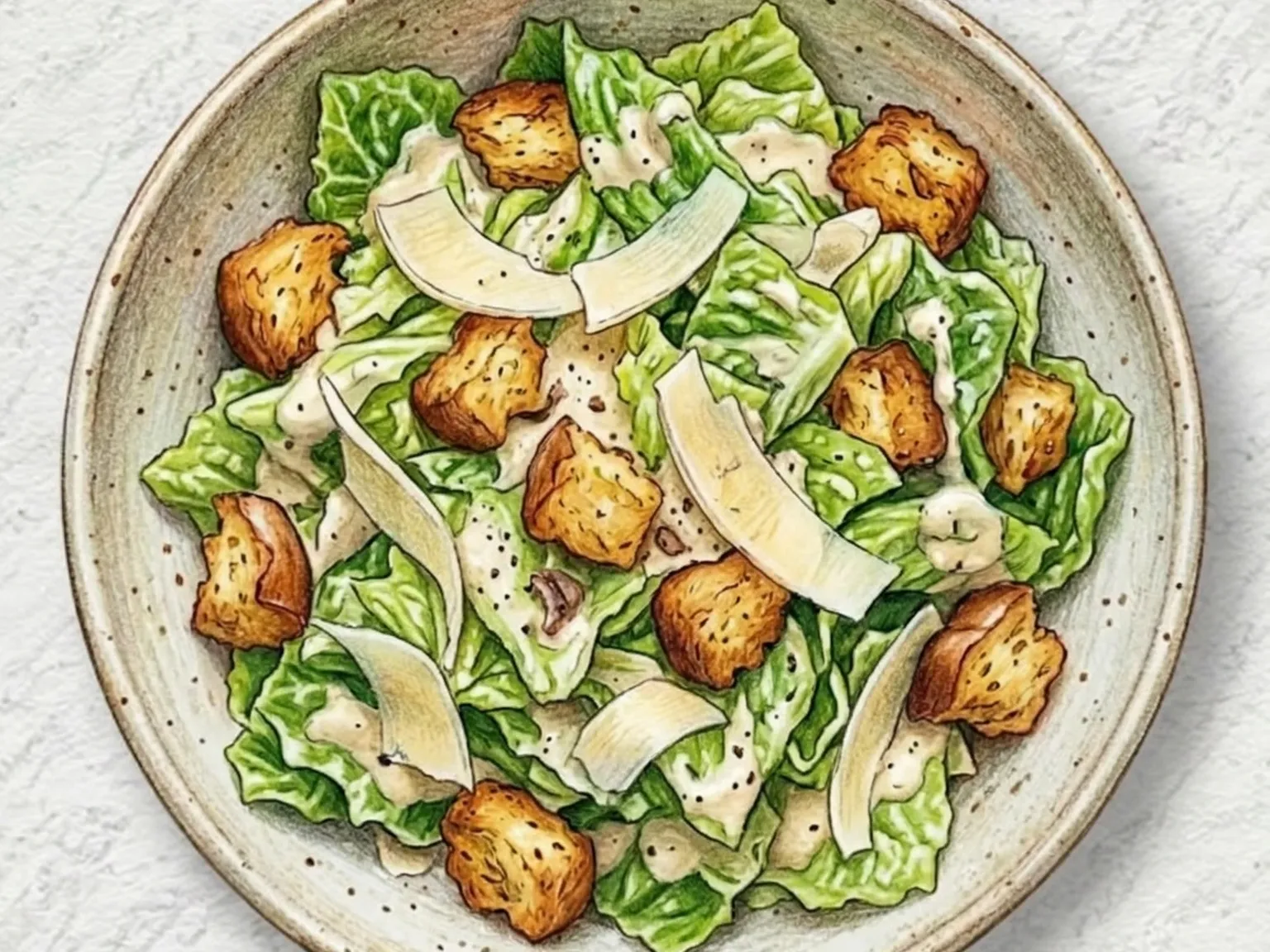
Caesar Salad

Caesar salad is built on romaine lettuce torn into rough, generous pieces and tossed in a dressing made from mayonnaise, lemon juice, garlic, and anchovy. The anchovy does not taste fishy in the finished dressing; it dissolves into the fat of the mayonnaise and functions as a deep umami foundation that keeps the salad interesting beyond its creamy surface. Lemon juice cuts through the richness of the mayo base, so the dressing coats the lettuce heavily without feeling cloying. Croutons are cubed bread toasted in olive oil until the outside turns crisp and golden but the inside stays slightly soft and chewy, giving them enough structure to absorb dressing without going immediately soggy. Wide, thin shavings of Parmesan add a dry, salty intensity that contrasts with the watery crunch of the romaine. With a short ingredient list, the quality of the dressing balance and the texture of the croutons determine the final outcome.

Grilled Chicken Caesar Salad
Shared ingredient: romaine lettuce Western

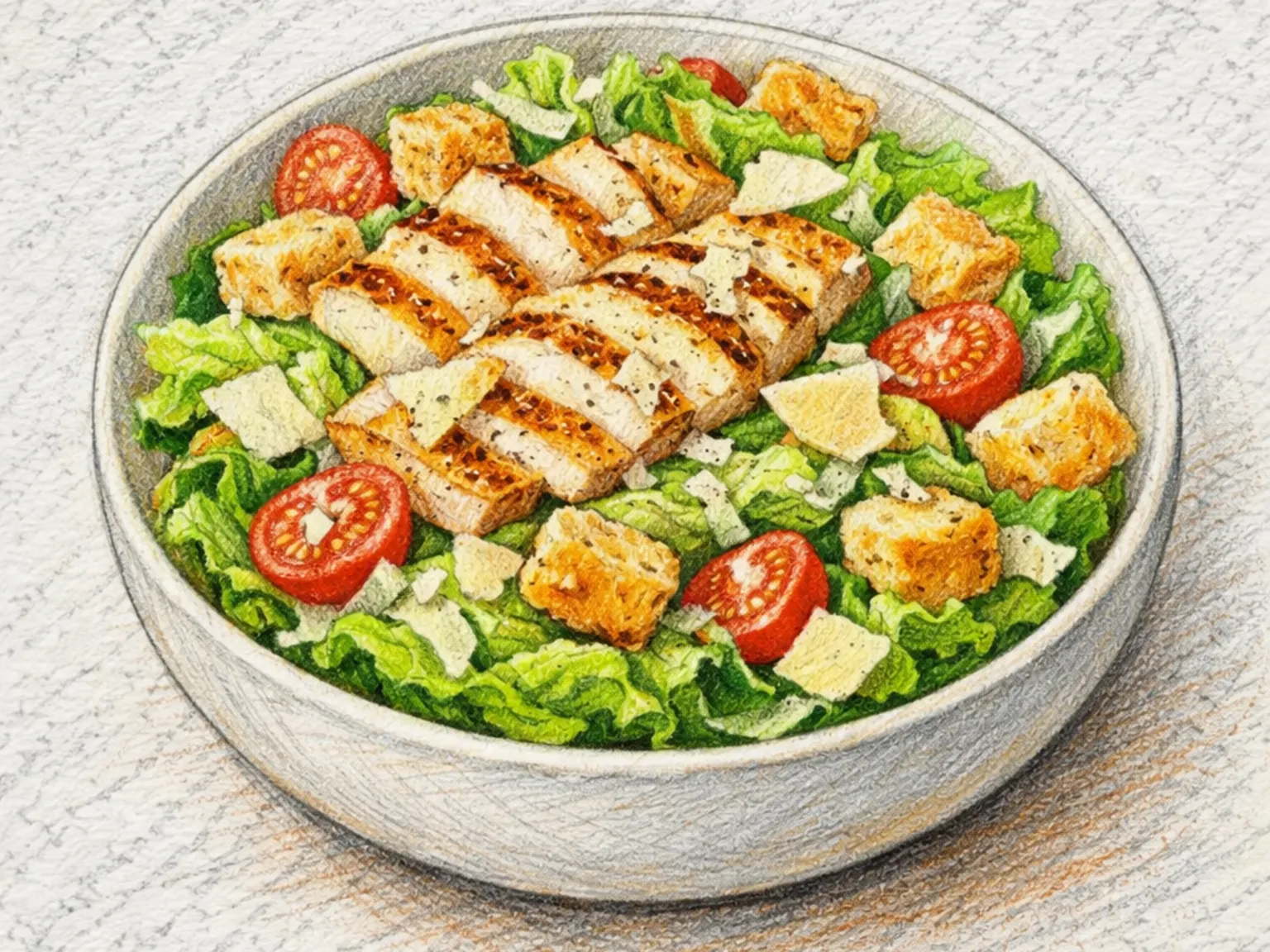
Grilled Chicken Caesar Salad

Grilled chicken Caesar salad is a classic constructed salad built on pan-seared chicken breast, crisp romaine lettuce, house-made Caesar dressing, croutons, and shaved Parmesan. The chicken breast is seasoned simply with salt and pepper and cooked over medium-high heat until golden on both sides, then left to rest for five minutes before slicing. Resting allows the muscle fibers to relax and the internal juices to redistribute, so each slice stays moist at the center rather than releasing liquid when cut. Slicing too thinly also causes rapid heat loss and results in a dry, mealy texture, so cutting into thicker pieces is preferable. The dressing is made by whisking together mayonnaise, fresh lemon juice, minced garlic, and a small amount of Worcestershire sauce. That combination produces a coating that is creamy and rich but balanced by the sharpness of citrus and the depth of the fermented condiment. Romaine is torn into bite-sized pieces and tossed lightly with dressing before the chicken and croutons are added on top, which prevents the weight of the toppings from bruising the leaves and accelerating wilting. Croutons go on last and should not be tossed through the greens, as contact with dressing causes them to absorb moisture and lose crunch quickly. Parmesan provides the concentrated salty umami of aged hard cheese that ties the neutral lettuce, mild chicken, and tangy dressing into a unified plate. The salad must be assembled immediately before serving to preserve the distinct textures that make it satisfying.

Korean Gochujang Grilled Garlic Scapes
Serve together Grilled

Korean Gochujang Grilled Garlic Scapes

Maneuljjong-gochujang-gui is a Korean vegetable side dish where garlic scapes cut into six-centimeter pieces are blanched for just thirty seconds, then stir-grilled in a pan with a sauce built from gochujang, gochugaru, soy sauce, oligosaccharide syrup, and minced garlic. The thirty-second blanch is precisely timed to loosen the tough outer fibers of the scape so the sauce has a surface to cling to, while the crisp interior stays intact. Plunging the scapes into cold water immediately after blanching is necessary to halt carryover cooking and lock in the texture. The garlic scape's own sharp, pungent bite merges with gochujang's fermented depth to build a layered spiciness that carries more complexity than raw chili heat alone, and the oligosaccharide syrup contributes both a glossy coating and a restrained sweetness that rounds off the sauce. When the sauce starts catching on the pan, adding a tablespoon of water loosens it without washing out the flavor. Sesame oil and toasted sesame seeds go on at the very end to finish the dish with a nutty, roasted aroma.

Tofu Salad (Pan-Seared Tofu on Fresh Greens)
Similar recipe Salads

Tofu Salad (Pan-Seared Tofu on Fresh Greens)

Dubu salad is made by pressing firm tofu to remove excess moisture, then pan-searing it until the outside turns golden and crisp while the inside stays soft and tender. The seared tofu is placed over a bed of baby greens, sliced cucumber, and cherry tomatoes. Wrapping the tofu in two layers of paper towels and setting a weight on top for twenty to thirty minutes draws out enough water so the surface browns properly in the pan without steaming. A dressing of soy sauce, sesame oil, lemon juice, and olive oil moves easily between Korean and Western flavor profiles. The salad is high in plant protein and low in fat, making it a practical and satisfying option when a light, clean-tasting meal is the goal.

Serve with this

Kimchi Lentil Ragu Tagliatelle
Pasta Medium

Kimchi Lentil Ragu Tagliatelle

Kimchi lentil ragu tagliatelle is a plant-forward pasta where lentils simmer with tomato puree, wine, and finely diced onion, carrot, and celery for 35 minutes, breaking down into a thick sauce with a meaty texture that contains no actual meat. The Korean-inflected soffritto builds the aromatic base, and as the lentils cook through they release starch that naturally thickens the ragu without any additional binder. Fermented kimchi is added late in the process, preserving its sharp acidity and keeping the fermented flavor present and distinct rather than cooked away. A small amount of sugar smooths the combined tartness of tomato and kimchi so neither dominates. The wide, flat tagliatelle ribbons hold the heavy sauce well, and every strand picks up the full depth of the braise. Without a gram of meat, the dish delivers genuine richness and staying power.

🥗 Light & Healthy 🎉 Special Occasion
Prep 20min Cook 35min 4 servings
Ebi Fry (Japanese Panko-Crusted Shrimp)
Asian Easy

Ebi Fry (Japanese Panko-Crusted Shrimp)

Ebi fry developed during Japan's Meiji era as Western cooking techniques arrived and were reinterpreted through a Japanese lens, becoming one of the defining dishes of yoshoku - the country's own adaptation of European cuisine. Preparation starts by cutting the tendons along the shrimp's belly at several points and pressing each piece flat against a cutting board so it holds a straight, elongated shape when lowered into hot oil rather than curling back on itself. The three-stage coating of flour, egg wash, and coarse panko breadcrumbs is central to the dish's character: panko's jagged, irregular flakes puff and expand in hot oil, producing a crust that is unmistakably lighter and more open-textured than anything made with fine Western breadcrumbs. Because the shrimp fries quickly at high temperature, the flesh stays fully moist and snaps with a satisfying springiness when bitten. Tartar sauce, with its creamy acidity and flecks of pickled vegetables, offsets the richness of the crust, while tonkatsu sauce takes the flavor in a sweeter, fruitier direction. The dish migrates easily across formats: tucked into bento boxes as a daily side, placed on top of curry rice for an ebi fry curry, or layered into soft milk bread as an ebi katsu sando. Its staying power in Japanese home cooking and restaurant menus alike reflects how thoroughly yoshoku dishes have become part of everyday Japanese food culture.

🍱 Lunchbox 🏠 Everyday
Prep 20min Cook 12min 2 servings

Similar recipes

Kimchi Burrata Salad
Salads Easy

Kimchi Burrata Salad

Aged napa kimchi brings fermented tang and concentrated umami that meets the mild, milky richness of fresh burrata in a pairing that achieves harmony rather than conflict. Peppery arugula adds a bitter counterpoint that lifts the overall weight of the dish, and halved cherry tomatoes scatter bright fruit acidity across the plate. The dressing blends perilla oil with olive oil, combining the nutty depth of Korean cuisine with the fruity character of Mediterranean cooking in a single drizzle. Pine nuts add a buttery, creamy crunch between bites that reinforces the richness of the cheese. The defining moment of this salad comes at the table, when the burrata is torn open with both hands and the soft stracciatella center spills into the surrounding ingredients. The creamy interior of the cheese mixes into the kimchi brine and perilla oil dressing, and that combination is what makes this salad more than a simple fusion exercise.

🥗 Light & Healthy ⚡ Quick
Prep 15min 2 servings
Ssamjang Tofu Kale Crunch Salad
Salads Easy

Ssamjang Tofu Kale Crunch Salad

Ssamjang tofu kale crunch salad sears firm tofu in olive oil for six to seven minutes until golden and crisp on the outside while staying tender within, then combines it with kale massaged with salt, shredded red cabbage, cucumber, and sliced almonds, all dressed in a ssamjang-based vinaigrette. The dressing blends ssamjang's fermented depth, a mixture of doenjang and gochujang, with lemon juice, honey, and olive oil, layering umami with citrus acidity and a restrained sweetness that tempers kale's natural bitterness. Massaging the kale with salt before adding the dressing breaks down its tough cell walls, making the leaves pliable and far more absorbent. Pressing moisture from the tofu thoroughly before pan-frying is what produces the crisp, golden crust; tofu that still holds water will steam rather than sear and come out pale and soft. Sliced almonds add a light, nutty crunch with every bite, giving the salad a clear contrast in texture throughout.

🥗 Light & Healthy ⚡ Quick
Prep 15min Cook 10min 2 servings
Salmon Avocado Salad
Salads Easy

Salmon Avocado Salad

Salmon avocado salad brings smoked salmon and ripe avocado together over chilled mixed greens with a lemon-Dijon vinaigrette that ties everything into focus. The dressing, olive oil whisked with fresh lemon juice and Dijon mustard, turns the smoky depth of the salmon clearer and brighter while the acidity cuts cleanly through the buttery weight of the avocado. Capers scattered throughout burst with briny tang on each bite, introducing a punchy contrast that keeps the richness from becoming monotonous. Paper-thin slices of raw onion contribute sharp fragrance and a clean crunch against the soft textures of salmon and avocado. Adding the dressing just before serving is the one step that matters most for texture, because the greens hold their crispness only if dressed at the last moment.

🥗 Light & Healthy ⚡ Quick
Prep 15min Cook 8min 2 servings

Tips

Cook off kimchi moisture well to keep the salad crisp.
Increase yogurt for a lighter Caesar-style flavor.

Nutrition (per serving)

Calories
365
kcal
Protein
17
g
Carbs
18
g
Fat
25
g