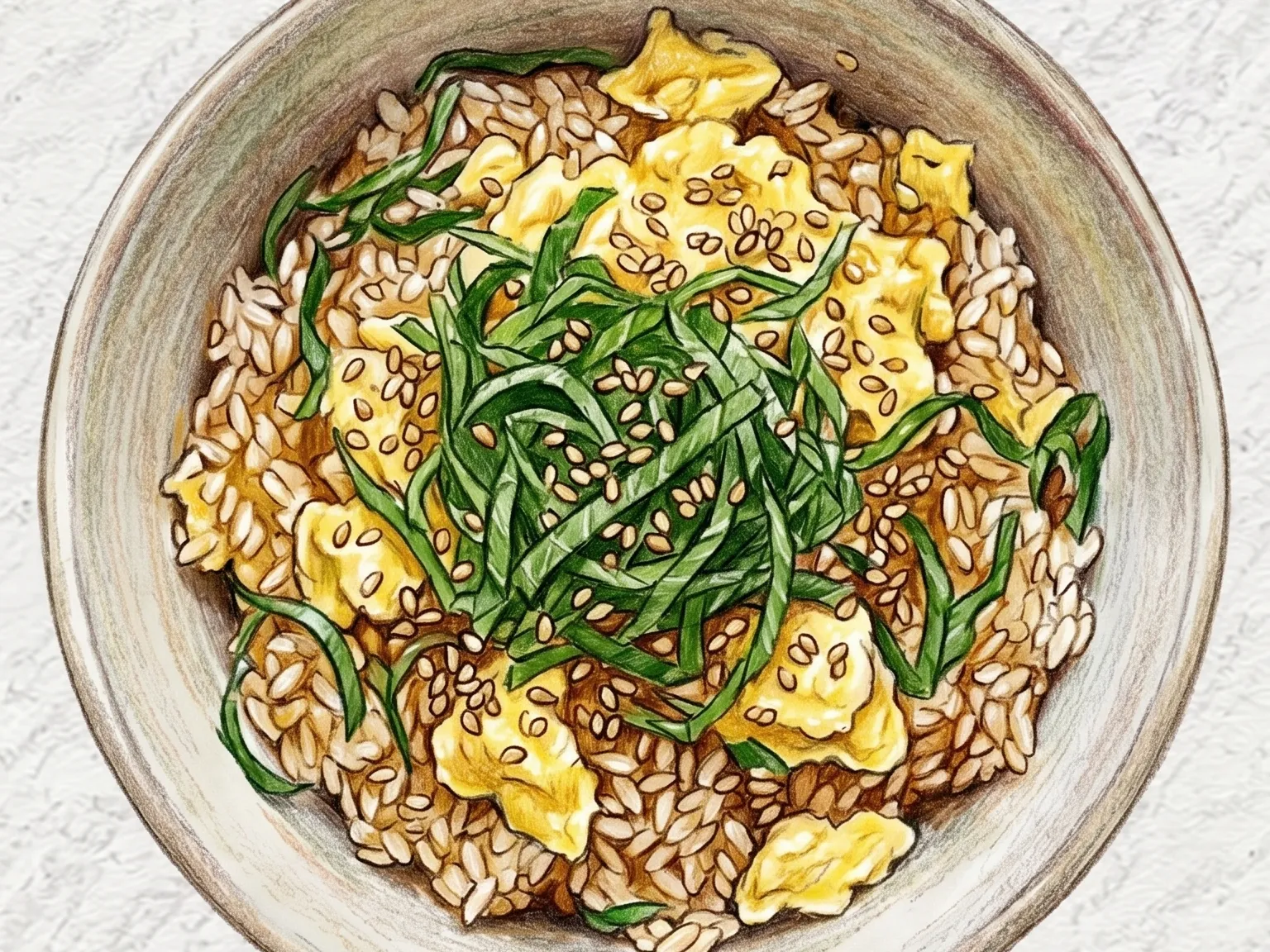
Korean Kkaennip Deulgireum Gyeran Bap (Perilla Egg Rice)
Eggs are gently scrambled in butter over low heat, set aside, then rice is stir-fried in perilla oil before everything is folded together with thin strips of perilla leaf. Perilla oil carries a distinctive roasted-nut aroma far deeper than regular sesame oil, and the herb-like fragrance of fresh perilla leaves layered on top sets this dish apart from other simple fried rice variations. Soy sauce drizzled along the hot pan edge picks up a hint of caramel char that adds complexity. The leaves must go in after the heat is off to preserve their volatile aroma - a small detail that makes or breaks the dish.
Adjust Servings
Instructions
- 1
Slice perilla leaves into thin strips and beat eggs with a pinch of salt.
- 2
Melt butter in a pan and make soft scrambled eggs over low heat; set aside.
- 3
In the same pan, heat 1 tbsp perilla oil with green onion for 30 seconds.
- 4
Add rice, break up clumps, and drizzle soy sauce along the pan edge; stir-fry 1 more minute.
- 5
Turn off heat, then fold in scrambled eggs, perilla leaves, and remaining perilla oil.
- 6
Serve in bowls and finish with sesame seeds.
As an Amazon Associate, we may earn from qualifying purchases.
Tips
Nutrition (per serving)
More Recipes

Korean Spam Mayo Rice Bowl
Thick-cut spam is pan-seared until the edges turn golden and crisp while the center stays moist. Soft-scrambled eggs are folded loosely so they remain creamy, then layered over steaming rice alongside the spam. A generous drizzle of mayonnaise sauce melts gently against the warm rice, binding the salty meat and silky egg together. A dash of soy sauce or sriracha adds a sharp accent that cuts through the richness and keeps each bite interesting.

Korean Fried Rice (Simple Leftover Rice Stir-Fry)
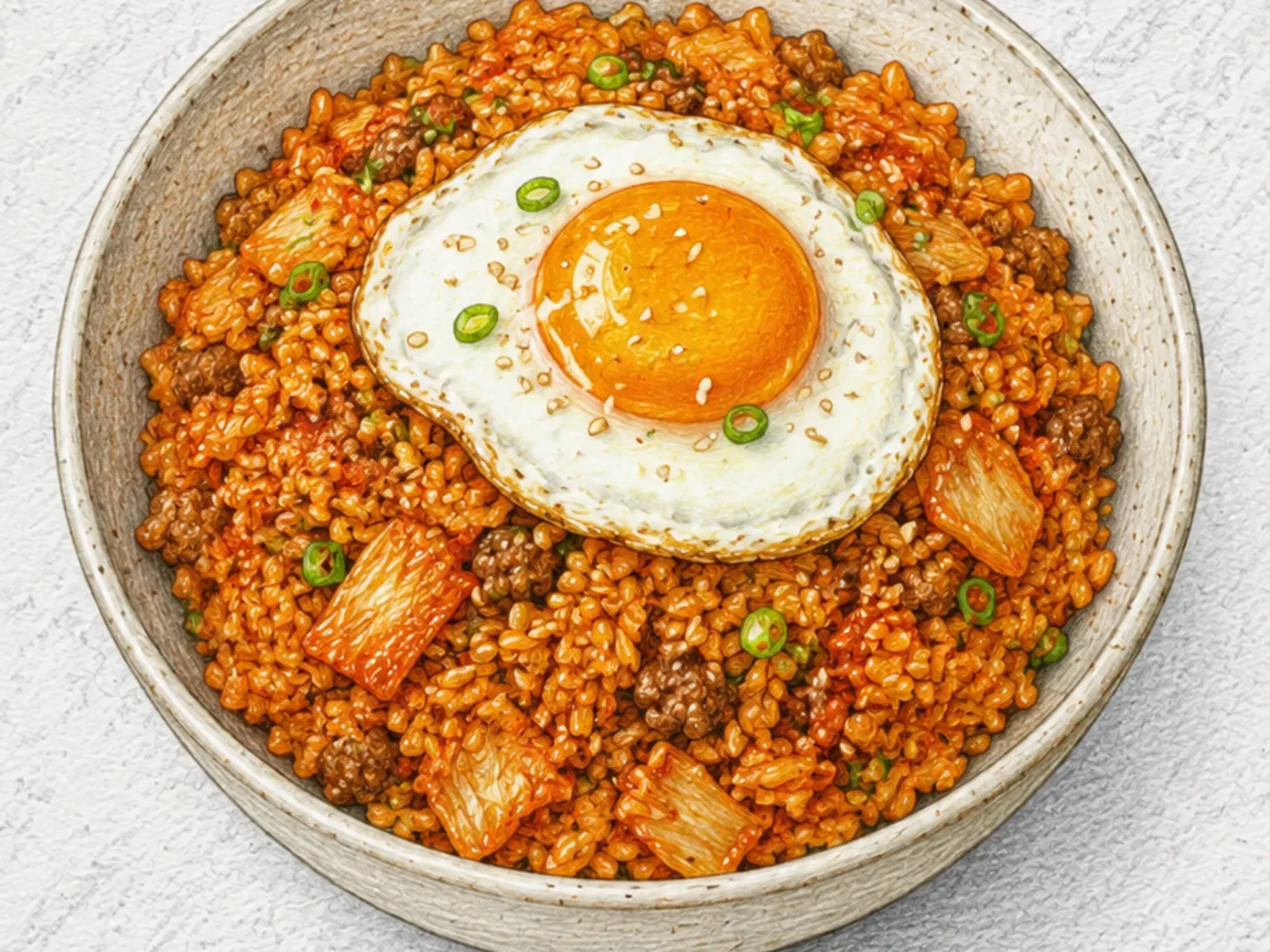
Korean fried rice is the ultimate utility dish, designed to turn leftover rice and whatever vegetables remain in the refrigerator into a satisfying meal in under ten minutes. Green onion hits the hot oil first to create a fragrant scallion-infused base, followed by diced carrot and beaten egg that gets scrambled into rough curds. Cold rice - essential because its lower moisture content prevents clumping - goes in next and is tossed vigorously over high heat until every grain separates and picks up a thin coat of oil. Soy sauce poured along the rim of the pan sizzles on contact with the hot metal, developing a toasted aroma that distinguishes a well-made fried rice from a mediocre one. A crack of black pepper and a final swirl of sesame oil complete the seasoning. The recipe is intentionally open-ended: ham, kimchi, shrimp, or any leftover protein slots in without altering the basic technique, which is why this dish appears on Korean dinner tables more often than almost any other.

Korean Tofu Seaweed Egg Rice Bowl
Dubu gim gyeran deopbap is a Korean rice bowl that stacks golden pan-fried tofu and soft scrambled egg over rice, then blankets everything in roasted seaweed flakes. The tofu is pressed dry, cut into cubes, and seared until the edges turn crisp before being tossed briefly with soy sauce and syrup to form a salty-sweet glaze. The eggs are scrambled to a soft, barely-set consistency that contrasts with the tofu's firm bite. Crumbled seaweed scattered on top adds a brittle crunch and a toasty marine aroma, while a final drizzle of sesame oil ties the components together. The dish requires only three common refrigerator staples - tofu, eggs, and dried seaweed - and comes together in about ten minutes, making it one of the most practical everyday meals when time and ingredients are both limited.

Korean Soy Glazed Beef Rice Bowl
Sogogi deopbap tops steamed rice with thin-sliced beef and onions cooked in a sweet-soy glaze, served with just enough sauce to soak into the grains. The beef is marinated briefly in a mixture of dark soy sauce, sugar, and minced garlic, which caramelizes quickly in a hot pan. Onion slices cook alongside the beef, their natural sweetness balancing the salty-sweet sauce as they soften. Sesame oil added toward the end leaves a nutty aftertaste that lingers. The key is keeping a small pool of sauce in the pan rather than reducing it completely - that glossy liquid seeps into the rice and makes each spoonful flavorful without needing additional seasoning. A generous crack of black pepper at the end adds a sharp finish.

Korean Perilla Leaf Kimchi
Kkaennip kimchi is an instant-style Korean perilla leaf kimchi assembled by spreading a thin layer of soy sauce, gochugaru, minced garlic, and sesame oil seasoning between each leaf in a stacked arrangement. The perilla's bold herbal scent softens when paired with the toasted richness of sesame oil, while the chili flakes provide a steady, gentle heat. Soy sauce builds the salty-savory framework, and chopped scallion adds a fresh note that ties the flavors together. No fermentation is needed - this kimchi is ready to eat immediately, served on top of rice or used as an aromatic wrap in place of lettuce with grilled meat.

Korean Tuna & Perilla Leaf Fritters
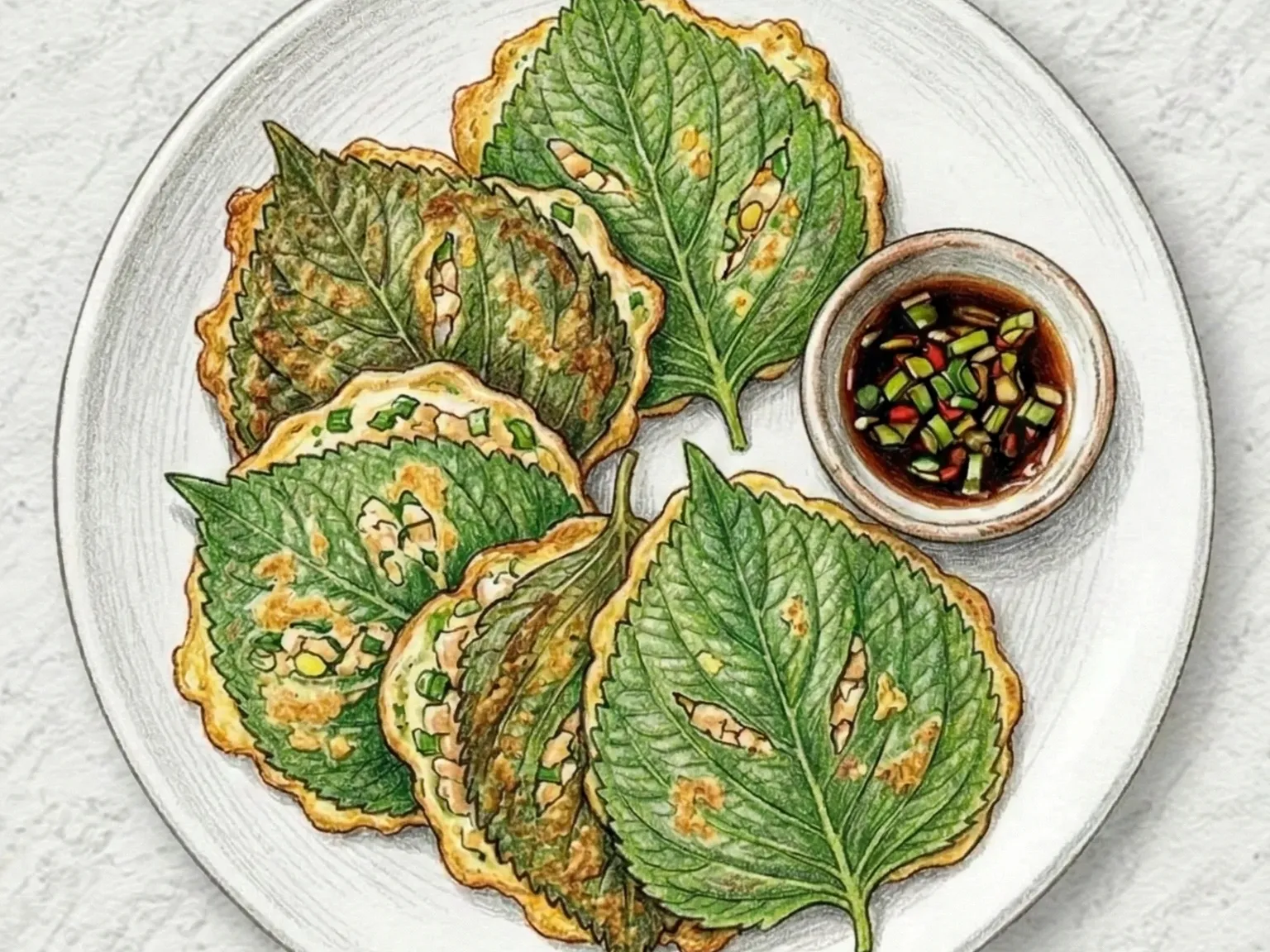
This jeon brings together canned tuna, perilla leaves, onion, and carrot in a pancake-mix batter bound with egg. The tuna provides a briny, savory base while the perilla leaves contribute their characteristic herbal fragrance. Finely diced carrot and onion add natural sweetness that balances the saltiness of the tuna. It comes together quickly and holds up well at room temperature, making it a practical choice for lunchboxes or a quick snack.