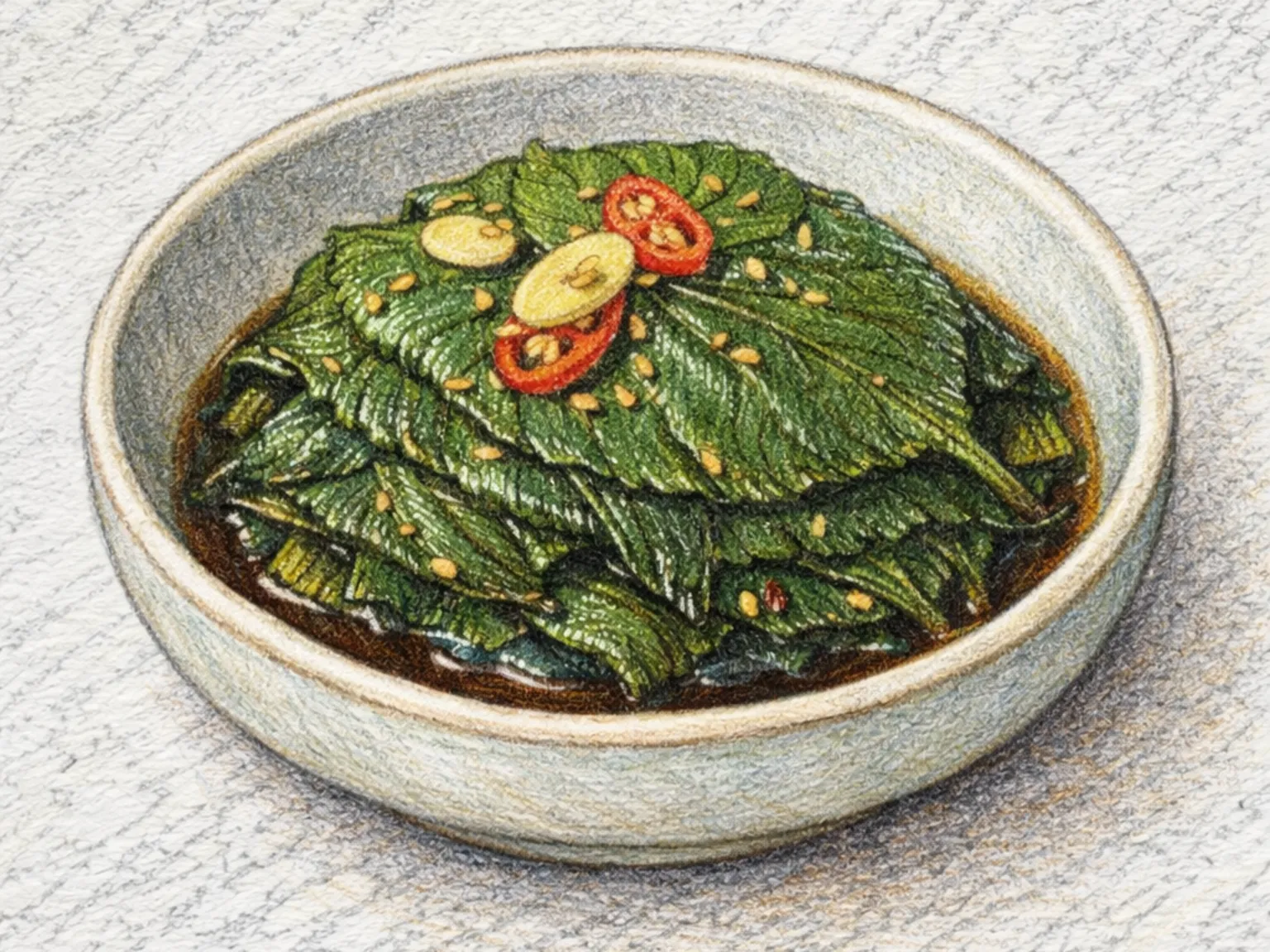
Korean Soy Pickled Perilla Leaves
Leftover water weakens this pickle, so dry the washed perilla leaves completely. Boil 150 ml soy sauce, 150 ml water, 100 ml vinegar and 3 tbsp sugar for about 1 minute, then let the brine cool until the pot no longer feels warm, because hot brine darkens and softens the leaves too much. Stack about 5 leaves at a time in a sterilized glass jar with garlic and chili between the layers, keep every leaf under the brine, and refrigerate until day 3.
Quick answer
- Active time
- 30 min
- Waiting
- See the steps
- Level
- Easy
- Servings
- 4 servings
- Ingredients
- 7
About this dish
Most soy pickles take their brine boiling hot, but in this recipe the boiled brine cools completely before it touches the perilla leaves, which would otherwise blacken and go limp.
Read more
Sliced garlic and a cheongyang chile are tucked between the leaves raw rather than simmered in the brine, which keeps their bite sharp against the herbal perilla. From day three, a single leaf wrapped around a spoonful of rice is the usual way to eat it. It stays in the fridge, and this mix is not meant to be kept beyond a month.
Ingredients
Instructions
- 1
Wash all 100 perilla leaves one by one under running water, checking both sides for grit.
Trim only the tough stem tips, then dry the leaves completely on towels or a rack so excess water does not weaken the pickle.
- 2
Slice 15 g garlic thinly and cut 1 hot green chili on the diagonal.
Add 150 ml soy sauce, 150 ml water, 100 ml vinegar, and 3 tbsp sugar to a pot, stirring until the sugar starts to dissolve.
- 3
Bring the brine to a boil and cook for about 1 minute, until the sugar dissolves.
Remove from the heat. Keep the sliced garlic and chili aside to layer between the leaves later.
- 4
Cool the boiled brine completely at room temperature before using it.
If poured while hot, the perilla leaves darken and soften too much, so wait until the pot no longer feels warm to the touch.
- 5
Pack the leaves into a sterilized glass jar in neat stacks of about 5 leaves, pressing gently without crushing them.
Distribute the garlic and chili between layers, then pour the cooled brine slowly down the side so all leaves are covered.
- 6
If the leaves float, hold them under the brine with a clean weight or small plate.
Close the jar, refrigerate, and start serving from day 3, lifting one leaf at a time to wrap with plain rice.
Use-up ingredient planner
Turn these ingredients into two more meals
The overlap excludes basic seasonings. Open the next recipe and your selected dishes will stay with you.
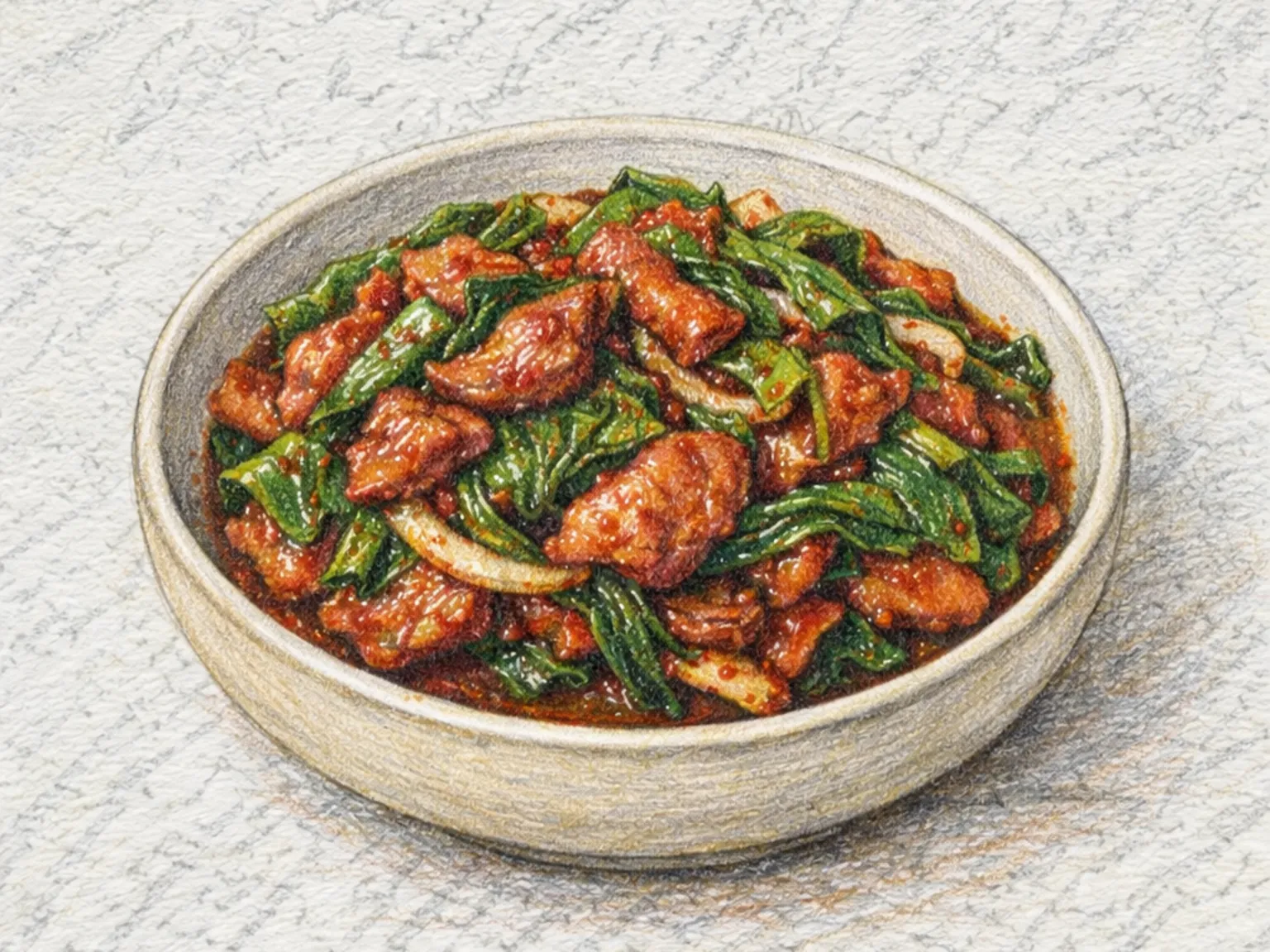
Korean Duck and Perilla Leaf Stir-fry
perilla leaves, hot green chili
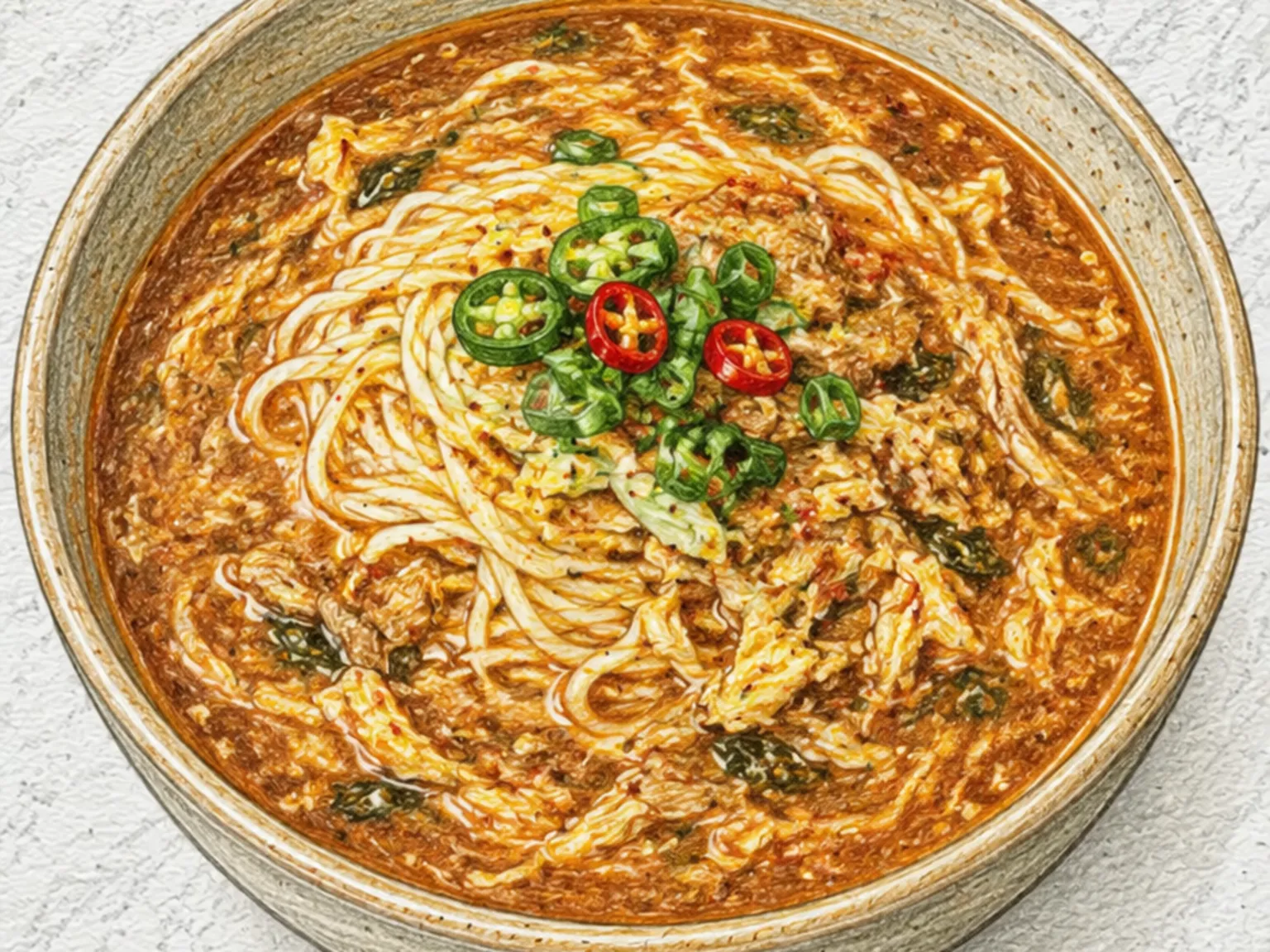
Korean Spicy Freshwater Fish Noodle Soup
perilla leaves, hot green chili
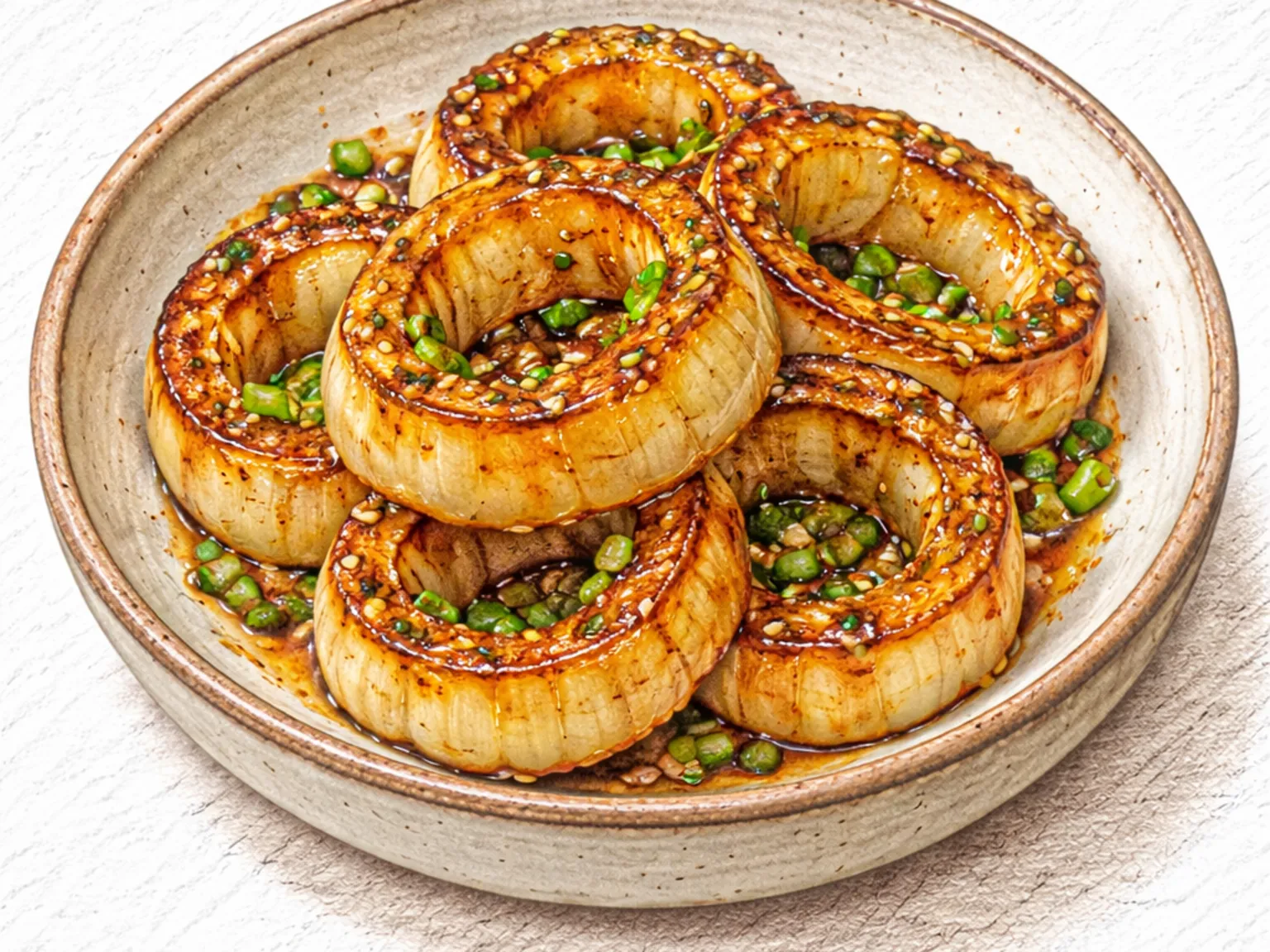
Korean Grilled Doenjang Onions
hot green chili