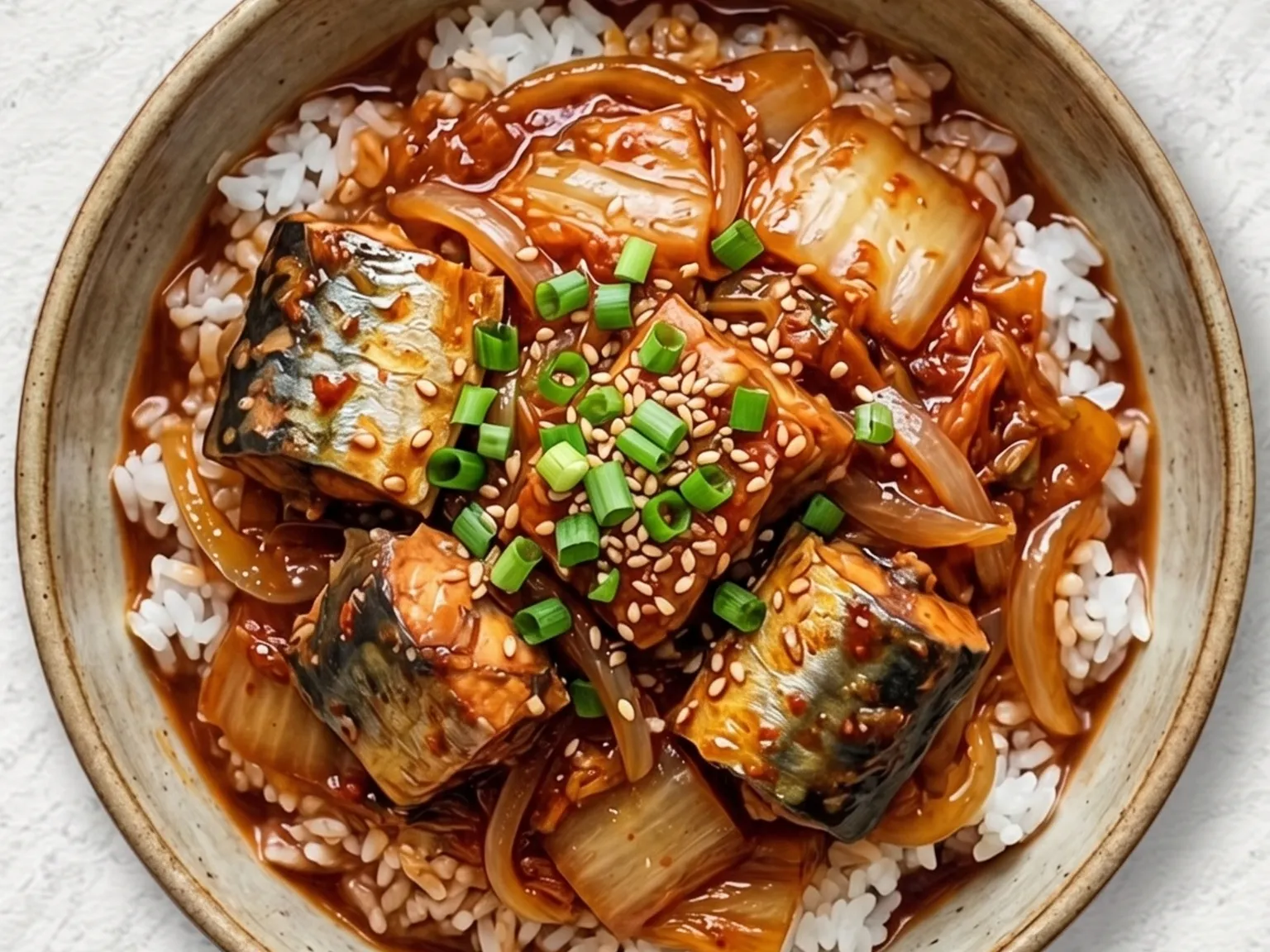
Korean Saury Kimchi Rice Bowl
Canned mackerel pike (kkongchi) is stir-fried with aged kimchi and sliced onion, using a couple spoonfuls of the can liquid to deepen the sauce's umami. The kimchi cooks down for three minutes first to drive off excess moisture and tame its sourness, then the fish is broken into generous chunks - keeping them large preserves a pleasant flaky texture. Chili flakes, soy sauce, and sugar simmer together for four minutes into a thick, clinging glaze that soaks into the rice below. Topped with fresh scallion, this is a pantry-friendly rice bowl that transforms humble canned fish into something deeply flavorful.
Adjust Servings
Instructions
- 1
Chop kimchi, slice onion thinly, and chop scallion.
- 2
Heat oil and stir-fry onion and kimchi for 3 minutes.
- 3
Add canned fish with 2 tbsp can liquid, breaking into large chunks.
- 4
Add chili flakes, soy sauce, and sugar; cook down for 4 minutes.
- 5
Place warm rice in bowls and top generously with the kimchi fish mix.
- 6
Finish with scallion and serve immediately.
As an Amazon Associate, we may earn from qualifying purchases.
Tips
Nutrition (per serving)
More Recipes

Korean Eggplant Rice Bowl
Gaji deopbap is a Korean eggplant rice bowl where sliced eggplant is pan-fried quickly in generous oil and then braised briefly with ground pork in a soy-based sauce. Soaking the eggplant in salted water for five minutes before cooking draws out bitterness. High heat is essential - eggplant absorbs oil rapidly, and fast searing creates a lightly crisp exterior while the inside collapses into a silky, almost creamy texture. The soy, sugar, and garlic sauce reduces in two minutes into a dark glaze that coats each piece, while the ground pork adds a savory depth that makes the dish feel more substantial. The sauce pools around the base of the rice and soaks into the grains, ensuring consistent flavor throughout the bowl. Green onion and sesame oil finish the dish. Summer eggplant, when the flesh is at its softest and most yielding, produces the best results.

Korean Grilled Mackerel Rice Bowl
Mackerel fillet is pan-seared skin-side down until the skin turns crisp and golden, then served over rice with a quick sauce of soy sauce, cooking wine, oligosaccharide syrup, minced ginger, and softened onion. The oily flesh of the mackerel absorbs the soy-ginger glaze, producing a clean, salty-sweet finish without fishiness. Keeping the pan still for the first minute of searing is critical for achieving crisp skin, and brushing the fillet with a little cooking wine before cooking further neutralizes any unwanted odor. Chopped chives scattered on top complete the bowl with color and a mild onion bite.

Korean Fish Roe Rice Bowl
Albap - fish roe rice bowl - is a casual Korean dish that likely evolved from sushi-bar culture, where tobiko (flying fish roe) was always on hand and cooks needed a quick staff meal. Warm rice is first tossed with sesame oil and a knob of butter, which gives each grain a glossy, slightly nutty coating. The toppings are arranged in sections on top: bright orange flying fish roe that pops between the teeth, stir-fried kimchi with its fermented tang, diced pickled radish for crunch and sweetness, and a shower of shredded seaweed. Everything gets mixed together at the table, and the warmth of the rice slightly softens the roe, releasing its briny juice into the buttered grains. Scallion scattered on top adds a fresh bite. It is a ten-minute lunch that delivers a surprising range of textures and flavors from simple ingredients.

Korean Bossam Kimchi Rice Bowl
Bossam kimchi deopbap is a Korean rice bowl that repurposes leftover bossam - tender boiled pork and well-fermented bossam kimchi - by stir-frying them with onion in a sweet-spicy gochujang sauce and serving it all over hot rice. The tangy crunch of the kimchi plays off the moist, savory pork, while the sauce ties every element together with warmth and depth. It is a practical and satisfying meal that needs no side dishes, making it an efficient way to transform bossam leftovers into an entirely new dish. The contrast between the soft, slow-cooked pork and the sharp acidity of fermented kimchi keeps each bite lively, and the gochujang glaze adds just enough heat to make you want more.

Korean Braised Saury Kimchi
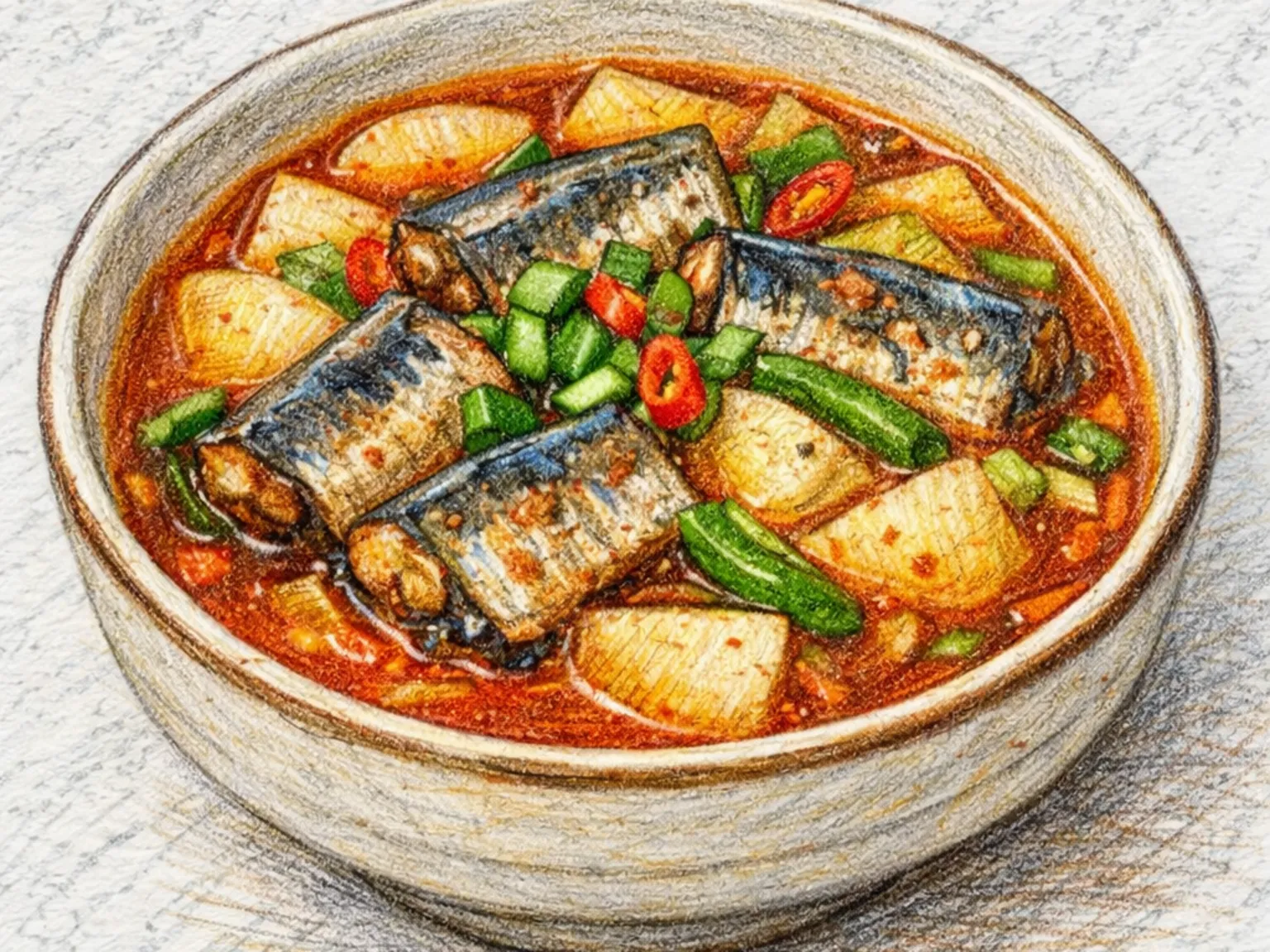
Kkongchi-kimchi-jjim is a Korean braise of canned Pacific saury and well-aged kimchi simmered together until the flavors meld into a concentrated, tangy broth. The aged kimchi's deep acidity and fermented complexity dissolve into the saury's natural oils, building a rich sauce without any additional stock. Adding tofu lets the cubes soak up the spicy liquid, and green onion with cheongyang chili finishes the dish with a sharp kick of heat. Using canned fish keeps preparation minimal, while the aged kimchi does the heavy lifting to create a flavor that tastes like it has simmered for hours.

Korean Bunsik Kimchi Bokkeumbap (Kimchi Fried Rice)
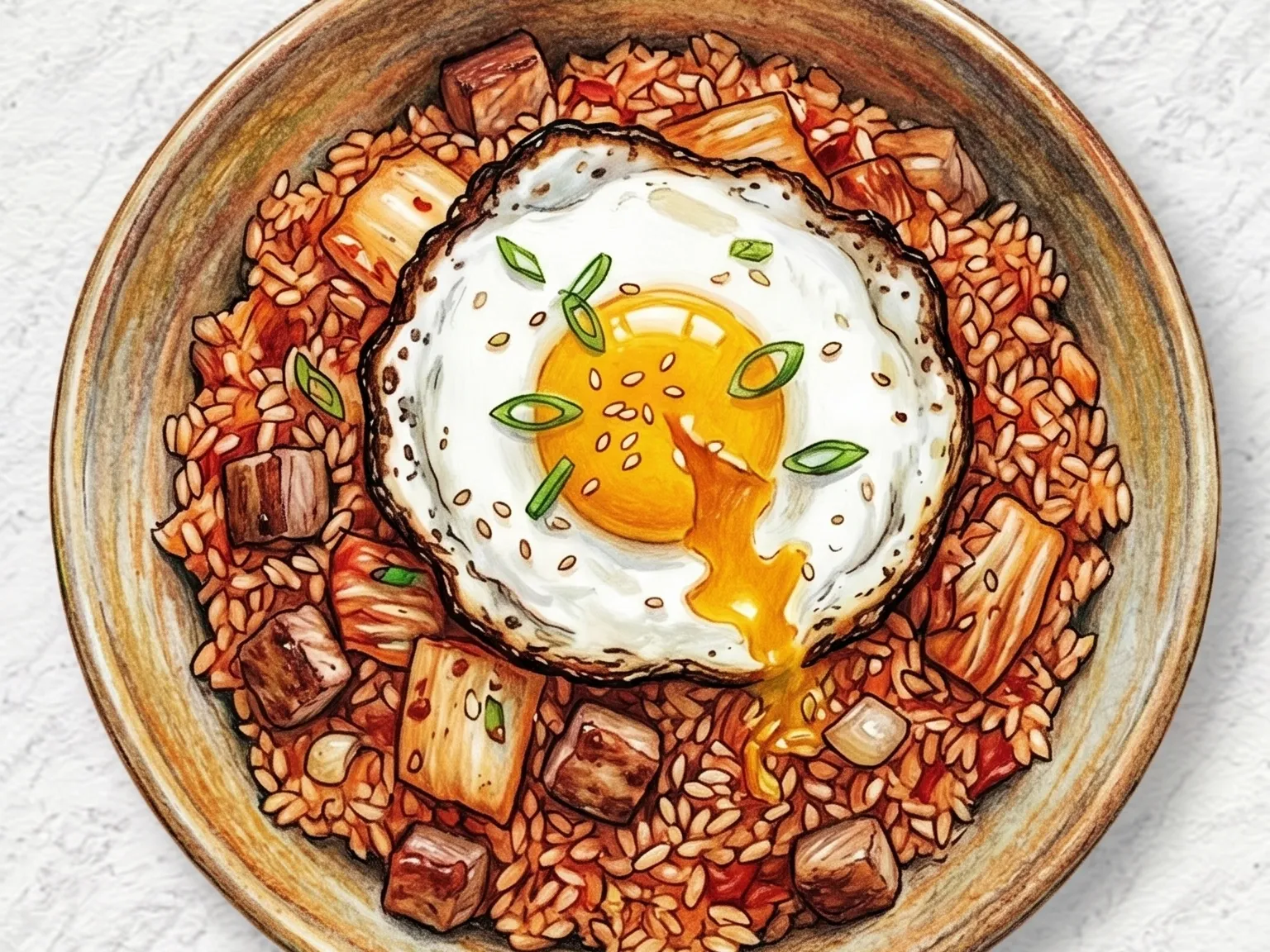
Bunsik-style kimchi fried rice starts by making scallion oil from green onions, then stir-frying well-fermented kimchi to drive off moisture before seasoning with gochujang and soy sauce and tossing in day-old rice. The scallion oil lays a nutty base across the rice, and the aged kimchi's sharp acidity layers with the gochujang's heat to build depth. Cold leftover rice fries without turning mushy, keeping individual grains distinct, and the dish is topped with seaweed flakes and a runny fried egg. A small amount of sugar can be added if the kimchi's sourness is overpowering.