Charim

2686 Korean & World Recipes

2686+ Korean recipes, clean and organized. Ingredients to instructions, all at a glance.

Korean Braised Beef and Shishito Rice
Rice Easy

Korean Braised Beef and Shishito Rice

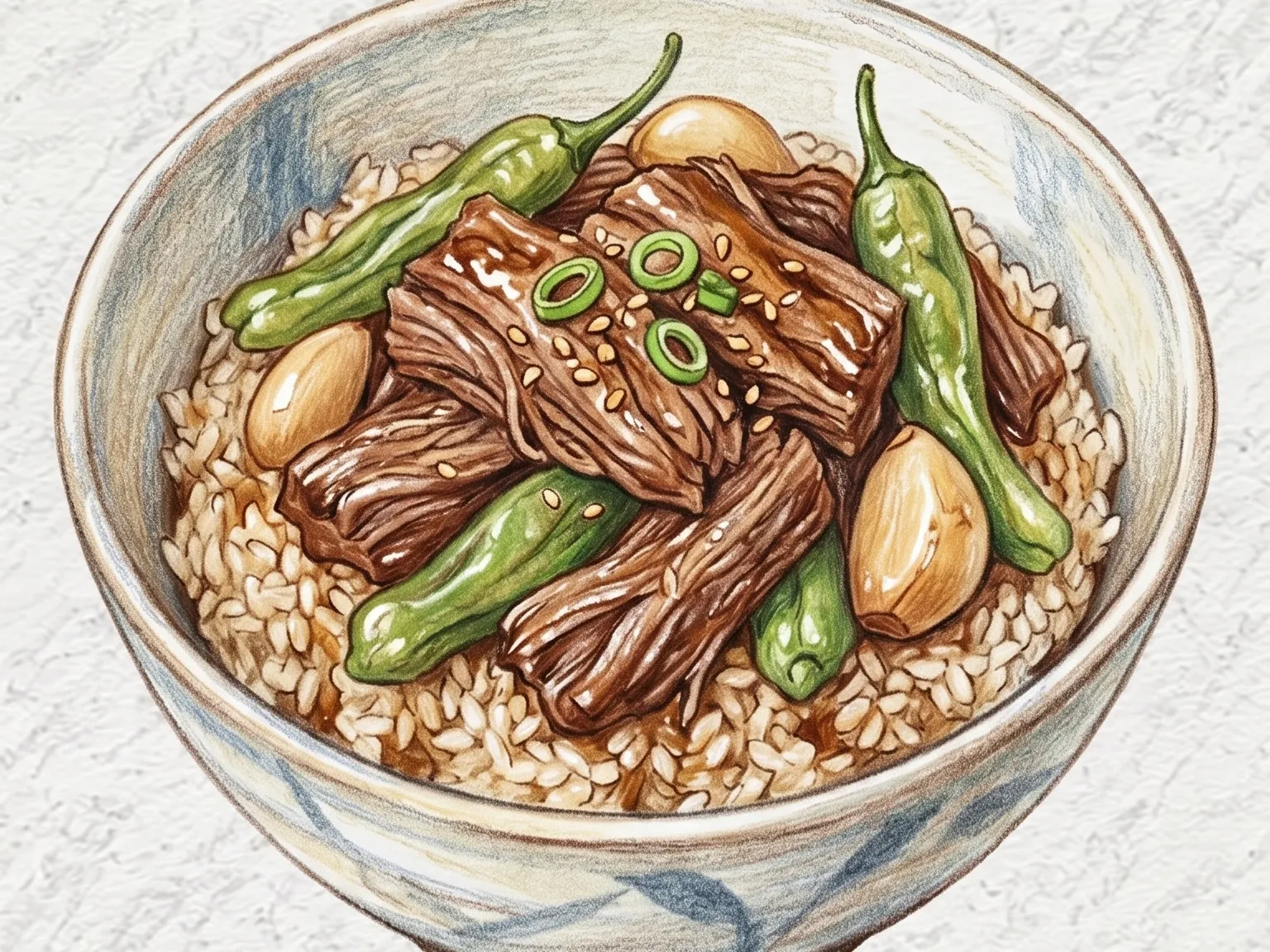
Beef is soaked in cold water to draw out blood, then braised for twenty minutes with soy sauce, sugar, cooking wine, and whole garlic cloves until the liquid reduces into a glossy, salty-sweet sauce. Shishito peppers go in for the final six minutes, contributing a gentle heat and slight crunch that contrasts with the soft-shredded beef. Tearing the meat along the grain and tossing it in the braising liquid with sesame oil gives each strand a lacquered sheen. Overnight refrigeration deepens the seasoning further. Piled over warm rice and mixed in, the jangjorim delivers concentrated soy-beef umami in every bite.

Prep 15min Cook 30min 2 servings

Adjust Servings

2servings
servings

Instructions

  1. 1

    Soak beef in cold water for 10 minutes to remove blood, then cut into chunks.

  2. 2

    Combine water, soy sauce, sugar, cooking wine, and garlic in a pot and boil.

  3. 3

    Add beef and braise over medium-low heat for 20 minutes.

  4. 4

    Add shishito peppers and braise 6 more minutes, then turn off heat.

  5. 5

    Shred beef along the grain, mix with braising sauce, and add sesame oil.

  6. 6

    Spoon generously over warm rice and mix before eating.

🛒Shop Ingredients on Amazon

As an Amazon Associate, we may earn from qualifying purchases.

Tips

Rest overnight in the fridge for deeper braised flavor.
Add a little Korean chili pepper for extra heat.

Nutrition (per serving)

Calories
560
kcal
Protein
31
g
Carbs
68
g
Fat
17
g

More Recipes

Korean Jangjorim Butter Rice
RiceEasy

Korean Jangjorim Butter Rice

Unsalted butter is melted into hot rice so each grain is coated in a slick of fat, then topped with shredded soy-braised beef and its concentrated braising liquid. The beef's soy-based marinade carries enough salt and sweetness that no additional seasoning is needed, and breaking a raw egg yolk into the center and stirring transforms the texture into something creamy. Roasted seaweed flakes add a brittle crunch and oceanic note, while scallion and sesame seeds round out the finish. If the jangjorim is already prepared, the entire assembly takes less than fifteen minutes.

🏠 Everyday🍱 Lunchbox
Prep 10minCook 15min2 servings
Korean Seaweed Jangjorim Rice Bowl
RiceMedium

Korean Seaweed Jangjorim Rice Bowl

Beef eye of round is simmered in soy sauce, sugar, and garlic until deeply seasoned, then shredded along the grain and braised again with quail eggs to absorb the concentrated liquid. The jangjorim is spooned over warm rice and finished with a generous crumble of gamtae seaweed, whose crisp, oceanic fragrance contrasts with the salty-sweet meat. Leftover braising liquid can be repurposed as a mixing sauce for bibimbap or other rice dishes. Adding the gamtae right before eating preserves its delicate crunch and aroma.

🏠 Everyday
Prep 15minCook 25min2 servings
Korean Braised Tofu Rice Bowl
RiceEasy

Korean Braised Tofu Rice Bowl

Dubu jorim deopbap places soy-braised tofu over a bowl of steamed rice, letting the glaze soak down into the grains. Firm tofu is sliced, patted dry, and pan-fried until a golden crust forms on both sides, then simmered in a sauce of soy sauce, sugar, minced garlic, and water until the liquid reduces to a sticky, mahogany-colored glaze. Sliced onion cooks alongside the tofu, softening into the sauce and contributing natural sweetness. A cheongyang chili cut on the bias adds a sharp kick, and green onion goes in at the end for fragrance. The braising sauce pools around the rice and seeps into each grain, ensuring that flavor carries through from the first bite to the last. Despite its simplicity, the dish provides a satisfying amount of plant protein and stands well on its own without additional side dishes.

🏠 Everyday
Prep 10minCook 15min2 servings
Korean Beef and Mushroom Rice Bowl
RiceEasy

Korean Beef and Mushroom Rice Bowl

Sogogi-beoseot deopbap is a Korean beef and mushroom rice bowl that sautees sliced beef with king oyster and shiitake mushrooms in soy-butter sauce. The beef is seared first over high heat to develop a golden crust, then the thickly cut mushrooms go in and absorb the rendered juices, forming a naturally concentrated sauce in the pan. A knob of butter melted in at the end adds a creamy richness, while soy sauce ties everything together with a salty umami backbone. Minced garlic and sliced scallion layered into the stir-fry build an aromatic base that makes the topping fragrant the moment it hits the rice. The mushrooms hold their springy bite against the tender beef, giving each mouthful a satisfying textural contrast.

🏠 Everyday
Prep 10minCook 12min2 servings
Korean Soy-braised Beef (Tender Shredded Brisket in Soy Glaze)
Side dishesMedium

Korean Soy-braised Beef (Tender Shredded Brisket in Soy Glaze)

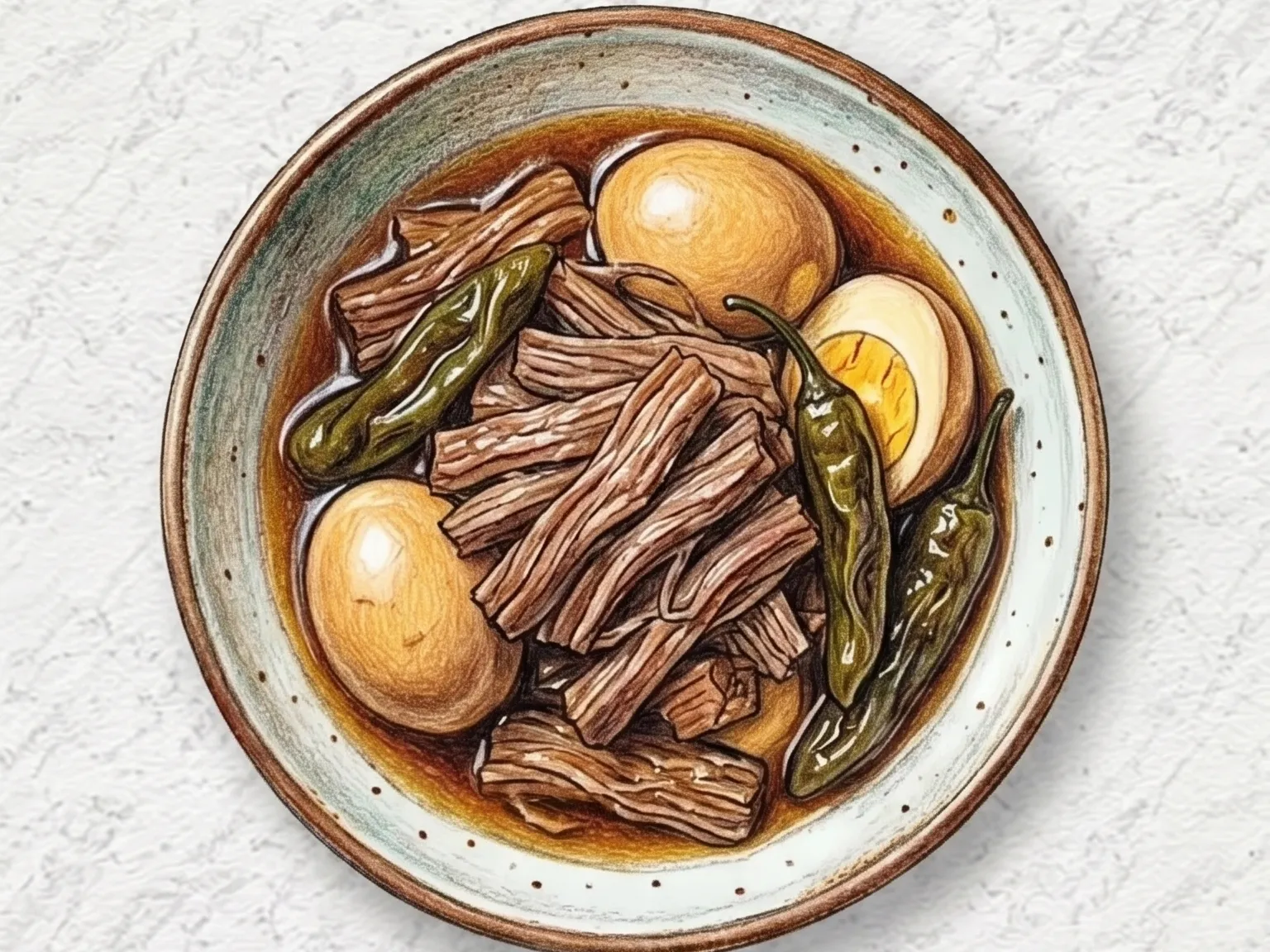
Jangjorim is the soy-braised beef that lives semi-permanently in Korean refrigerators - a make-ahead banchan with a shelf life of roughly two weeks. Beef eye round (hongdukkasal) is the traditional cut because its uniform grain and low fat content allow clean shredding along the fibers, producing the signature stringy texture. The process is unhurried: thirty minutes of soaking to draw out blood, forty minutes of simmering with whole garlic and peppercorns, then shredding and returning to the pot with soy sauce and sugar for another twenty minutes. Hard-boiled eggs and shishito peppers added in the final stage absorb the dark soy broth - the eggs turn mahogany and the peppers contribute a gentle heat to the sauce. Swapping in quail eggs makes each piece lunchbox-sized. Flavor deepens noticeably after a day of refrigeration as the seasoning penetrates fully.

🏠 Everyday🍱 Lunchbox
Prep 15minCook 60min4 servings
Korean Braised Beef and Radish
SteamedMedium

Korean Braised Beef and Radish

Sogogi mu jorim is a Korean braised beef and radish dish where brisket and thick-cut Korean radish are slowly simmered in soy sauce with garlic, ginger, and a touch of sugar. Boiling the beef first and skimming the foam produces a clean broth base for braising. The radish goes in later so it cooks until semi-translucent, absorbing the beef-enriched liquid and developing a natural sweetness that balances the soy. Green onion added at the end contributes a fresh note. Cutting the radish thick is important so it holds its shape through the braise, and resting the dish overnight before reheating deepens the flavor noticeably.

🏠 Everyday🎉 Special Occasion
Prep 20minCook 45min4 servings
More Rice →