Charim

2686 Korean & World Recipes

2686+ Korean recipes, clean and organized. Ingredients to instructions, all at a glance.

Korean Kohlrabi Soy Pickle
KimchiEasy

Korean Kohlrabi Soy Pickle

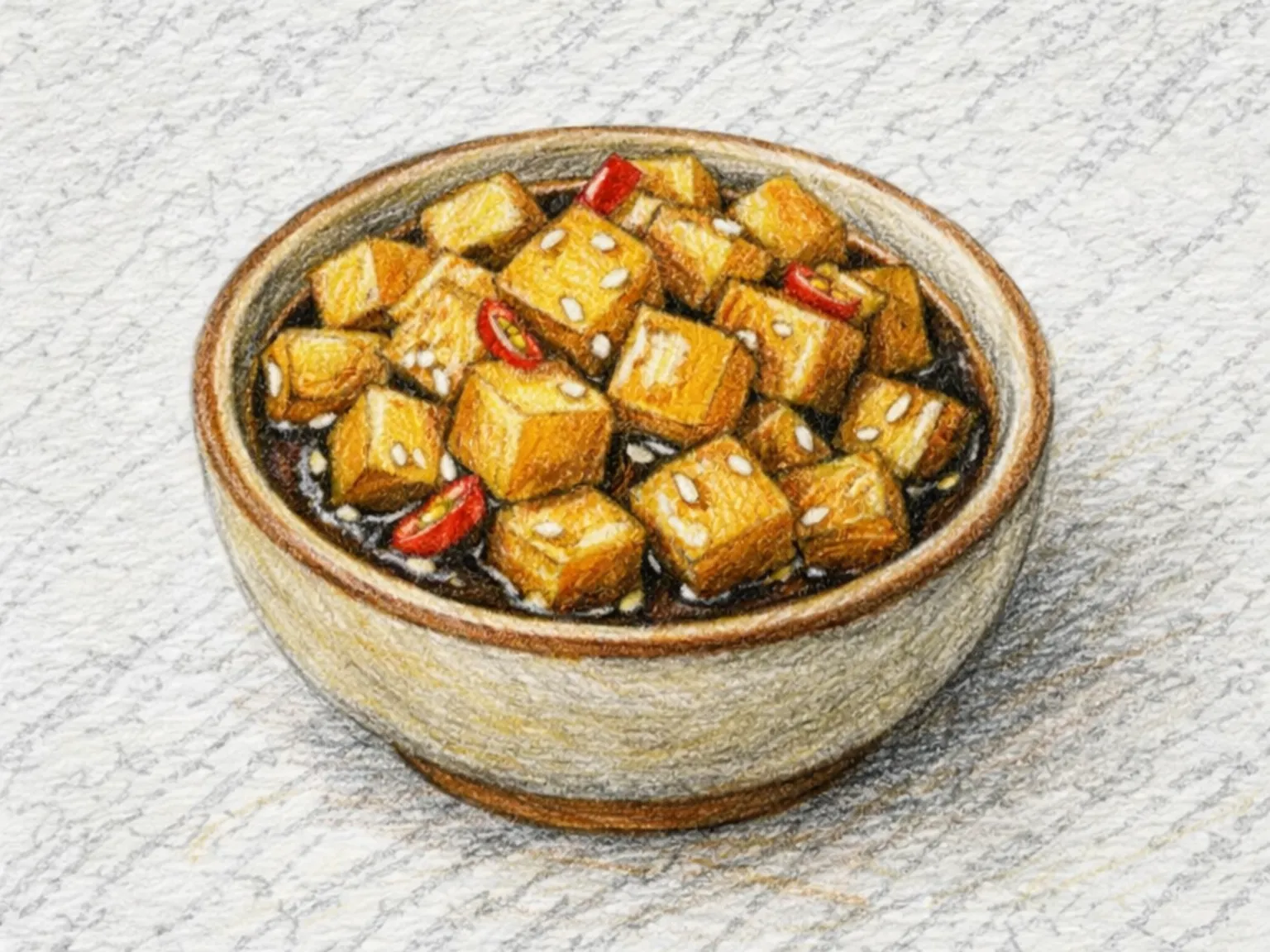
Kohlrabi jangajji is a Korean soy pickle made by thickly peeling kohlrabi, cutting it into 2 cm cubes, and submerging the pieces with garlic and dried chili in a brine of boiled soy sauce, vinegar, and sugar. Kohlrabi's dense cellular structure absorbs the brine slowly, holding a firmer crunch and a more pronounced sweetness than radish over several days of pickling. The soy sauce's savory depth and the vinegar's acidity draw out the kohlrabi's natural sugars, and dried chili lays a subtle warm note in the background. This pickle works especially well as a palate cleanser alongside grilled meats or samgyeopsal, cutting through richness with its tart, sweet bite.

Prep 20minCook 12min4 servings

Adjust Servings

2servings
servings

Instructions

  1. 1

    Peel kohlrabi thickly and cut into 2 cm cubes.

  2. 2

    Add kohlrabi, garlic, and dried chili to a sterilized container.

  3. 3

    Bring soy sauce, vinegar, water, and sugar to a boil.

  4. 4

    Cool for 3 minutes, then pour until fully submerged.

  5. 5

    Cool fully at room temperature, then refrigerate for 2 days.

  6. 6

    Turn once before serving for even seasoning.

🛒Shop Ingredients on Amazon

As an Amazon Associate, we may earn from qualifying purchases.

Tips

Keep cubes around 2 cm to retain crunch.
Add one green chili if you want extra heat.

Nutrition (per serving)

Calories
74
kcal
Protein
2
g
Carbs
15
g
Fat
0
g

More Recipes

Korean Cauliflower Jangajji (Pickled Cauliflower)
KimchiEasy

Korean Cauliflower Jangajji (Pickled Cauliflower)

Crunchy, tangy, and addictively snackable - Korean pickled cauliflower in a sweet-sour soy brine that stays crisp for days. Florets are broken into bite-sized pieces and soaked in a boiled-and-cooled brine of soy sauce, vinegar, and sugar. The dense structure absorbs the pickling liquid gradually while keeping its firm crunch intact. A perfect palate cleanser alongside fried chicken, BBQ, or any rich dish on the Korean table.

🍱 Lunchbox
Prep 25minCook 10min4 servings
Korean Bell Pepper Pickles
KimchiEasy

Korean Bell Pepper Pickles

Papeurika jangajji is a Korean soy-vinegar pickle where red and yellow bell peppers are cut into two-centimeter strips alongside half-moon cucumber slices, layered in a sterilized glass jar, and covered with a boiling brine of soy sauce, vinegar, water, sugar, and whole peppercorns. The peppers' thick flesh absorbs the brine while keeping a firm crunch, and their natural vegetable sweetness creates a three-way balance with the soy's saltiness and the vinegar's tang. Whole peppercorns leave a subtle spice note at the finish, and the bright red-and-yellow colors make these pickles a visual accent on any table. Edible after one day, the flavor peaks around day two or three once the brine fully penetrates. Omitting the cucumber reduces moisture release and extends storage life.

🏠 Everyday🍱 Lunchbox
Prep 15minCook 10min2 servings
Korean Soy Pickled Radish Cubes
KimchiEasy

Korean Soy Pickled Radish Cubes

Mu jangajji is a fundamental Korean soy-pickled radish made by cutting radish into 1.5 cm cubes, packing them in a sterilized jar with dried chili, and pouring over a boiled brine of soy sauce, vinegar, and sugar. The radish's firm flesh absorbs the sweet-salty brine gradually while maintaining its crisp bite, and the dried chili adds a gentle warmth and aroma to the liquid. Vinegar balances the soy's saltiness with a clean tang, and using dense winter radish yields the best texture. This is one of the most versatile Korean pickles, appearing alongside gimbap, bibimbap, and gukbap as a standard table companion.

🍱 Lunchbox
Prep 20minCook 10min4 servings
Korean Soy-Pickled Eggplant
KimchiEasy

Korean Soy-Pickled Eggplant

Gaji jangajji is a Korean pickled eggplant made by blanching eggplant for just over a minute to soften only the surface, then submerging it in a boiled brine of soy sauce, vinegar, and sugar. The blanched eggplant absorbs the pickling liquid rapidly like a sponge while keeping a yielding, silky texture inside. Vinegar gives direction to the eggplant's otherwise neutral flavor, and garlic and cheongyang chili layered into the brine build a quiet complexity beyond simple preservation. Ready to eat after one day, this jangajji holds its texture for over ten days refrigerated, making it a practical banchan to prepare in advance.

🏠 Everyday🍱 Lunchbox
Prep 20minCook 8min4 servings
Korean Pickled Celtuce Stems
Side dishesMedium

Korean Pickled Celtuce Stems

Gungchae is the dried stem of celtuce (Lactuca sativa var. asparagina) - called wosun in Chinese - and its Korean name, meaning 'palace vegetable,' reflects a belief that it was eaten in the royal court. When rehydrated from its dried state, the stems develop a distinctive crunchy, almost cartilaginous snap that is the entire point of the ingredient. Packed into sterilized jars and covered with a boiling brine of soy sauce, vinegar, sugar, and water, the stems pickle quickly: edible within a day, but the sweet-sour-salty balance peaks at three days. The pickle's crisp bite and tangy flavor make it a natural counterpart to rich or oily main dishes, cutting through heaviness with every crunch.

🏠 Everyday🍱 Lunchbox
Prep 20minCook 10min4 servings
Korean Pickled Garlic Scapes
Side dishesEasy

Korean Pickled Garlic Scapes

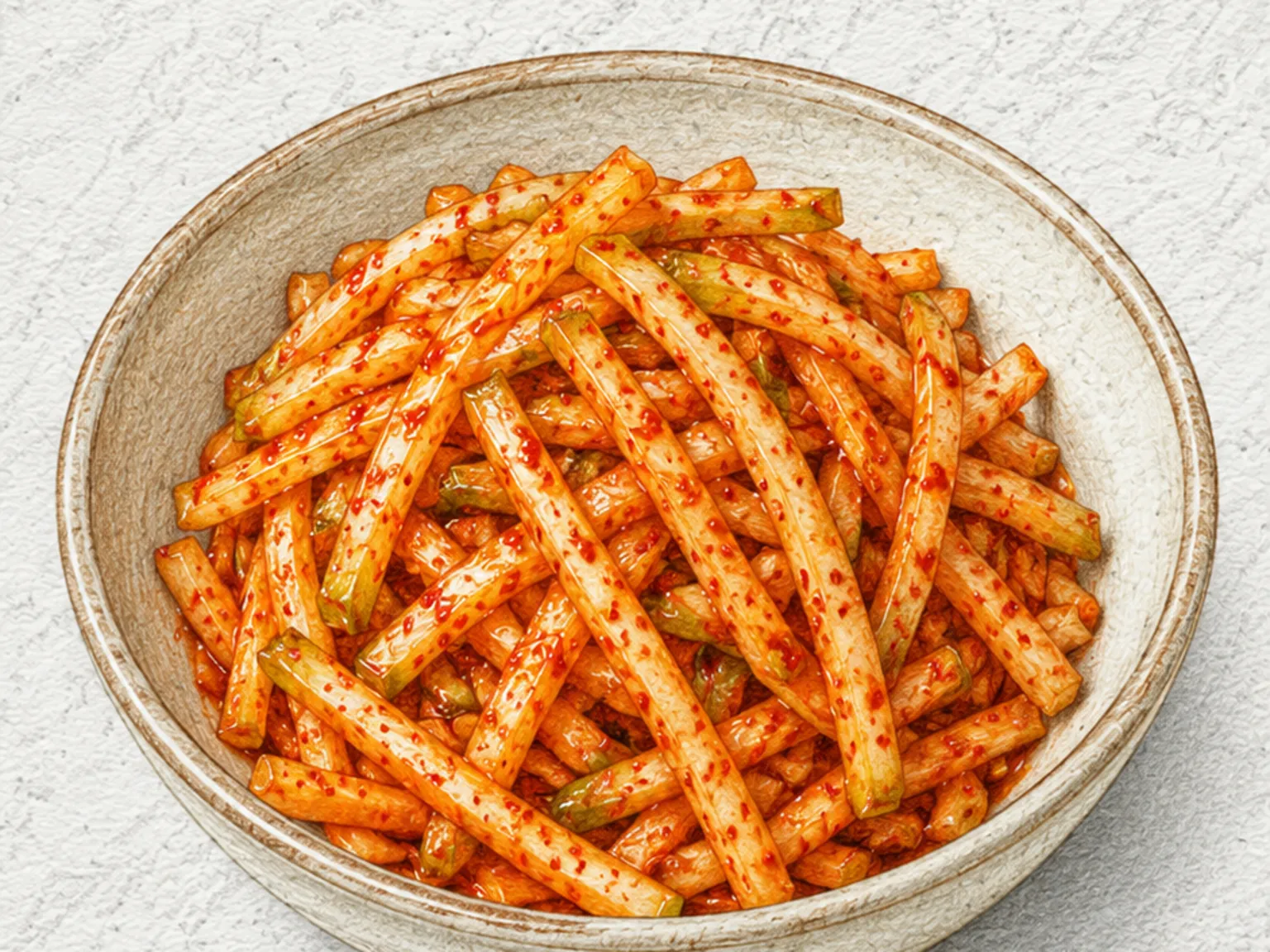
Maneuljjong-jangajji pickles garlic scapes in a boiled soy-vinegar-sugar brine, sharing the same preservation principle as garlic clove jangajji but using the stalks instead of the bulbs. The scapes are cut to 4 cm lengths, packed tightly in a jar, and doused with the brine while still hot - the heat partially cooks the outer surface, giving each piece a clean snap when bitten, unlike the cold-pour method used for whole garlic jangajji. Whole black peppercorns added to the jar release their spicy aroma into the liquid during aging, adding depth beyond the basic salt-acid profile. Though edible after one day, day three is the sweet spot where the seasoning has penetrated enough while the scapes still retain crunch. Reboiling and repouring the brine once extends the preservation window significantly. These pickled scapes serve as a sharp, vinegary counterpoint to rich meat dishes on the Korean table.

🏠 Everyday🍱 Lunchbox
Prep 15minCook 8min4 servings
More Kimchi