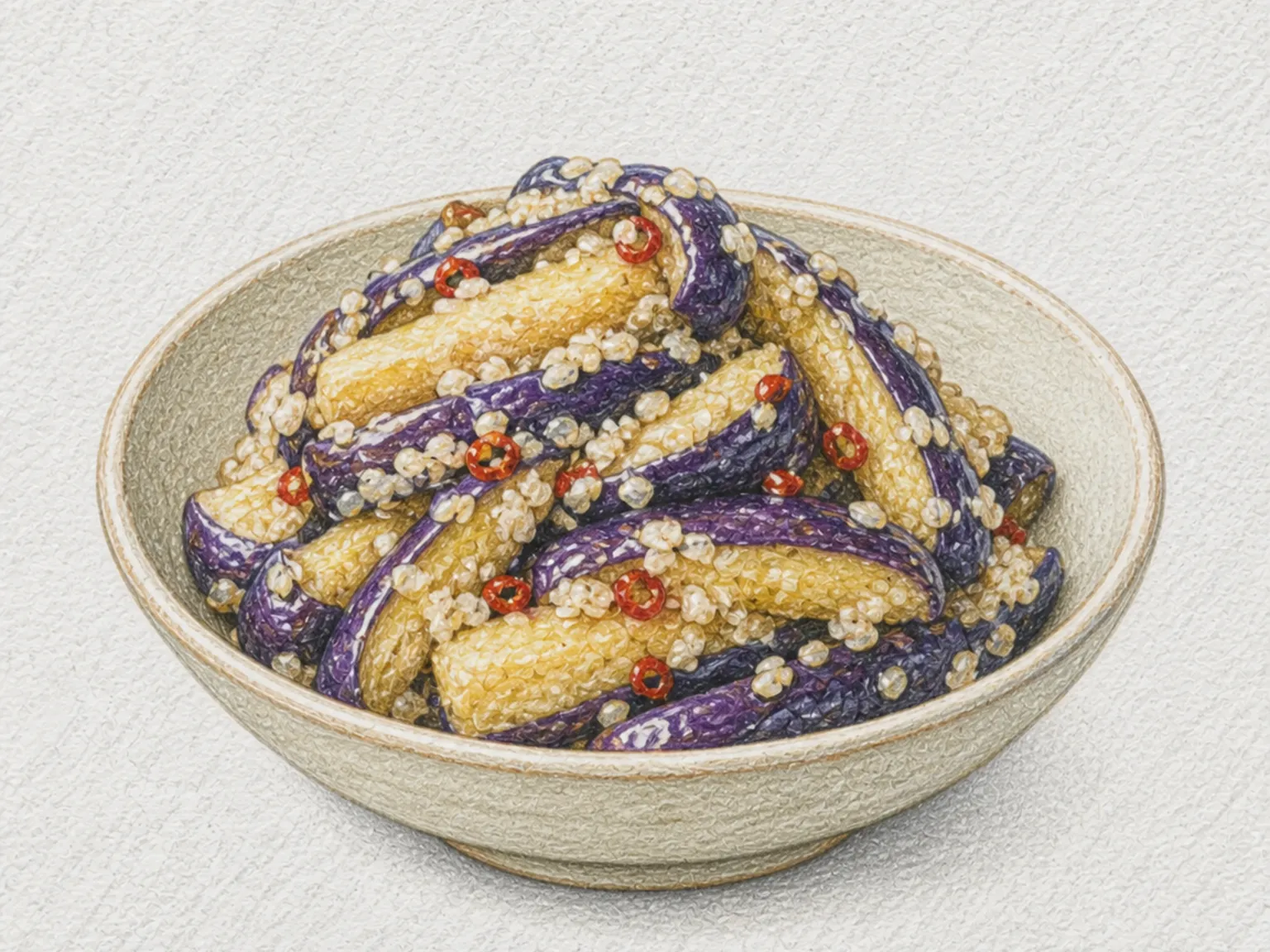
Nasu no Koji-zuke (Eggplant Pickled with Rice Koji)
Quick answer
- Total time
- 210 min
- Level
- Hard
- Servings
- 60 servings
- Ingredients
- 9
About this dish
With six kilograms of small eggplants in one batch, the fermenting crock, pressing stone and a month of refrigerator space need to be sorted out before anything else.
Read more
In a pickling bed of steamed rice, rice koji, salt, coarse sugar and shochu, the eggplants take on sweetness and koji aroma rather than plain saltiness, with bamboo leaves and dried red chili layered in. Once the brine rises over everything, the weight is reduced so the contents simply stay submerged. Mold, a rotten smell or abnormal slime means the whole crock is discarded untasted.
Ingredients
Instructions
- 1
Wash and sanitize the fermentation vessel, lid, weight plate, and tongs with a food-contact sanitizer and dry completely.
Select only sound fruit from 6kg small eggplants, wash and dry them, then rub 20g food-grade alum evenly over every surface.
- 2
Spread the eggplants on clean mesh and dry for 3 to 6 hours in a shaded, ventilated place, turning halfway.
Once both surfaces are dry, rinse quickly under running water to remove excess alum and dry thoroughly with clean cloth.
- 3
Rinse 1.5kg rice, soak for 1 hour, and drain for 30 minutes.
Steam over strong steam for 35 to 45 minutes until cooked through, then spread on a sanitized tray and cool to 35C or below.
- 4
With sanitized utensils, combine the cooled steamed rice, 1.5kg active rice koji, 900g salt, 1.25kg coarse sugar, and 200ml shochu without lumps. Slice 8 dried chilies 5mm thick and wash and dry 12 food-grade bamboo leaves.
- 5
Spread a thin layer of rice-koji mixture in the vessel and pack one snug layer of eggplants.
Scatter some chili and repeat. Cover the final layer completely with mixture, overlap bamboo leaves on top, add the sanitized plate, and apply at least 12kg of sanitized weight.
- 6
Keep the vessel refrigerated at 4C or colder.
Once brine rises to cover the eggplants and mixture, reduce the weight to about 6kg while keeping everything submerged. After one month, remove a piece with clean tongs and inspect it. If mold, putrid odor, or abnormal slime is present, do not taste and discard the batch.
References checked
These references were consulted when this page was prepared or corrected. A source check does not mean the recipe was independently kitchen-tested.
- 일본 농림수산성 うちの郷土料理
『あきた郷味風土記』(秋田県農山漁村生活研究グループ協議会) · Checked: 2026-08-11
Use-up ingredient planner
Turn these ingredients into two more meals
The overlap excludes basic seasonings. Open the next recipe and your selected dishes will stay with you.
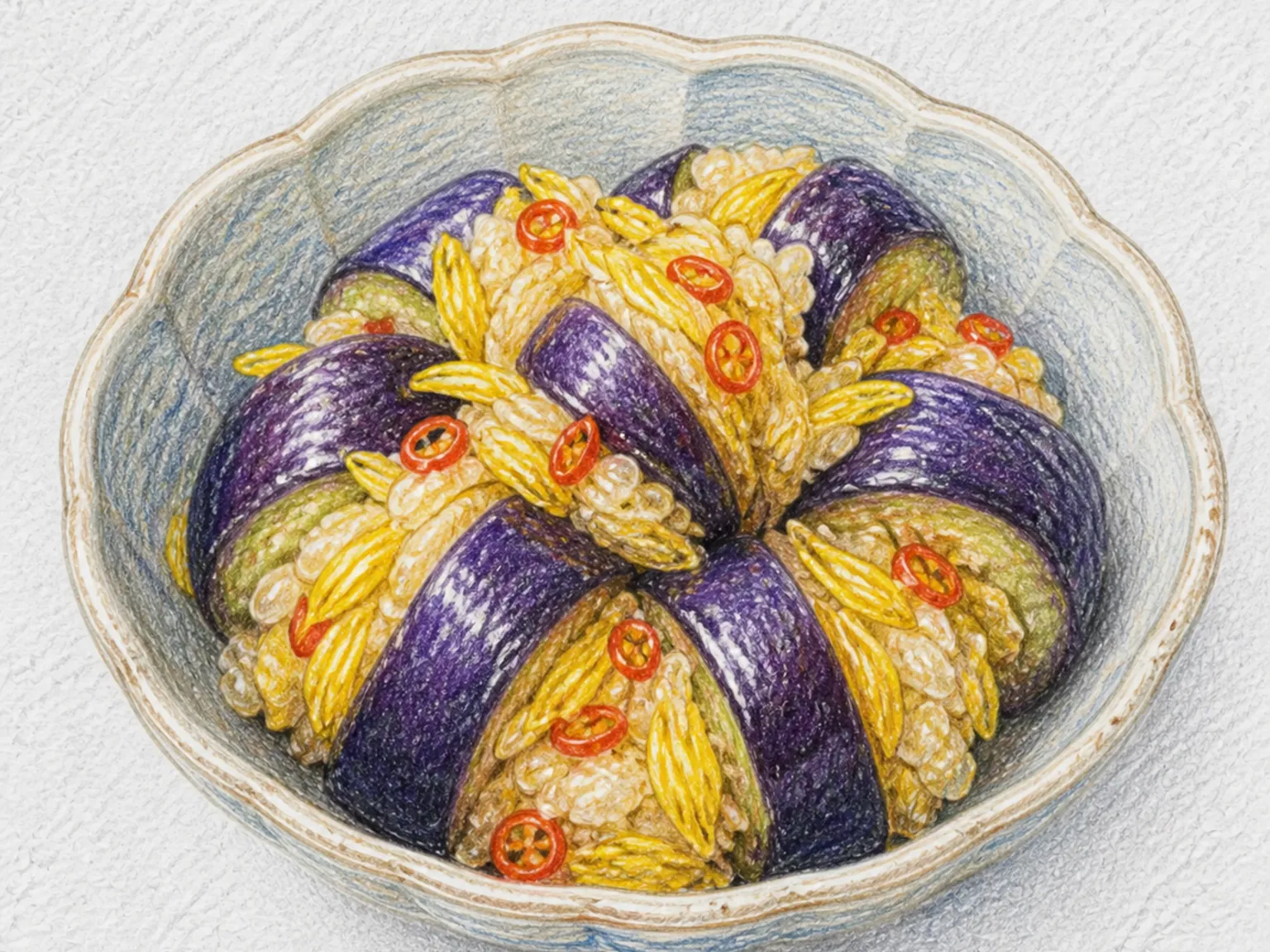
Nasu no Hana-zushi
food-grade alum, food-grade bamboo leaves
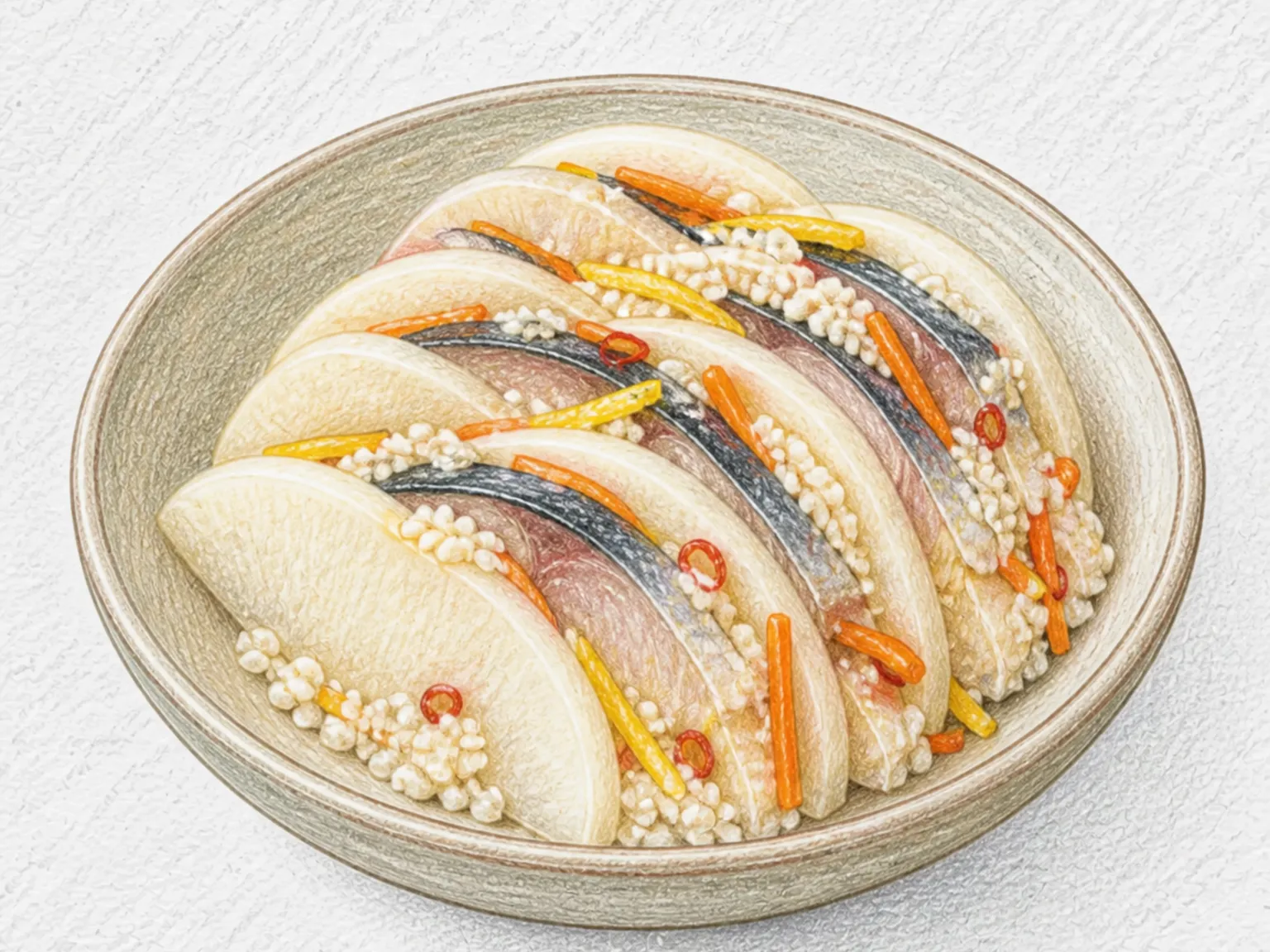
Kaburazushi (Koji-Fermented Turnip and Yellowtail)
rice, dried red chilies
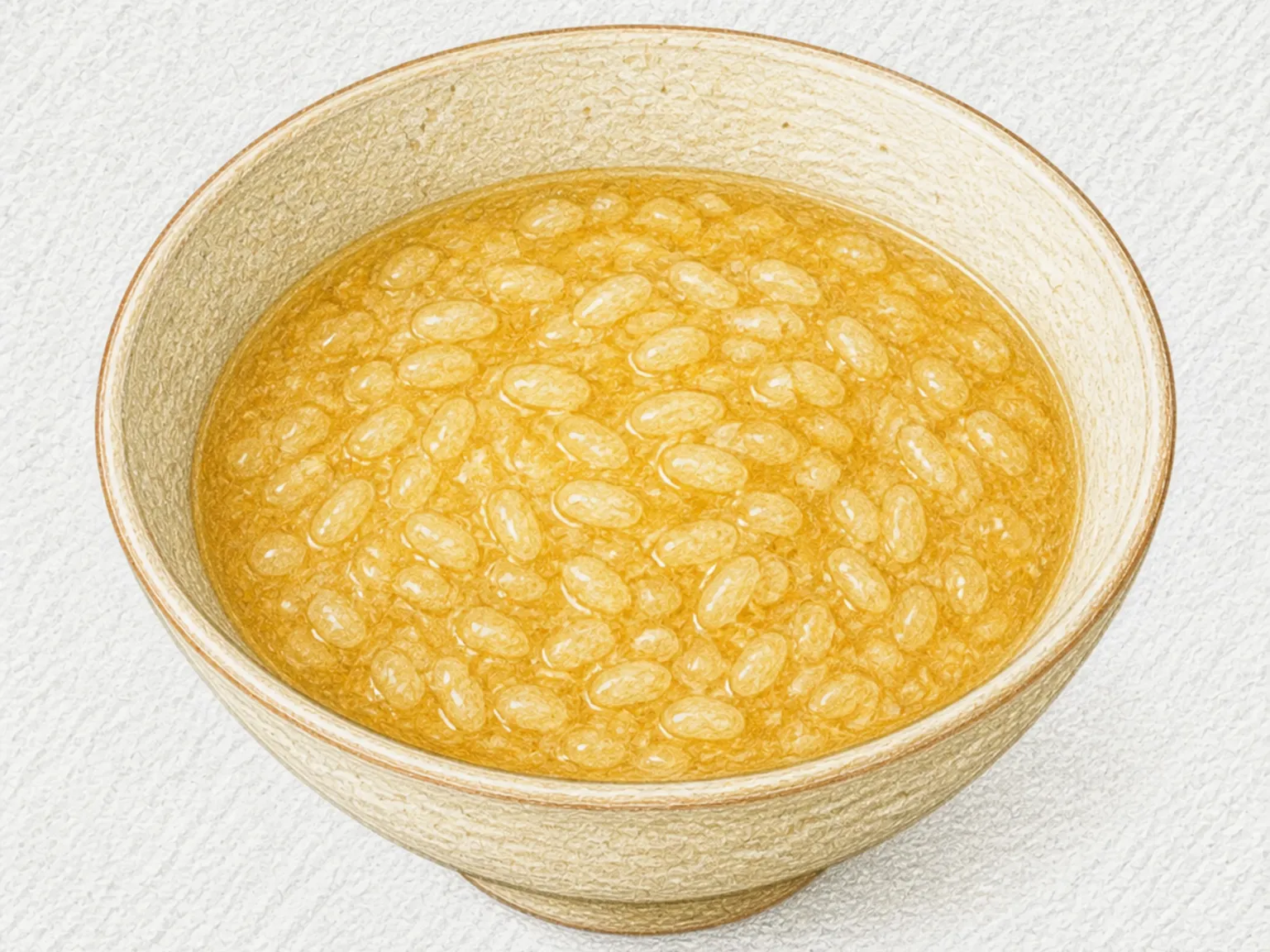
Chagayu (Yamaguchi Bancha Rice Porridge)
rice