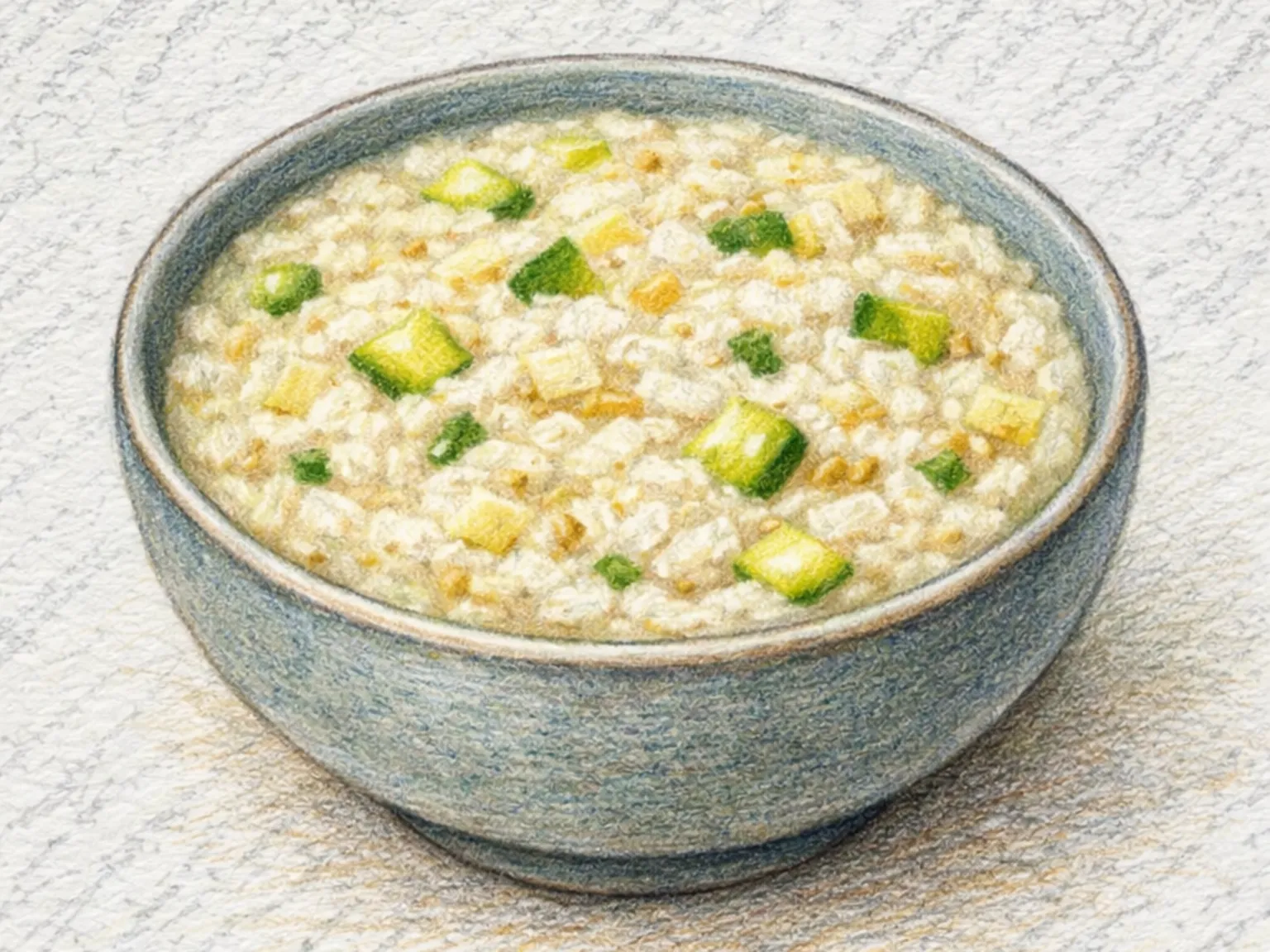
Korean Soy Pulp Porridge (High-Protein Okara Anchovy Stock Porridge)
Soy pulp (okara) and soaked rice simmer together in anchovy stock, creating a thick, protein-rich porridge with a hearty body. Onion and garlic are first sautéed in sesame oil to build an aromatic base, then the rice goes in for a brief toast before the stock is added. Once the rice is half-cooked, soy pulp and diced zucchini join the pot, and constant stirring over low heat is essential - okara scorches quickly if left unattended. Seasoned with just salt and black pepper, this juk has a nutty, beany depth from the soy pulp paired with the clean umami of anchovy stock, making it filling yet light on the palate.
Adjust Servings
Instructions
- 1
Drain soaked rice and finely dice zucchini and onion.
- 2
Heat sesame oil and sauté onion with garlic for 1 minute.
- 3
Add rice, stir for 2 minutes, then pour in anchovy stock and simmer.
- 4
When rice is half-cooked, add soy pulp and zucchini, then cook on low while stirring.
- 5
Season with salt and pepper once thickened.
- 6
Rest for 3 minutes off heat, then serve.
As an Amazon Associate, we may earn from qualifying purchases.
Tips
Nutrition (per serving)
More Recipes

Korean Seaweed Rice Porridge
Miyeok-juk is a classic Korean porridge made by sauteing rehydrated seaweed in sesame oil, then simmering it with rice until velvety smooth. Stir-frying the seaweed first tames any brininess and lets the nutty sesame flavor infuse the entire pot. Seasoned lightly with soup soy sauce, the porridge lets the natural depth of the seaweed come through. Its gentle flavor and soft texture have made it a staple for breakfast, recovery meals, and postpartum nourishment across Korea.

Korean Chicken Breast Perilla Porridge
Dakgaesal deulkkae juk is a Korean porridge enriched with perilla seed powder, built on a base of shredded chicken breast, onion, and carrot stir-fried before simmering with soaked rice and chicken stock. The perilla powder dissolves into the porridge as it cooks, creating a thick, creamy consistency and a deeply nutty aroma that defines every spoonful. The chicken adds lean protein without heaviness, making the bowl nourishing and easy to digest. Unlike sesame, which has a sharper roasted quality, perilla carries a rounder, more herbaceous nuttiness that makes the porridge feel distinctly Korean. It works well as a recovery meal after exercise or as a warming, restorative dish when energy runs low and the body needs gentle replenishment.

Korean Napa Cabbage Tofu Porridge
A gentle, warming Korean porridge of napa cabbage and soft tofu - light enough for a recovering stomach yet satisfying for any morning. The rice is first sauteed in sesame oil, forming a thin oily coat on each grain that releases a nutty fragrance as the porridge cooks. Vegetable stock and finely chopped cabbage are added, and the pot simmers at medium heat until the rice grains break down completely, during which the cabbage releases its moisture and sweetens the broth naturally. The tofu is crumbled by hand and stirred in during the last five minutes, dispersing evenly to create a smooth protein layer within the porridge. Minced garlic goes in early so its raw edge cooks out fully. Seasoning is kept to a minimum with just guk-ganjang and salt, letting the ingredients speak for themselves. Without heavy oils or strong spices, the porridge draws its flavor entirely from the cabbage sweetness and the quiet richness of tofu.

Korean Sesame Oil Abalone Porridge
Both abalone flesh and innards are used together with a generous two tablespoons of sesame oil to maximize nuttiness in this porridge. Sauteing the minced innards with garlic in the sesame oil infuses the fat with both marine and roasted flavors, forming the aromatic foundation for the entire pot. Soaked rice is stirred in the same oil until translucent, then water is added and the mixture simmers for 25 minutes as the grains release starch into a naturally thick consistency. Soup soy sauce and salt sharpen the finish, and chopped chives provide both color and a light onion fragrance.

Korean Steamed Tofu with Soy Sauce
Dubu-jjim is firm tofu steamed and topped with a seasoning sauce of soy sauce, gochugaru, chopped green onion, garlic, and sesame oil. Cutting the tofu into thick slabs before steaming lets heat penetrate evenly, producing a surface with slight resistance and a silky interior. The soy-chili sauce drizzled on top seeps into the warm tofu, delivering salty and mildly spicy flavors in each bite. Sesame oil and seeds finish the dish with a toasted aroma. Cooked without any added oil, it is a clean, protein-rich banchan that works well on a vegetarian spread.

Korean Wild Soy Grain Smoothie
Deulkkong misut smoothie is a Korean grain-based drink made by blending wild soybean powder and roasted brown rice powder with milk, plain yogurt, and banana. Mixing the powders with liquid first prevents clumps, and briefly freezing the banana before blending creates a thick, shake-like consistency without additional thickeners. Wild soybean powder delivers a deep, beany nuttiness while roasted brown rice powder adds a toasty, cereal-like undertone, so both flavors layer together. Honey adjusts the sweetness, and a pinch of salt sharpens the grain flavors.