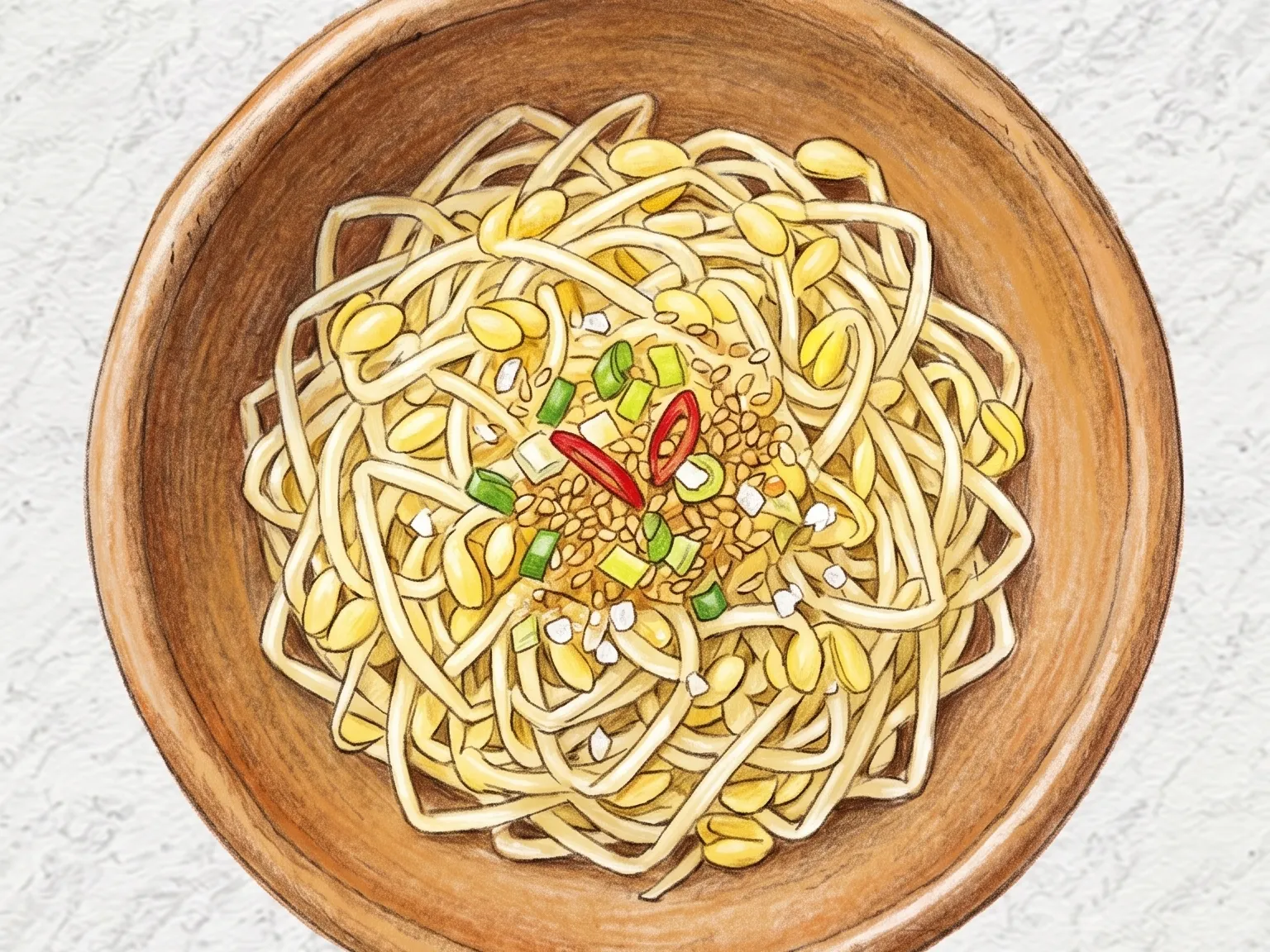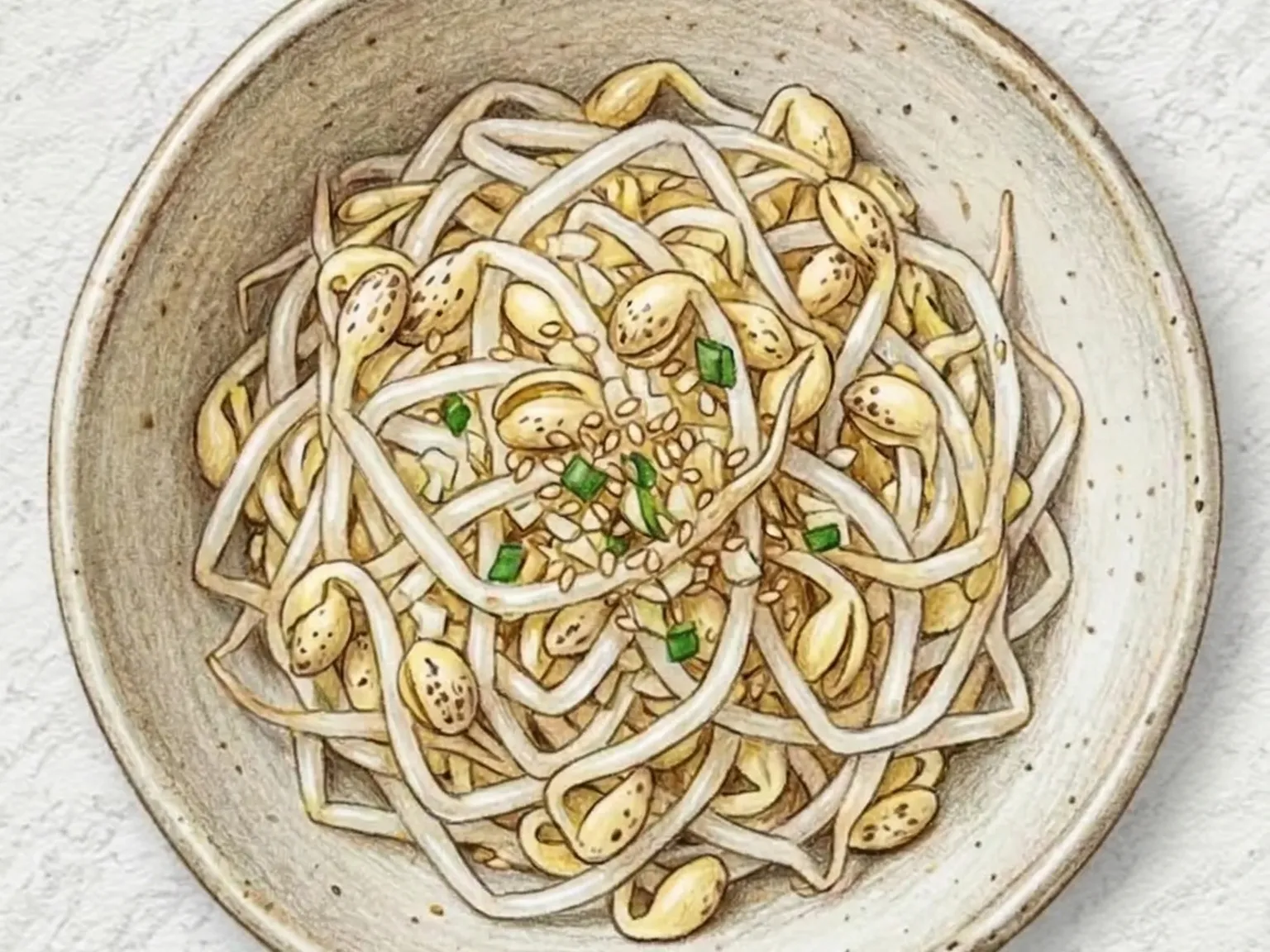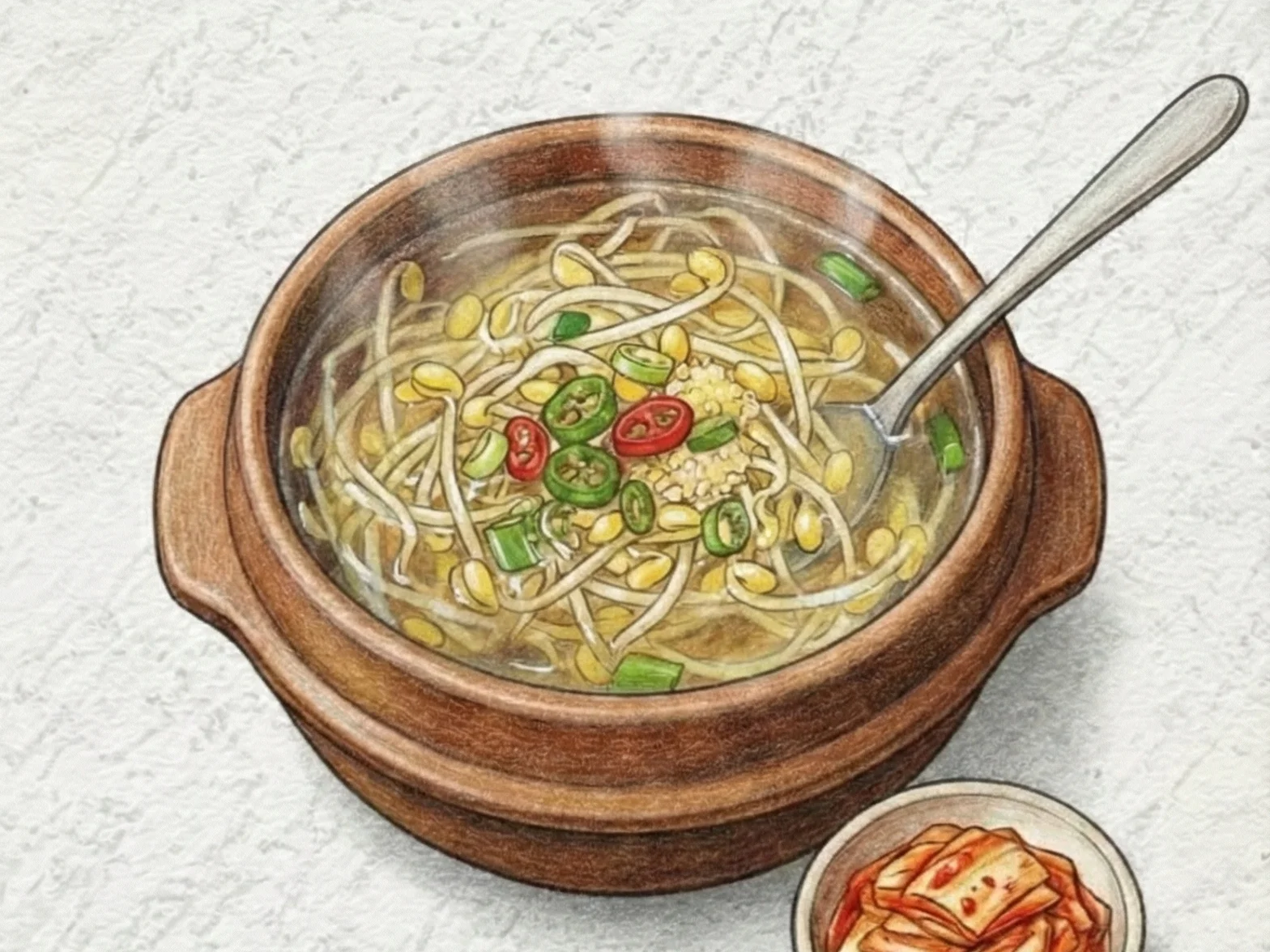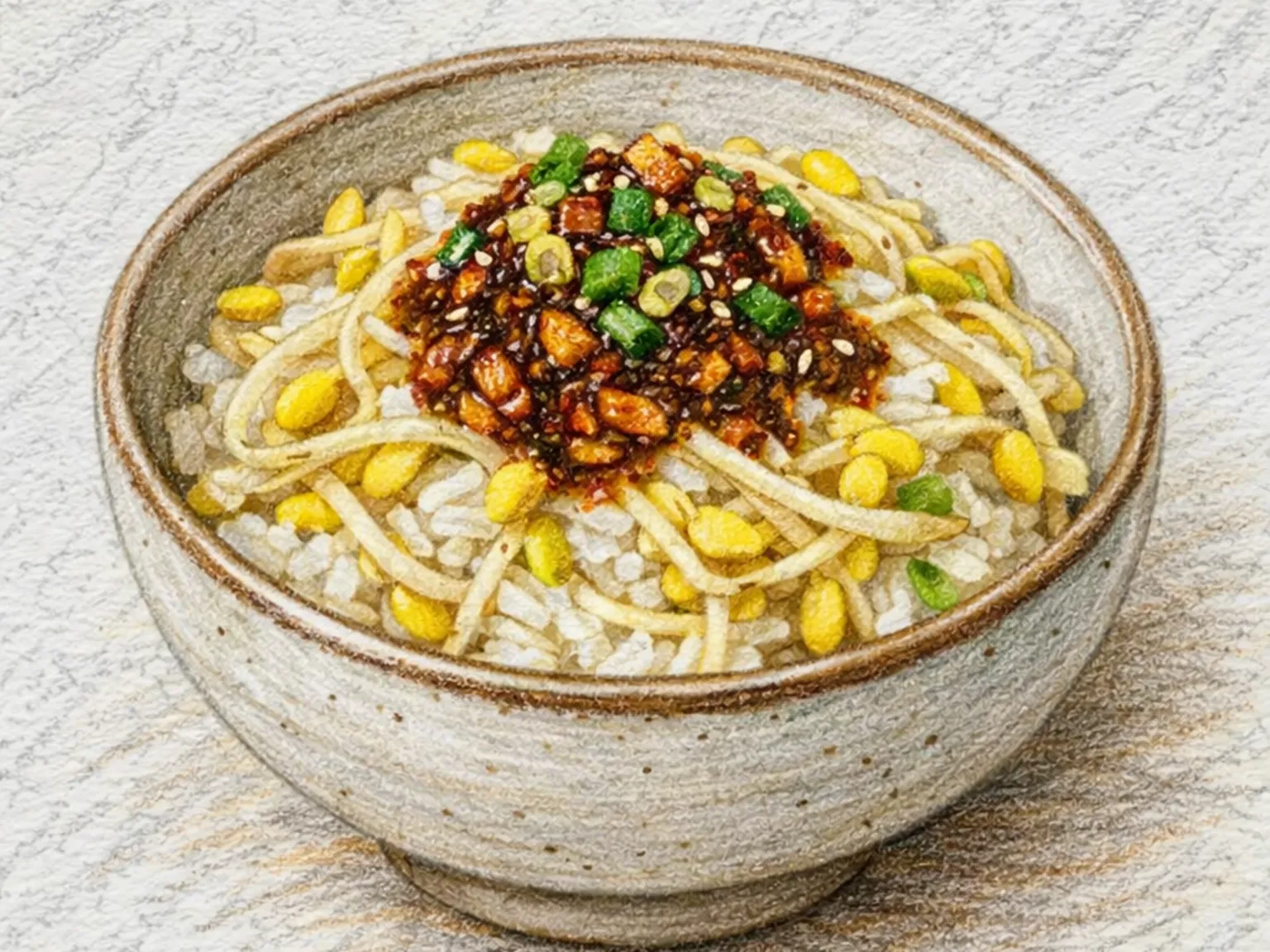
Korean Bean Sprout Rice (Pot-Steamed Rice with Soy Sprouts)
Rice Easy

Korean Bean Sprout Rice (Pot-Steamed Rice with Soy Sprouts)

Quick answer

Kongnamul-bap is a simple Korean home dish of soaked rice cooked together with a generous pile of bean sprouts in a covered pot.

What makes this special

  • A sealed lid traps steam to cook bean sprouts into a crisp, fragrance-free topping for rice.
  • Lid stays shut throughout so the sprouts steam crisp without any beany smell
  • Sprout moisture seeps into each rice grain during the final 5-minute rest
Total time
35 min
Level
Easy
Servings
2 servings
Ingredients
8
Calories
380 kcal
Protein
12 g

Key ingredients

RiceBean sproutsSoy sauceSesame oilRed pepper flakes

Core cooking flow

  1. 1 Rinse 1 1/2 cups rice until the water runs almost clear, then soak it for 30 minutes and drain well.
  2. 2 Spread the drained rice evenly in a heavy pot and add 1.3 cups water.
  3. 3 Set the pot over high heat until strong steam rises around the lid and the w...

Kongnamul-bap is a simple Korean home dish of soaked rice cooked together with a generous pile of bean sprouts in a covered pot. Timing and the closed lid are the two things that define the result. The pot starts on high heat until the water boils, then drops to low for fifteen minutes of steady cooking followed by five minutes of resting. Opening the lid at any point during this process releases steam and allows a raw, beany smell to develop in the finished rice. Once the resting period is complete, the sprouts have steamed through and their moisture has been absorbed into the rice grains. The seasoning sauce is mixed directly into the bowl at the table: soy sauce, sesame oil, gochugaru, finely sliced green onion, and a scatter of sesame seeds. Each spoonful combines the soft, starchy rice with the firm snap of the sprout stems, and the soy dressing pulls everything into a coherent flavor. The dish asks very little from the cook and costs almost nothing to make, yet it produces the kind of deeply satisfying meal that is difficult to improve upon. Some versions add daikon cut into thick batons, which contribute a cool, clean sweetness to the broth that forms at the bottom of the pot.

Prep 10min Cook 25min 2 servings

Instructions

Read the steps as a cooking flow: prep, heat, seasoning, doneness control, and finish.

6 steps
  1. 1
    Heat

    Rinse 1 1/2 cups rice until the water runs almost clear, then soak it for 30 minutes and drain well.

    Pick through 200 g bean sprouts, removing loose skins and any wilted pieces before cooking.

  2. 2
    Control

    Spread the drained rice evenly in a heavy pot and add 1.3 cups water.

    Pile the bean sprouts on top without pressing them down, cover the pot tightly, and keep the lid closed from this point on.

  3. 3
    Control

    Set the pot over high heat until strong steam rises around the lid and the water is clearly boiling inside.

    Reduce immediately to low heat, control overflow by adjusting the flame, and do not open the lid.

  4. 4
    Control

    Cook quietly on low heat for 15 minutes.

    Resist checking the rice, because lifting the lid lets steam escape and can leave the sprouts with a raw beany smell instead of a clean steamed aroma.

  5. 5
    Control

    Turn off the heat and let the covered pot rest in place for 5 more minutes.

    After resting, open it once and check that the grains are fluffy and the sprouts look slightly translucent and softened.

  6. 6
    Finish

    Mix 2 tablespoons soy sauce, 1 tablespoon sesame oil, 1 teaspoon red pepper flakes, sliced green onion, and sesame seeds.

    Gently scoop the rice so the sprouts stay intact, then serve with the sauce for mixing at the table.

After the steps

Pick a recipe that fits this dish.

Continue with shared ingredients, meal pairings, or a similar method.

Recipes That Go Well With This

More Rice →

Based on shared ingredients and meal pairing

Korean Dried Pollock Bean Sprout Soup Rice
Shared ingredient: bean sprouts Rice

Korean Dried Pollock Bean Sprout Soup Rice

Hwangtae kongnamul gukbap is a hangover-recovery rice soup built on a broth of stir-fried dried pollock strips, bean sprouts, and radish. The dried pollock is soaked briefly in water to restore some moisture, then stir-fried in sesame oil. The frying step drives off any fishiness and releases a deep, toasted aroma that becomes the flavor backbone of the entire broth. Without this step, the soup tastes thin and vaguely fishy; with it, the broth has a satisfying nuttiness even before any other ingredients are added. Sliced radish goes into the water next and simmers until it softens and releases its natural sweetness into the liquid. Bean sprouts go in after the radish, and here a small detail matters: the lid stays on throughout the bean sprout cooking. If the lid is removed while the sprouts cook, their distinctive raw smell rises with the steam and lingers in the broth. Keeping the lid sealed lets the sprouts cook in their own steam and the smell dissipates harmlessly. Soup soy sauce seasons the broth with a clean saltiness that does not darken the liquid as much as regular soy sauce would, keeping the broth pale and clear-looking. Sliced green onion goes in at the very end for a fresh accent. The soup is poured over a bowl of rice to serve.

Korean Bean Sprout Soup with Rice
Shared ingredient: bean sprouts Rice

Korean Bean Sprout Soup with Rice

Kongnamul gukbap is a Jeonju-style soup-and-rice dish built around bean sprouts simmered in anchovy broth with the lid kept off throughout cooking. Leaving the pot uncovered for the five to six minute cooking time allows steam to carry off the beany odor while keeping the sprouts snappy and firm rather than limp. Soup soy sauce seasons the broth, sliced green onion is added for freshness, and a whole egg is poached directly in the simmering liquid until the yolk is just set. Hot broth is then poured over a bowl of cooked rice, and shredded dried seaweed and a pinch of red pepper flakes are scattered on top to finish. The refreshing, clean flavor that bean sprouts bring to the soup pairs naturally with the deep savoriness of anchovy stock, and simmering a piece of radish alongside clarifies the broth and gives it additional sweetness. Cooking uncovered is a traditional rule of thumb that Korean cooks have followed for generations. This dish has long been associated with Jeonju and is widely sought out as a restorative meal after a late night.

Manduguk (Korean Dumpling Clear Broth Soup)
Serve together Soups

Manduguk (Korean Dumpling Clear Broth Soup)

Manduguk is a Korean dumpling soup in which hand-folded dumplings stuffed with ground pork, tofu, scallion, and garlic are dropped into a clear, simmering broth, typically anchovy-kelp stock or beef broth, and cooked until they float. As the dumplings cook, their thin wheat-flour wrappers release a subtle starch that gives the broth a barely perceptible body, while the filling leaks savory juices that enrich the liquid gradually. A thin drizzle of beaten egg stirred in near the finish creates silken wisps on the surface of the broth and gives the bowl a more finished appearance. Shredded egg strips and crumbled dried seaweed scattered on top add a pleasant contrast in color and a faint oceanic note to the flavor. Many Korean households serve manduguk on Lunar New Year as an alternative to tteokguk, and some combine the two by adding sliced rice cakes alongside the dumplings. Dumplings can be made in large batches and frozen raw, which means this soup can be pulled together quickly on weeknights without sacrificing any of the flavor that comes from homemade filling. A small dish of soy-vinegar dipping sauce served alongside lets each person adjust the seasoning at the table, and the light acidity of the sauce cuts through the mild broth in a way that makes the contrast between the two worth trying.

Korean Red Bean Rice (Steamed Rice with Adzuki Beans)
Similar recipe Rice

Korean Red Bean Rice (Steamed Rice with Adzuki Beans)

Pat-bap is Korean red bean rice, a traditional dish that has been tied to the winter solstice for centuries as a food believed to ward off misfortune and bad spirits for the coming year. Dried red beans are boiled until they are nearly at the point of splitting, then removed from the liquid so the deep-tinted cooking water can be used to soak and cook the rice, staining every grain with a soft reddish hue that sets the dish apart visually from plain white rice. The beans are folded back into the pot during cooking, and their starchy, earthy sweetness blends with the sticky bite of the short-grain rice, deepening with each chew in a way that plain rice does not. A light dusting of salt draws out the beans' natural, understated sweetness and sharpens the overall flavor without overpowering the grain's own character. The dish is deliberately plain in approach, and that simplicity is the point: a bowl of pat-bap alongside kimchi forms a complete, filling meal grounded in centuries of Korean seasonal food culture. Though historically associated with ritual occasions and seasonal festivals, pat-bap is equally suited to everyday meals.

Serve with this

Korean Mushroom Dumpling Hot Pot
Stews Easy

Korean Mushroom Dumpling Hot Pot

Mandu jeongol is a generous hot pot of twelve large dumplings simmered with napa cabbage, shiitake mushrooms, oyster mushrooms, and bok choy in anchovy-kelp stock. The two varieties of mushroom add layers of umami to the clear broth, while the cabbage and bok choy soften and release their natural sweetness as they cook. The dumplings cook directly in the simmering stock, their wrappers gradually turning chewy as the filling flavors seep into the surrounding liquid. Soup soy sauce and garlic provide a clean, understated seasoning that keeps the broth from overshadowing any single ingredient. The right moment to eat is when the vegetables have wilted and the dumplings float to the surface, signaling they are cooked through. The absence of any spice or strong seasoning makes this one of the more universally approachable hot pots, suited for all ages. Leftover broth absorbs cooked rice or soaked glass noodles easily, turning what remains into a satisfying finish to the meal.

🏠 Everyday 🎉 Special Occasion
Prep 15min Cook 20min 4 servings
Korean Stir-Fried Eggplant Banchan
Side dishes Easy

Korean Stir-Fried Eggplant Banchan

Gaji bokkeum turns eggplant, a vegetable Koreans have cultivated since the Goryeo period, into a quick, oil-glazed banchan where cooking speed matters as much as the seasoning. The eggplant is sliced into half-moons, and the pan must be smoking hot before they go in - any hesitation and the pieces steam rather than sear, collapsing into a soggy mass. High heat with restrained oil produces lightly charred edges while the interior becomes silky and almost custardy, two contrasting textures in the same bite. Soy sauce, garlic, and sesame oil go in during the final thirty seconds, sizzling against the hot surface and coating each piece in a thin, caramelized glaze. The result has a concentrated, clean umami quality that a braised preparation cannot match. Because the spongy cellular structure of eggplant absorbs oil rapidly, starting with too much fat leaves each piece greasy rather than glazed - the dish relies on pan temperature, not oil volume. Korean home cooks return to this recipe as a weeknight banchan precisely because the whole process, from cutting board to table, takes under ten minutes, and the payoff is consistently good.

🏠 Everyday 🍱 Lunchbox
Prep 10min Cook 7min 4 servings
Korean Cauliflower Jangajji (Pickled Cauliflower)
Kimchi Easy

Korean Cauliflower Jangajji (Pickled Cauliflower)

Korean pickled cauliflower made by soaking bite-sized florets in a boiled-and-cooled brine of soy sauce, vinegar, and sugar. The dense, compact structure of cauliflower absorbs the pickling liquid at a gradual pace, developing flavor over time without turning soft - a texture advantage over vegetables like cucumber or radish that break down faster. Vinegar and sugar balance each other cleanly, and the soy sauce adds a low layer of umami beneath the bright, tangy top note. The pickle works well as a palate cleanser alongside fried or grilled food, and holds up just as well as a plain rice side. The preparation is simple: boil the brine, let it cool, pour it over the florets, and wait.

🍱 Lunchbox 🏠 Everyday
Prep 25min Cook 10min 4 servings

Similar recipes

Korean Black Bean Sauce Rice
Rice Easy

Korean Black Bean Sauce Rice

The key to jjajangbap lies in pre-frying chunjang (Korean black bean paste) in oil to strip its raw bitterness and unlock a toasty, earthy aroma. Ground pork, diced onion, zucchini, and cabbage are stir-fried until just softened, then folded into the fried paste so the dark sauce coats every piece. A potato starch slurry thickens the mixture after a brief simmer, giving it enough body to cling to rice without pooling. The finished bowl delivers a mellow sweetness mostly from the caramelized onion, layered with fermented soybean depth - a homestyle take on Chinese-Korean comfort food.

🏠 Everyday
Prep 20min Cook 20min 2 servings
Korean Kimchi Bean Sprout Stew
Stews Easy

Korean Kimchi Bean Sprout Stew

This jjigae simmers fermented kimchi and soybean sprouts in an anchovy-based stock for a broth that is both refreshing and sharply spiced. The soybean sprouts contribute a crisp bite and a clean, neutral flavor that tempers the kimchi's fermented tang and chili heat, keeping the overall taste from feeling one-dimensional. Soft tofu adds creaminess and a gentle texture contrast, while onion provides background sweetness and green onion brings a fresh, aromatic note. Soup soy sauce and gochugaru are used to season, producing a clear, clean spiciness without muddying the broth. In Korean households, this jjigae is frequently eaten in the morning or as a hangover remedy, valued for its simplicity and its ability to settle the stomach while still delivering a satisfying depth of flavor.

🏠 Everyday ⚡ Quick
Prep 10min Cook 20min 2 servings
Korean Bean Sprout Pancake
Grilled Easy

Korean Bean Sprout Pancake

Kongnamul-jeon is a Korean bean sprout pancake made by folding blanched soybean sprouts and sliced green onion into a thin batter of Korean pancake mix, water, and salt, then pan-frying until both sides turn golden. The sprout heads turn nutty and soft when cooked while the stems retain their crunch, creating a contrast of textures within a single pancake. Draining the sprouts thoroughly before mixing is essential-any residual water thins the batter and results in a soggy rather than crisp pancake. Sliced green onion adds an aromatic sharpness to the otherwise mild sprout flavor, and letting the finished pancake cool briefly before slicing keeps it from falling apart.

🍺 Bar Snacks 🏠 Everyday
Prep 15min Cook 10min 2 servings

Tips

Do not open the lid while cooking to prevent a beany smell.
Adding ground pork makes it more filling.

Nutrition (per serving)

Calories
380
kcal
Protein
12
g
Carbs
68
g
Fat
8
g