Bean Sprout Bulgur Seaweed Salad
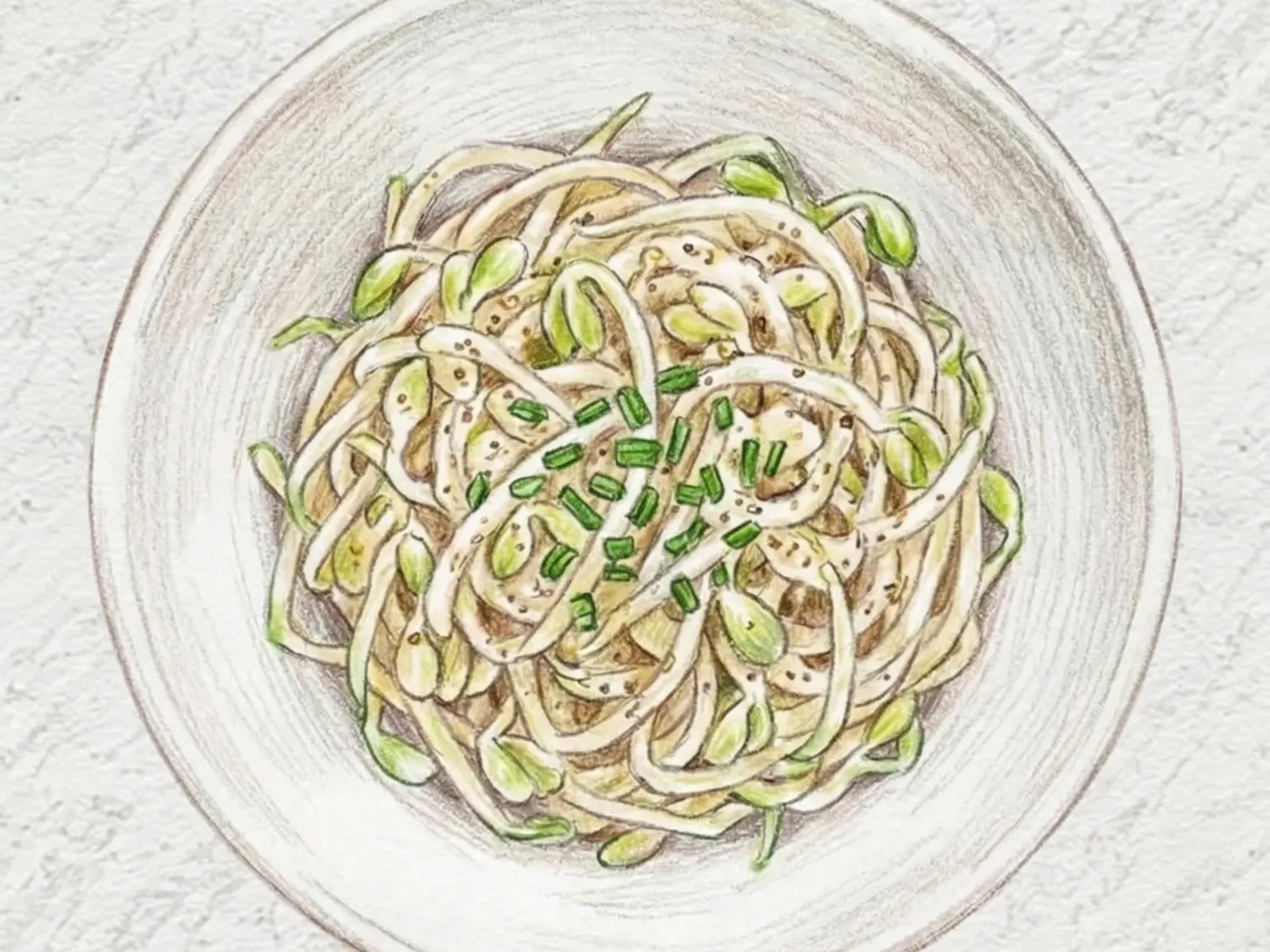
Bulgur wheat brings a plump, nutty chew that pairs naturally with blanched bean sprouts, creating a hearty Korean grain salad with satisfying bite. The dressing - soy sauce, apple vinegar, sesame oil, and minced garlic - mirrors the classic Korean namul seasoning profile, tying grain and vegetable together seamlessly. Julienned carrot adds sweetness and color, while sliced scallion sharpens the finish with a mild onion bite. Roasted seaweed flakes are folded in just before serving to preserve their crunch; their oceanic saltiness plays off the earthy grain in a combination that is distinctly Korean.
Adjust Servings
Instructions
- 1
Rinse bulgur, cook with double water on low heat for 10 minutes, then steam off heat and cool.
- 2
Blanch bean sprouts for 2 minutes, shock in cold water, and squeeze out excess moisture.
- 3
Julienne carrot and finely slice scallion.
- 4
Whisk soy sauce, vinegar, sesame oil, and minced garlic into a dressing.
- 5
Combine bulgur, sprouts, carrot, and scallion, then toss evenly with dressing.
- 6
Add seaweed flakes right before serving and toss briefly.
As an Amazon Associate, we may earn from qualifying purchases.
Tips
Nutrition (per serving)
More Recipes

Wild Rice Crispy Seaweed Salad
Wild rice crispy seaweed salad combines cooked and cooled wild rice with julienned red cabbage, carrot, and thawed edamame, dressed in soy sauce, brown rice vinegar, sesame oil, and minced garlic, then topped with crispy seaweed chips. Wild rice takes longer to cook than regular rice due to its tough hull, but cooling it completely is essential - warm grains clump together and lose their distinct chewy bite. The dressing layers soy saltiness and garlic depth over a gentle vinegar acidity and sesame richness, elevating the mild grain base. Edamame contributes soft protein while the raw vegetables provide a crisp, fresh contrast to the chewy rice. The seaweed chips must be added just before serving to preserve their crunch and concentrated umami.

Korean Bean Sprout Rice (Pot-Steamed Rice with Soy Sprouts)
Washed bean sprouts are piled on top of soaked rice in a pot, then cooked together - the lid stays closed throughout to prevent a beany smell from developing. After fifteen minutes on low heat and five minutes of resting, the rice emerges with the sprouts steamed directly into it. A simple seasoning sauce of soy sauce, sesame oil, chili flakes, sliced green onion, and sesame seeds is mixed in at the table. The crunch of the sprouts against the soft rice creates a satisfying textural contrast, and the salty-sweet soy dressing ties everything together - proof that minimal ingredients can produce a deeply comforting Korean home meal.

Charred Broccolini Doenjang Lentil Salad
Charred broccolini doenjang lentil salad halves broccolini lengthwise, coats it in olive oil, and chars it in a hot pan for 4-5 minutes until the edges darken and turn slightly bitter-sweet. Cooked lentils bring a starchy, filling texture, and a thick dressing of doenjang, Dijon mustard, apple cider vinegar, and minced garlic layers fermented depth with sharp acidity. Roughly chopped walnuts release oily richness when bitten, and the apple cider vinegar tempers the salt of the doenjang. Draining the lentils thoroughly prevents the dressing from thinning, and resting the assembled salad five minutes before serving lets the grains absorb the seasoning more fully.

Charred Corn Bulgur Gochujang Salad
Charred corn bulgur gochujang salad dry-chars corn kernels in a hot pan for three minutes to caramelize their natural sugars, then combines them with bulgur wheat cooked for eight minutes to a chewy, al dente finish. A smooth dressing of gochujang, olive oil, apple cider vinegar, and maple syrup coats the grains in spicy-sweet Korean flavor, and diced cucumber with halved cherry tomatoes provides moisture and bright acidity. Pulling the bulgur while still slightly firm prevents it from turning mushy, and resting the salad for 10 minutes at room temperature lets the grains soak up the dressing. Thinly sliced scallions add a mild onion note on top.

Kimbap Salad Bowl (Without the rice)
This bowl deconstructs kimbap by arranging its signature fillings - spinach, carrot, pickled radish, and egg strips - without the rice wrapper. A simple sauce of soy sauce and sesame oil ties the components together with the same savory, nutty flavor profile found in traditional kimbap rolls. Seaweed flakes should be added only at the table to preserve their crispness and oceanic aroma. The pickled radish contributes enough salt and acidity to season the entire bowl without extra condiments, making it a satisfying low-carb alternative when a kimbap craving strikes.

Korean Kimchi Bean Sprout Stew
This stew brings together fermented kimchi and soybean sprouts in an anchovy stock base for a broth that is both refreshing and spicy. The sprouts retain a slight crunch and release a clean flavor that tempers the kimchi's sharp tang. Soft tofu melts into the stew, providing creaminess, while onion and green onion add background sweetness. Seasoned with soup soy sauce and gochugaru, it is a lighter-style jjigae often enjoyed as a morning-after remedy.