Thai Larb Gai
Quick answer
Larb gai is a traditional salad preparation originating from the Isan region of Thailand that uses ground chicken as its primary protein component.
What makes this special
- Thai Larb Gai uses toasted rice powder to add a smoky, nutty finish to savory minced chicken.
- Toasted rice powder (khao khua) gives a smoky, nutty note no other ingredient can replicate
- Two tablespoons of water keep the minced chicken moist, not dry
Key ingredients
Core cooking flow
- 1 Slice 70 g red onion as thinly as possible, and finely cut 25 g scallion.
- 2 Warm a dry pan over medium-low heat, then add 300 g ground chicken with 2 tablespoons water.
- 3 Cook for 4 to 5 minutes, stirring, until the chicken turns white and the juices look clear.
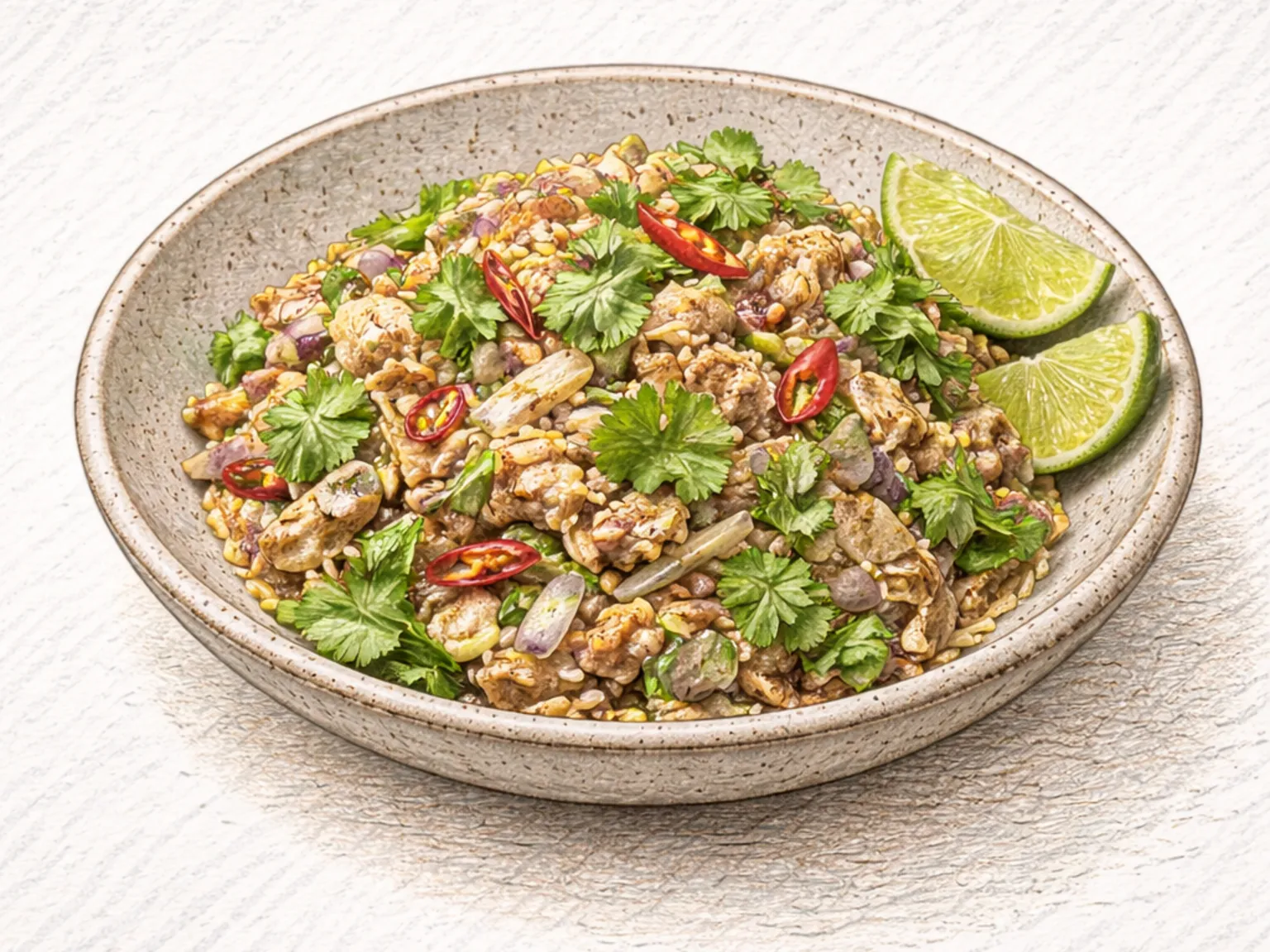
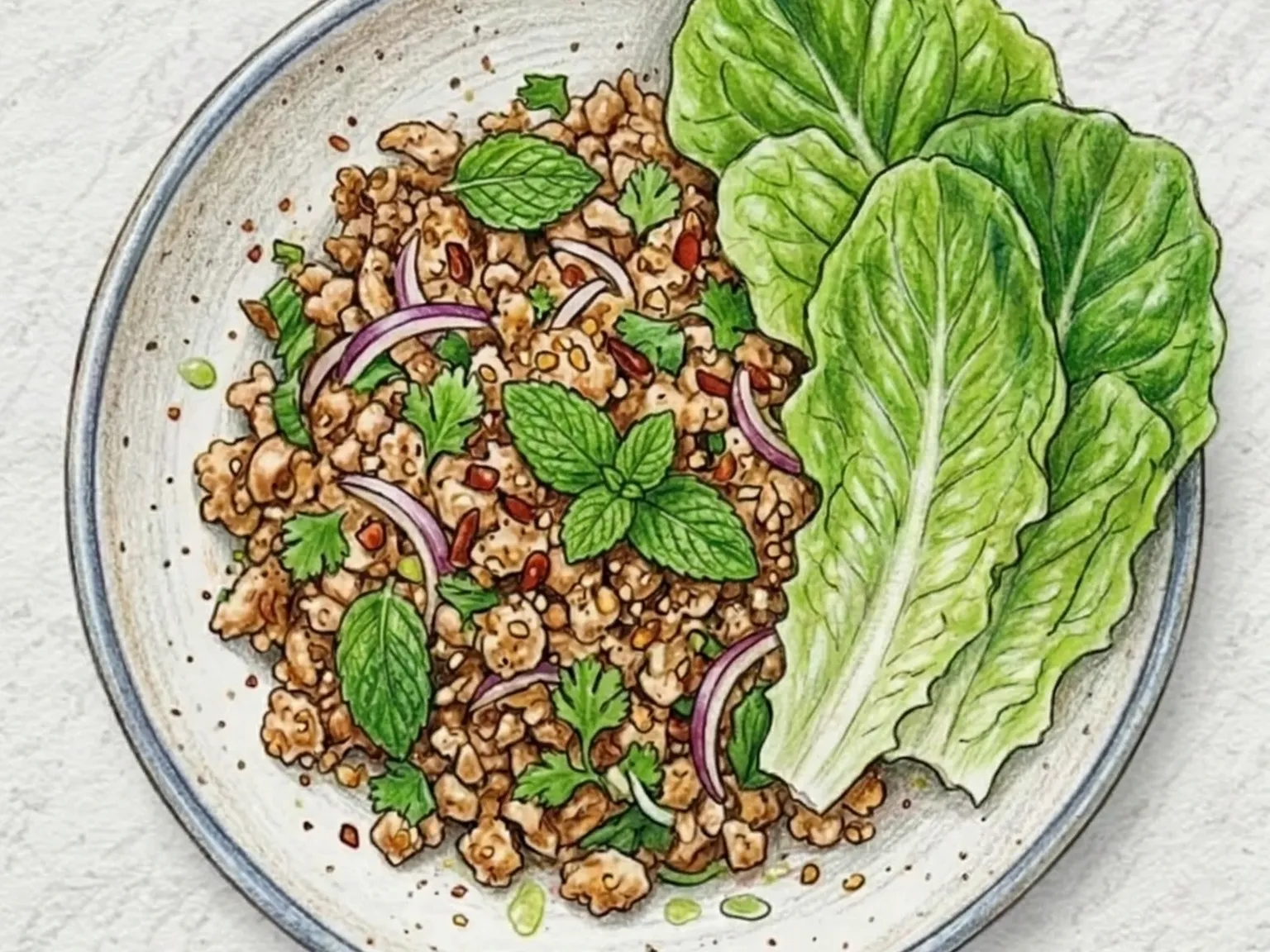
Larb gai is a traditional salad preparation originating from the Isan region of Thailand that uses ground chicken as its primary protein component. During the cooking process, the minced meat is simmered with a small volume of water to ensure that it remains soft and retains its natural moisture throughout the preparation. The chicken is then seasoned using a combination of fish sauce and the juice squeezed from fresh limes. A specific ingredient that gives this dish its unique character is khao khua, which is rice that has been dry-toasted and subsequently processed into a coarse powder. To create this, plain white rice is heated in a dry pan without the addition of any oil until the grains develop a golden brown color and release a toasted aroma. When this ground rice is added to the salad, it introduces a nutty and slightly smoky flavor profile that distinguishes larb from other types of minced meat preparations found in the region. The dish also incorporates thin slices of raw red onion, which provide a sharp flavor and a crisp texture. Additionally, fresh mint leaves are mixed in to provide a cooling herbal quality that balances the savory notes of the seasoned chicken. After the salad has been placed on a plate, the amount of lime juice can be adjusted according to individual preferences for acidity. The standard method for consuming larb gai involves placing a portion of the mixture into a fresh, crisp lettuce leaf, which provides an extra layer of crunch while helping to moderate the intensity of the spices.
Instructions
Read the steps as a cooking flow: prep, heat, seasoning, doneness control, and finish.
- 1Prep
Slice 70 g red onion as thinly as possible, and finely cut 25 g scallion.
Rinse or check the mint leaves if needed, shake off moisture, and keep the 15 g mint aside so it can be added at the end.
- 2Control
Warm a dry pan over medium-low heat, then add 300 g ground chicken with 2 tablespoons water.
Break it apart with a spatula and avoid high heat, which can make the meat clump and turn dry.
- 3Heat
Cook for 4 to 5 minutes, stirring, until the chicken turns white and the juices look clear.
If the pan becomes dry before the meat is cooked, add just a small spoonful of water to keep it moist.
- 4Season
Turn off the heat while the chicken is still warm, then mix in 2 tablespoons fish sauce and 2 tablespoons lime juice.
Do not leave it sitting on a hot pan too long, and coat the meat evenly with saltiness and acidity.
- 5Season
Add the red onion, scallion, and 1 tablespoon toasted rice powder, then toss lightly.
Sprinkle the rice powder over the surface instead of dumping it in one spot, so it does not clump and its toasted aroma spreads through the salad.
- 6Finish
Add the mint last and fold only two or three times so the leaves stay fresh.
Taste, adjust the acidity with a little more lime juice if needed, and serve right away, preferably spooned into crisp lettuce leaves.
After the steps
Pick a recipe that fits this dish.
Continue with shared ingredients, meal pairings, or a similar method.
Recipes That Go Well With This
More Salads →Based on shared ingredients and meal pairing
Thai Beef Salad (Charred Sirloin Tossed in Lime-Fish Sauce)
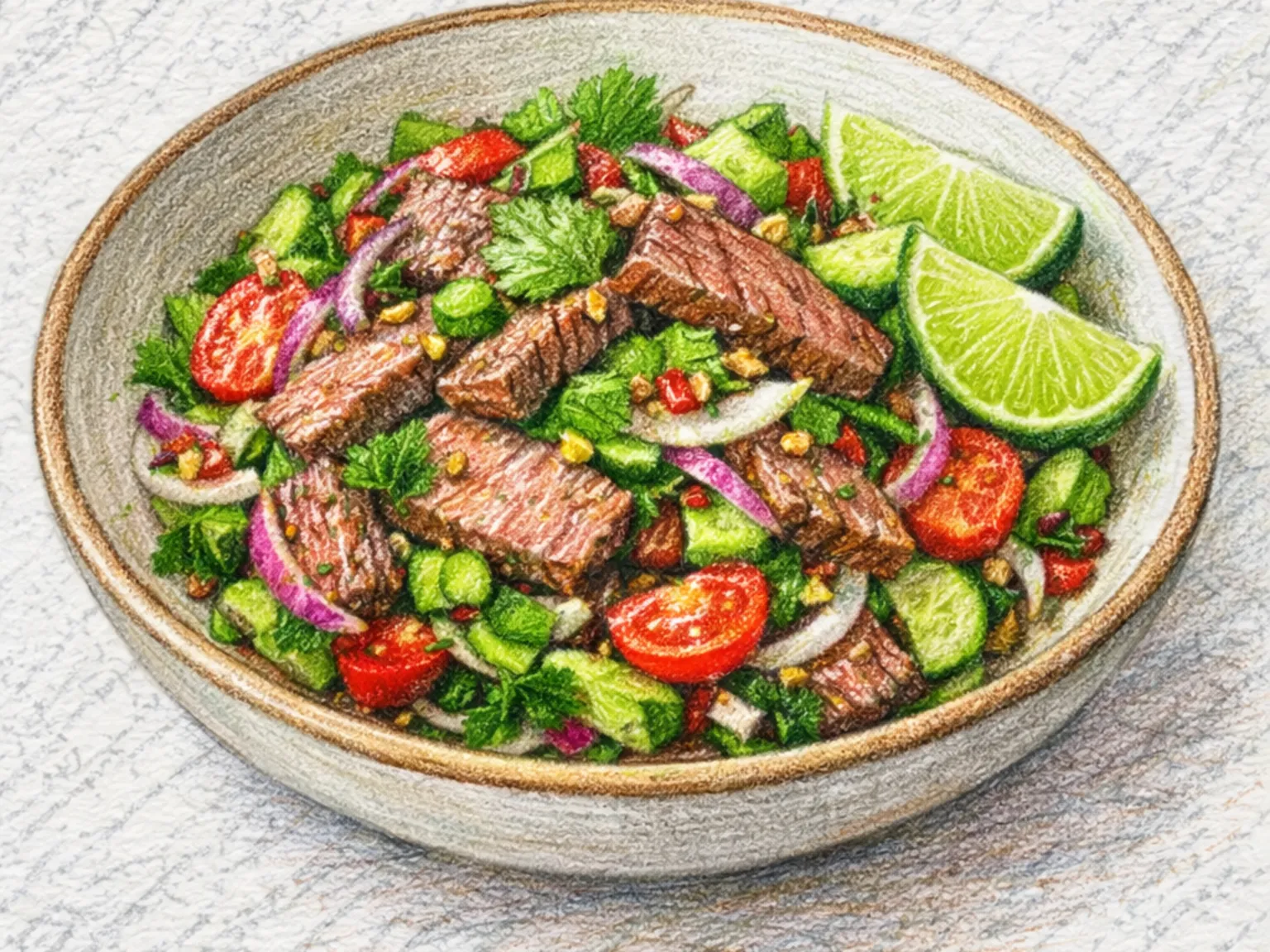
Yam neua is a Thai beef salad where sirloin is seared on high heat until the surface is deeply charred but the interior remains medium, then sliced thin and tossed with cucumber, tomato, red onion, and torn mint in a lime-fish sauce dressing. Cooking each side for only two to three minutes keeps the center pink and tender, and resting the meat for five minutes before slicing prevents the juices from running out onto the cutting board. The dressing layers fish sauce umami under sharp lime acidity and chili flake heat, cutting through the rich beef fat with precision. Torn mint leaves scattered throughout provide a cool, aromatic pause between the spicy, sour bites. If the red onion's raw bite is too strong, soaking it in cold water for five minutes mellows it without losing its crunch.
Larb Gai (Thai Isan Minced Chicken Herb Salad with Lime)
Larb Gai is a traditional herb salad from the Isan region of northeastern Thailand, featuring minced chicken as its base. The preparation starts by cooking ground chicken with a small amount of water until it is no longer pink, ensuring the meat remains tender and crumbly. Once removed from the heat, the warm chicken is seasoned with lime juice, fish sauce, sugar, and chili flakes. Adding the lime juice off the heat preserves its natural acidity and bright aroma. Thinly sliced shallots and toasted rice powder are then folded into the mixture. The toasted rice powder acts as a binding agent that absorbs the juices while providing a distinct nutty crunch. Fresh mint leaves are tossed in at the very end to prevent them from darkening. The salad is served alongside sticky rice, lettuce, or cabbage cups.
Som Tam (Thai Green Papaya Salad with Lime Fish Sauce Dressing)
Som tam is a Thai salad made by pounding shredded green papaya with a handful of bold seasonings in a clay mortar. The dressing comes together right in the mortar: bird's eye chilies and palm sugar are crushed first, then lime juice and fish sauce are added to create a sauce that is simultaneously sour, salty, sweet, and spicy. Cherry tomatoes are bruised just enough to release their juices into the mix, and roasted peanuts contribute a nutty crunch that contrasts with the crisp, watery strands of papaya. The pounding is deliberately gentle-too much force turns the papaya limp and loses the texture that defines the dish. Som tam is Thailand's most widely eaten salad, appearing everywhere from pushcart vendors to upscale restaurants, and it is often served alongside sticky rice and grilled chicken as a complete meal.
Khao Mok Gai (Thai-Muslim Spiced Chicken Biryani)
Khao mok gai is a Thai-Muslim take on biryani, in which spice-marinated chicken is cooked together with turmeric-tinted rice until the grains absorb the meat's juices. The chicken is rubbed with yogurt, cumin, coriander, and cinnamon, then briefly seared before being buried in parboiled rice seasoned with cardamom, cloves, and bay leaves. The pot is sealed and left on low heat so steam circulates through the layers, infusing every grain with aromatic depth. Turmeric gives the rice its signature golden hue. The dish originated in the Muslim communities of southern Thailand and reflects the culinary crossroads of Indian, Middle Eastern, and Southeast Asian cooking traditions. It is served with a sweet chili sauce for dipping, a bowl of clear chicken broth on the side, and a scattering of crispy fried shallots on top.
Serve with this
Korean Grilled Deodeok Root
Deodeok-gui is a traditional Korean mountain vegetable dish where peeled deodeok roots are pounded flat with a mallet, coated in a paste of gochujang, gochugaru, honey, sesame oil, and garlic, then grilled over high heat. The pounding step is critical: it breaks down the tough fibers so the seasoning absorbs evenly and the root develops a pleasant chewiness instead of remaining stringy. Soaking the peeled deodeok in lightly salted water for about thirty minutes before pounding draws out the sharpest bitterness, leaving only the characteristic mellow, slightly medicinal aroma the root is known for. That bittersweet quality sits in balance between the fermented spice of gochujang and the sweetness of honey. Quick grilling at high temperature chars the glaze just enough to add smokiness while keeping the interior moist; applying the seasoning paste in two stages during grilling builds a thicker, glossier layer on the surface. Toasted sesame seeds scattered on top contribute nuttiness that complements the wild herb's earthy, resinous character.
Grilled Chicken Caesar Salad
Grilled chicken Caesar salad is a classic constructed salad built on pan-seared chicken breast, crisp romaine lettuce, house-made Caesar dressing, croutons, and shaved Parmesan. The chicken breast is seasoned simply with salt and pepper and cooked over medium-high heat until golden on both sides, then left to rest for five minutes before slicing. Resting allows the muscle fibers to relax and the internal juices to redistribute, so each slice stays moist at the center rather than releasing liquid when cut. Slicing too thinly also causes rapid heat loss and results in a dry, mealy texture, so cutting into thicker pieces is preferable. The dressing is made by whisking together mayonnaise, fresh lemon juice, minced garlic, and a small amount of Worcestershire sauce. That combination produces a coating that is creamy and rich but balanced by the sharpness of citrus and the depth of the fermented condiment. Romaine is torn into bite-sized pieces and tossed lightly with dressing before the chicken and croutons are added on top, which prevents the weight of the toppings from bruising the leaves and accelerating wilting. Croutons go on last and should not be tossed through the greens, as contact with dressing causes them to absorb moisture and lose crunch quickly. Parmesan provides the concentrated salty umami of aged hard cheese that ties the neutral lettuce, mild chicken, and tangy dressing into a unified plate. The salad must be assembled immediately before serving to preserve the distinct textures that make it satisfying.
Doenjang Clam Spinach Orzo
Doenjang clam spinach orzo is a one-bowl pasta built by cooking orzo in doenjang-seasoned vegetable stock alongside clams in a method borrowed directly from risotto technique. The clams are first purged in salt water to remove sand, then steamed open in white wine so they release their briny cooking liquid into the pan. That liquid merges with the already-present fermented depth of doenjang to form a layered savory base that carries the pasta from the very first minute of cooking. Toasting the orzo in butter or oil before adding any liquid coats the starch on each grain, a step that slows its release and produces a consistently creamy sauce by the end rather than a gluey mass or a watery broth. The stock goes in two or three additions rather than all at once, each addition added only once the previous one has been absorbed, and the pasta is stirred throughout so the released starch works into the liquid rather than sinking to the bottom. Spinach added in the final thirty to sixty seconds of cooking wilts just enough to turn tender without losing its bright green color or dissolving into the sauce. A knob of cold butter stirred in off heat as the finishing touch emulsifies into the sauce, adding a glossy sheen and a rounded, buttery richness that ties all the flavors together.
Similar recipes
Shrimp Mango Lime Salad
Shrimp mango lime salad is a Thai-style dish that combines briefly poached shrimp with ripe mango, cucumber, red onion, and roughly chopped cilantro, dressed with lime juice, fish sauce, and olive oil. The shrimp go into boiling water for exactly two minutes, which is just long enough to cook them through while keeping their natural snap; any longer causes the proteins to contract and the texture turns from tender to rubbery. Fish sauce contributes a fermented, savory depth that amplifies the shrimp's briny character, while lime's sharp acidity slices through the mango's sweetness and brings the dressing into balance. Thinly sliced red onion adds a raw, peppery heat that creates tension between the sweet fruit and the savory seafood, and cilantro releases a distinctive herbal fragrance with each bite. Cucumber stirred into the mix lightens the overall texture and keeps the salad from feeling too dense. Served cold immediately after dressing, every element stays distinct and the contrast between the yielding fruit, the crisp vegetables, and the firm shrimp comes through clearly.
Som Tam Thai (Thai Green Papaya Salad)
Som tam Thai shreds green papaya into thin strips and pounds them in a mortar with Thai chilies, palm sugar, lime juice, and fish sauce, bruising the fibers just enough to let the dressing seep in while keeping the crunch intact. The pounding technique drives flavor deeper than simple tossing, creating a salad where each strand carries the full range of sweet, salty, sour, and spicy in a single bite. Palm sugar's dark caramel sweetness, fish sauce's fermented brine, the sharp brightness of lime, and the direct burn of chili hold each other in a balance that defines the dish. Roasted peanuts scattered on top add a nutty crunch to finish. Without a mortar, a large bowl and a rolling pin work as a substitute by applying light pressure to bruise the papaya without crushing it. Halved cherry tomatoes pounded in alongside the papaya release their juice into the dressing and contribute a natural sweetness and extra moisture.
Thai Chicken Fried Rice
Khao pad gai is Thai chicken fried rice, one of the most consistently available single-plate meals sold at street stalls and sit-down restaurants across Thailand from morning until late at night. Bite-size pieces of chicken breast or thigh are seared first in a ripping-hot wok to develop color and a slight char, then minced garlic and a cracked egg follow in rapid succession. Day-old jasmine rice, cold from the refrigerator, is added next because its reduced moisture allows each grain to separate cleanly and pick up oil rather than clumping. Constant tossing over the highest possible heat is what produces the characteristic wok fragrance that sets Thai fried rice apart from versions cooked at lower temperatures. Fish sauce provides the primary saltiness, soy sauce adds a brown color and a layer of savory depth, and white pepper delivers a warm, earthy heat that lingers in the background. The mound of finished rice is tipped onto a plate and surrounded by a lime wedge, cucumber slices, and tomato to provide cool, acidic relief between bites. At the table, diners season their own portion from a small tray holding fish sauce, dried chili flakes, white sugar, and vinegar - the standard four-condiment set present at virtually every Thai table. The combination of all these adjustments makes a single dish capable of tasting quite different from person to person, which is part of its enduring appeal.