Lotus Root Crab Yuja Salad
Quick answer
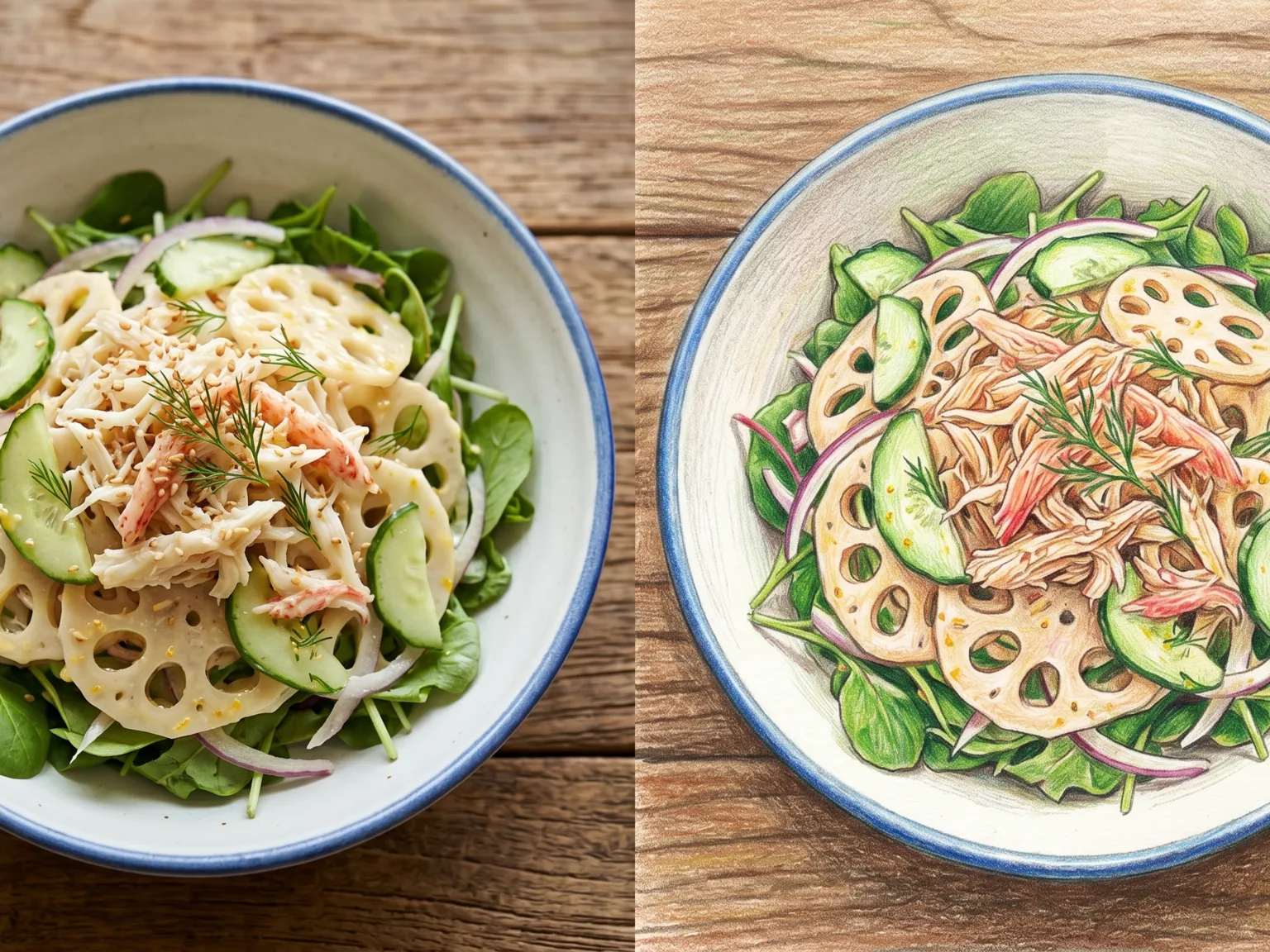
Thinly sliced lotus root, blanched until just crisp-tender, provides the structural crunch at the center of this salad, while gently separated crab meat drapes a delicate...
What makes this special
- Lotus Root Crab Yuja Salad pairs crisp blanched root with sweet crab and citrus mayonnaise.
- Lotus root blanched under 4 minutes keeps its characteristic crisp snap
- Yuja-mayo dressing combines citrus sweetness and creamy richness
Key ingredients
Core cooking flow
- 1 Trim the 280 g lotus root and slice it evenly to about 3 mm thick.
- 2 When the water is at a full boil, add the lotus root and blanch over medium...
- 3 Squeeze excess moisture from the 180 g crab meat, then separate it along the grain into bite-size pieces.
Thinly sliced lotus root, blanched until just crisp-tender, provides the structural crunch at the center of this salad, while gently separated crab meat drapes a delicate sweetness and umami over each bite. The yuja mayo dressing - yuja marmalade folded into mayonnaise with lemon juice - delivers citrus fragrance and creamy richness simultaneously. Half-moon cucumber slices and thin red onion add contrasting crunch, and a bed of mixed baby greens brings color and freshness to the plate. Keeping the blanching time under four minutes is critical; even a minute longer turns the lotus root soft and robs it of its signature snap.
Instructions
Read the steps as a cooking flow: prep, heat, seasoning, doneness control, and finish.
- 1Prep
Trim the 280 g lotus root and slice it evenly to about 3 mm thick.
Soak the slices in vinegar water for 5 minutes to prevent browning and lightly rinse away surface starch.
- 2Control
When the water is at a full boil, add the lotus root and blanch over medium heat for only 3 minutes 30 seconds to 4 minutes.
Remove it when the edges look slightly translucent but the center still snaps.
- 3Step
Squeeze excess moisture from the 180 g crab meat, then separate it along the grain into bite-size pieces.
Keep some larger strands, because very fine shreds disappear once coated with the creamy dressing.
- 4Season
Cut the 120 g cucumber into half-moons and slice the 70 g red onion very thinly.
Soak the onion briefly in cold water, then drain it well so the sharpness softens without watering down the salad.
- 5Season
Mix 1.5 tablespoons yuja marmalade, 3 tablespoons mayonnaise, 1 tablespoon lemon juice, and 0.3 teaspoon salt before adding the vegetables. Stir until glossy and smooth, with no thick marmalade pockets left.
- 6Finish
Put the lotus root, crab meat, cucumber, and onion in a large bowl, then add the dressing in portions and toss gently to avoid breaking the slices. Serve chilled over 80 g mixed baby greens.
After the steps
Pick a recipe that fits this dish.
Continue with shared ingredients, meal pairings, or a similar method.
Recipes That Go Well With This
More Salads →Based on shared ingredients and meal pairing
Korean Lotus Root Yuzu Salad
Blanched lotus root slices are dressed in a bright mixture of yuzu marmalade, rice vinegar, sesame oil, and a pinch of sugar. The citrusy yuzu lifts the otherwise neutral lotus root with floral tartness, while the 3 mm thick rounds keep a satisfying crunch even after boiling. Sesame seeds and oil round out the finish with a warm, nutty note. This banchan works especially well alongside richer main dishes, cutting through heaviness with its clean acidity. It can be served as a side dish with rice, with simple accompaniments chosen to match the sauce, broth, or topping.
Korean Tofu Yuja Salad (Pan-Fried Tofu Citrus Dressing)
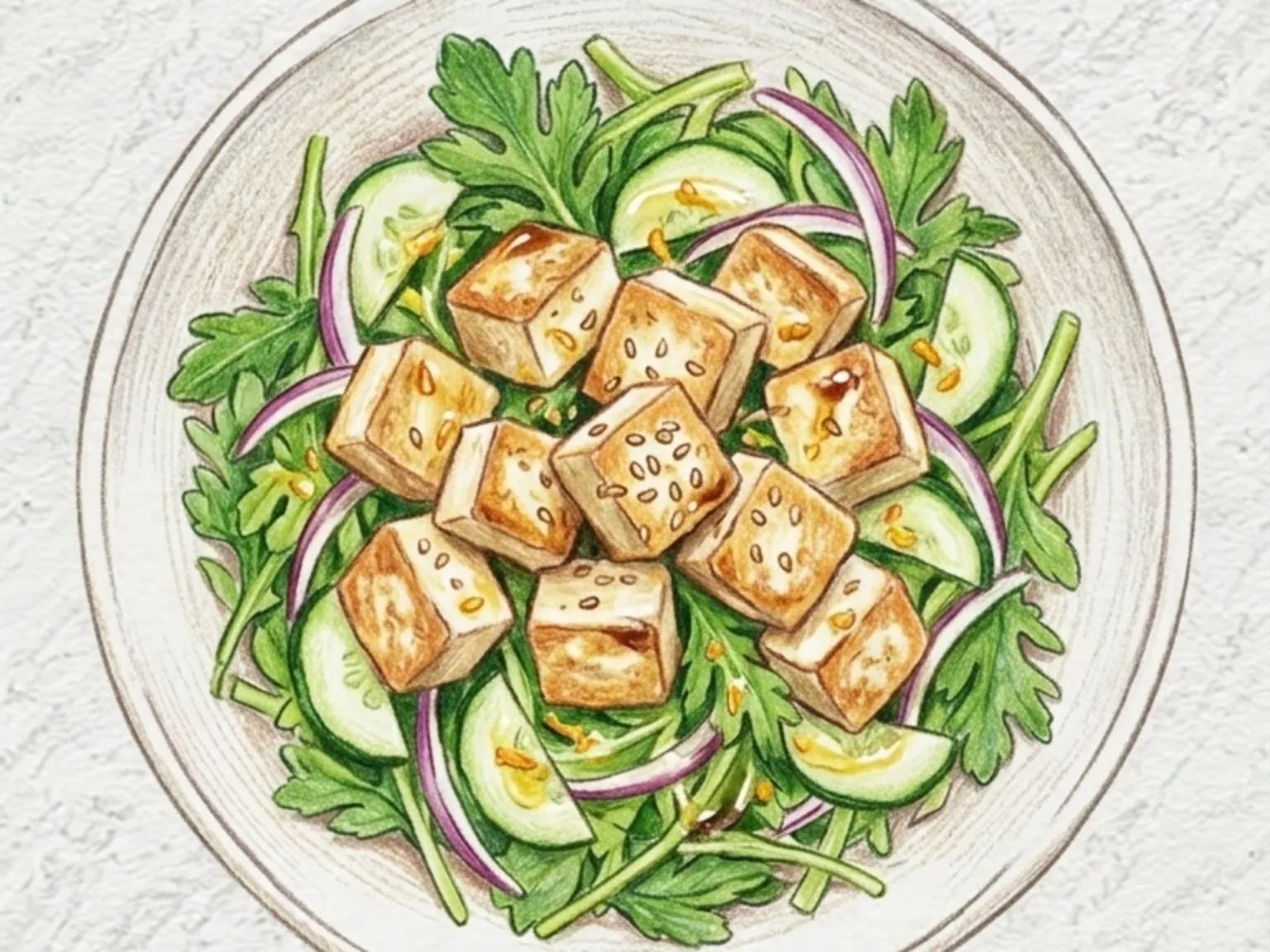
Dubu yuja muchim brings an uncommon citrus dimension to Korean tofu banchan by using yuja-cheong - a preserve of yuzu-like Korean citrus rind in honey or sugar. Soft tofu is blanched briefly to warm through and firm up slightly, then cut into bite-sized pieces and dressed while still warm so the pores open to absorb the vinaigrette. The dressing blends yuja-cheong with soy sauce, vinegar, and sesame oil - the citrus peel's fragrant bitterness cutting through the tofu's blandness in a way that soy sauce alone cannot achieve. Yuja has been cultivated on Korea's southern coast - especially Goheung and Namhae - since the Joseon era. The dish sits in a category between Korean and Western salad sensibilities, light enough to serve as a starter. Best eaten cold or at room temperature within a few hours of assembly, as the tofu's texture begins to soften with prolonged marination. The transparent sweetness of the yuja-cheong combined with the sharp edge of vinegar transforms tofu into something with an entirely different flavor register.
Korean Grilled Deodeok Root
Deodeok-gui is a traditional Korean mountain vegetable dish where peeled deodeok roots are pounded flat with a mallet, coated in a paste of gochujang, gochugaru, honey, sesame oil, and garlic, then grilled over high heat. The pounding step is critical: it breaks down the tough fibers so the seasoning absorbs evenly and the root develops a pleasant chewiness instead of remaining stringy. Soaking the peeled deodeok in lightly salted water for about thirty minutes before pounding draws out the sharpest bitterness, leaving only the characteristic mellow, slightly medicinal aroma the root is known for. That bittersweet quality sits in balance between the fermented spice of gochujang and the sweetness of honey. Quick grilling at high temperature chars the glaze just enough to add smokiness while keeping the interior moist; applying the seasoning paste in two stages during grilling builds a thicker, glossier layer on the surface. Toasted sesame seeds scattered on top contribute nuttiness that complements the wild herb's earthy, resinous character.
Bellflower Root, Chestnut & Perilla Salad
Doraji chestnut perilla salad brings together blanched bellflower root, boiled chestnuts, and Korean pear in a combination that captures the flavors of Korean autumn. Blanching doraji tempers its raw bitterness to a clean, gentle edge and softens its crunch just enough to make it pleasant to eat without cooking out its character entirely. Boiled chestnut contributes a starchy warmth and sweetness that is entirely different from fruit sugars - it is dense and slightly powdery, more comforting than bright. Korean pear introduces cool juice and a delicate crunch that refreshes the palate between bites of root and nut. Ground perilla seeds tie the ingredients together with a nutty, faintly grassy aroma rooted in their omega-3 fatty acid content, a flavor profile that cannot be replicated by sesame alone. The dressing is built from apple cider vinegar for fruit acidity, honey for sweetness, and olive oil to emulsify and smooth the transitions between components. Both bellflower root and chestnuts peak in autumn, so the salad is at its most rewarding when made with freshly harvested seasonal ingredients. The color combination of ivory doraji, cream-colored chestnut, and pale pear gives the bowl a quiet, autumnal visual quality.
Serve with this
Kongguksu-Style Cold Linguine
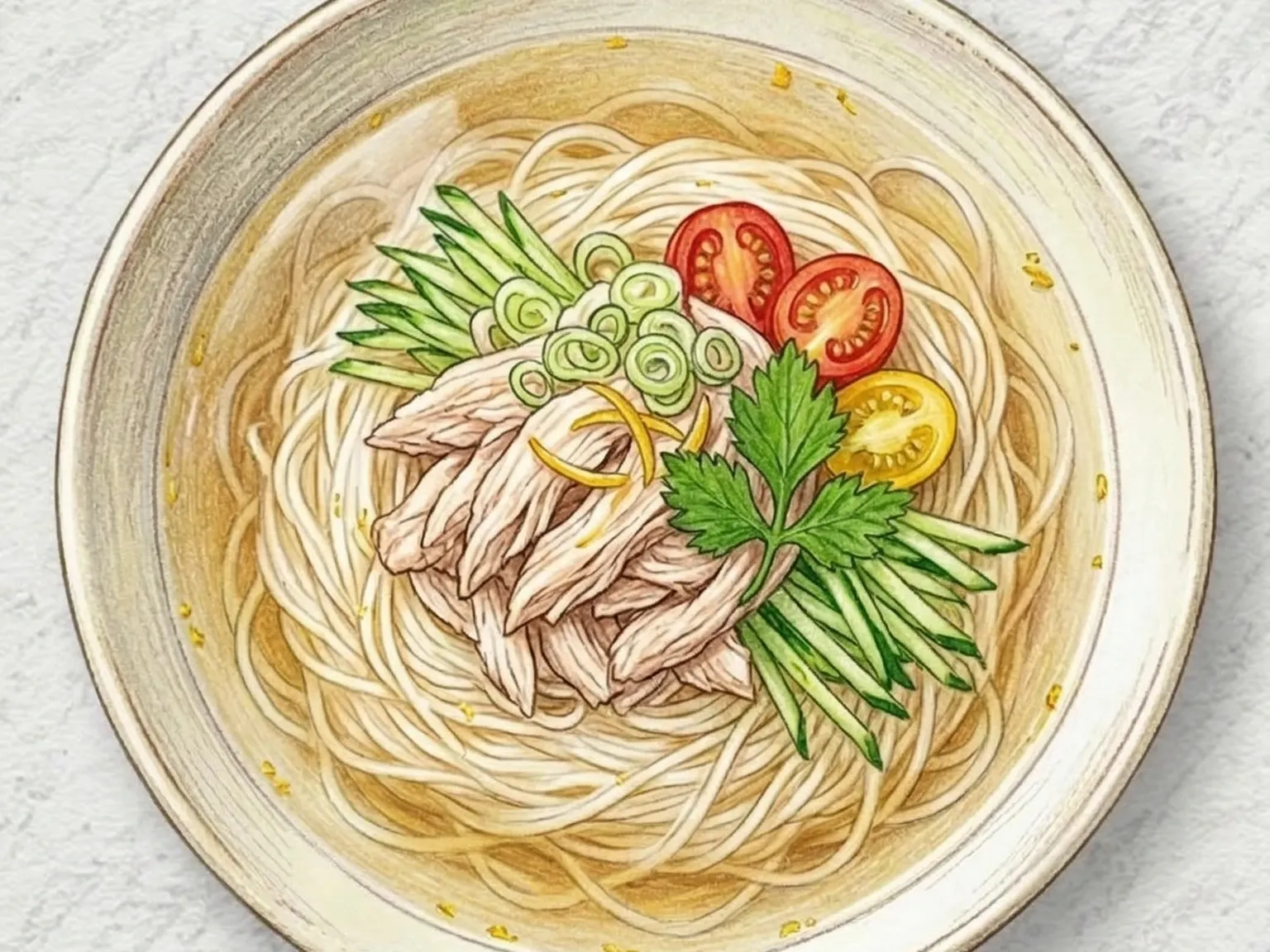
Kongguksu-style cold linguine reinterprets Korea's chilled soy noodle soup using Italian linguine in place of traditional wheat noodles. Unsweetened soy milk is blended with toasted sesame seeds and peanut butter into a thick, nutty cold broth poured directly over the pasta at serving. The linguine is cooked al dente and immediately shocked in ice water to firm up the texture and chill it completely before the broth goes on. Julienned cucumber and halved cherry tomatoes scatter on top for fresh crunch and color. Salt and sugar are adjusted at the end to balance the broth's natural bean flavor against the richness from the peanut butter. The full preparation takes about ten minutes, with stovetop time limited strictly to boiling the pasta, which makes it one of the more practical cold dishes to assemble in summer heat. Adding more peanut butter thickens the broth further, while extra sesame seeds push the nuttiness higher.
Soybean Paste Stew with Clams
Doenjang jjigae with clams is one of the most frequently made stews in Korean households, built on the combination of fermented soybean paste's deep, earthy flavor and the clean briny umami of manila clams. The clams are purged of sand before being added to a pot of doenjang-laced broth, where they open and release their salty, seawater-flavored liquor directly into the soup. The result transforms the base from something merely savory into something distinctly oceanic and complex. Zucchini softens in the bubbling broth and contributes a natural sweetness as it breaks down, while blocks of soft tofu act as sponges, soaking up the seasoned liquid and releasing it in a burst of hot, flavorful broth when bitten into. Sliced cheongyang chili peppers are added to interrupt the heaviness of the fermented paste and sharpen the overall flavor. The stew is typically served in an earthenware pot while still bubbling, alongside rice. Many Koreans ladle the broth directly over their bowl of rice. The recipe adapts to any season: assembled with leftover summer vegetables from the refrigerator for a lighter version, or cooked piping hot in a stone pot through winter.
Salisbury Steak
Salisbury steak is an American comfort dish made by shaping ground beef mixed with milk-soaked breadcrumbs and egg into oval patties, pan-searing them, and then simmering in a mushroom-onion gravy. The breadcrumbs absorb milk and form moisture pockets within the meat, keeping the patties juicy even after cooking through. Pressing a shallow indent into the center of each patty prevents it from puffing up during searing, ensuring even thickness. Building the gravy in the same pan - sauteing onion and mushrooms, stirring in flour, then deglazing with beef stock and Worcestershire sauce - dissolves the browned fond into the sauce for deeper flavor. Returning the patties to simmer in the gravy for eight minutes finishes the interior and coats them in a rich, savory glaze.
Similar recipes
Deodeok Apple Perilla Salad (Bellflower Root Salad)
Deodeok -- codonopsis root -- is pounded with a mallet to split along its fibers, releasing its distinctive herbal fragrance and producing a chewy, shredded texture. The root is best in season from autumn through early spring and suits raw preparations just as well as it does grilling or seasoned side dishes. Thin apple slices add crisp sweetness that tempers the root's mild bitterness. The dressing combines gochujang and vinegar for a tangy-spicy profile, while ground perilla seeds contribute a nutty, aromatic finish. When pounding, light taps work better than heavy blows -- the goal is to open the fibers without crushing the flesh. Tear the root by hand along the grain after pounding for the best texture. Toss with the dressing just before serving to keep the apple and deodeok crisp.
Roasted Mushroom Perilla Potato Salad
Potatoes are boiled skin-on and roughly mashed with a fork to keep a mix of fluffy interior and chunky structure rather than a smooth puree. King oyster mushrooms are torn lengthwise into thick strips and pan-roasted in olive oil until chewy and deeply savory, developing color on the cut surfaces. Perilla seed powder and Greek yogurt create a nutty, creamy binder that unifies the two main components without masking their individual flavors. Shredded perilla leaves release their bold, anise-like fragrance across the entire plate, while lemon juice and minced garlic cut through the richness and sharpen the overall aroma. Two distinctly Korean aromatics, perilla seed and perilla leaf, give the familiar potato salad format a flavor profile that diverges significantly from its Western counterpart. The salad is best at room temperature, where the potato texture stays fluffy and the mushrooms hold their chew; if refrigerated, pulling it out 30 minutes before serving restores the right consistency.
Smoked Duck Chive Salad (Korean Chive Salad)
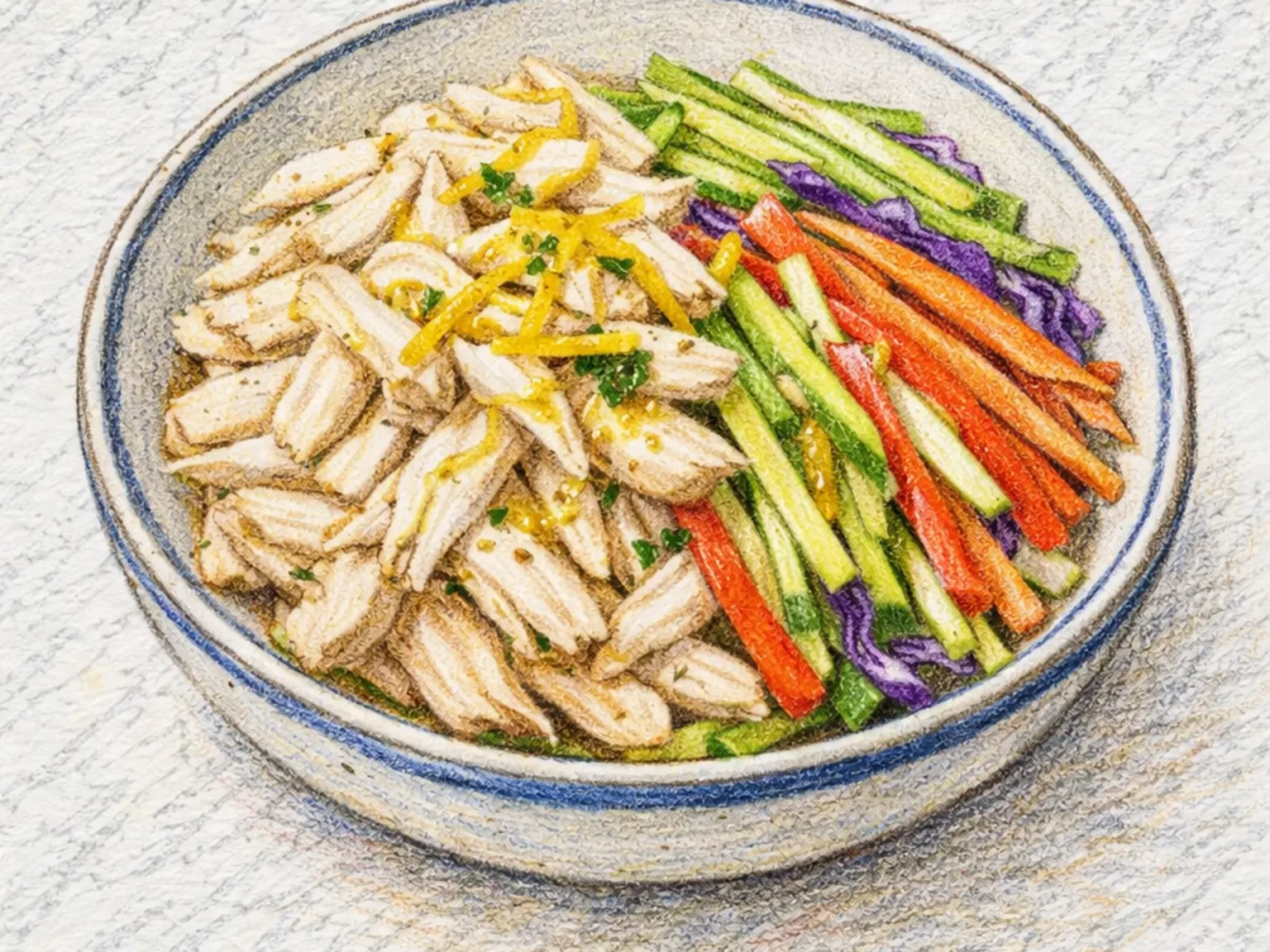
Smoked duck chive salad brings together pan-seared smoked duck and fresh Korean chives in a soy-mustard dressing that cuts through the meat's richness with precision. The duck is seared in a dry or lightly oiled pan for two to three minutes to render off the surface fat before it meets the other ingredients. Korean chives are cut to four-centimeter lengths and combined with shredded cabbage and sliced bell pepper, each element adding its own texture to the finished dish. A dressing of soy sauce, mustard, vinegar, honey, and sesame oil delivers a multi-layered hit of nose-clearing heat, sweet-sour acidity, and roasted depth that cleanses the palate after every fatty bite of duck. The cabbage provides firm, watery crunch against the chewy, smoke-infused meat, while toasted sesame seeds scatter a nutty fragrance across the top. Adding the chives at the very end keeps their herbal aroma vivid rather than grassy, and limiting the searing time prevents the duck from turning tough. The interplay between the dense smokiness of the duck and the sharp freshness of the chives is what gives this salad its character beyond a simple protein-and-greens combination.