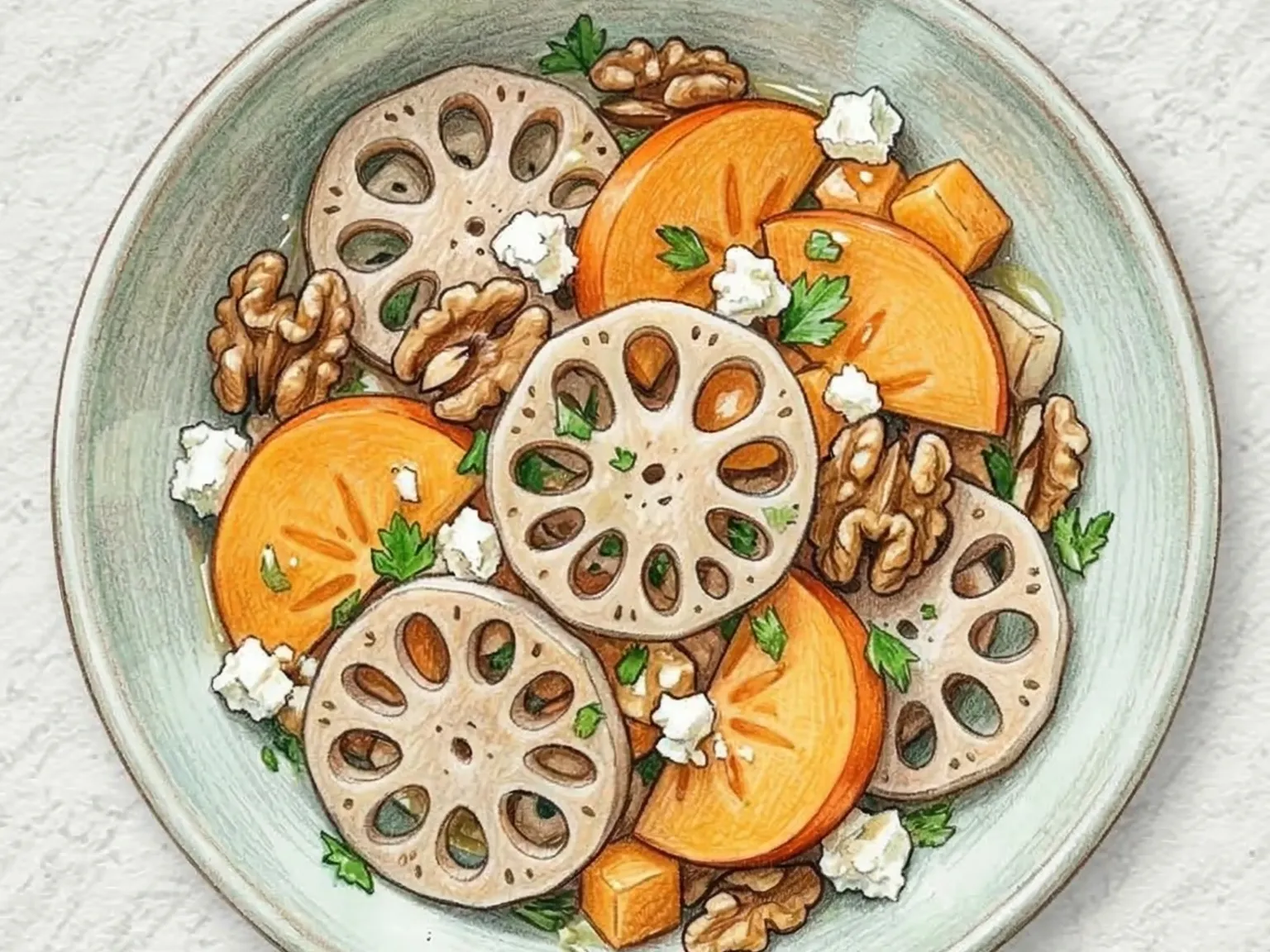
Lotus Root Persimmon Salad
Blanched lotus root delivers a clean crunch that pairs with sweet persimmon slices to capture autumn's character in a single plate. The dressing keeps to olive oil, honey, and lemon juice, letting the produce speak without distraction. Crumbled feta introduces a salty, tangy dairy note that sharpens the fruit's sweetness. Walnuts, toasted briefly in a dry pan, add earthy fat and a crisp contrast to the softer persimmon. Baby greens form the base layer for color, and splitting the dressing between two additions - tossing two-thirds with the salad, drizzling the rest on top - ensures seasoning reaches every component.
Adjust Servings
Instructions
- 1
Slice lotus root to 3mm and soak in vinegar water for 5 minutes.
- 2
Blanch lotus root for 3 minutes, cool in cold water, and drain well.
- 3
Thinly slice the persimmon and toast walnuts in a dry pan for 2 minutes.
- 4
Whisk lemon juice, olive oil, honey, salt, and pepper into a dressing.
- 5
Combine greens, lotus root, and persimmon, then toss with two-thirds of the dressing.
- 6
Plate the salad, top with feta and walnuts, and drizzle the remaining dressing.
As an Amazon Associate, we may earn from qualifying purchases.
Tips
Nutrition (per serving)
More Recipes

Danggam Jogae Naengchae Salad (Persimmon Clam Chilled Salad)
Blanched clam meat releases briny sea flavor, then layered with thinly sliced sweet persimmon whose honeyed taste creates an unexpected harmony with the shellfish. Minari adds grassy bitterness that anchors the sweet and salty elements, while shredded red cabbage contributes crunch and vivid color. Julienned Korean pear releases enough juice to act as a natural dressing. Vinegar and hot mustard paste bring sharp acidity and nasal heat that complete the clean aftertaste typical of Korean chilled salads.

Korean Braised Lotus Root
Lotus root rounds are simmered in soy sauce, sugar, and corn syrup until each slice glistens with a translucent, caramel-colored glaze. Cooking activates the starch in the lotus root, turning the exterior smooth and the interior pleasantly sticky, a texture unique to this root vegetable. As the soy sauce permeates the flesh, the ivory color deepens into a clear amber that signals the seasoning has reached the center. A splash of vinegar at the start prevents discoloration and introduces a faint tartness that prevents the sweetness from becoming cloying. The corn syrup reduces over low heat for fifteen to twenty minutes, forming a glass-like coating that catches the light on every surface. Because the liquid seeps through the root's hollow channels, every bite delivers consistent flavor regardless of angle. The finished jorim retains its crunch at the core while the outer layer yields with a gentle chew, and refrigerated in a sealed container the dish stays good for well over a week.

Lotus Root Crab Yuja Salad
Thinly sliced lotus root, blanched until just crisp-tender, provides the structural crunch at the center of this salad, while gently separated crab meat drapes a delicate sweetness and umami over each bite. The yuja mayo dressing - yuja marmalade folded into mayonnaise with lemon juice - delivers citrus fragrance and creamy richness simultaneously. Half-moon cucumber slices and thin red onion add contrasting crunch, and a bed of mixed baby greens brings color and freshness to the plate. Keeping the blanching time under four minutes is critical; even a minute longer turns the lotus root soft and robs it of its signature snap.

Korean Potato Salad (Creamy Mashed Potato Ham Cucumber)
Korean potato salad (gamja salad) arrived via Japan's yoshoku tradition but evolved its own identity in Korean home kitchens. Potatoes are boiled and mashed while hot, leaving some lumps for textural contrast - uniformly smooth is not the goal. Diced ham is pan-seared to render excess fat, then mixed with salt-drained cucumber and boiled carrot. The dressing is simply mayonnaise adjusted with sugar and salt, producing the distinctly sweet-creamy profile that separates Korean potato salad from Western versions. Chilling for at least an hour before serving lets the seasoning equalize throughout the mixture.

Korean Lotus Root Chicken Porridge
Yeongeun-dak-juk is a Korean porridge that simmers diced lotus root and shredded chicken breast in a rice base. The finely chopped lotus root introduces small pockets of crunch throughout the otherwise creamy porridge. Green onion and ginger remove any gaminess from the chicken while adding a clean aroma. Since the porridge uses chicken stock as its foundation, it carries depth of flavor without heavy seasoning. The result is a light yet filling bowl suited to mornings or recovery meals.

Deodeok Apple Perilla Salad (Bellflower Root Salad)
Deodeok (codonopsis root) is pounded with a mallet to split its fibers, releasing its distinctive herbal fragrance and creating a chewy, shredded texture. Thin apple slices add crisp sweetness that tempers the root's mild bitterness. The dressing combines gochujang and vinegar for a tangy-spicy profile, while ground perilla seeds contribute a nutty finish. Deodeok is in season from autumn through early spring and is traditionally used in Korean cooking for grilling and seasoned dishes, though it also works well raw in salads.