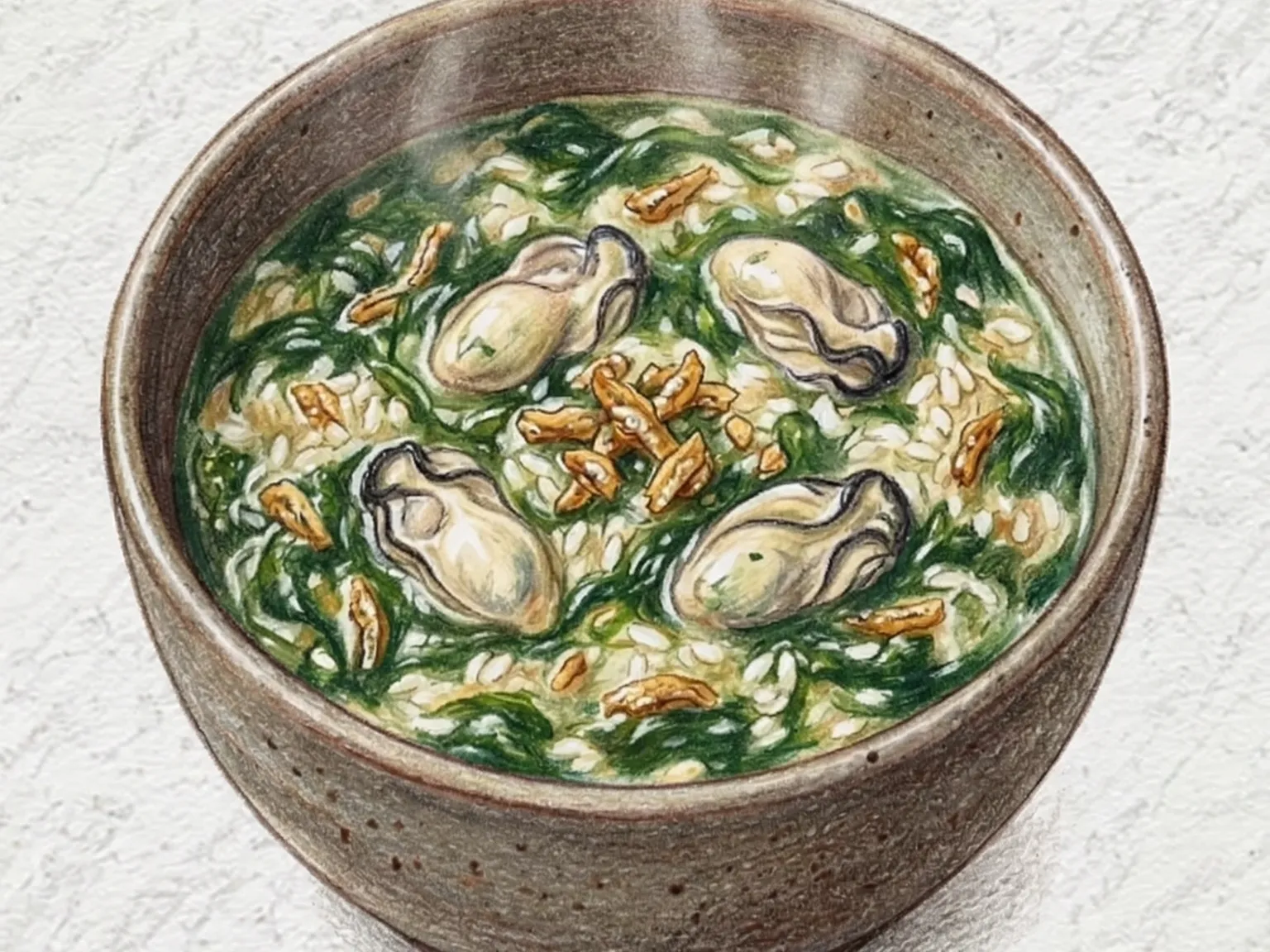
Korean Maesaengi Oyster Porridge
Maesaengi gul juk is a warming Korean winter porridge built on sesame-oil-toasted rice simmered in anchovy-kelp stock. Delicate strands of maesaengi seaweed lend a mild oceanic fragrance, while plump oysters release briny juices that deepen the broth. The rice is stir-fried in sesame oil before the stock goes in, giving the porridge a nutty backbone. Maesaengi goes in at the very end to keep its vivid green color and fresh sea aroma intact.
Adjust Servings
Instructions
- 1
Rinse oysters gently in salted water; rinse maesaengi and drain well.
- 2
Heat sesame oil and stir-fry soaked rice for 2 minutes until slightly translucent.
- 3
Add stock gradually and simmer on low, stirring until the rice softens.
- 4
When rice is tender, add oysters and garlic; cook 3 more minutes.
- 5
Add maesaengi and soup soy sauce, simmer 2 minutes to keep the color bright.
- 6
Season with salt and pepper, then serve hot.
As an Amazon Associate, we may earn from qualifying purchases.
Tips
Nutrition (per serving)
More Recipes

Korean Oyster Porridge (Savory Briny Rice Porridge)
Fresh oysters and soaked rice are first sauteed in sesame oil, then simmered with water and finely diced radish for twenty minutes before the oysters go in for a final seven minutes of gentle cooking. Adding the oysters late preserves their plump bite and prevents them from becoming chewy, while the radish dissolves slightly to lend a quiet sweetness to the broth. Soup soy sauce seasons the porridge without masking the natural brine of the shellfish, and a teaspoon of ginger juice can be added to temper any fishiness. The result is a warming, protein-rich bowl that soothes the stomach while delivering concentrated ocean flavor.

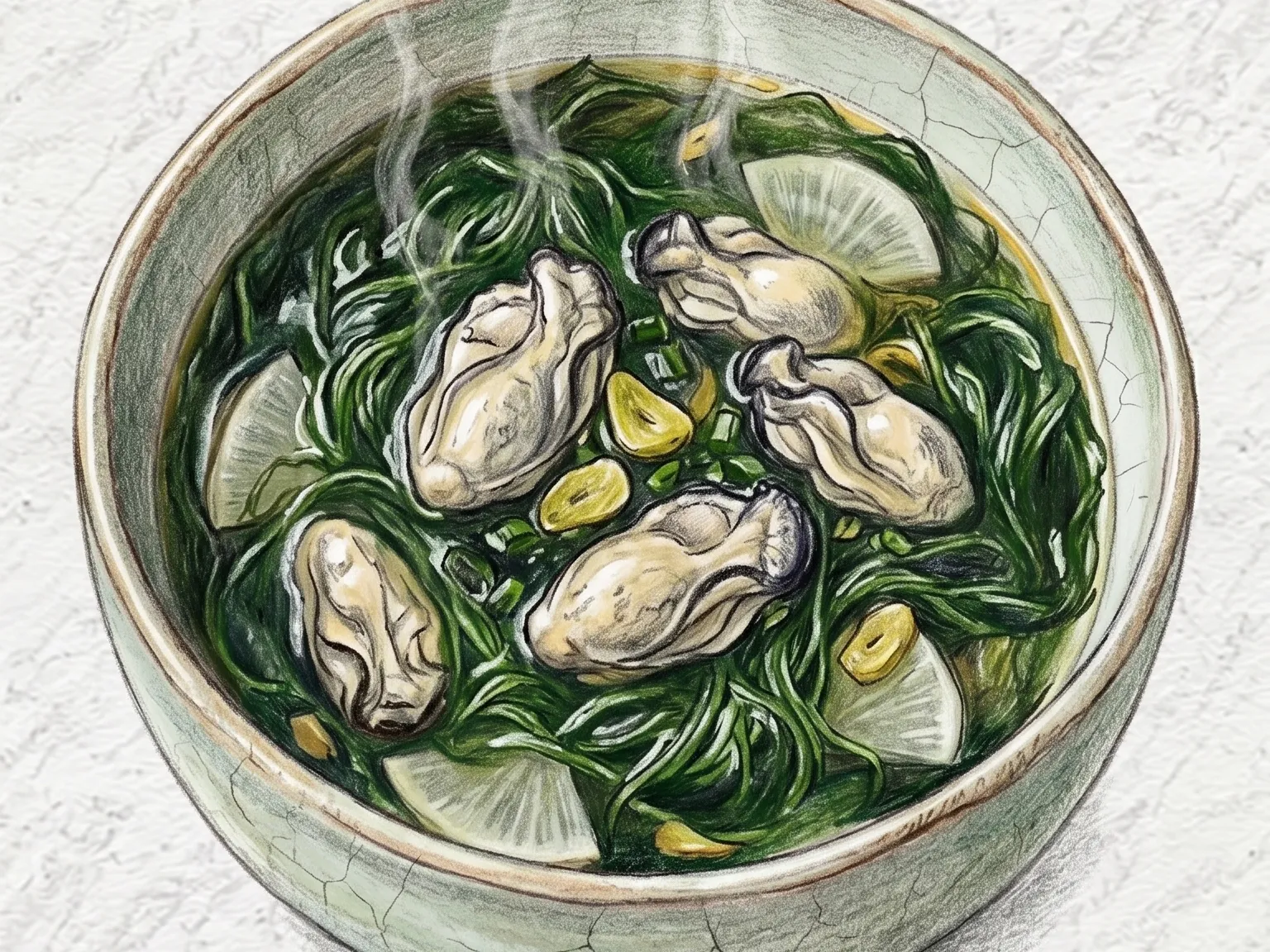
Korean Seaweed and Oyster Soup
Maesaengi-gul-guk combines two peak-winter ingredients, capsosiphon seaweed and fresh oysters, in a single light broth. Julienned radish and garlic are sauteed in sesame oil to establish sweetness, then water is added and brought to a boil before the oysters go in for three minutes. The seaweed is added last and simmered for only two minutes to preserve its silky texture and subtle marine scent. Soup soy sauce and a pinch of salt are the only seasonings needed, since the oysters release enough brininess to flavor the broth on their own.

Korean Taro Porridge (Perilla Oil-Toasted Rice with Taro Root)
Soaked rice is toasted in perilla oil until fragrant, then simmered with peeled taro in a generous amount of water until the porridge reaches a thick, flowing consistency. Some taro pieces dissolve into the liquid and naturally thicken it, while others hold their shape and offer a starchy, crumbly bite. The gentle nuttiness of perilla oil and the mild earthiness of taro create a soothing combination with no sharp flavors. Seasoning with just salt preserves the delicate taste of the taro without masking it.

Korean Sesame Oil Abalone Porridge
Both abalone flesh and innards are used together with a generous two tablespoons of sesame oil to maximize nuttiness in this porridge. Sauteing the minced innards with garlic in the sesame oil infuses the fat with both marine and roasted flavors, forming the aromatic foundation for the entire pot. Soaked rice is stirred in the same oil until translucent, then water is added and the mixture simmers for 25 minutes as the grains release starch into a naturally thick consistency. Soup soy sauce and salt sharpen the finish, and chopped chives provide both color and a light onion fragrance.

Korean Kimchi Porridge (Fermented Kimchi Pork Rice Porridge)
Well-fermented napa kimchi is chopped, stir-fried with ground pork in sesame oil, then slow-simmered with soaked rice and water for thirty minutes. Extended cooking softens the raw heat of the chili while spreading the fermentation tang evenly through the porridge, and the pork builds a savory backbone. Soup soy sauce adjusts the salt, and a scatter of sesame seeds adds a final nutty note. The more sour the kimchi, the more complex the finished juk becomes - a traditional Korean porridge meant to warm and soothe when appetite or digestion needs a gentle reset.

Korean Mussel Seaweed Soup
Honghap-maesaengi-guk is a winter specialty from Korea's southern coast that pairs fresh mussels with maesaengi, a hair-thin green seaweed harvested in cold water. The seaweed is briefly sautéed in sesame oil before water and mussels are added, and as the pot simmers, the broth turns a deep green with a mineral-rich ocean fragrance. Soup soy sauce and garlic provide just enough seasoning to frame the natural salinity without masking it. The textural contrast is central to the experience: maesaengi slides across the palate in silky strands while the mussels offer a firm, meaty chew. Each spoonful delivers both the vegetal depth of seaweed and the concentrated brininess of shellfish, making it a dish greater than the sum of its two main ingredients.