Charim

2686 Korean & World Recipes

2686+ Korean recipes, clean and organized. Ingredients to instructions, all at a glance.

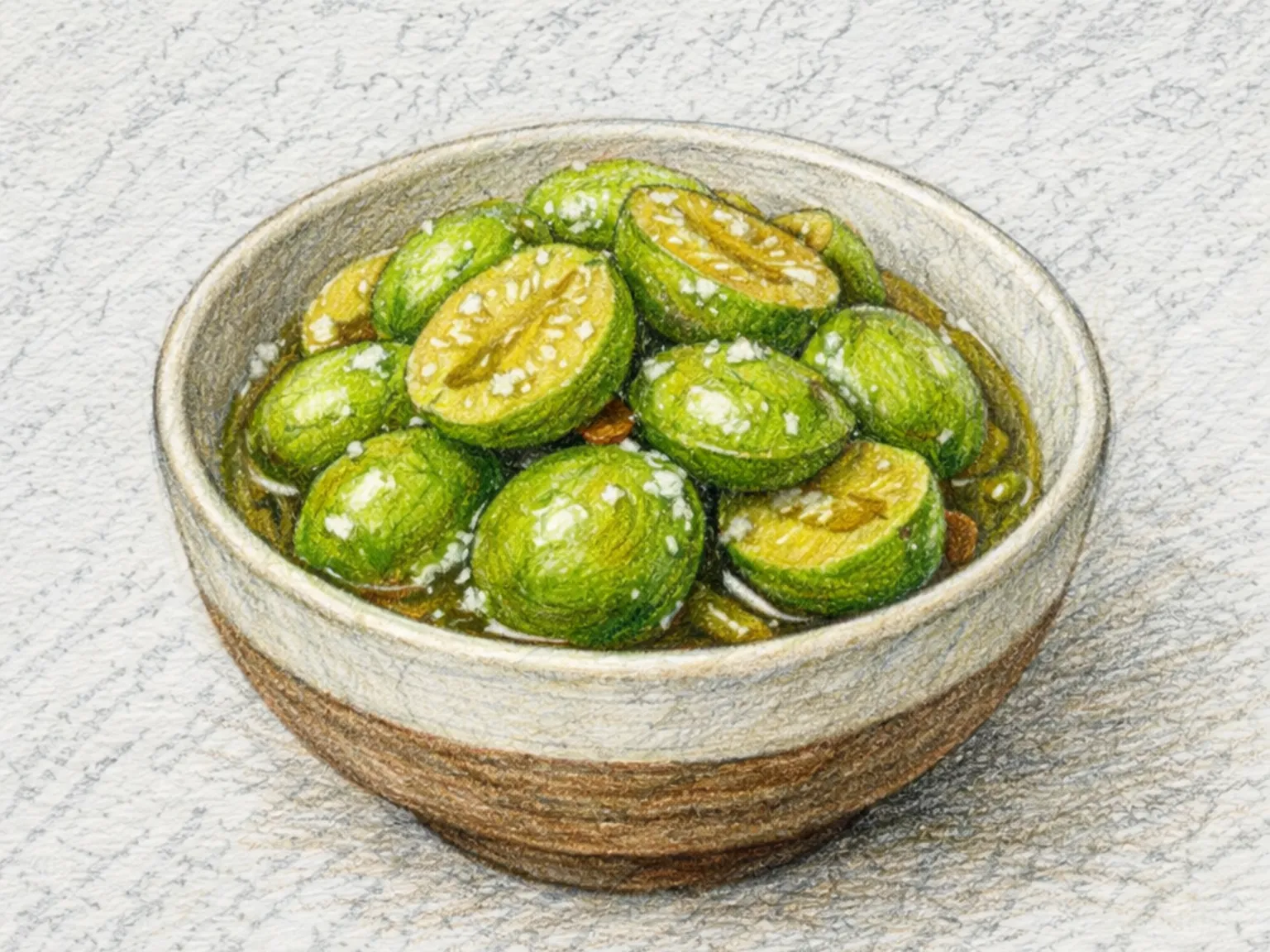
Korean Green Plum Pickles
Kimchi Medium

Korean Green Plum Pickles

Maesil jangajji is a traditional Korean green plum pickle made by salting unripe plums to draw out bitterness, layering them with sugar, and pouring in vinegar and rice wine for months of aging. Over the long curing process, the plum's sharp acidity gradually harmonizes with the sugar's sweetness, and the flesh condenses as moisture evaporates, concentrating its floral aroma. Vinegar stabilizes the fermentation while rice wine smooths any harsh notes, resulting in a pickle that is tart, sweet, and cleanly fragrant. A couple of pieces placed beside a bowl of rice stimulate the appetite with their bright acidity - a quintessential Korean summer preserve.

Prep 25min 0 4 servings

Adjust Servings

2servings
servings

Instructions

  1. 1

    Wash plums, remove stems, and dry completely.

  2. 2

    Toss with salt and rest for 2 hours to reduce bitterness.

  3. 3

    Layer plums with sugar in a jar, then add vinegar and rice wine.

  4. 4

    Rest 1 day at room temp, then refrigerate for at least 2 weeks.

  5. 5

    Remove pits from cured plums before serving.

🛒Shop Ingredients on Amazon

As an Amazon Associate, we may earn from qualifying purchases.

Tips

Dry plums thoroughly to prevent mold growth.
Shake once daily early on to dissolve sugar evenly.

Nutrition (per serving)

Calories
110
kcal
Protein
1
g
Carbs
27
g
Fat
0
g

More Recipes

Korean Melon Pickle (Korean Melon Soy Vinegar Brine)
KimchiEasy

Korean Melon Pickle (Korean Melon Soy Vinegar Brine)

Chamoe jangajji is a Korean summer pickle made from firm Korean melon, seeded and sliced into thin half-moons, then cured in a brine of soy sauce, vinegar, and sugar. Salting the melon slices for fifteen minutes draws out excess moisture and prevents the brine from becoming diluted, helping the fruit hold its crunch over time. Sliced ginger added to the jar layers a warm, spicy note beneath the melon's naturally cool, sweet fragrance. After two days of refrigeration the sweet-sour-salty balance settles in, making this a refreshing seasonal banchan that works well on its own with rice or as a tangy topping for summer salads.

🍱 Lunchbox
Prep 20minCook 12min4 servings
Korean Pickled Ginger in Soy-Vinegar Brine
KimchiEasy

Korean Pickled Ginger in Soy-Vinegar Brine

Saenggang jangajji is a Korean soy-vinegar pickled ginger made by peeling and slicing fresh ginger as thin as possible, blanching the slices for just thirty seconds to soften their raw pungency, then submerging them in a hot brine of soy sauce, vinegar, water, and sugar. The brief blanch relaxes the ginger's tough fibers without stripping its fragrance, and three days of cold fermentation lets the sweet-salty-sour brine soak through each thin slice, rounding the sharp heat into a mellow warmth. A single slice eaten with rice refreshes the palate between bites, and alongside fatty cuts like pork belly or boiled pork, the pickled ginger's acidity provides a clean counterpoint. Over-blanching dulls the ginger's essential aroma, so keeping to thirty seconds is critical.

🍱 Lunchbox
Prep 20minCook 8min4 servings
Korean Garlic Scape Soy Pickles
KimchiEasy

Korean Garlic Scape Soy Pickles

Maneul jong jangajji is a Korean garlic scape pickle made by cutting scapes into 5 cm lengths, packing them in a sterilized jar with cheongyang chili, and pouring over a brine of boiled soy sauce, vinegar, sugar, and kelp. The scapes' sharp garlic bite melds with the soy's salty savory character to build a flavor that deepens with every chew, and the kelp infuses the brine with a subtle seaweed umami. Vinegar cuts through the salt to keep the taste clean, and the chili adds a lingering warmth at the finish. Reboiling and repouring the brine after two days extends the shelf life, allowing this banchan to last over a month in the refrigerator.

🍱 Lunchbox
Prep 20minCook 10min4 servings
Korean Miyeok Julgi Jangajji (Seaweed Stem Pickles)
KimchiEasy

Korean Miyeok Julgi Jangajji (Seaweed Stem Pickles)

Miyeok julgi jangajji is a Korean seaweed stem pickle made by soaking salted seaweed stems to remove excess salt, blanching briefly, and submerging them with onion and cheongyang chili in a brine of boiled dark soy sauce, vinegar, and sugar. The stems' distinctive crunchy-chewy texture holds up as they absorb the brine, and a faint oceanic note lingers beneath the soy sauce's savory depth and the vinegar's brightness. Onion adds natural sweetness to the pickling liquid, and the chili sharpens the finish with a clean heat. Reboiling and cooling the brine before a second pour extends shelf life, making this a long-lasting banchan in the refrigerator.

🥗 Light & Healthy🍱 Lunchbox
Prep 20minCook 12min4 servings
Korean Sparkling Green Plum Ade
DrinksEasy

Korean Sparkling Green Plum Ade

Maesil sparkling ade is a Korean effervescent drink that pairs green plum syrup with lemon juice and sparkling water poured slowly over ice. The plum syrup delivers a tangy-sweet depth that carbonation lifts and brightens with every bubble. Lemon slices and fresh mint leaves layered in the glass add citrus fragrance and visual freshness. Adjusting the ratio of syrup to sparkling water lets you dial the sweetness up or down to match the meal.

🍺 Bar Snacks Quick
Prep 4min2 servings
Korean Green Plum Tea (Sweet-Tart Plum Honey Drink)
DrinksEasy

Korean Green Plum Tea (Sweet-Tart Plum Honey Drink)

Maesilcha is a Korean plum tea made by dissolving green plum syrup in lukewarm water and rounding it with honey and a squeeze of lemon juice. The plum syrup carries a vivid tartness that honey softens into a balanced sweet-sour profile. A small amount of lemon juice defines the edges of the flavor, keeping each sip clean and distinct. Served over ice with mint leaves it becomes a refreshing cold tea, or with reduced water and no ice it works as a concentrated warm drink.

🍺 Bar Snacks Quick
Prep 5minCook 3min2 servings
More Kimchi →