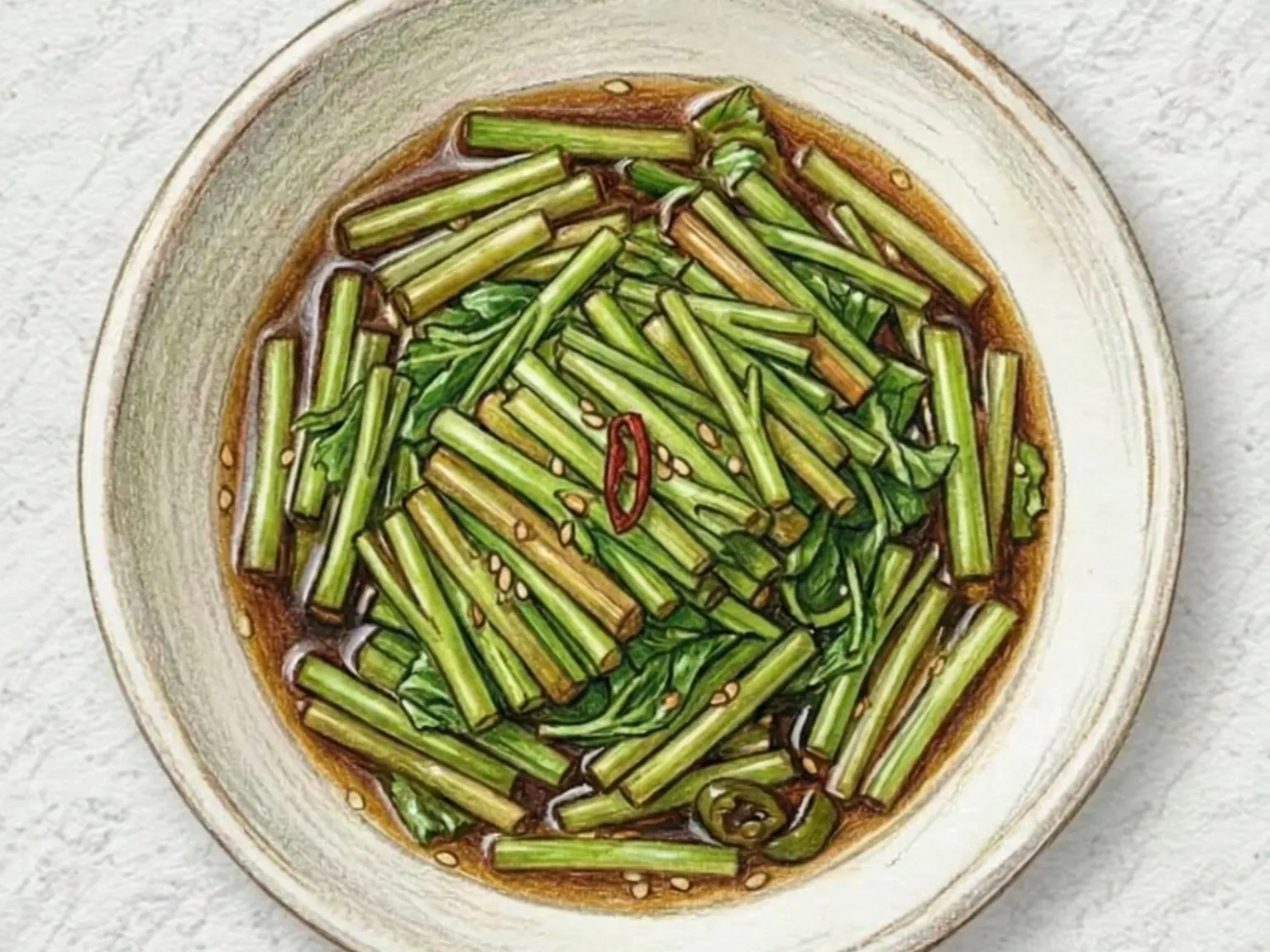
Korean Water Parsley Soy Pickle
Minari jangajji is a Korean soy-pickled water parsley made by cutting the stems into 5 cm lengths, drying them thoroughly, and submerging them with garlic and cheongyang chili in a brine of boiled soy sauce, vinegar, and sugar. The water parsley's cool, herbaceous fragrance gains depth when enveloped by the soy sauce's savory character, and the vinegar's tartness keeps the aftertaste refreshing. Cheongyang chili adds a sharp heat while garlic contributes a pungent undercurrent. Flavor and crunch peak around days two to three, so making small batches frequently ensures this pickle is always at its best.
Adjust Servings
Instructions
- 1
Cut water parsley into 5 cm lengths, wash, and dry thoroughly.
- 2
Place parsley, sliced garlic, and chili in a sterilized jar.
- 3
Boil soy sauce, vinegar, water, and sugar until dissolved.
- 4
Cool the brine for 2 minutes and pour to fully submerge ingredients.
- 5
Cool at room temperature, then refrigerate for at least 1 day.
As an Amazon Associate, we may earn from qualifying purchases.
Tips
Nutrition (per serving)
More Recipes

Korean Soy Pickled Cucumber
Oi jangajji is a Korean soy-pickled cucumber made by slicing cucumbers into one-centimeter rounds, lightly salting them, then packing them into a sterilized jar with garlic cloves and green chilies before pouring over a boiling brine of soy sauce, water, vinegar, and sugar. The hot liquid partially cooks the cucumber surface while the center stays crisp, and two days of cold fermentation lets the sweet-salty-sour brine soak through to the core. The green chilies leave a faint heat at the back of each bite, and whole garlic cloves release their aroma into the brine as they soften. Reboiling and re-pouring the brine once extends the pickle's crunch, making this a practical side dish that keeps well over a week in the refrigerator.

Korean Cherry Tomato Jangajji
Tomato jangajji is a Korean soy-vinegar pickle made with peeled cherry tomatoes soaked in a boiled brine of soy sauce, vinegar, and sugar. Removing the skins allows the brine to penetrate the flesh quickly, creating an even sweet-salty-tangy flavor throughout each tomato. Sliced onion and fresh basil leaves added to the jar contribute crunch and an herbaceous note that elevates the tomatoes' natural fruitiness. After one day of chilling, the pickle develops a crisp, cold tanginess that makes it especially suited to warm-weather meals.

Korean Water Parsley Kimchi
Minari kimchi is a quick Korean water parsley kimchi made by wilting the stems in salt for just ten minutes, then tossing them in a seasoning of gochugaru, anchovy fish sauce, and plum syrup with blended onion. The brief brining preserves the stem's crisp texture and cool herbal aroma, while the fish sauce grounds the light vegetable with a seafood umami foundation. Plum syrup's fruit acidity softens the chili heat, leaving a bright, clean finish. Paired with samgyeopsal or boiled pork, the water parsley's fresh fragrance cuts through the fat and resets the palate between bites.

Korean Coastal Herb Pickle
Bangpungnamul jangajji is a Korean soy-pickled side dish made from coastal hog fennel, a spring herb with a distinctive fragrance and mild bitterness. The pickling liquid is prepared by boiling soy sauce, water, vinegar, and sugar together, then pouring it hot over the cleaned herb in a jar. Garlic cloves and ginger slices added to the brine contribute additional aromatic depth. After about two days of marination, the herb absorbs enough of the soy-vinegar liquid to become flavorful, and the taste continues to develop over subsequent weeks. The pickle keeps for over a month under refrigeration and is served in small portions alongside rice. Its pungent, slightly bitter character acts as a palate stimulant between bites of milder dishes.

Korean Soy-Marinated Soybean Leaves
Kongnip-jangajji is soybean leaves preserved in a seasoned soy brine - one of the two major leaf jangajji traditions alongside perilla leaf (kkaennip) jangajji. Soybean leaves are larger and thicker than perilla leaves, taking longer to absorb the pickling liquid but offering a more substantial chew, with each leaf large enough to wrap around a spoonful of rice. The brine - soy sauce, water, vinegar, and sugar boiled together - must cool completely before pouring over the leaves; hot liquid softens them into a limp state, destroying the desired texture. Garlic cloves, cheongyang chili, and onion slices added to the jar infuse the brine with aromatic complexity during the curing process, producing a more layered flavor than plain soy. A minimum of two days of refrigerated aging is needed for the seasoning to reach the leaf interior, and flipping the layers once daily ensures even penetration. The most common way to eat it is draped over hot steamed rice, ssam-style.

Korean Water Parsley Salad
Minari-muchim is blanched water parsley (minari) dressed in a gochugaru-soy-vinegar sauce - a spring banchan built entirely around the herb's distinctive fragrance. Minari is a semi-aquatic plant that grows in clean-running paddies and wetlands across Korea, carrying an aroma in a different family from Western parsley or celery. The blanching window determines whether the dish succeeds: past twenty seconds, the volatile aromatic compounds escape with the steam and the entire point of using minari is lost. Trimming the tough lower stems and cutting to 5 cm lengths makes eating easier, and cold-water shocking after blanching locks in the chlorophyll for vivid green color. The vinegar in the dressing amplifies the herbal brightness while suppressing any aquatic mustiness that water-grown plants can carry. International awareness of this ingredient grew after the 2020 film 'Minari.' Dipping raw minari in cho-gochujang (vinegared chili paste) is another popular serving method.