Korean Water Parsley Kimchi
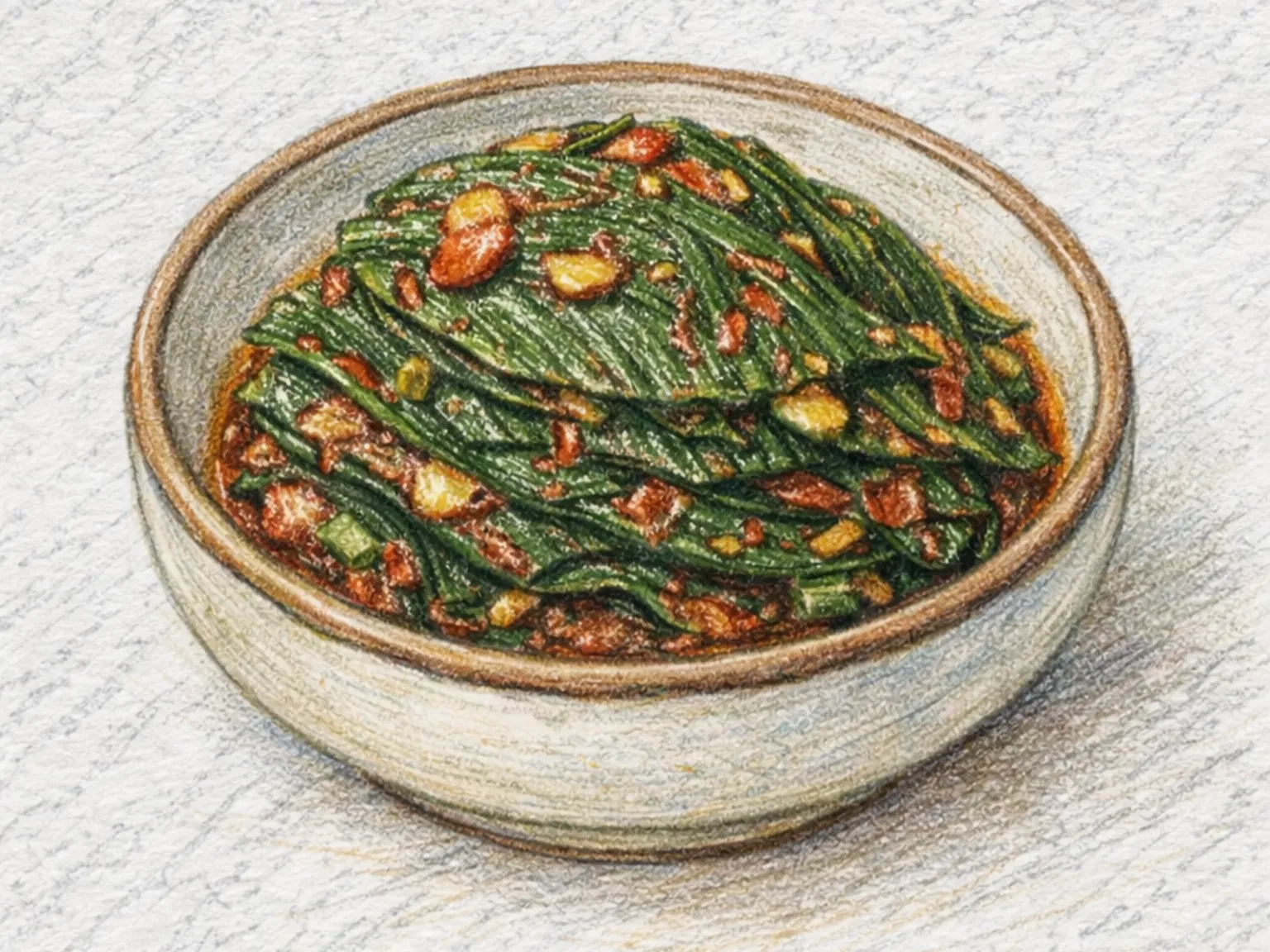
Minari kimchi is a quick Korean water parsley kimchi made by wilting the stems in salt for just ten minutes, then tossing them in a seasoning of gochugaru, anchovy fish sauce, and plum syrup with blended onion. The brief brining preserves the stem's crisp texture and cool herbal aroma, while the fish sauce grounds the light vegetable with a seafood umami foundation. Plum syrup's fruit acidity softens the chili heat, leaving a bright, clean finish. Paired with samgyeopsal or boiled pork, the water parsley's fresh fragrance cuts through the fat and resets the palate between bites.
Adjust Servings
Instructions
- 1
Cut water parsley into 5 cm lengths, rinse, and shake off excess water.
- 2
Lightly salt for 10 minutes, then quickly rinse.
- 3
Finely mince or blend onion, then mix with chili flakes, fish sauce, garlic, ginger, and plum syrup.
- 4
Gently toss parsley with seasoning to avoid bruising stems.
- 5
Marinate for 30 minutes, or chill for 1 day for deeper flavor.
As an Amazon Associate, we may earn from qualifying purchases.
Tips
Nutrition (per serving)
More Recipes

Korean Fresh Eggplant Kimchi
Gaji kimchi is a fresh, no-fermentation eggplant kimchi made by steaming eggplant until soft, tearing it along the grain, and tossing it with gochugaru, fish sauce, garlic, and sesame oil. Tearing rather than cutting exposes the fibrous interior so the seasoning reaches deep into every strand. Scallions add a fresh, sharp lift, and sesame seeds provide a nutty finish. Since no fermentation is required, this kimchi can be eaten immediately after preparation, making it especially useful in summer when a quick banchan is needed. Mixed into a bowl of cold leftover rice, the seasoning soaks into the grains for a satisfying one-bowl meal.

Korean Water Parsley Soy Pickle
Minari jangajji is a Korean soy-pickled water parsley made by cutting the stems into 5 cm lengths, drying them thoroughly, and submerging them with garlic and cheongyang chili in a brine of boiled soy sauce, vinegar, and sugar. The water parsley's cool, herbaceous fragrance gains depth when enveloped by the soy sauce's savory character, and the vinegar's tartness keeps the aftertaste refreshing. Cheongyang chili adds a sharp heat while garlic contributes a pungent undercurrent. Flavor and crunch peak around days two to three, so making small batches frequently ensures this pickle is always at its best.

Korean Green Chili Kimchi
Gochu kimchi is a spicy Korean kimchi made with whole or halved green chili peppers that are salted, then dressed in gochugaru, salted shrimp, anchovy fish sauce, and garlic for a short fermentation. The thick pepper walls retain a firm crunch through salting and fermentation, and the seeds clustered inside deliver a concentrated burst of heat when bitten into. Salted shrimp brings immediate umami even without extended aging, and the pepper's own grassy sweetness supports the seasoning in place of added sugar. Served alongside grilled pork belly or bossam, this kimchi works as a sharp counterpoint that cuts through the richness of fatty meats.

Korean Lettuce Kimchi (Quick Leaf Gochugaru Dressed)
Sangchu kimchi is a quick Korean lettuce kimchi made by tearing leaf lettuce into bite-sized pieces, lightly salting for ten minutes to wilt the leaves just enough, then tossing them in a dressing of gochugaru, sand lance fish sauce, minced garlic, vinegar, and sugar. The lettuce absorbs the seasoning and softens, but eating it before it fully collapses preserves a slight crispness at the leaf edges. Fish sauce's fermented depth adds weight to the lettuce's otherwise mild green flavor, and vinegar leaves a clean, tangy finish. Sesame seeds contribute a toasted accent with each chew. Thorough drying after salting is essential - residual water dilutes the seasoning rapidly, turning the kimchi bland within hours.

Korean Oyster Water Parsley Stir-fry
Gul-minari-bokkeum stir-fries plump raw oysters with fragrant water parsley (minari), gochugaru, and light soy sauce over high heat. The oysters cook just enough to firm up while keeping their juicy brine, and the minari retains its crunch and herbal freshness. The briny sweetness of the oysters meets the clean, grassy note of minari, creating a balanced and refreshing dish. It is best prepared in winter when oysters are at their plumpest and most flavorful.

Korean Water Parsley Pancake
Minari-jeon is a Korean spring pancake made by cutting water parsley into five-centimeter lengths and mixing them into a batter of Korean pancake mix, water, egg, and salt, then pan-frying in oil until golden on both sides. Water parsley's cool, herbaceous fragrance permeates the entire pancake, and its stems provide a fresh, snappy bite against the soft batter. Spreading the mixture thin and cooking over medium heat for three to four minutes per side ensures crisp, almost fried edges, while overcooking quickly diminishes the herb's distinctive aroma. Dipping slices in cho-ganjang-soy sauce mixed with vinegar-balances the subtle bitterness of the parsley with sharp acidity.