Minari Pesto Chicken Gemelli
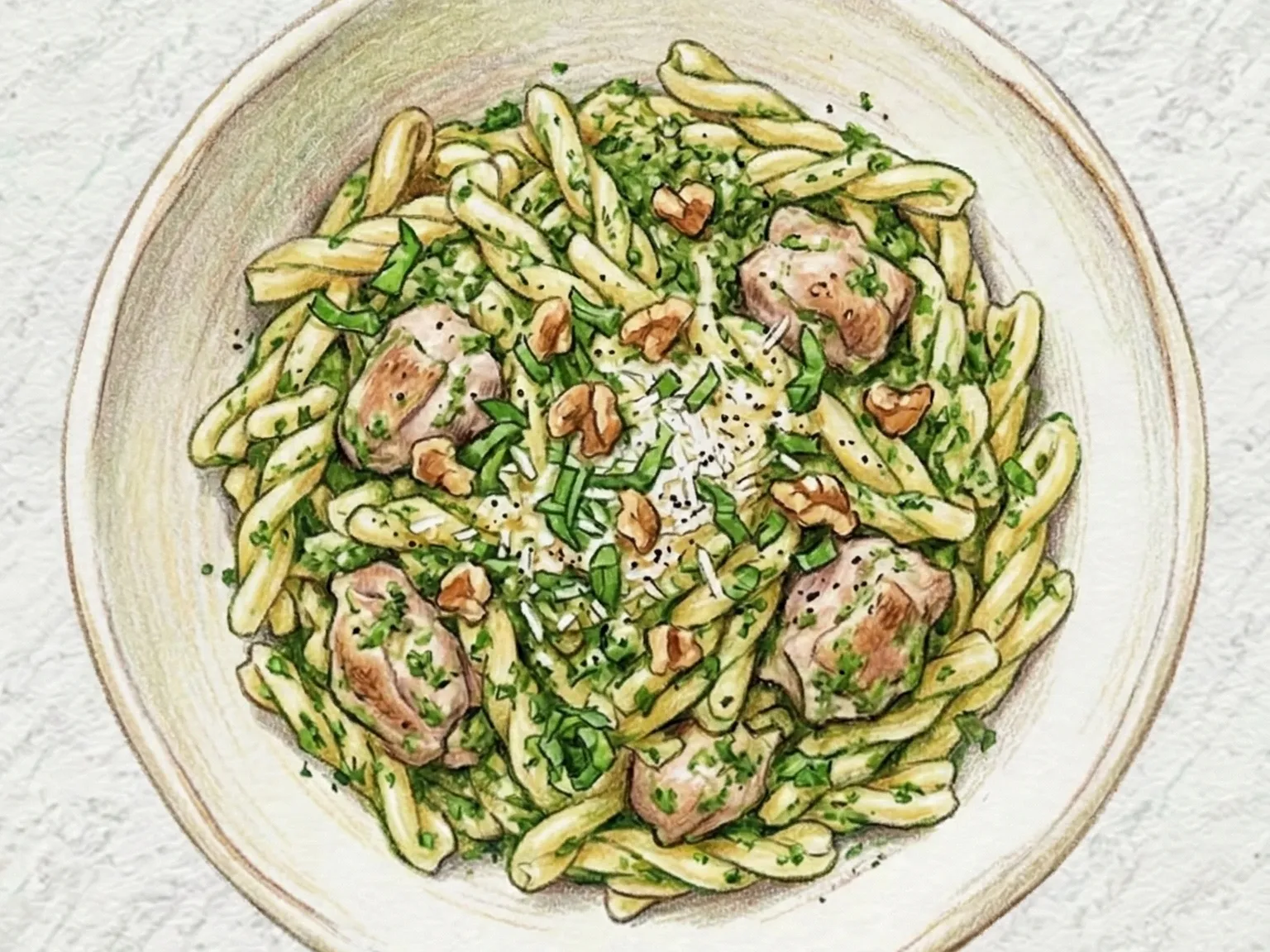
Minari pesto chicken gemelli features a pesto made from Korean water parsley (minari) and walnuts, producing a herbaceous sauce distinct from classic basil versions. Minari has a clean, slightly peppery green aroma that stands apart in the finished dish. Chicken thigh is pan-seared until golden and sliced, adding protein and savory depth. Parmesan cheese and olive oil give the pesto its creamy body, while lemon juice adds brightness that keeps the oily richness in check. Gemelli's twisted shape grips the thick pesto effectively, ensuring even distribution across the pasta. The cook time runs about 20 minutes including the chicken sear.
Adjust Servings
Instructions
- 1
Trim tough minari stems, wash thoroughly, and dry completely.
- 2
Blend minari, walnuts, garlic, parmesan, lemon juice, and 4 tbsp olive oil into pesto.
- 3
Cut chicken thigh into bite-size pieces, season with salt and pepper, and pan-sear until golden.
- 4
Boil gemelli in salted water to al dente and reserve 120 ml pasta water.
- 5
Combine chicken, pasta, and pesto in a pan, adding pasta water gradually and tossing for 2 minutes.
- 6
Finish with 1 tbsp olive oil for aroma and serve immediately.
As an Amazon Associate, we may earn from qualifying purchases.
Tips
Nutrition (per serving)
More Recipes

Perilla Pesto Chicken Penne
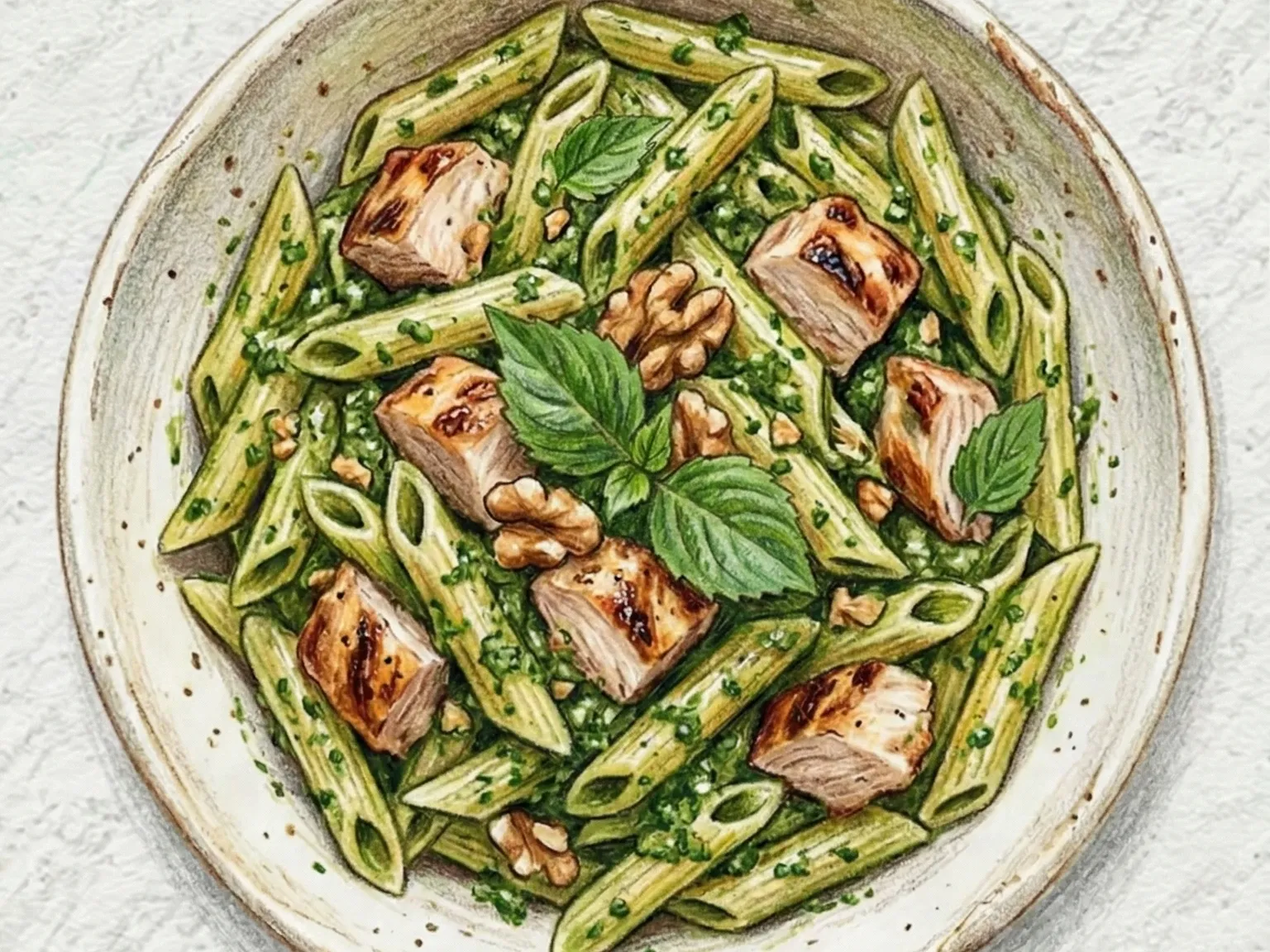
Perilla pesto chicken penne uses Korean perilla leaves (kkaennip) and walnuts blended with olive oil into a thick pesto that coats penne and sliced seared chicken breast. The perilla delivers a grassy, slightly minty aroma that is fundamentally different from basil - closer to shiso but with a stronger sesame-like undertone. Walnuts add creamy body and lingering nuttiness to the pesto base. The chicken breast is seared in olive oil for a golden crust, then sliced thin to distribute evenly. Parmesan contributes salt and umami, and lemon juice provides enough acidity to balance the oil-heavy sauce. Penne's hollow tubes catch pesto inside, so each bite carries full flavor even without visible sauce on the surface.

Chamnamul Walnut Pesto Trofie
Chamnamul walnut pesto trofie coats twisted pasta shapes in a pesto made from Korean chamnamul (wild parsley), walnuts, Parmigiano, and olive oil. Chamnamul has a lighter, more herbaceous flavor than basil, with a faintly bitter finish that gives the pesto a distinctly Korean aromatic quality. Walnuts contribute a heavier, more robust nuttiness than pine nuts, thickening the sauce and anchoring the savory depth alongside the aged cheese. The spiral grooves of trofie trap the pesto in every fold, releasing flavor evenly with each bite. Adding enough olive oil during blending slows oxidation and keeps the chamnamul's green color from darkening too quickly.

Korean Water Parsley Pancake
Minari-jeon is a Korean spring pancake made by cutting water parsley into five-centimeter lengths and mixing them into a batter of Korean pancake mix, water, egg, and salt, then pan-frying in oil until golden on both sides. Water parsley's cool, herbaceous fragrance permeates the entire pancake, and its stems provide a fresh, snappy bite against the soft batter. Spreading the mixture thin and cooking over medium heat for three to four minutes per side ensures crisp, almost fried edges, while overcooking quickly diminishes the herb's distinctive aroma. Dipping slices in cho-ganjang-soy sauce mixed with vinegar-balances the subtle bitterness of the parsley with sharp acidity.

Soy-Garlic Chicken Parmesan Spaghetti
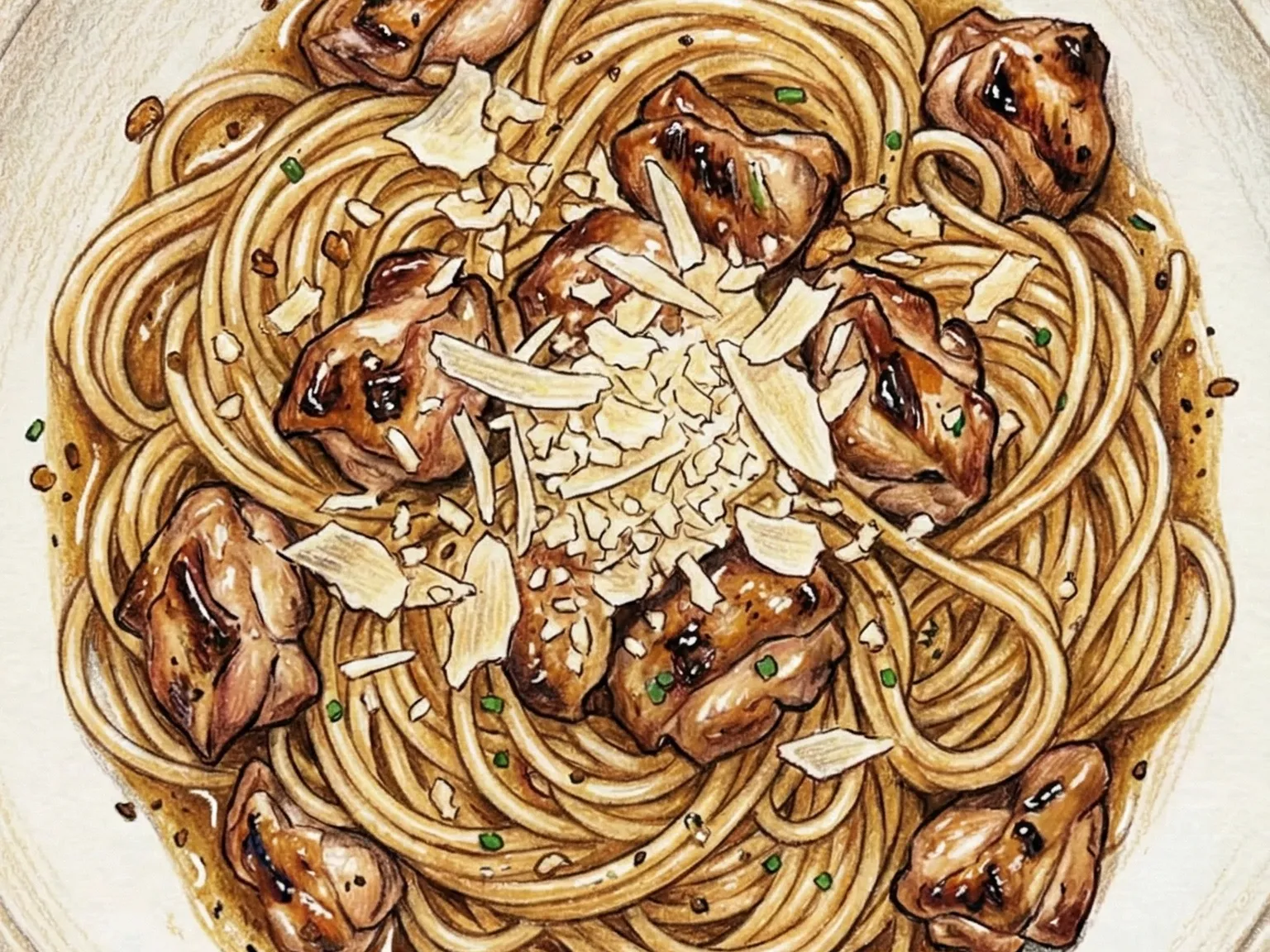
Soy-garlic chicken Parmesan spaghetti marinates chicken thigh in soy sauce, minced garlic, and honey, then pan-sears it until the glaze caramelizes into a dark, glossy coating. The soy-honey combination creates a sweet-salty crust on the chicken that pairs with a simple tomato sauce underneath. Garlic drives the aromatic profile throughout the dish, appearing both in the marinade and sautéed into the sauce base. Parmesan cheese, grated generously over the top, adds a nutty umami layer that bridges the Korean marinade with the Italian pasta format. Chicken thigh holds moisture well through the sear, staying juicy against the hot spaghetti. Sliced scallions finish with color and a light allium note.

Ssamjang Chicken Spinach Orecchiette (Ssamjang Chicken Pasta)
Ssamjang chicken spinach orecchiette dissolves ssamjang in milk rather than frying it first, softening the fermented paste's intensity into a smooth, savory cream sauce. Boneless chicken thigh is seared until golden to render its fat, then combined with sauteed onion and garlic that build a sweet aromatic base. Spinach goes in at the very end to preserve its bright color and slight bite, and the concave shape of orecchiette cups the thick sauce inside each piece. Parmesan and black pepper are folded in off the heat so the cheese melts gradually into the sauce without clumping.

Korean Chamnamul Kimchi (Pimpinella Kimchi)
Chamnamul kimchi is a spring kimchi made by salting chamnamul greens for just ten minutes to wilt them slightly, then dressing them in gochugaru, anchovy fish sauce, and salted shrimp without rinsing. Skipping the rinse allows the residual salt to convert into umami during fermentation, deepening the overall flavor. Pureed Korean pear and onion blended with sweet rice paste form the seasoning base, contributing natural sweetness that softens the chili heat. After three hours of initial fermentation at room temperature followed by refrigeration, the kimchi reaches its best balance within one to two days, when the grassy herbal aroma of chamnamul meets the fermented depth of the fish sauce.