Chunjang Beef Ragu Tagliatelle
Pasta Medium

Chunjang Beef Ragu Tagliatelle

Quick answer

Chunjang beef ragu tagliatelle combines a slow-cooked ground beef ragu with Korean black bean paste and tomato passata, tossed through wide tagliatelle ribbons.

What makes this special

  • Fermented chunjang black bean paste adds savory depth to a slow-cooked ground beef ragu.
  • Chunjang (fermented black bean paste) adds a fermented depth no classic ragu has
  • Beef seared undisturbed until browned for concentrated meatiness
Total time
60 min
Level
Medium
Servings
2 servings
Ingredients
9
Calories
760 kcal
Protein
36 g

Key ingredients

tagliatelleground beefKorean black bean pastetomato passataonion

Core cooking flow

  1. 1 Finely dice 100 g onion and 12 g garlic so they melt into the sauce rather than stay chunky.
  2. 2 Heat 1.5 tbsp olive oil in a wide pan over medium heat.
  3. 3 Add 220 g ground beef, spread it out, and cook over high heat so moisture evaporates quickly.

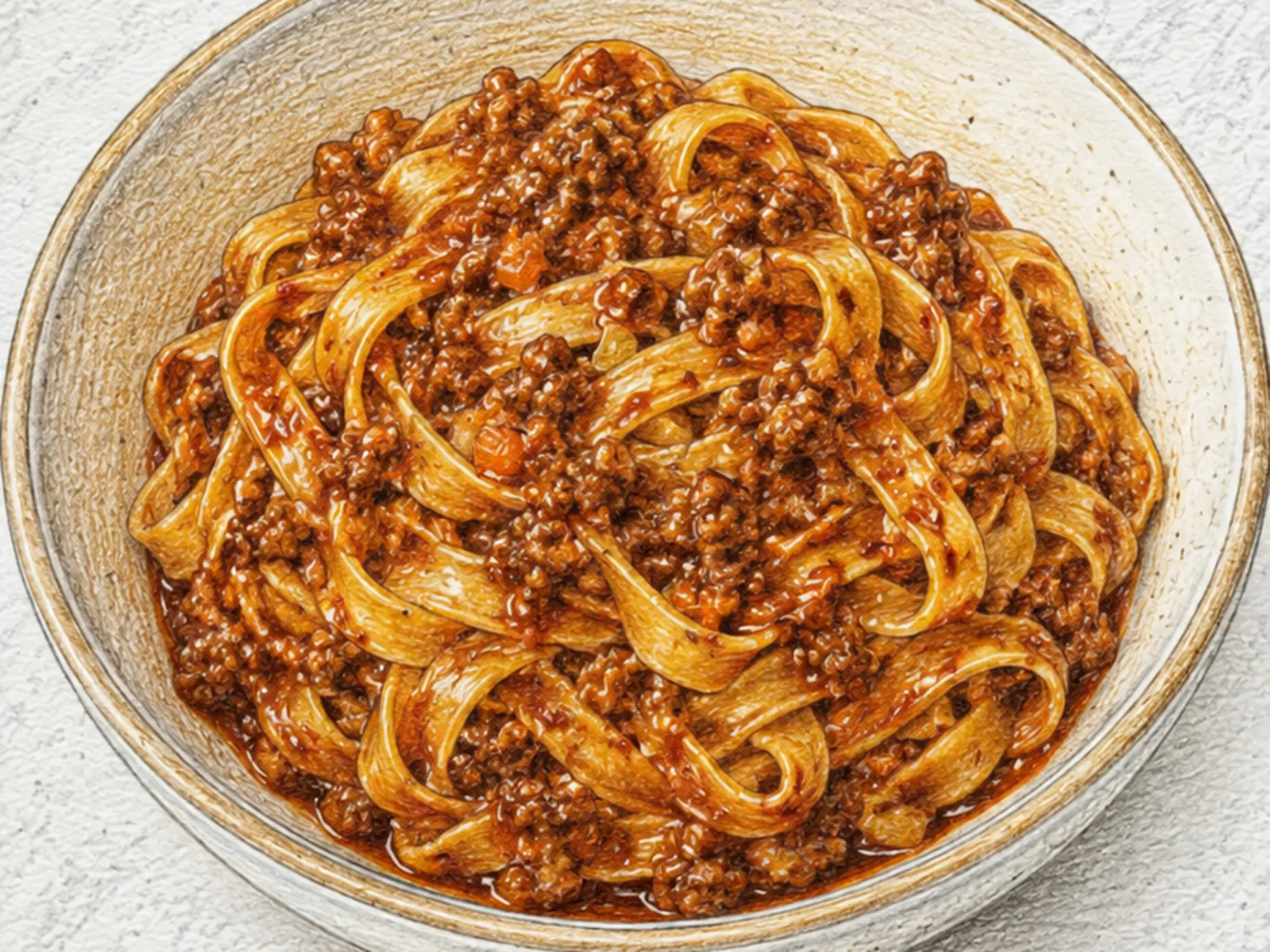
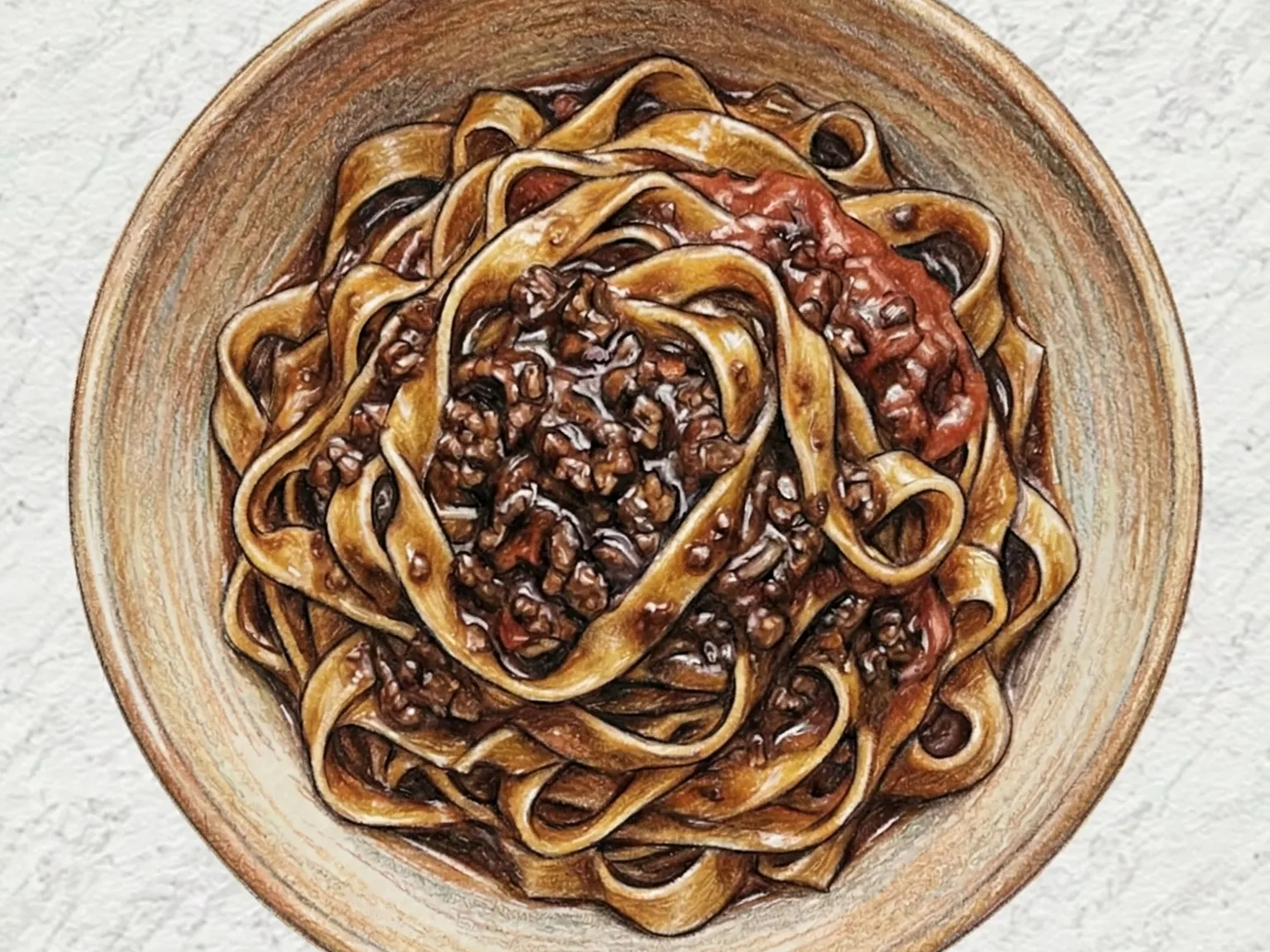
Chunjang beef ragu tagliatelle combines a slow-cooked ground beef ragu with Korean black bean paste and tomato passata, tossed through wide tagliatelle ribbons. Chunjang is a fermented black soybean paste that, when fried in oil first, releases a deep roasted umami and loses its raw bitterness before joining the tomato base. Browning the ground beef hard over high heat before adding liquids develops a Maillard crust that intensifies the meatiness of the finished sauce. The sauce then simmers on low heat until it reduces into a thick, glossy coating. Wide tagliatelle catches the dense ragu across its broad surface, ensuring each forkful carries both the tomato-chunjang depth and chunks of seasoned beef.

Prep 20min Cook 40min 2 servings

Instructions

Read the steps as a cooking flow: prep, heat, seasoning, doneness control, and finish.

6 steps
  1. 1
    Control

    Finely dice 100 g onion and 12 g garlic so they melt into the sauce rather than stay chunky.

    Set a large pot of water over high heat and salt it once it boils for the tagliatelle.

  2. 2
    Control

    Heat 1.5 tbsp olive oil in a wide pan over medium heat.

    Cook the onion for about 3 minutes until translucent, then add the garlic for 1 minute, lowering the heat if it starts to brown.

  3. 3
    Control

    Add 220 g ground beef, spread it out, and cook over high heat so moisture evaporates quickly.

    When browned patches form and the meat smells roasted, stir in 1.5 tbsp chunjang and fry for 1 minute.

  4. 4
    Control

    Pour in 60 ml red wine and boil hard, scraping the browned bits from the pan.

    When reduced by half, add 220 ml tomato passata and simmer on low for 20 minutes until thick and glossy.

  5. 5
    Finish

    Cook 180 g tagliatelle in the salted boiling water for 1 minute less than the package time.

    Reserve half a cup of pasta water before draining, keeping the pasta slightly firm for the final toss.

  6. 6
    Finish

    Add the pasta to the ragu with small splashes of reserved water and toss over medium low heat for 1 minute.

    Stop when the sauce clings glossily to the ribbons, then plate and finish with 20 g Parmigiano Reggiano.

After the steps

Pick a recipe that fits this dish.

Continue with shared ingredients, meal pairings, or a similar method.

Recipes That Go Well With This

More Pasta →

Based on shared ingredients and meal pairing

Gochujang Beef Ragu Rigatoni
Shared ingredient: beef slices Pasta

Gochujang Beef Ragu Rigatoni

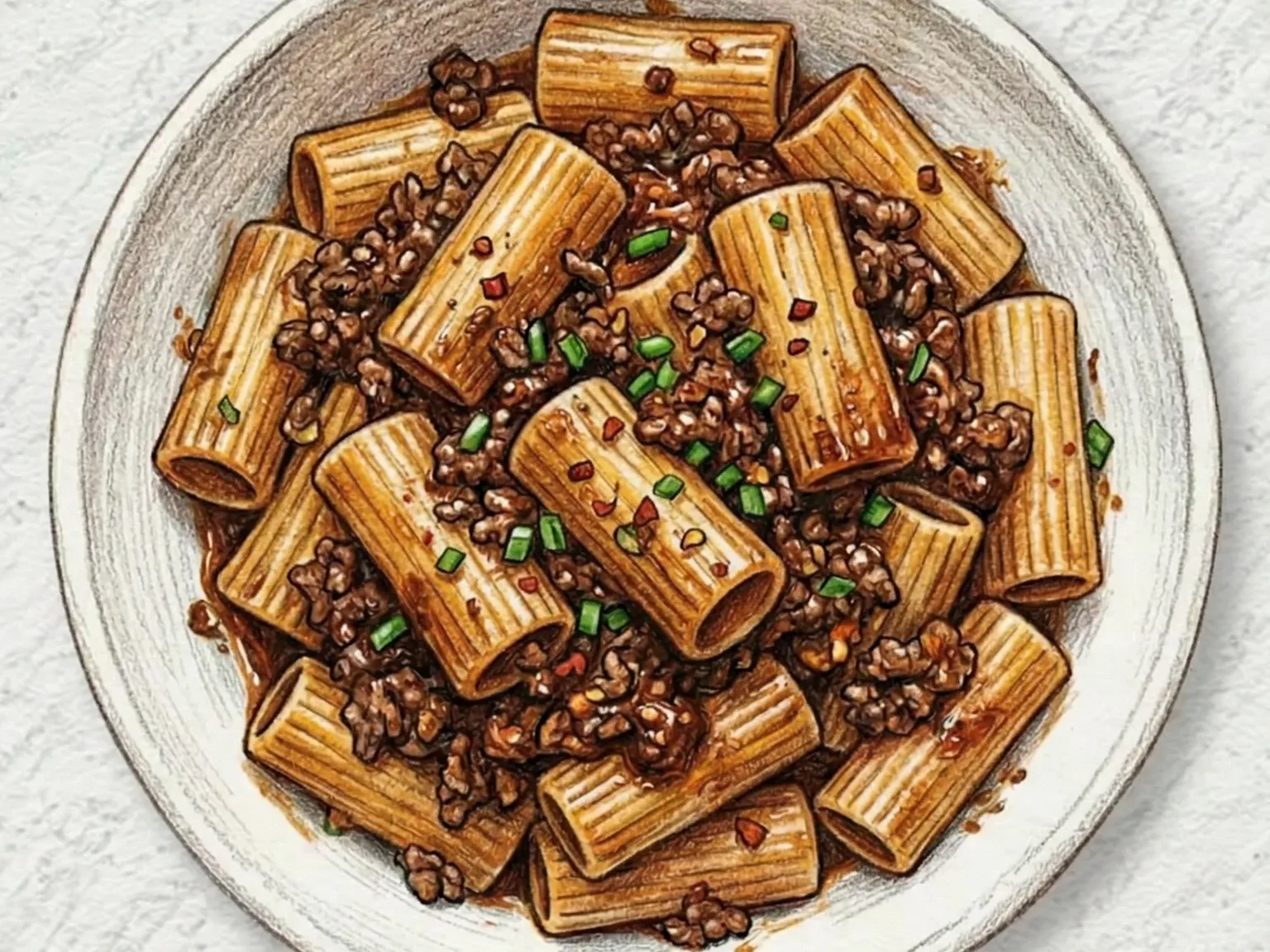
Gochujang beef ragu rigatoni builds depth in two stages: first, ground beef is seared undisturbed over high heat until a proper crust forms, then gochujang, tomato puree, and red wine are added and the whole pot simmers on medium-low heat for twenty minutes. The browning step is critical and non-negotiable-stirring too early releases steam and moisture from the meat, which prevents crust formation and produces braised ground beef instead of seared. Frying the gochujang in oil for a full minute before adding the tomato puree unlocks its fermented sweetness and blunts the raw edge of the paste; the acidity of the tomato then balances the gochujang's heat naturally. As the red wine reduces, it leaves behind layered fruit notes that add complexity the tomato alone cannot provide. Rigatoni is pulled from the water one minute before al dente and transferred to the sauce pan with a ladle of pasta water; the starch dissolves into the sauce and coats the tubes inside and out with a glossy, cohesive finish. Grated Parmesan stirred in at the end deepens the overall savory character of the ragu.

Soy Galbi Ragu Pappardelle
Shared ingredient: onion Pasta

Soy Galbi Ragu Pappardelle

Soy galbi ragu pappardelle starts with short rib seared hard on both sides, then braised low and slow with aromatics, red wine, and soy sauce for ninety minutes until the meat pulls apart into thick shreds. The extended braise renders out the collagen in the short rib, building a sauce with a genuinely silky, gelatinous body that clings to wide pappardelle ribbons. A soffritto of onion, carrot, and celery forms the sweet foundation; canned whole tomatoes and tomato paste add body and acidity. Soy sauce replaces plain salt and contributes fermented depth that sets this apart from standard Bolognese - the difference is noticeable. Red wine adds tannin and fruit complexity. Grated Parmigiano-Reggiano finishes the bowl. Most of the ninety-minute cook time is hands-off braising.

Lotus Root Crab Yuja Salad
Serve together Salads

Lotus Root Crab Yuja Salad

Thinly sliced lotus root, blanched until just crisp-tender, provides the structural crunch at the center of this salad, while gently separated crab meat drapes a delicate sweetness and umami over each bite. The yuja mayo dressing - yuja marmalade folded into mayonnaise with lemon juice - delivers citrus fragrance and creamy richness simultaneously. Half-moon cucumber slices and thin red onion add contrasting crunch, and a bed of mixed baby greens brings color and freshness to the plate. Keeping the blanching time under four minutes is critical; even a minute longer turns the lotus root soft and robs it of its signature snap.

Soy Butter Steak Garlic Spaghetti
Similar recipe Pasta

Soy Butter Steak Garlic Spaghetti

Thick-cut sirloin seared at high heat, then glazed in soy sauce and butter, forms the base of this steak pasta. The fond left in the pan gets deglazed with soy sauce and butter, then emulsified with pasta water into a thin, shiny coating that clings to each strand without turning greasy. Generous garlic browned in olive oil beforehand builds a deep, roasted-garlic base that runs through the entire sauce, and tsuyu -- a Japanese seasoning concentrate made from kombu and bonito -- adds the round umami depth of dashi without any extra steps. The steak is best cooked to medium-rare and sliced against the grain before laying over the pasta; resting the meat first keeps the juices from running out when cut. Black pepper and sliced scallions cut through the richness at the end. The full cook time is about 20 minutes, and pasta water volume controls the final sauce consistency.

Serve with this

Clear Korean Rice Wine (Traditional Fermented Yakju)
Drinks Hard

Clear Korean Rice Wine (Traditional Fermented Yakju)

Yakju is a traditional Korean clear rice wine produced by steaming soaked glutinous rice for 35 minutes, then fermenting it with crushed nuruk starter, dry yeast, and water for seven to ten days at room temperature. Daily stirring distributes the yeast culture evenly, and sliced ginger and jujube are added during fermentation to suppress off-flavors and contribute subtle aromatics. After fermentation, the solids are allowed to settle completely so only the clear upper liquid is carefully decanted, giving yakju its transparent appearance and refined taste distinct from cloudy makgeolli. Two days of cold aging in the refrigerator rounds off the sharp alcohol edge, bringing forward a smooth, grain-forward character.

🍺 Bar Snacks 🎉 Special Occasion
Prep 25min Cook 35min 4 servings
Yaksik (Korean Royal Sweet Glutinous Rice with Jujube)
Baking Medium

Yaksik (Korean Royal Sweet Glutinous Rice with Jujube)

Yaksik is a traditional Korean sweet rice dish with roots in royal court cuisine. Glutinous rice is mixed with soy sauce, honey, and sesame oil, then steamed with jujubes and chestnuts until each grain absorbs a deep caramel-brown color and a sweet-salty seasoning. The soy sauce provides savory depth while the honey glazes the rice with a gentle sheen and lingering sweetness. Jujubes burst with natural fruity sweetness when bitten, and chestnuts contribute a crumbly, starchy contrast to the chewy rice. A pinch of cinnamon adds warm spice that ties the elements together. Yaksik holds its texture well at room temperature, making it equally suited for packed lunches or make-ahead desserts.

🎉 Special Occasion 🧒 Kid-Friendly
Prep 25min Cook 45min 4 servings
Mushroom Risotto
Western Medium

Mushroom Risotto

Mushroom risotto cooks unwashed arborio rice in olive oil and butter to activate the surface starch, then adds warm chicken stock one ladle at a time over 18 to 20 minutes of continuous stirring. Not rinsing the rice is essential - the starch released during cooking is what creates the signature creamy consistency without any cream. The mushrooms are sauteed on high heat until their moisture evaporates and they develop a deep brown color, which concentrates the earthy aroma. White wine is added to the toasted rice and stirred until absorbed, leaving behind a subtle acidity once the alcohol cooks off. Finishing off the heat with cold butter and grated Parmesan - a step called mantecatura - gives the risotto its glossy, velvety texture.

🎉 Special Occasion 🍺 Bar Snacks
Prep 10min Cook 30min 2 servings

Similar recipes

Chamnamul Walnut Pesto Trofie
Pasta Easy

Chamnamul Walnut Pesto Trofie

Chamnamul walnut pesto trofie is a fusion pasta that coats twisted trofie in a pesto made from Korean chamnamul (wild parsley), walnuts, Parmigiano, and olive oil. Chamnamul has a lighter, more herbaceous quality than basil, with a faintly bitter finish that gives the pesto a distinctly Korean aromatic character. Walnuts contribute a heavier, more assertive nuttiness than pine nuts, thickening the sauce and anchoring the savory depth together with the aged cheese. The spiral grooves of trofie hold the pesto in every ridge, releasing an even concentration of flavor with each bite. Adding sufficient olive oil during blending slows oxidation and prevents the chamnamul's green color from darkening too quickly. The pasta is best eaten immediately after tossing, when both the color and fragrance are at their peak.

🥗 Light & Healthy 🎉 Special Occasion
Prep 15min Cook 12min 2 servings
Korean Soy Sauce Bulgogi (Soy-Pear Marinated Thinly Sliced Beef)
Stir-fry Easy

Korean Soy Sauce Bulgogi (Soy-Pear Marinated Thinly Sliced Beef)

Ganjang bulgogi is one of Korea's most enduring home-cooked main dishes, built around thinly sliced beef marinated in soy sauce, pear juice, sugar, garlic, and sesame oil. Pear juice acts as a natural tenderizer while adding a subtle sweetness that offsets the salt-forward depth of the soy. Onion, carrot, and green onion are stir-fried together with the beef over high heat, developing caramelized edges while keeping the center moist. Slicing the beef thin is essential: the short cooking time only penetrates marinade fully into thin cuts, and the pan must be properly preheated before the meat goes in to seal the juices. The soy-based seasoning is milder and less assertive than gochujang-marinated bulgogi, making it broadly appealing across ages and a consistent presence on both everyday dinner tables and guest menus.

🏠 Everyday 🎉 Special Occasion
Prep 18min Cook 10min 4 servings
Pasta Bolognese
Noodles Medium

Pasta Bolognese

Pasta Bolognese is a slow-simmered meat ragu from Bologna in Emilia-Romagna, built on a soffritto of onion, carrot, and celery cooked down with a mixture of ground beef and ground pork. Browning the meat properly in a hot pan before any liquid is added creates a Maillard crust that contributes a depth of flavor that no amount of simmering can replicate. Red wine deglazes the pan, lifting every bit of browned fond from the bottom. Whole milk is then stirred in to soften the acidity and tenderize the proteins, which is the detail that separates a true Bolognese from a generic meat sauce. The ragu requires at least one hour of low, uncovered simmering for the fat to separate, the liquid to reduce, and the meat to break down into a cohesive sauce. Tagliatelle is the canonical pairing in the region, with the wide, egg-enriched ribbons catching the chunky sauce in every fold. Freshly grated Parmigiano-Reggiano finishes the dish. Cooking the tomato paste directly in the pan after the soffritto for two minutes caramelizes its natural sugars and removes raw bitterness before any liquid goes in.

🎉 Special Occasion 🍺 Bar Snacks
Prep 20min Cook 90min 4 servings

Tips

Too much chunjang can taste salty and heavy; start with 1.5 tbsp.
The ragu tastes deeper after resting overnight.

Nutrition (per serving)

Calories
760
kcal
Protein
36
g
Carbs
75
g
Fat
32
g