Water Parsley Shrimp Salad
Quick answer
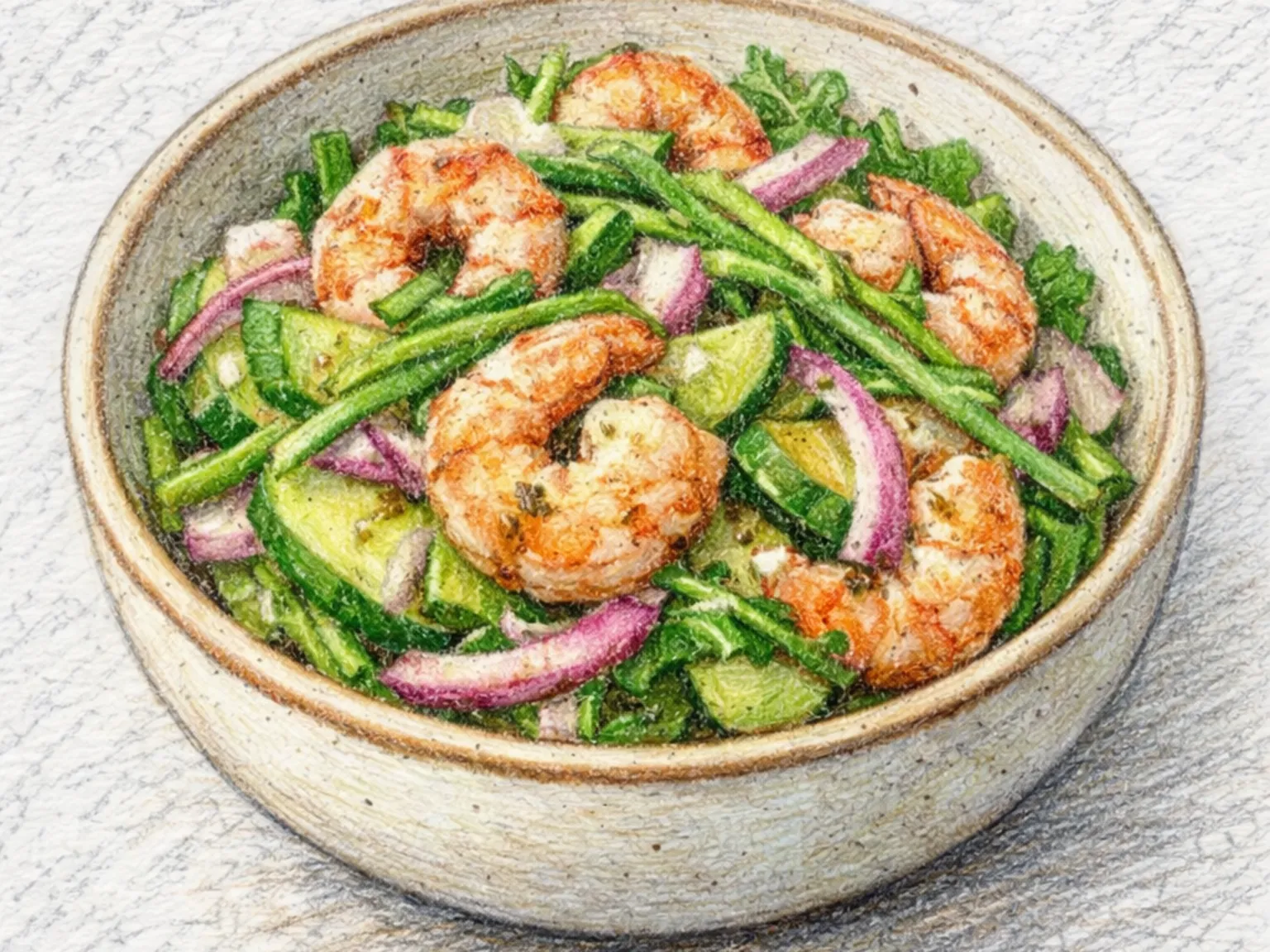
This Korean salad combines pan-seared shrimp with water parsley (minari) in a doenjang yogurt dressing that brings Korean fermented soybean paste together with plain yogu...
What makes this special
- Water Parsley Shrimp Salad features a creamy dressing made with fermented Korean soybean paste.
- Doenjang dissolved in yogurt translates fermented umami into a creamy, lighter form
- Two-stage dressing technique applies two-thirds first, then adjusts saltiness with remainder
Key ingredients
Core cooking flow
- 1 Rinse 180 g shrimp in lightly salted water, then pat them very dry with paper towels.
- 2 Cut 80 g minari into 5 cm lengths and slice 80 g cucumber thinly.
- 3 Heat a pan well over medium heat, then place the shrimp in one layer without crowding.
This Korean salad combines pan-seared shrimp with water parsley (minari) in a doenjang yogurt dressing that brings Korean fermented soybean paste together with plain yogurt in a lighter, creamier form than the paste alone. The shrimp are cooked just until opaque and springy - overcooking at this stage toughens them and diminishes their clean sweetness, which is the primary flavor note in the dish. Thinly sliced cucumber adds cool moisture and a fresh crunch throughout, and red onion soaked in cold water for at least ten minutes loses its raw harshness while keeping a pleasant mild sharpness. The dressing ratio technique matters: coating all the ingredients with two-thirds of the dressing first establishes a baseline seasoning, then tasting and adjusting with the remaining third ensures every component is evenly flavored without oversalting. Doenjang varies in salt intensity by brand and age, so tasting the dressing before assembling and balancing with extra yogurt or lemon juice prevents the final dish from being too salty. Sesame seeds scattered on top contribute a nutty finish that ties the Korean pantry elements together.
Instructions
Read the steps as a cooking flow: prep, heat, seasoning, doneness control, and finish.
- 1Season
Rinse 180 g shrimp in lightly salted water, then pat them very dry with paper towels.
If the surface stays wet, the shrimp will steam in the pan instead of searing and the texture will lose springiness.
- 2Prep
Cut 80 g minari into 5 cm lengths and slice 80 g cucumber thinly.
Slice 50 g red onion very thin, soak it in cold water for 10 minutes, then drain so the sharp raw bite softens.
- 3Control
Heat a pan well over medium heat, then place the shrimp in one layer without crowding.
When one side turns opaque and lightly colored at the edges, flip and cook about 2 minutes more only.
- 4Step
Remove the shrimp as soon as they are fully opaque and spring back lightly when pressed.
Let them cool just until warm rather than leaving them in the hot pan, which can make them tough.
- 5Season
Whisk 90 g plain yogurt, 12 g doenjang, and 12 ml lemon juice until no paste lumps remain.
Taste before assembling, and if it is too salty, loosen it with a little more yogurt.
- 6Finish
Right before serving, toss the minari, cucumber, red onion, and shrimp gently with only two-thirds of the dressing.
Taste, add just enough remaining dressing to balance the seasoning, and finish with 6 g sesame seeds.
After the steps
Pick a recipe that fits this dish.
Continue with shared ingredients, meal pairings, or a similar method.
Recipes That Go Well With This
More Salads →Based on shared ingredients and meal pairing
Bomdong Strawberry Doenjang Salad
Bomdong strawberry doenjang salad combines the crisp leaves of early spring bomdong cabbage with the fruity sweetness of strawberries and the fermented depth of Korean soybean paste. The dressing, built by whisking doenjang with olive oil and vinegar, adds savory richness to the mild bomdong leaves, while the natural acidity of the strawberries neutralizes the saltiness of the paste and brings brightness to every bite. Walnuts introduce crunch and nuttiness, creating textural contrast among the softer components, and cucumber adds moisture that keeps the salad refreshing throughout. Dressing the salad too early draws water from the strawberries, so adding the dressing immediately before serving is essential for maintaining the right texture. Tearing the bomdong by hand rather than cutting it preserves its natural shape without bruising the leaves. The saltiness of doenjang varies between brands, so adding the dressing gradually and tasting as you go prevents overseasoning. Swapping strawberries for blueberries or mandarin segments adapts the salad to other seasons while keeping the doenjang dressing intact. Toasted almond slices or sunflower seeds make a good substitute for walnuts when a lighter crunch is preferred.
Tofu Salad (Pan-Seared Tofu on Fresh Greens)
Dubu salad is made by pressing firm tofu to remove excess moisture, then pan-searing it until the outside turns golden and crisp while the inside stays soft and tender. The seared tofu is placed over a bed of baby greens, sliced cucumber, and cherry tomatoes. Wrapping the tofu in two layers of paper towels and setting a weight on top for twenty to thirty minutes draws out enough water so the surface browns properly in the pan without steaming. A dressing of soy sauce, sesame oil, lemon juice, and olive oil moves easily between Korean and Western flavor profiles. The salad is high in plant protein and low in fat, making it a practical and satisfying option when a light, clean-tasting meal is the goal.
Kimchi Tofu Alfredo Farfalle (Creamy Kimchi Bow-Tie Pasta)
Kimchi tofu Alfredo farfalle is a fusion pasta that counters the richness of a cream-and-Parmesan Alfredo sauce with the lactic acidity of well-fermented kimchi. Garlic bloomed in butter forms the aromatic base, then cream, milk, and Parmigiano are combined into the classic Alfredo sauce, after which chopped kimchi is folded in to introduce fermented tang and a layer of umami that a standard Alfredo lacks. Firm tofu cut into cubes and pan-fried until each side is golden provides a mild, neutral protein element with direct textural contrast against the smooth sauce. Farfalle's pinched center holds pockets of sauce against each piece of pasta, delivering a consistent hit of creaminess in every bite, and freshly ground black pepper draws a sharp line through the richness at the finish. The entire dish moves from pan to plate in about 15 minutes.
Charred Daepa Gamja Doenjang Salad (Charred Leek Potato Salad)
Charred daepa gamja doenjang salad combines boiled potatoes with large green onion segments that have been seared until deeply caramelized and smoky. The high heat strips away the raw onion bite and replaces it with a concentrated sweetness and char aroma. A dressing made from doenjang, lemon juice, honey, and olive oil layers fermented depth with bright acidity and a touch of sweetness, drawing out the mild flavor of the potato. Tossing the potatoes while still warm allows the dressing to absorb into the starchy flesh rather than sitting on the surface. Red chard adds color and a faint bitterness that gives the bowl a sense of direction, while black sesame seeds contribute a final nutty accent.
Serve with this
Korean Grilled Cabbage Leaf Wraps
Baechu kimchi gui ssam takes napa cabbage to the grill, charring the leaves before using them as wraps for grilled pork belly and doenjang-based ssam sauce. A whole cabbage is halved lengthwise, brushed with sesame oil and sprinkled with salt, then grilled over high heat for two to three minutes per side until the outer edges char while the inner layers keep some crispness. Pork belly is grilled separately until golden and cut into bite-sized pieces. The ssam sauce - doenjang, gochujang, minced garlic, and sesame oil mixed together - is spread on a grilled leaf, topped with pork, and rolled into a wrap. Each bite combines the smoky sweetness of the charred cabbage, the fatty richness of the pork, and the salty, fermented punch of the sauce. Grilled cheongyang chili on the side adds extra heat. The cabbage must not stay on the grill beyond the recommended time or it loses all structure and collapses into mush, making it impossible to use as a wrap. Unlike lettuce or perilla leaf, napa cabbage shrinks under heat and concentrates moisture inside the leaf, which allows it to absorb pork fat naturally as it wraps around the meat.
Soybean Paste Stew with Clams
Doenjang jjigae with clams is one of the most frequently made stews in Korean households, built on the combination of fermented soybean paste's deep, earthy flavor and the clean briny umami of manila clams. The clams are purged of sand before being added to a pot of doenjang-laced broth, where they open and release their salty, seawater-flavored liquor directly into the soup. The result transforms the base from something merely savory into something distinctly oceanic and complex. Zucchini softens in the bubbling broth and contributes a natural sweetness as it breaks down, while blocks of soft tofu act as sponges, soaking up the seasoned liquid and releasing it in a burst of hot, flavorful broth when bitten into. Sliced cheongyang chili peppers are added to interrupt the heaviness of the fermented paste and sharpen the overall flavor. The stew is typically served in an earthenware pot while still bubbling, alongside rice. Many Koreans ladle the broth directly over their bowl of rice. The recipe adapts to any season: assembled with leftover summer vegetables from the refrigerator for a lighter version, or cooked piping hot in a stone pot through winter.
Blackened Chicken Caesar Salad
Blackened chicken Caesar salad starts with chicken breast coated thickly in paprika, cayenne, garlic powder, onion powder, and dried herbs before hitting a very hot, dry pan. The spice coating undergoes rapid charring at high temperature, forming a dark, smoky crust that seals in moisture and concentrates the spice aromatics on the surface of the meat. The interior of the chicken stays juicy because the charred crust acts as an insulating barrier, provided the pan is hot enough from the start. Creamy Caesar dressing, made with anchovy paste, egg yolk, lemon, and Parmesan, wraps around the cold, crisp romaine and the sliced hot chicken alike, moderating the cayenne heat without erasing the spice character entirely. Shaved Parmesan adds sharp, salty depth throughout, while croutons introduce a crunchy textural break against the tender chicken and limp lettuce. Because blackening generates substantial smoke, proper ventilation or an outdoor cooking setup is strongly recommended. The dish functions as a full main course rather than a starter salad.
Similar recipes
Naengi Doenjang Mushroom Salad
Naengi is blanched for about thirty seconds in boiling water to remove its raw grassy edge while keeping the earthy, faintly sweet spring aroma that makes it distinctive. Oyster mushrooms go onto a dry, well-heated pan with no oil, pressed gently as they cook, so the moisture evaporates and the surfaces caramelize to a light golden color, concentrating their savory depth. The dressing is made by dissolving doenjang in yuja marmalade, rice vinegar, and sesame oil, producing a layered flavor that is nutty and fermented at the base with a bright citrus lift. Baby greens spread across the plate as a soft, neutral bed, and halved cherry tomatoes add bursts of juice that cut through the weight of the fermented paste. A few drops of sesame oil and toasted sesame seeds add a roasted, nutty finish, and minced garlic folded into the dressing contributes a quiet warmth that ties the individual flavors together without dominating. Using freshly foraged naengi in early spring gives the salad a vivid seasonal character that dried or stored greens cannot replicate.
Korean Steamed Shrimp
Saeu jjim is a traditional Korean method for preparing steamed shrimp by utilizing a specific layering technique within a steamer. The process begins by creating a foundation of sliced onions, green onions, and garlic cloves across the steamer basket. Whole shrimp are then carefully arranged directly on top of this bed of aromatic vegetables. As the water boils below, the rising steam carries the volatile oils and scents of the onion and garlic upward, allowing these fragrances to penetrate the shrimp through their shells. A small amount of rice wine is applied to the shrimp before the lid is closed to neutralize any strong briny odors that may be present. Leaving the shells intact during the steaming process is a deliberate step to minimize the loss of internal moisture. This protective layer ensures the meat remains firm and juicy while preserving the natural sugars found in the seafood. Precision regarding the cooking duration is a critical factor for success. The shrimp typically require only eight to nine minutes of exposure to the steam once the water has reached a steady boil. If the cooking time exceeds this window, the proteins in the flesh will contract and cause the texture to become noticeably tough and dry. When the time is up and the lid is lifted, it should be tilted to the side rather than pulled straight up. This prevents the heavy condensation collected on the underside of the lid from dripping back down onto the shrimp, which would otherwise dilute the seasoning on the surface of the shells. Just before the dish is served, a light squeeze of fresh lemon juice is applied to provide a bright acidity that complements the inherent sweetness of the shrimp. While the dish is sufficiently flavorful to be eaten without any dipping sauce, it is often accompanied by cho-ganjang, which is a mixture of soy sauce and vinegar. Alternatively, a sweet chili sauce can be provided as a condiment for individuals who prefer an additional flavor profile alongside the seafood.
Korean Broccoli Doenjang Salad
Blanched broccoli tossed in doenjang dressing is a modern Korean banchan that pairs Western ingredients with traditional fermented seasoning. Florets and thinly sliced stems blanch for ninety seconds in salted boiling water, then shock in cold water to lock in vivid green color and a firm, crisp bite. The dressing is built from doenjang stirred with rice vinegar and oligosaccharide syrup, combining fermented salt depth, acidity, and a gentle natural sweetness that lifts rather than masks the vegetable's mild bitterness. Using the stems alongside the florets eliminates waste and adds textural variety to each bite. Ready in under ten minutes and holds well refrigerated for two days.