Korean Seaweed Rice Porridge
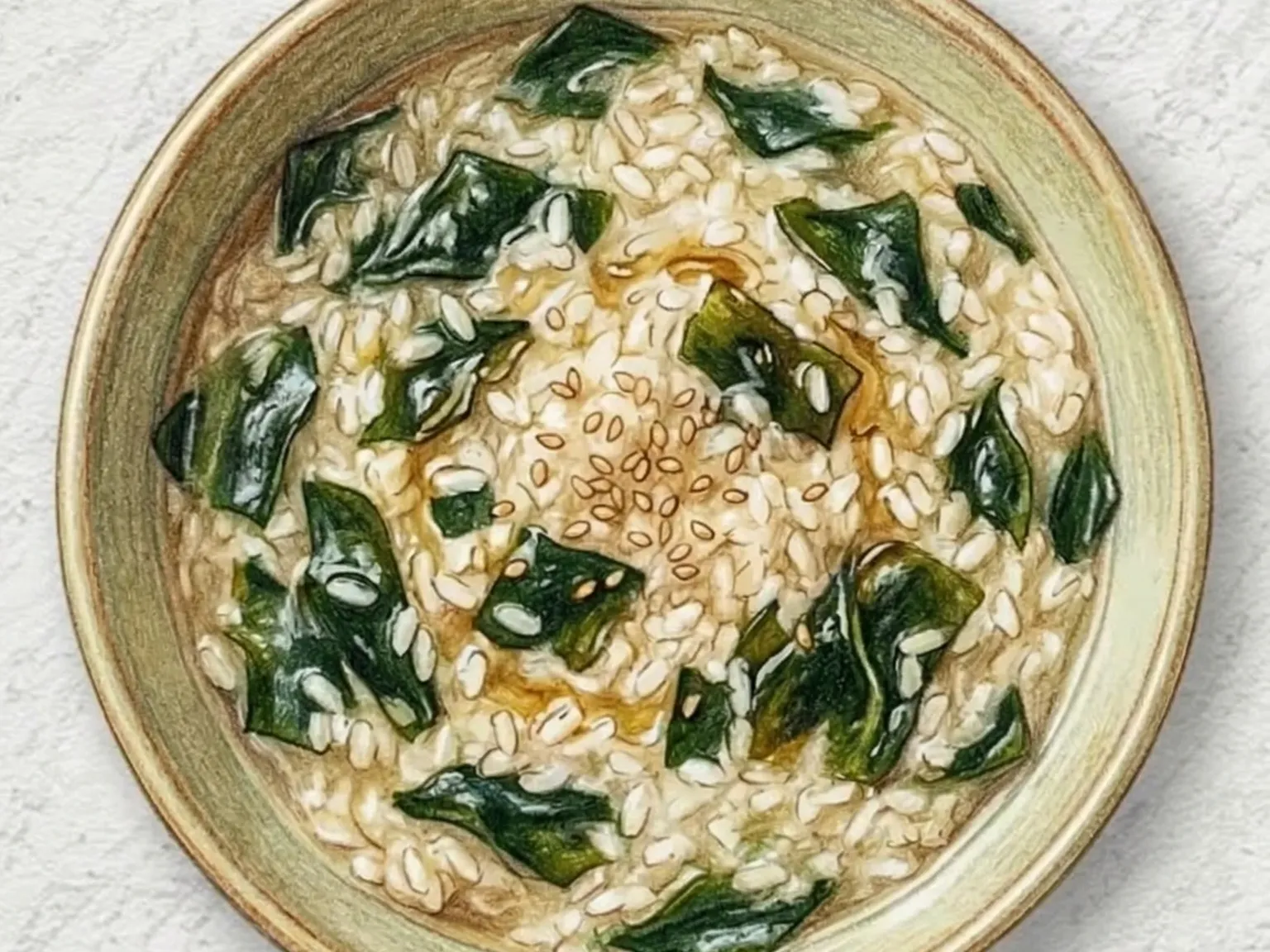
Miyeok-juk is a classic Korean porridge made by sauteing rehydrated seaweed in sesame oil, then simmering it with rice until velvety smooth. Stir-frying the seaweed first tames any brininess and lets the nutty sesame flavor infuse the entire pot. Seasoned lightly with soup soy sauce, the porridge lets the natural depth of the seaweed come through. Its gentle flavor and soft texture have made it a staple for breakfast, recovery meals, and postpartum nourishment across Korea.
Adjust Servings
Instructions
- 1
Soak rice for 30 minutes; soak seaweed for 10 minutes and chop.
- 2
Sauté seaweed and garlic in sesame oil for 2 minutes.
- 3
Add soaked rice and sauté 2 more minutes.
- 4
Add water and simmer for 20 minutes, stirring frequently.
- 5
Season with soup soy sauce and cook for 5 more minutes.
- 6
Turn off heat when creamy and serve hot.
As an Amazon Associate, we may earn from qualifying purchases.
Tips
Nutrition (per serving)
More Recipes

Korean Napa Cabbage Tofu Porridge
A gentle, warming Korean porridge of napa cabbage and soft tofu - light enough for a recovering stomach yet satisfying for any morning. The rice is first sauteed in sesame oil, forming a thin oily coat on each grain that releases a nutty fragrance as the porridge cooks. Vegetable stock and finely chopped cabbage are added, and the pot simmers at medium heat until the rice grains break down completely, during which the cabbage releases its moisture and sweetens the broth naturally. The tofu is crumbled by hand and stirred in during the last five minutes, dispersing evenly to create a smooth protein layer within the porridge. Minced garlic goes in early so its raw edge cooks out fully. Seasoning is kept to a minimum with just guk-ganjang and salt, letting the ingredients speak for themselves. Without heavy oils or strong spices, the porridge draws its flavor entirely from the cabbage sweetness and the quiet richness of tofu.

Korean Egg Porridge (Silky Sesame-Scented Rice Porridge)
Soaked rice is first stir-fried in sesame oil to release its starch aroma, then simmered in water on low heat for 20 minutes with frequent stirring until the grains dissolve into a smooth base. Beaten eggs are drizzled in at the very end and gently folded for just one minute, creating soft ribbons of egg throughout the porridge without overcooking. Soup soy sauce and salt provide restrained seasoning that lets the sesame fragrance carry the flavor, while chopped green onion on top adds a mild sharpness. The result is a clean, mild bowl that sits easy on the stomach.

Korean Geomeun Kong Juk (Black Bean Porridge)
Black beans are soaked for at least four hours, boiled until soft, then blended with their cooking liquid into a smooth slurry. This bean puree is combined with separately soaked rice and simmered on low heat, stirring frequently to prevent sticking, until everything merges into a thick, velvety porridge. The beans' deep, almost nutty flavor dominates each spoonful, and the dish can be finished with salt alone for a savory version or with a tablespoon of sugar for a subtly sweet one. Pine nuts and sesame seeds on top add a contrasting crunch and reinforce the overall nuttiness.

Korean Napa Cabbage Doenjang Porridge
Baechu doenjang juk is a Korean porridge where soaked rice is first toasted in sesame oil to build a nutty base, then simmered slowly in anchovy stock with dissolved doenjang, napa cabbage, and onion. Toasting the rice grains in oil before adding liquid gives the finished porridge a roasted depth that plain boiled rice cannot achieve. The doenjang is strained through a sieve into the stock so the porridge remains smooth without grainy bits. Finely chopped onion melts into the broth as it cooks, contributing a quiet sweetness, while the napa cabbage softens until it nearly dissolves into the texture of the porridge. Stirring frequently over medium-low heat for at least twenty minutes ensures the rice breaks down evenly. A drop of sesame oil and a seasoning adjustment with guk-ganjang finishes the dish. The result is a bowl that feels gentle on the stomach while carrying the full fermented complexity of doenjang.

Korean Bajirak Miyeok Jjigae (Clam Seaweed Stew)
Bajirak miyeok jjigae is a Korean stew combining manila clams and soaked seaweed, layering shellfish umami with the mineral depth of sea vegetables. Clams start in cold water with radish, which adds a cool sweetness to the broth that balances the clams' natural saltiness as the temperature climbs. Once the shells open, rice wine removes any briny off-notes, and the stew is seasoned with soup soy sauce and minced garlic. The seaweed, soaked and cut into bite-sized pieces, must enter the pot only in the last five minutes; longer cooking turns it tough and unpleasantly slippery. Diagonally sliced scallion added at the end releases a fresh aroma across the surface of the stew. The iodine-rich character of the seaweed and the briny depth of the clams belong to the same marine family yet occupy different flavor registers, creating a broth with compound depth. Any clams that remain closed after cooking must be removed to prevent grit from contaminating the finished stew.

Korean Green Seaweed Tofu Soup
Salted cheonggak seaweed is desalinated in cold water, then simmered with tofu and onion in a broth built on perilla oil, tuna extract, and soup soy sauce. The seaweed introduces an oceanic brininess and a distinctive crunchy texture that contrasts with the soft tofu cubes. Sauteing onion and garlic in perilla oil first layers in a nutty aroma, and at 140 calories per serving, the soup stays notably light.