Charim

2686 Korean & World Recipes

2686+ Korean recipes, clean and organized. Ingredients to instructions, all at a glance.

Korean Miyeok Julgi Jangajji (Seaweed Stem Pickles)
KimchiEasy

Korean Miyeok Julgi Jangajji (Seaweed Stem Pickles)

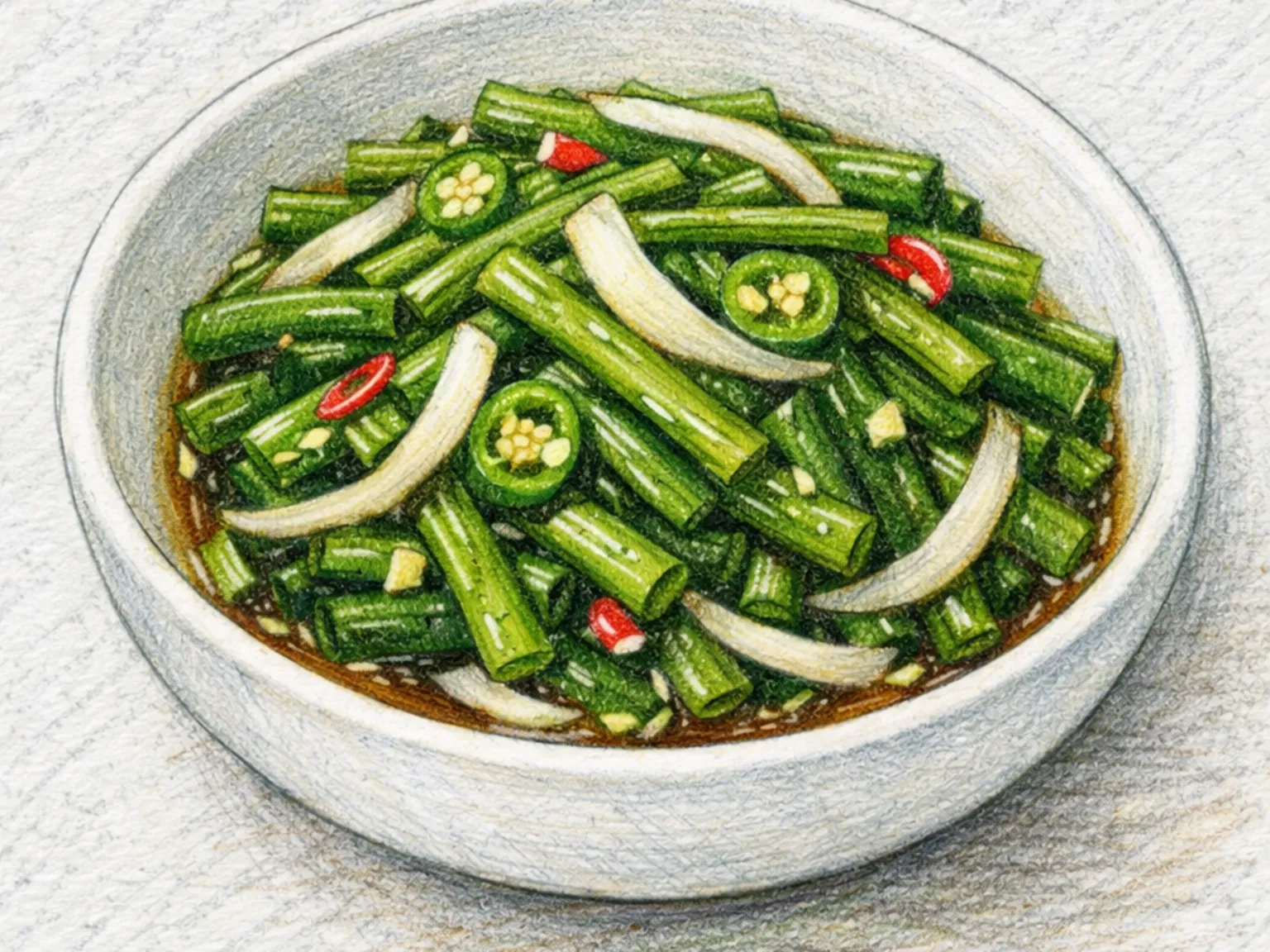
Miyeok julgi jangajji is a Korean seaweed stem pickle made by soaking salted seaweed stems to remove excess salt, blanching briefly, and submerging them with onion and cheongyang chili in a brine of boiled dark soy sauce, vinegar, and sugar. The stems' distinctive crunchy-chewy texture holds up as they absorb the brine, and a faint oceanic note lingers beneath the soy sauce's savory depth and the vinegar's brightness. Onion adds natural sweetness to the pickling liquid, and the chili sharpens the finish with a clean heat. Reboiling and cooling the brine before a second pour extends shelf life, making this a long-lasting banchan in the refrigerator.

Prep 20minCook 12min4 servings

Adjust Servings

2servings
servings

Instructions

  1. 1

    Soak salted seaweed stems in cold water for 15 minutes, then cut into 4 cm pieces.

  2. 2

    Blanch for 40 seconds, cool immediately, and drain thoroughly.

  3. 3

    Slice onion and chili, then place with stems in a sterilized glass jar.

  4. 4

    Boil soy sauce, vinegar, water, sugar, and garlic; simmer 1 extra minute after boiling.

  5. 5

    Pour hot brine over ingredients, fully submerge, and cool to room temperature.

  6. 6

    Refrigerate for 24 hours before serving; best flavor develops by day 3.

🛒Shop Ingredients on Amazon

As an Amazon Associate, we may earn from qualifying purchases.

Tips

If still salty, extend soaking time by 5 minutes.
Reboiling and cooling the brine once improves shelf life.

Nutrition (per serving)

Calories
64
kcal
Protein
2
g
Carbs
11
g
Fat
1
g

More Recipes

Korean Soy Pickled Burdock
KimchiEasy

Korean Soy Pickled Burdock

Ueong jangajji is a soy-pickled burdock root prepared by soaking cut burdock in vinegar water to prevent browning, blanching to remove any earthiness, then submerging in a brine of soy sauce, vinegar, and sugar. Kelp, dried red chili, and whole peppercorns boiled into the brine contribute umami depth and a subtle warmth. The root's natural nuttiness and earthy aroma meld with the sweet-salty-tangy brine into a complex, lingering flavor. Its firm, crunchy texture holds up well over days of storage, and reboiling the brine on the third day extends the pickle's shelf life further.

🏠 Everyday🍱 Lunchbox
Prep 20minCook 12min4 servings
Korean Melon Pickle (Korean Melon Soy Vinegar Brine)
KimchiEasy

Korean Melon Pickle (Korean Melon Soy Vinegar Brine)

Chamoe jangajji is a Korean summer pickle made from firm Korean melon, seeded and sliced into thin half-moons, then cured in a brine of soy sauce, vinegar, and sugar. Salting the melon slices for fifteen minutes draws out excess moisture and prevents the brine from becoming diluted, helping the fruit hold its crunch over time. Sliced ginger added to the jar layers a warm, spicy note beneath the melon's naturally cool, sweet fragrance. After two days of refrigeration the sweet-sour-salty balance settles in, making this a refreshing seasonal banchan that works well on its own with rice or as a tangy topping for summer salads.

🍱 Lunchbox
Prep 20minCook 12min4 servings
Korean-Style Cabbage Pickle
KimchiEasy

Korean-Style Cabbage Pickle

Yangbaechu pickle is a quick Korean-style vinegar pickle made by pouring a hot brine of vinegar, sugar, salt, and whole peppercorns over bite-sized cabbage and carrot pieces. The hot liquid slightly wilts the vegetables while they retain a firm, crisp crunch. Whole black peppercorns add a subtle spiced note that gives the pickle more dimension than a plain vinegar soak. Ready after just one day of refrigeration, it is commonly served alongside fried cutlets, burgers, or other rich dishes to cut through greasiness. Best consumed within a week for peak crunchiness.

🍱 Lunchbox
Prep 15minCook 8min4 servings
Korean Soy Pickled Beet (Vinegar Soy Brine Jangajji)
KimchiEasy

Korean Soy Pickled Beet (Vinegar Soy Brine Jangajji)

Beet jangajji is a Korean soy-pickled beet prepared by slicing beets thin and submerging them in a cooled brine of soy sauce, vinegar, and sugar. The vinegar cuts through the beet's earthy undertone, leaving a clean sweetness sharpened by acidity, while onion adds a mellow depth to the pickling liquid. As the brine cools, the beet's vivid red pigment bleeds into the liquid, creating a striking appearance. After at least a day of pickling, the flavor penetrates fully, making this a crisp, refreshing side dish alongside rice or grilled meats.

🍱 Lunchbox
Prep 20minCook 10min2 servings
Seaweed Stem and Apple Mustard Salad
SaladsEasy

Seaweed Stem and Apple Mustard Salad

Salted seaweed stems are soaked to remove excess brine, then blanched briefly to achieve a firm, slightly chewy bite that defines this Korean salad's texture. Julienned apple adds crisp sweetness that contrasts with the seaweed's oceanic mineral flavor. Thinly sliced onion, soaked to mellow its sting, contributes a subtle sharpness. The dressing mixes Korean mustard paste with vinegar and oligosaccharide syrup - the mustard delivers a sharp nasal heat, while the syrup smooths the vinegar's acidity into something rounder. Tossing the apple with lemon juice first prevents browning, and a three-minute rest after dressing lets the flavors meld without overdressing the delicate stems.

🥗 Light & Healthy🍱 Lunchbox
Prep 14minCook 2min2 servings
Korean Seasoned Kelp Strips
Side dishesEasy

Korean Seasoned Kelp Strips

Kelp strips are soaked to soften their salt, then blanched 20 seconds - enough to turn them pliable without losing their snap. Dressed in gochugaru, vinegar, soy sauce, sugar, and garlic, with julienned cucumber adding freshness, the dish balances mineral-dense ocean taste against a bright, acidic dressing. The strips have a satisfying resistance between the teeth, distinct from softer Korean seaweed dishes. Best served cold; holds up well in packed lunches.

🥗 Light & Healthy🏠 Everyday
Prep 12minCook 3min2 servings
More Kimchi