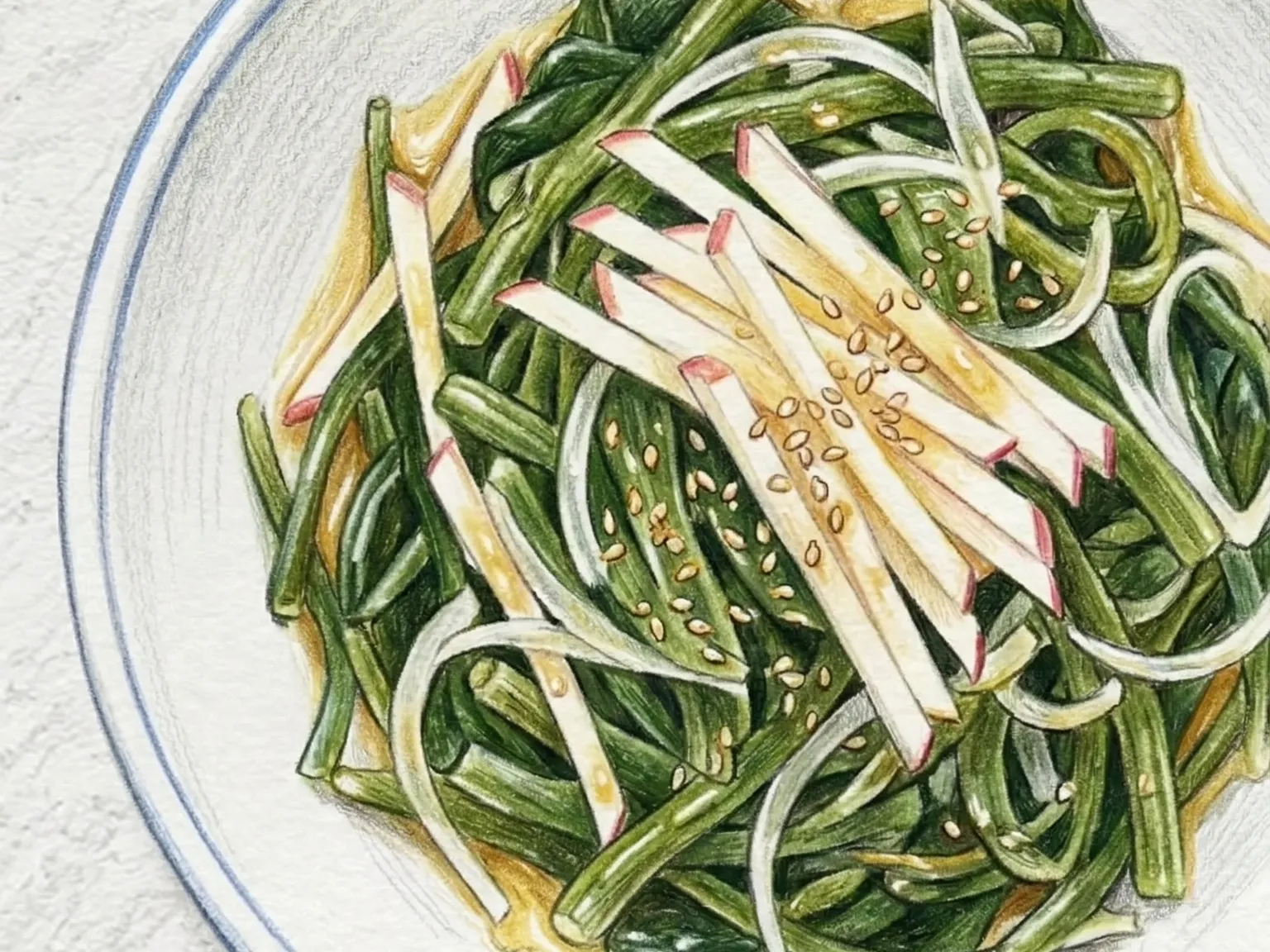
Seaweed Stem and Apple Mustard Salad
Salted seaweed stems are soaked to remove excess brine, then blanched briefly to achieve a firm, slightly chewy bite that defines this Korean salad's texture. Julienned apple adds crisp sweetness that contrasts with the seaweed's oceanic mineral flavor. Thinly sliced onion, soaked to mellow its sting, contributes a subtle sharpness. The dressing mixes Korean mustard paste with vinegar and oligosaccharide syrup - the mustard delivers a sharp nasal heat, while the syrup smooths the vinegar's acidity into something rounder. Tossing the apple with lemon juice first prevents browning, and a three-minute rest after dressing lets the flavors meld without overdressing the delicate stems.
Adjust Servings
Instructions
- 1
Soak salted seaweed stems for 10 minutes, blanch for 2 minutes, rinse cold, and squeeze dry.
- 2
Julienne the apple and toss lightly with lemon juice to prevent browning.
- 3
Slice onion very thin and soak in cold water for 3 minutes to mellow sharpness.
- 4
Whisk mustard paste, vinegar, oligosaccharide syrup, olive oil, and pepper into dressing.
- 5
Toss all ingredients with dressing, rest 3 minutes for flavor, and serve chilled.
As an Amazon Associate, we may earn from qualifying purchases.
Tips
Nutrition (per serving)
More Recipes

Smoked Duck Chive Salad (Korean Chive Salad)
Smoked duck chive salad sears smoked duck in a hot pan for two to three minutes to render excess fat, then combines it with Korean chives cut into four-centimeter lengths, shredded cabbage, and sliced bell pepper in a soy-mustard dressing. The duck's dense smokiness and fatty richness are tempered head-on by the chives' sharp, pungent grassiness, and a dressing of soy sauce, mustard, vinegar, honey, and sesame oil layers a nose-clearing heat with sweet-sour acidity to clean the palate after each oily bite. Crisp cabbage provides textural relief against the chewy duck meat, and toasted sesame seeds finish with a nutty fragrance. Adding the chives last preserves their fresh aroma, and keeping the searing time short prevents the duck from turning tough.

Pork Bossam Apple Mustard Salad
Bossam apple mustard salad arranges thinly sliced boiled pork belly over shredded cabbage and cucumber, then dresses the plate with crisp apple slices and a sharp mustard vinaigrette. Chilling the boiled pork before slicing firms the fat cap and yields clean, even cuts. Cabbage and cucumber provide a crunchy base that contrasts with the soft, fatty pork, and the apple introduces a fruit sweetness that lifts the plate. Korean hot mustard dissolved into a soy-vinegar dressing sends a nasal heat through each bite that cuts the richness, and perilla leaves layered underneath suppress any residual pork aroma with their herbal fragrance.

Charred Cabbage Gamtae Salad
Charred cabbage gamtae salad quarters baby napa cabbage lengthwise, brushes the cut sides with perilla oil, and sears them on a hot pan for 3-4 minutes per side until deeply browned. The intense heat replaces raw cabbage's grassy bite with caramelized sweetness and smoky char, and gamtae seaweed crumbled by hand at the very end adds a crisp texture and concentrated ocean umami. A dressing of dark soy sauce, maesil syrup, brown rice vinegar, and perilla oil provides a salty-tangy base, while halved cherry tomatoes contribute juicy acidity. Serving the salad warm preserves both the cabbage's char aroma and the seaweed's crispness.

Korean Seasoned Kelp Strips
Kelp strips are soaked to soften their salt, then blanched 20 seconds - enough to turn them pliable without losing their snap. Dressed in gochugaru, vinegar, soy sauce, sugar, and garlic, with julienned cucumber adding freshness, the dish balances mineral-dense ocean taste against a bright, acidic dressing. The strips have a satisfying resistance between the teeth, distinct from softer Korean seaweed dishes. Best served cold; holds up well in packed lunches.

Bellflower Root and Pear Salad
Doraji (bellflower root) is rubbed with salt to draw out its bitterness, then briefly blanched to achieve a texture that is both crisp and yielding. Julienned Korean pear brings cool sweetness and moisture to balance the root's dryness. The seasoning follows a traditional Korean muchim structure: gochugaru for heat, vinegar for tang, and fish sauce for depth. A drizzle of sesame oil finishes the dish with a toasted aroma. The pear's high water content keeps each bite juicy.

Korean Broccoli Doenjang Salad
Blanched broccoli in doenjang dressing - a modern Korean banchan bridging Western ingredients with traditional seasoning logic. Florets and thinly sliced stems blanch ninety seconds, then are shocked in cold water for vivid green and a firm bite. The dressing combines doenjang with vinegar and oligosaccharide syrup - fermented salt, acidity, and gentle sweetness that lifts mild bitterness. Ready in under ten minutes and keeps refrigerated for days.