Korean Radish Greens Kimchi
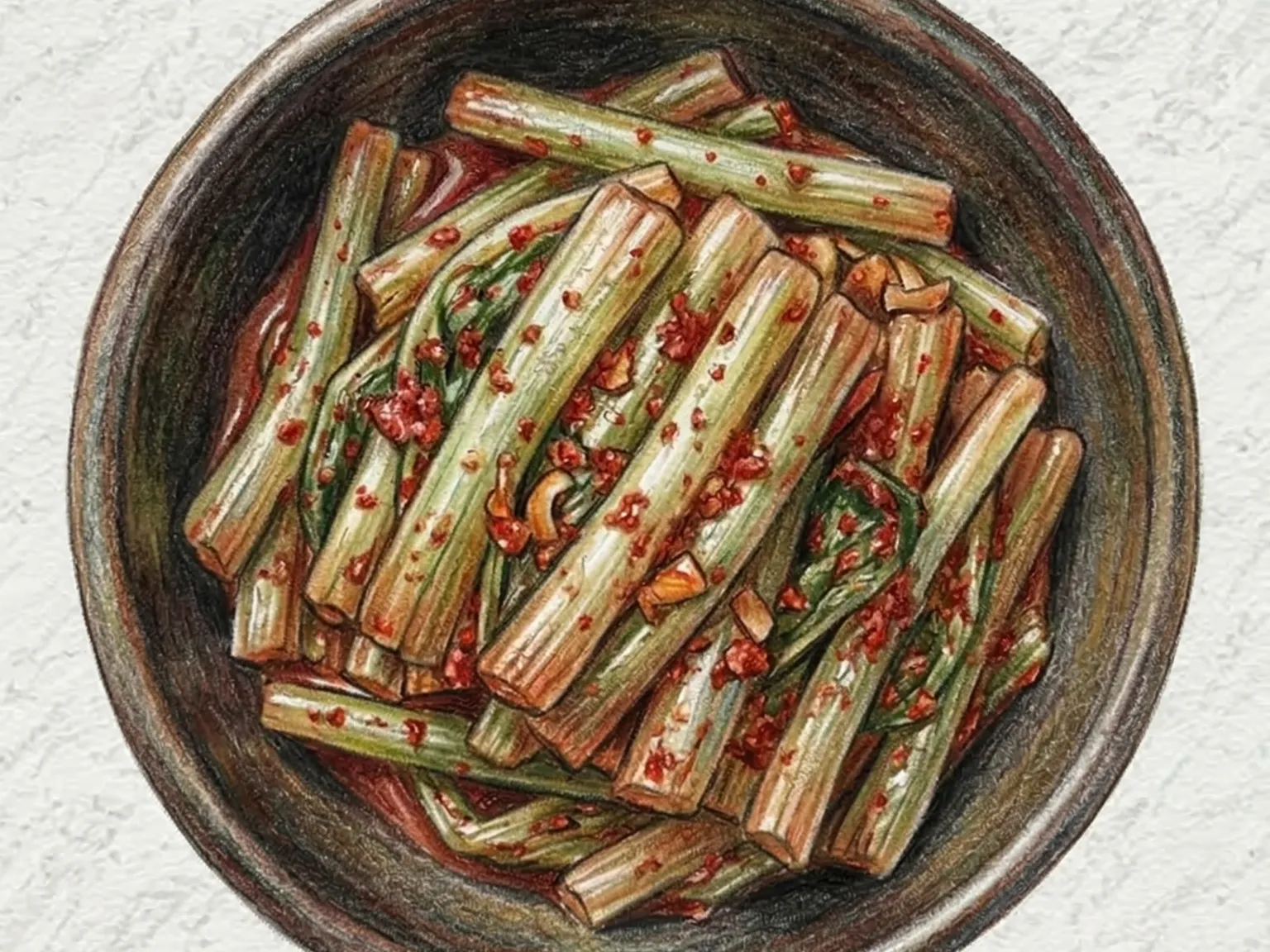
Mucheong kimchi is a Korean radish greens kimchi made by trimming tough parts, cutting greens into 5 cm pieces, brining in coarse salt, then dressing them in a paste of sweet rice flour, gochugaru, anchovy fish sauce, garlic, ginger, and onion. The fibrous stems absorb the seasoning deeply while retaining a substantial chew, and the rice paste acts as a binding agent that keeps the coating even throughout fermentation. Anchovy fish sauce contributes a deep seafood umami, and onion buffers the chili heat with natural sweetness. Beyond serving as a standalone side dish, this kimchi adds concentrated flavor when torn and stirred into siraegi soup or doenjang jjigae.
Adjust Servings
Instructions
- 1
Trim tough leaves, cut greens into 5 cm pieces, and wash well.
- 2
Salt and wilt for 40 minutes, then rinse twice and drain.
- 3
Blend onion and mix with rice paste, chili flakes, fish sauce, garlic, and ginger.
- 4
Coat greens evenly with seasoning and pack tightly in a container.
- 5
Ferment at room temperature for 12 hours, then refrigerate for at least 2 days.
As an Amazon Associate, we may earn from qualifying purchases.
Tips
Nutrition (per serving)
More Recipes

Korean Seokbakji Radish Kimchi
Seokbakji is a Korean chunky radish kimchi where large-cut Korean radish cubes are salted for one hour, drained, then tossed with a seasoning of gochugaru, salted shrimp, minced garlic, and ginger alongside scallion pieces. Keeping the radish in large chunks is key - smaller cuts turn mushy during fermentation, while big cubes maintain their firm crunch through the process. Salted shrimp provides the fermented umami foundation that chili flakes alone cannot deliver. One day of room-temperature fermentation followed by two days of refrigeration develops a refreshing lactic tang, and the liquid that the radish releases becomes a flavorful brine. Served next to hot rice soups like seolleongtang or gukbap, the cold, crunchy kimchi cuts through the richness of the broth.

Korean Cubed Radish Kimchi
Kkakdugi is a staple Korean kimchi made from radish cut into 2 cm cubes, brined in coarse salt, then seasoned with gochugaru, salted shrimp, garlic, and ginger before fermentation. Salting draws out moisture from the cubes, creating a contrast between the damp interior and the snappy outer surface. Salted shrimp layers its briny seafood depth beneath the chili heat, and as fermentation progresses, the radish's natural sugars emerge to balance the spice with a clean sweetness. The accumulated brine at the bottom of the jar develops a refreshing tang that makes kkakdugi the essential companion to rich, milky soups like seolleongtang and gomtang.

Korean Ponytail Radish Kimchi
Chonggak kimchi is a classic Korean kimchi made with whole young ponytail radishes salted for two hours, then coated in a seasoning paste of gochugaru, anchovy fish sauce, garlic, ginger, and scallions. Blooming the chili flakes in fish sauce first softens their texture and intensifies the color before garlic and ginger are added for aromatic depth. Trimming the radish tops short prevents them from turning fibrous and keeps the eating experience crisp. One day of room-temperature fermentation produces a lively carbonation and refreshing tang, after which refrigeration preserves the crunchy texture and spicy umami for weeks. This is a year-round kimchi staple in Korean households.

Korean Bitter Herb Kimchi
Sseumbagwi kimchi is a traditional Korean fermented side dish made from sseumbagwi, a wild bitter herb harvested in spring. The herb is soaked in cold water for twenty minutes to temper its pronounced bitterness, salted for fifteen minutes, then dressed in a thick paste of gochugaru, sand lance fish sauce, minced garlic, ginger, sweet rice paste, and plum syrup alongside scallion pieces. The rice paste gives the seasoning enough body to cling to the thin stems and leaves, and the plum syrup smooths out both the bitterness and the salt's sharpness. Five hours of room-temperature fermentation followed by refrigeration allows lactic acid to develop gradually, layering a tangy depth over the herb's inherent bitter-green character. The flavor is most complex around day three. If the bitterness is too strong, an additional change of soaking water before seasoning brings it under control.

Korean Restaurant-Style Kkakdugi
Sikdang-style kkakdugi is the cubed radish kimchi served free at virtually every Korean restaurant, standing alongside baechu-kimchi as a non-negotiable table banchan. Cutting the Korean radish into chunky 2 cm cubes ensures the interior stays crunchy even after salting and fermentation. Twenty minutes in coarse salt draws moisture, then the cubes are dressed with gochugaru, myeolchi-aekjeot (anchovy fish sauce), garlic, ginger, and sugar. The fish sauce provides the umami backbone that deepens during fermentation, while ginger suppresses off-flavors and sharpens the finish. One day at room temperature triggers lactic acid production - the signature tingle that signals active fermentation - followed by refrigeration where the flavor matures over two to three weeks. Winter radish carries more natural sugar, so the added sugar can be reduced; in summer, cutting the room-temperature rest to half a day prevents over-fermentation.

Korean Seasoned Radish Greens Namul
Dried radish greens are soaked, boiled until pliable, and dressed in a seasoning anchored by doenjang and ground perilla seeds. The drying process concentrates the fiber in the greens, giving them a satisfying chew that persists even after boiling: the outer layer turns silky while the inner stem retains a springy resistance. Doenjang supplies the salty, fermented backbone, and ground perilla seeds melt into a creamy coating that softens the roughness of the greens on the palate. A generous pour of perilla oil ties the dressing together, adding a glossy sheen and a rich, nutty fragrance. Minced garlic and chopped green onion introduce a sharp aromatic layer that cuts through the heaviness. Each bite releases more of the siraegi's own deep, vegetal flavor, a taste that builds rather than fades. Paired with steamed rice, the doenjang's salinity and the perilla's richness draw out the natural sweetness of the grain.