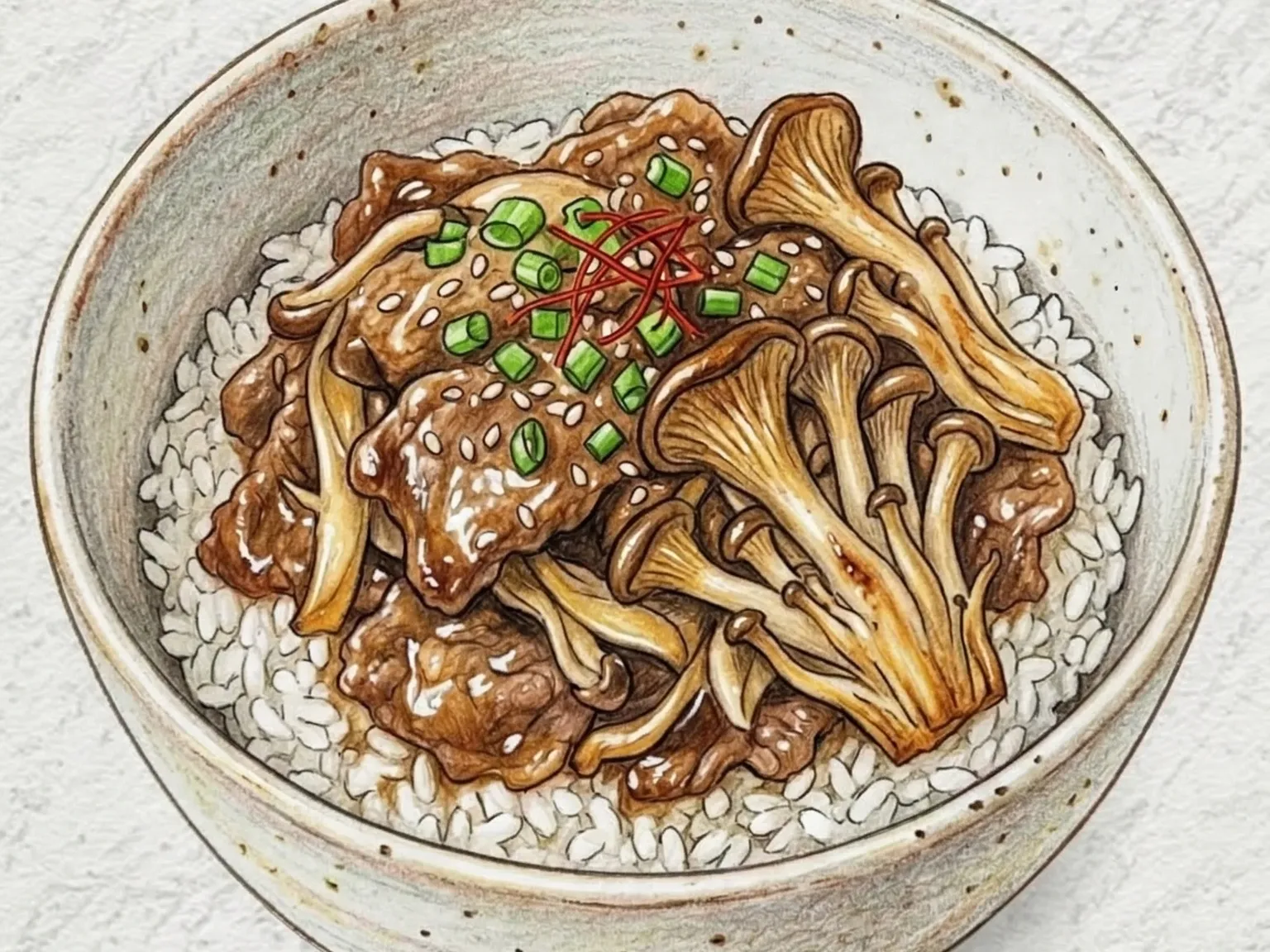
Korean Bulgogi Mushroom Rice Bowl
Soy-and-pear-juice-marinated beef is stir-fried with torn oyster mushrooms and served over rice for an umami-loaded bowl. Pre-cooking the mushrooms drives off excess moisture, so the sauce stays concentrated and glossy when the marinated beef joins the pan. Pear juice tenderizes the beef naturally while contributing a subtle sweetness, and sesame oil ties the flavors together with its toasty fragrance. If pear juice is unavailable, a teaspoon of sugar with a tablespoon of water makes a workable substitute.
Adjust Servings
Instructions
- 1
Marinate beef with soy sauce, pear juice, garlic, and pepper for 10 minutes.
- 2
Tear oyster mushrooms and slice onion.
- 3
Heat sesame oil, then sauté onion and mushrooms first to reduce moisture.
- 4
Add marinated beef and stir-fry quickly over high heat.
- 5
When sauce lightly reduces, turn off heat and spoon over rice.
As an Amazon Associate, we may earn from qualifying purchases.
Tips
Nutrition (per serving)
More Recipes

Korean Bulgogi Deopbap (Pork Rice Bowl)
Spicy-sweet pork bulgogi piled over rice with aromatic crown daisy greens - a one-bowl Korean dinner ready in 30 minutes. Gochujang-marinated pork shoulder is stir-fried with onion over high heat and finished with a handful of crown daisy greens. The marinade layers gochujang, chili flakes, soy sauce, sugar, and garlic into a sauce that is simultaneously spicy, sweet, and deeply savory. Pork shoulder renders enough fat during cooking to carry the sauce into the rice below, creating a rich base. Crown daisy goes in during the final thirty seconds - just long enough to wilt slightly and release its herbal, almost chrysanthemum-like fragrance, which cuts through the heaviness of the pork and sauce with a green, aromatic brightness. The timing of the ssukgat addition is critical: too early and it turns limp and bitter, too late and the aroma stays locked inside the leaves. The finished bowl needs no accompaniment to feel complete.

Korean Beef and Mushroom Rice Bowl
Sogogi-beoseot deopbap is a Korean beef and mushroom rice bowl that sautees sliced beef with king oyster and shiitake mushrooms in soy-butter sauce. The beef is seared first over high heat to develop a golden crust, then the thickly cut mushrooms go in and absorb the rendered juices, forming a naturally concentrated sauce in the pan. A knob of butter melted in at the end adds a creamy richness, while soy sauce ties everything together with a salty umami backbone. Minced garlic and sliced scallion layered into the stir-fry build an aromatic base that makes the topping fragrant the moment it hits the rice. The mushrooms hold their springy bite against the tender beef, giving each mouthful a satisfying textural contrast.

Korean Soy Glazed Beef Rice Bowl
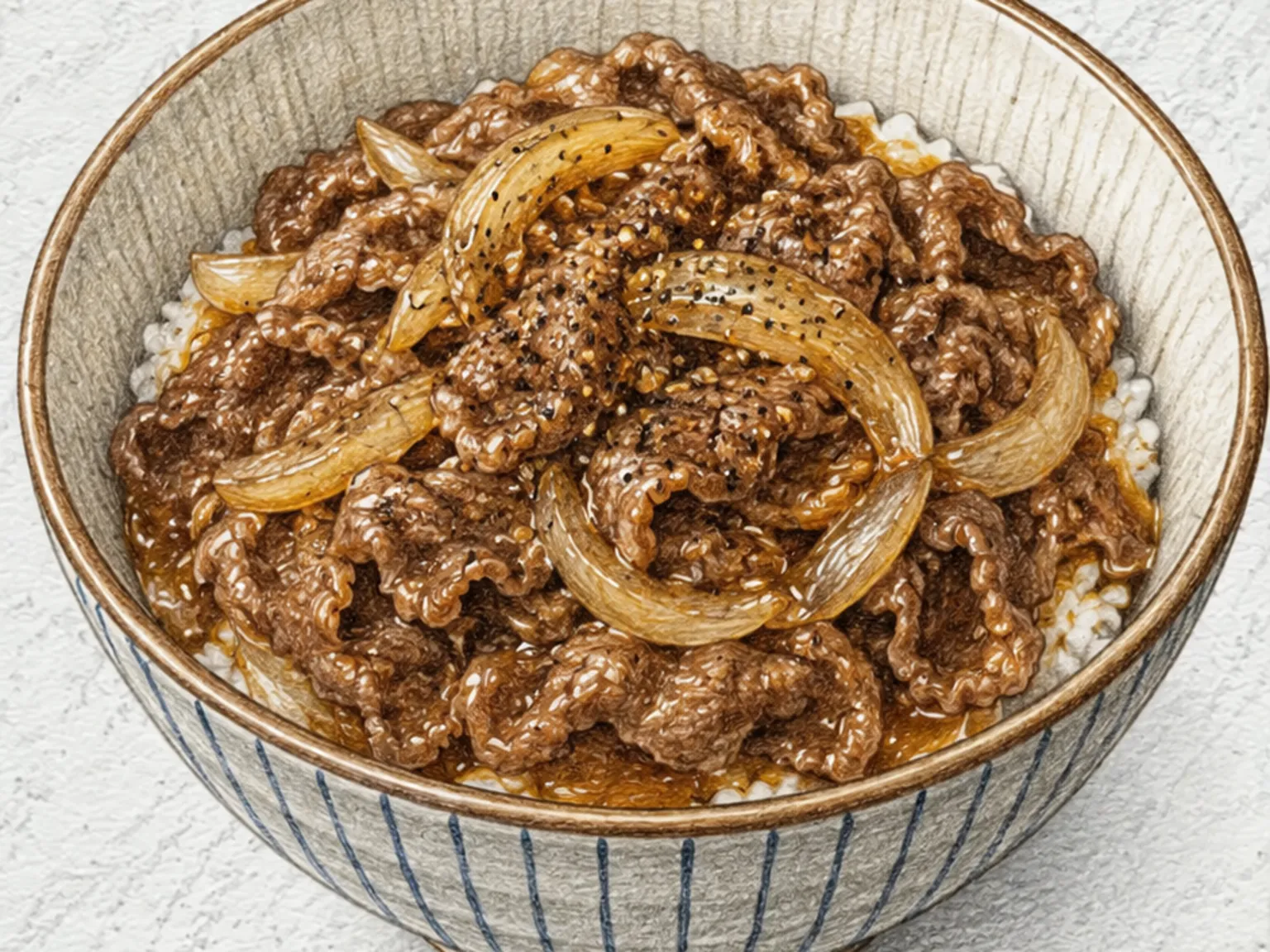
Sogogi deopbap tops steamed rice with thin-sliced beef and onions cooked in a sweet-soy glaze, served with just enough sauce to soak into the grains. The beef is marinated briefly in a mixture of dark soy sauce, sugar, and minced garlic, which caramelizes quickly in a hot pan. Onion slices cook alongside the beef, their natural sweetness balancing the salty-sweet sauce as they soften. Sesame oil added toward the end leaves a nutty aftertaste that lingers. The key is keeping a small pool of sauce in the pan rather than reducing it completely - that glossy liquid seeps into the rice and makes each spoonful flavorful without needing additional seasoning. A generous crack of black pepper at the end adds a sharp finish.

Korean Jangjorim Butter Rice
Unsalted butter is melted into hot rice so each grain is coated in a slick of fat, then topped with shredded soy-braised beef and its concentrated braising liquid. The beef's soy-based marinade carries enough salt and sweetness that no additional seasoning is needed, and breaking a raw egg yolk into the center and stirring transforms the texture into something creamy. Roasted seaweed flakes add a brittle crunch and oceanic note, while scallion and sesame seeds round out the finish. If the jangjorim is already prepared, the entire assembly takes less than fifteen minutes.

Korean Soy Bulgogi with Mushrooms
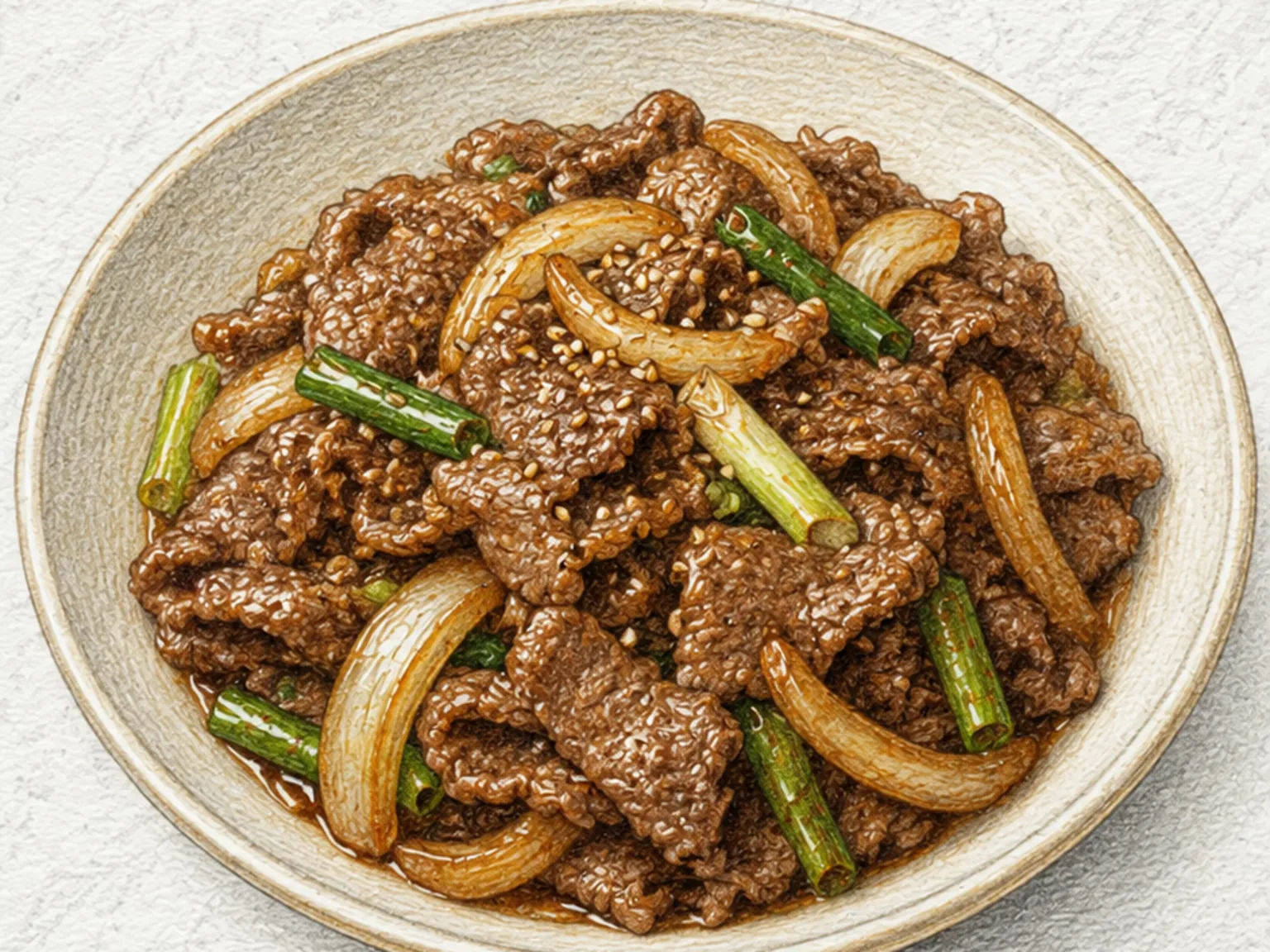
Thinly sliced beef is marinated in soy sauce, Korean pear juice, and sesame oil, then stir-fried over high heat together with shiitake and king oyster mushrooms. The pear juice tenderizes the protein and leaves a subtle fruit sweetness in the background, while the two mushroom varieties absorb the meat juices and contribute their own textures: shiitake with a firm, chewy bite and king oyster with a thick, clean meatiness. Spreading the ingredients across the pan rather than crowding them is critical; excess moisture needs to evaporate quickly so the marinade can reduce into a glossy coating instead of pooling into a broth. Green onion goes in during the final minute of cooking, adding a sharp, fresh note that cuts through the sweet soy richness and lifts the entire dish.

Korean Mushroom Bulgogi Jeongol
This hot pot brings together soy sauce-marinated sliced beef with shiitake and enoki mushrooms simmered in a generous broth. Sweet potato noodles soak up the savory stock, gaining a chewy, flavorful bite with every serving. The combination of earthy mushrooms, caramelized onion sweetness, and garlic-infused broth makes it a satisfying communal dish meant to be shared at the table.