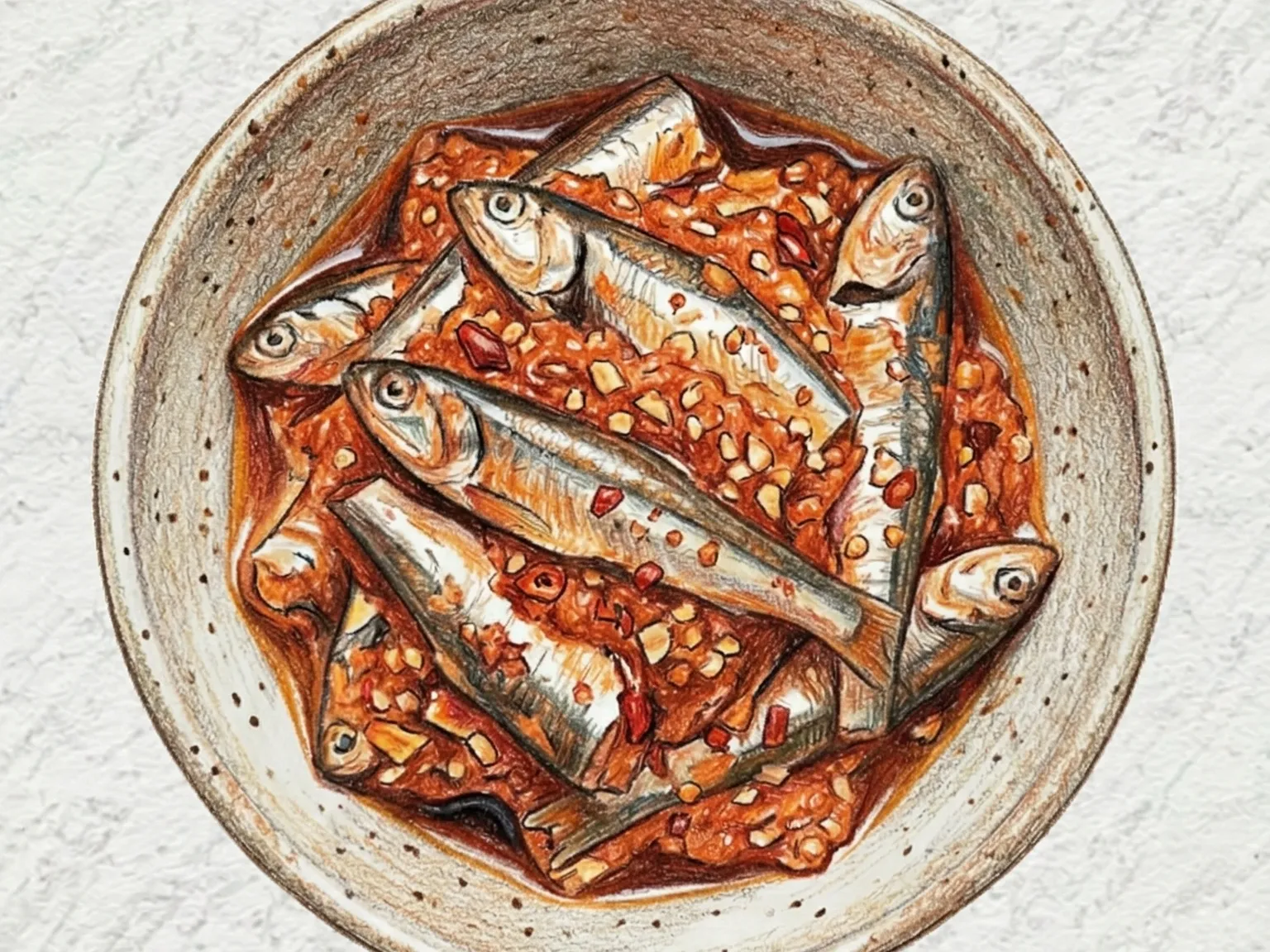
Korean Salted Anchovy Jeotgal
Myeolchi jeotgal is a traditional Korean fermented anchovy preserve made by layering cleaned small anchovies with sea salt in a sterilized container and pressing out trapped air before refrigerating. Over the first five days the salt draws moisture from the fish and begins breaking down proteins into concentrated umami compounds, at which point garlic, ginger, chili flakes, and rice wine are folded in to add aromatic complexity. The salt ratio must stay at or above twenty percent of the anchovy weight to prevent spoilage bacteria from taking hold. The finished jeotgal serves two purposes - stirred into kimchi seasoning paste as an umami backbone, or spooned directly over hot rice as a pungent, deeply savory side dish.
Adjust Servings
Instructions
- 1
Clean anchovies by removing heads/guts, rinse quickly, and drain well.
- 2
Layer anchovies and salt in a sterilized container.
- 3
Press down to minimize trapped air.
- 4
After 5 days, mix in garlic, ginger, chili flakes, and rice wine.
- 5
Reseal and cure for at least 7 more days in the fridge.
As an Amazon Associate, we may earn from qualifying purchases.
Tips
Nutrition (per serving)
More Recipes

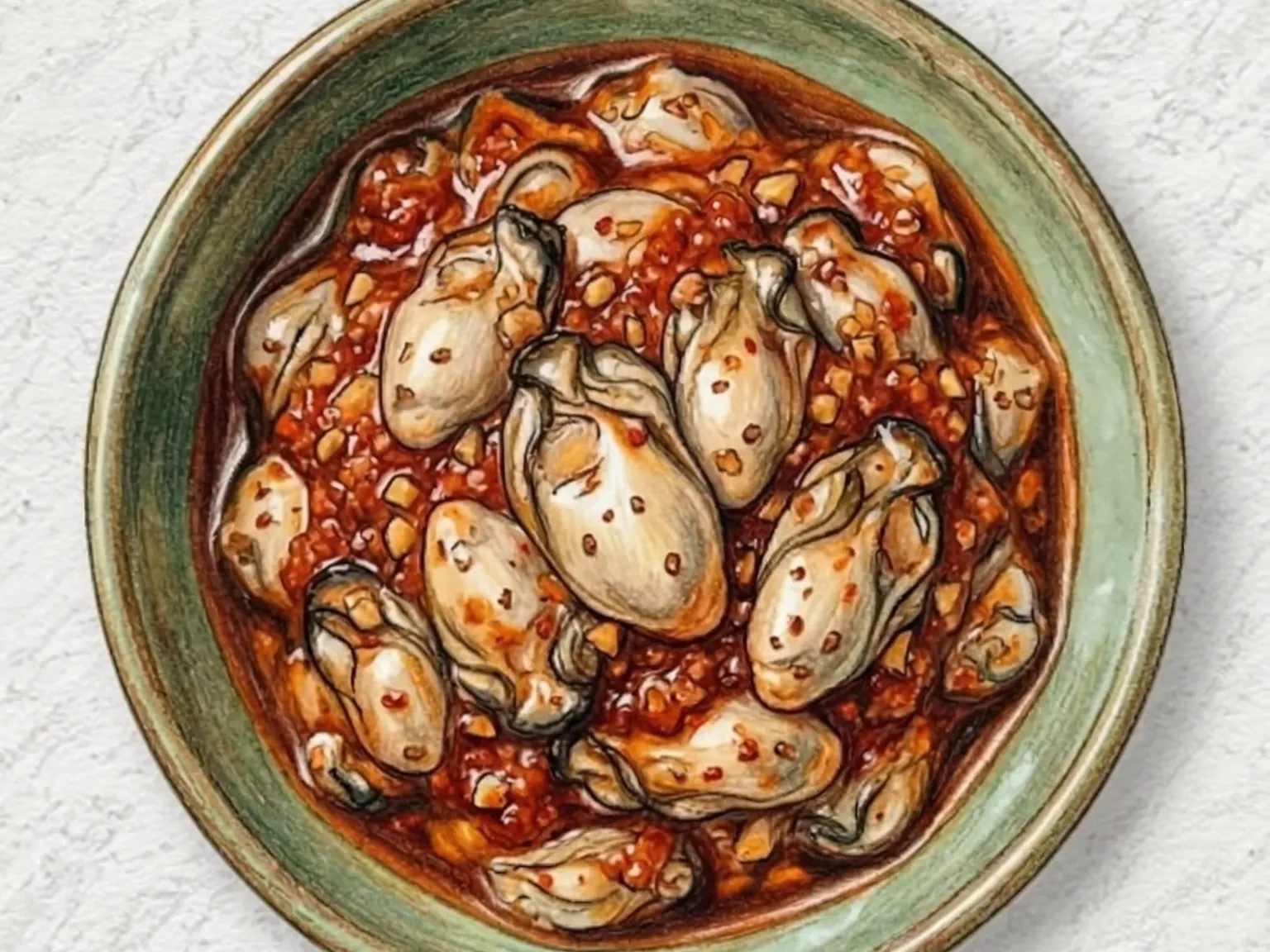
Korean Salted Oyster Jeotgal
Gul jeotgal is a traditional Korean fermented seafood condiment made by curing fresh winter oysters in solar salt with gochugaru, garlic, ginger, and plum extract, then aging at low temperature. Salt draws moisture from the soft oyster flesh, concentrating its marine umami into a potent, briny paste. Gochugaru adds color and a spicy dimension, while plum extract suppresses any fishiness that develops during fermentation and contributes a balancing acidity. Beyond serving as a banchan on its own over rice, gul jeotgal is commonly folded into napa cabbage kimchi filling, where it elevates the kimchi's savory depth by an order of magnitude.

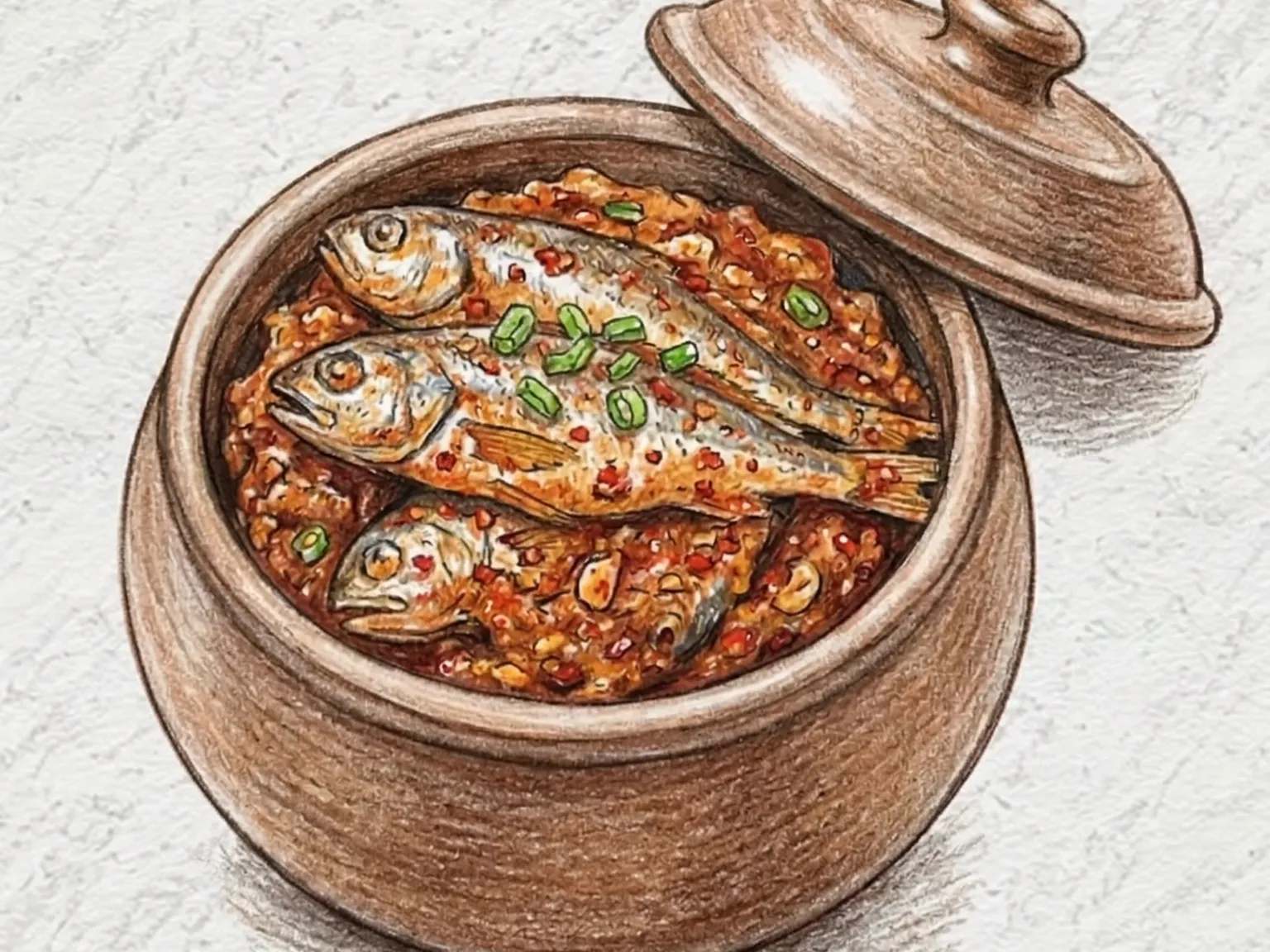
Korean Salted Yellow Croaker Jeotgal
Jogi jeotgal is a Korean salted and fermented yellow croaker, prepared by gutting the fish, layering it in coarse sea salt for an initial multi-day cure in the refrigerator, then adding gochugaru, garlic, ginger, and rice wine for a second round of aging. The extended fermentation breaks down the fish protein into a concentrated savory depth that bears no resemblance to the raw ingredient, while the salt draws out moisture and firms the flesh. Gochugaru and ginger suppress any fishiness and contribute a mild heat and aromatic warmth, and rice wine smooths out the rough edges of early fermentation. This is a pantry staple used sparingly - a small piece atop rice or stirred into kimchi jjigae to amplify umami.

Korean Salt-Fermented Tiny Shrimp
Saeujeot is a Korean salt-fermented tiny shrimp condiment made by mixing small shrimp thoroughly with sea salt, packing the mixture tightly into a sterilized jar, and fermenting under refrigeration for at least two weeks. During this time, the salt breaks down the shrimp's proteins into concentrated amino acids, replacing raw fishiness with a deep, complex umami that serves as the backbone of kimchi seasoning and stew bases. Rice wine and ginger juice suppress off-flavors during the early stage of fermentation, and a small amount of chili flakes adds a trace of warmth. Removing as much moisture as possible after rinsing the shrimp is critical - excess water invites off-odors during the long cure. Only clean utensils should touch the jar to ensure stable, extended storage.

Korean Salted Pollock Roe Jeotgal
Myeongran jeotgal is a Korean salted pollock roe ferment where fresh roe sacs are cleaned of blood spots and membranes, brushed with rice wine to suppress fishiness, then coated in a curing blend of sea salt, gochugaru, and minced garlic before being sealed in a container with a piece of kelp. Over three to five days of cold fermentation, the salt extracts moisture from each tiny egg, concentrating the pop-and-burst texture while enzymatic breakdown generates a deep, briny umami. The chili flakes add a gentle warmth that complements rather than overwhelms the roe's natural flavor. Sliced thin and placed on hot steamed rice, the eggs release their salty, oceanic intensity with each bite.

Korean Anchovy Rice Balls
Dried small anchovies are dry-toasted to remove fishiness, then glazed in soy sauce and oligosaccharide syrup before being folded into warm rice to form compact rice balls. Sesame oil, roasted seaweed flakes, and sesame seeds contribute layers of nuttiness that complement the sweet-salty anchovy glaze. Shaping the balls while the rice is still warm ensures they hold together firmly. These rice balls keep their flavor even after cooling, making them ideal for packed lunches and on-the-go snacking.

Korean Seasoned Salted Pollock Stomach
Changnanjeot - salt-fermented pollock stomach - belongs to Korea's jeotgal tradition, where seafood organs are brined for months until they develop intense umami. The stomach lining has a firm, slightly rubbery chew distinct from softer jeotgal like salted shrimp. Drained of excess brine and dressed with gochugaru, garlic, scallion, and sugar, it becomes a high-impact condiment banchan. A thumbnail-sized piece on rice delivers a concentrated burst of fermented marine salt and chili heat.