Naengi Doenjang Mushroom Salad
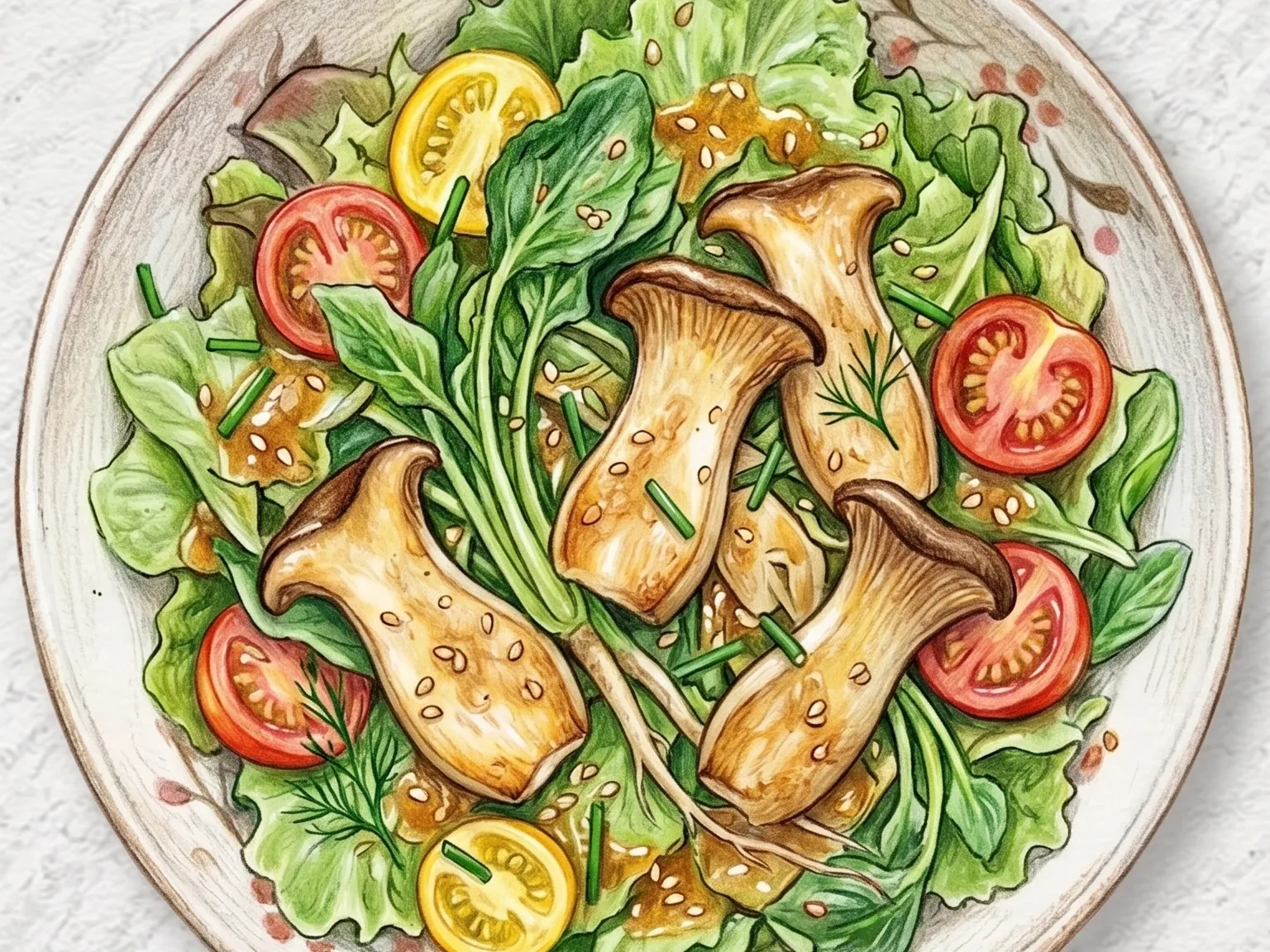
Naengi is briefly blanched to soften its earthy bitterness while preserving its spring fragrance, and oyster mushrooms are dry-seared to concentrate their savory depth. A dressing of doenjang dissolved with yuja marmalade and vinegar provides a rich fermented base lifted by citrus brightness. Baby greens and halved cherry tomatoes lighten the heavy paste flavor with tenderness and bursting juice. Sesame oil and toasted sesame seeds add a nutty finish, making the salad most compelling with freshly foraged naengi in early spring.
Adjust Servings
Instructions
- 1
Wash naengi thoroughly, trim, and cut into 4 cm pieces; drain well.
- 2
Tear oyster mushrooms, dry-sear for 2 minutes, then add 1 tsp sesame oil and sauté 1 more minute.
- 3
Whisk doenjang, yuja marmalade, vinegar, minced garlic, and remaining sesame oil into a dressing.
- 4
Combine greens, naengi, mushrooms, and halved tomatoes; toss gently with two-thirds of the dressing.
- 5
Adjust with remaining dressing to taste, plate, and finish with toasted sesame seeds.
As an Amazon Associate, we may earn from qualifying purchases.
Tips
Nutrition (per serving)
More Recipes

Chwinamul Apple Doenjang Salad
Chwinamul (aster scaber) is blanched briefly to preserve its herbal, slightly bitter character, then combined with thin-sliced apple and cucumber for crisp sweetness. The dressing is built on doenjang - Korean fermented soybean paste - which adds a deep umami layer uncommon in typical salad dressings. Perilla oil rounds out the nuttiness, while red onion contributes a sharp edge that keeps the bowl from feeling heavy. The salad is best in spring when chwinamul is freshly harvested and most aromatic.

Naengi Beef Salad (Shepherd's purse)
Fresh naengi - shepherd's purse - is blanched to mellow its earthy bite while keeping the fragrance intact. Beef sirloin is sliced thin and seared quickly so the surface chars lightly and the center stays moist. Julienned Korean pear bridges the beef's richness and the naengi's mild bitterness with clean sweetness. A dressing of soy sauce, vinegar, sesame oil, and plum extract balances salty, sour, and subtly sweet, while red onion and toasted sesame seeds finish with sharpness and nutty crunch.

Squid Naengi Chojang Salad
Squid is dipped into boiling water just long enough to reach peak chewiness, then paired with fragrant naengi for a distinct spring note. Lettuce and cucumber create a crunchy foundation sharpening the textural contrast against the tender squid. The chojang dressing layers gochujang with vinegar and oligosaccharide syrup for spicy umami with gentle sweetness. Sesame oil and minced garlic pull the aromatics together, making this a seasonal specialty best served cold during naengi season.

Bomdong Strawberry Doenjang Salad
Bomdong strawberry doenjang salad pairs the crisp, mild leaves of early-spring bomdong cabbage with ripe strawberries and a dressing built on fermented soybean paste. Doenjang dissolved into olive oil and vinegar creates a savory base that gives the otherwise neutral greens a deep, umami-driven character, while the strawberries' natural acidity neutralizes the paste's saltiness. Walnuts bring a crunchy, toasted contrast between the soft fruit and tender leaves, and sliced cucumber adds a cooling moisture. The salad should be dressed just before serving - tossing too early draws juice from the strawberries and dilutes the bowl.

Korean Seasoned Shepherd's Purse
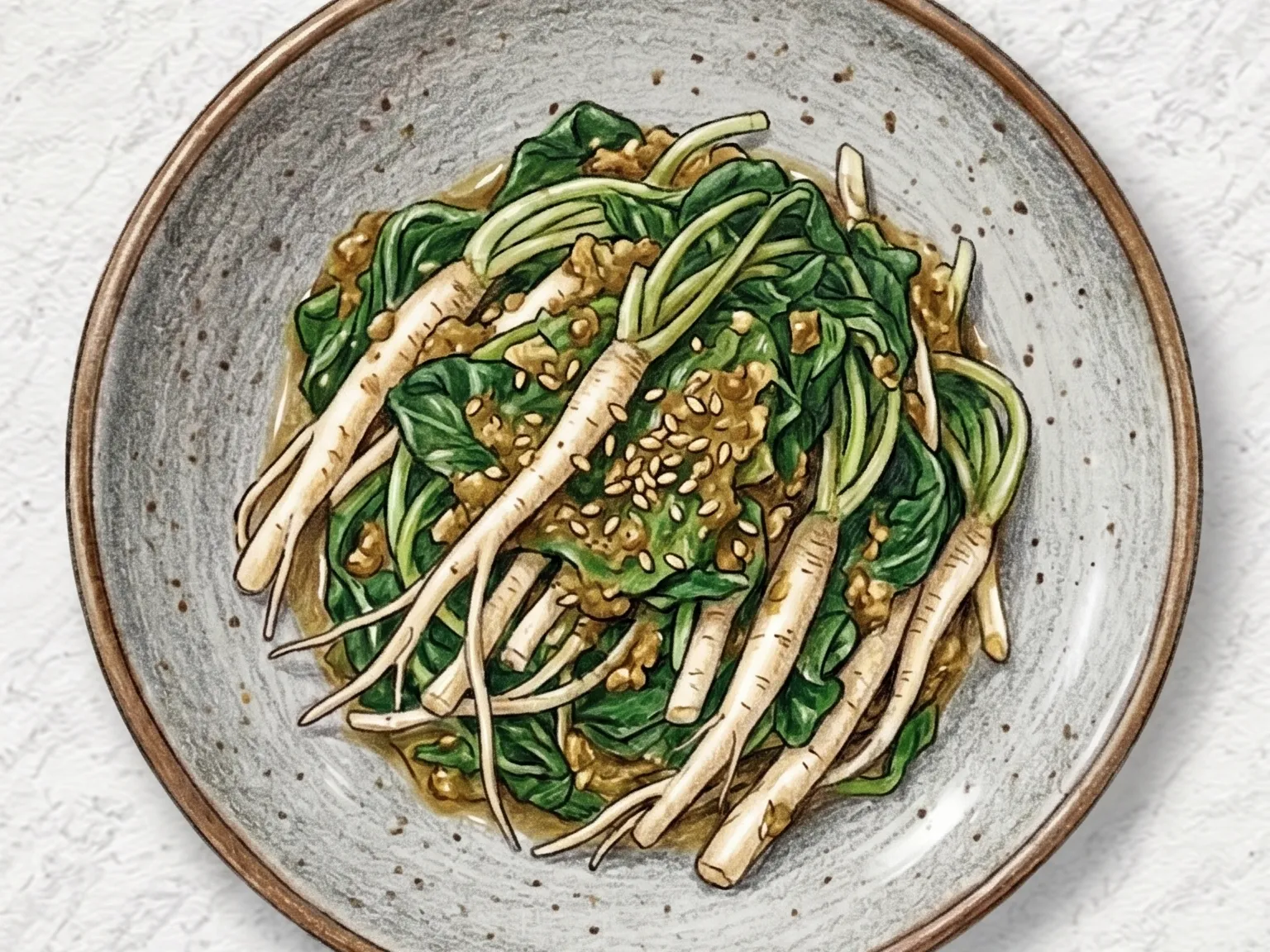
Naengi-namul-muchim is a fragrant spring banchan made from shepherd's purse (naengi), a wild green foraged from rice paddy edges and field margins in early spring. The root is eaten along with the leaves - its distinctive earthy, almost truffle-like aroma defines the dish, and discarding it halves the point of using naengi at all. Cleaning the roots of clinging soil is the most time-consuming prep step, requiring careful scraping with a knife. Blanching must stay under thirty seconds to preserve the volatile aromatics, with immediate cold-water shocking to lock in color and fragrance. Doenjang, soup soy sauce, minced garlic, and sesame oil form the dressing - the fermented paste's earthy depth meets the herb's soil-scented fragrance to create a layered spring flavor. Doenjang rather than gochujang is the traditional choice because chili heat would overwhelm naengi's delicate perfume. Available at Korean markets only during the brief February-to-March window, it is one of the most anticipated seasonal namul.

Korean Chive Salad with Doenjang Dressing
Garlic chives - buchu - have a sharper, more pungent bite than Western chives, and Koreans dress them raw to preserve that kick. Chives are cut, rinsed in cold water to crisp them, then tossed for only 20 seconds with a doenjang dressing spiked with vinegar and gochugaru. Over-mixing draws out moisture and turns the dish limp. The fermented paste clings to the flat blades, delivering a salty-funky punch with each bite. Best assembled minutes before serving.