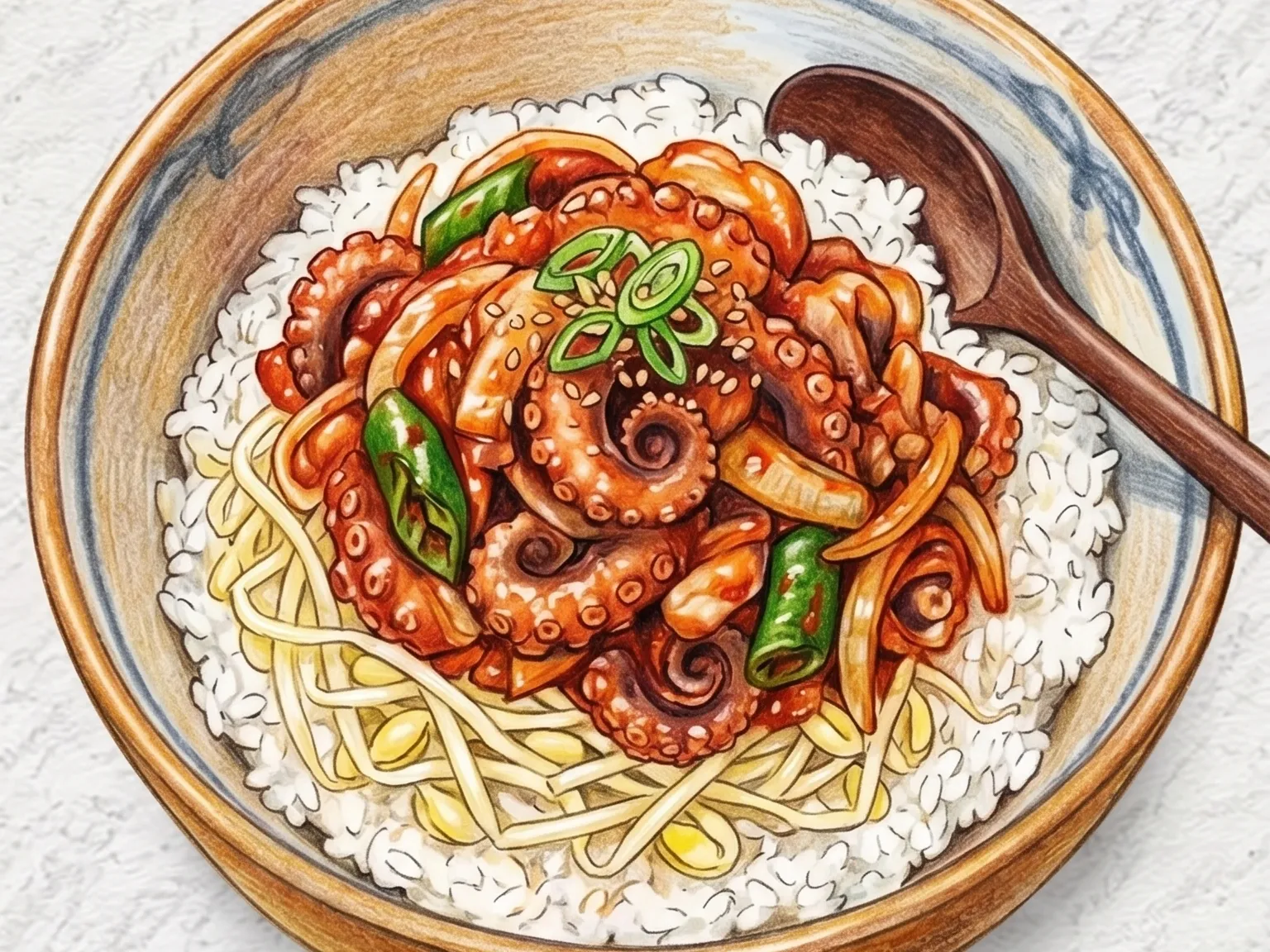
Korean Spicy Stir-Fried Octopus Rice Bowl
Spicy stir-fried baby octopus in a gochujang sauce is served over a bowl of steamed rice. The octopus delivers a satisfying chew, coated alongside onion and cheongyang chili in a well-seasoned glaze that makes each bite of rice deeply flavorful. Stir-frying on high heat for just a few minutes keeps the octopus springy rather than tough, and scrubbing it with flour before rinsing ensures a clean taste free of any sliminess. Adding a layer of bean sprouts under the stir-fry introduces a contrasting crunch.
Adjust Servings
Instructions
- 1
Clean octopus with flour, rinse, and cut into pieces.
- 2
Mix gochujang, pepper flakes, soy sauce, sugar, and garlic for the sauce.
- 3
Stir-fry onion and chili in oil on high heat for 1 minute.
- 4
Add octopus and sauce, stir-fry vigorously on high heat for 3 minutes.
- 5
Serve the stir-fry over steamed rice.
As an Amazon Associate, we may earn from qualifying purchases.
Tips
Nutrition (per serving)
More Recipes

Korean Stir-Fried Octopus Fried Rice
Baby octopus is tossed with rice over high heat in a gochujang-and-red-pepper-flake sauce for a bold, spicy fried rice. The sauce coats each grain with a vibrant red glaze, and the octopus adds a springy, chewy bite throughout. Cleaning the octopus with flour before rinsing removes any sliminess, and a fast cook on high heat keeps the tentacles from toughening. Green onion and sesame oil go in at the very end for a fragrant finish.

Korean Spicy Baby Octopus Fried Rice
Webfoot octopus is rubbed with salt to remove slime, cut into bite-sized pieces, and seared fast over high heat - three minutes at most - to keep its signature springy chew. The gochujang-based sauce, spiked with chili flakes, soy sauce, sugar, and garlic, hits hard with spice and umami before the rice goes in and absorbs the deep-red seasoning. A finishing touch of sesame oil adds fragrance, and melted cheese on top is a popular way to soften the heat. The oceanic intensity of the octopus gives this fried rice a character that ground meat or vegetables simply cannot replicate.

Korean Spicy Stir-Fried Squid Rice Bowl
Scored squid is stir-fried with onion, cabbage, and scallion in a gochujang-based sauce over high heat, then served on steamed rice. The squid's chewy texture and smoky wok char pair with the sweet-salty-spicy glaze, while the vegetables bring natural sweetness that tempers the heat. Vegetables go into the pan first to drive off moisture, then the squid cooks quickly for just 3 to 4 minutes to stay tender. Leaving a little sauce in the pan lets it soak into the rice when mixed, coating every grain.

Korean Spicy Stir-fried Octopus
Nakji-bokkeum is a fiery Korean stir-fry of small octopus (nakji) coated in a sauce of gochujang, gochugaru, soy sauce, sugar, and garlic, tossed with bean sprouts, onion, carrot, and scallion. Bean sprouts line the bottom of the pan, releasing moisture to prevent sticking while adding crunch. The vegetables and half the sauce go on next, then the octopus on top, covered and steamed on medium heat for three minutes before a final high-heat stir-fry sears everything for two minutes. Speed is critical - octopus toughens with prolonged cooking - and the dish is often mixed with boiled thin wheat noodles for a heartier meal.

Korean Seafood Fried Rice
Mixed seafood including shrimp, squid, and mussel meat is stir-fried together on high heat until a smoky wok char develops. Day-old cold rice works best because its lower moisture content lets the grains separate cleanly in the pan, and seasoning with soy sauce and oyster sauce layers additional depth on top of the seafood's own brininess. Cracking the eggs into the pan first and immediately tossing the rice on top coats each grain in a thin shell of egg, yielding a lightly crisp exterior. Sesame oil is drizzled only after the heat is off so its fragrance stays intact.

Korean Octopus Hot Pot (Spicy Gochujang Broth with Herbs)
Nakji jeongol is a spicy Korean hot pot starring small octopus simmered with napa cabbage, water parsley, and onion in an anchovy stock laced with gochujang and gochugaru. The octopus should be cooked briefly to keep its signature springy, chewy texture. The broth develops a layered heat from both the chili paste and flakes, while water parsley cuts through the spice with its fresh, herbal bite.