Napa Cabbage Pear Black Sesame Salad

Napa Cabbage Pear Black Sesame Salad

Quick answer

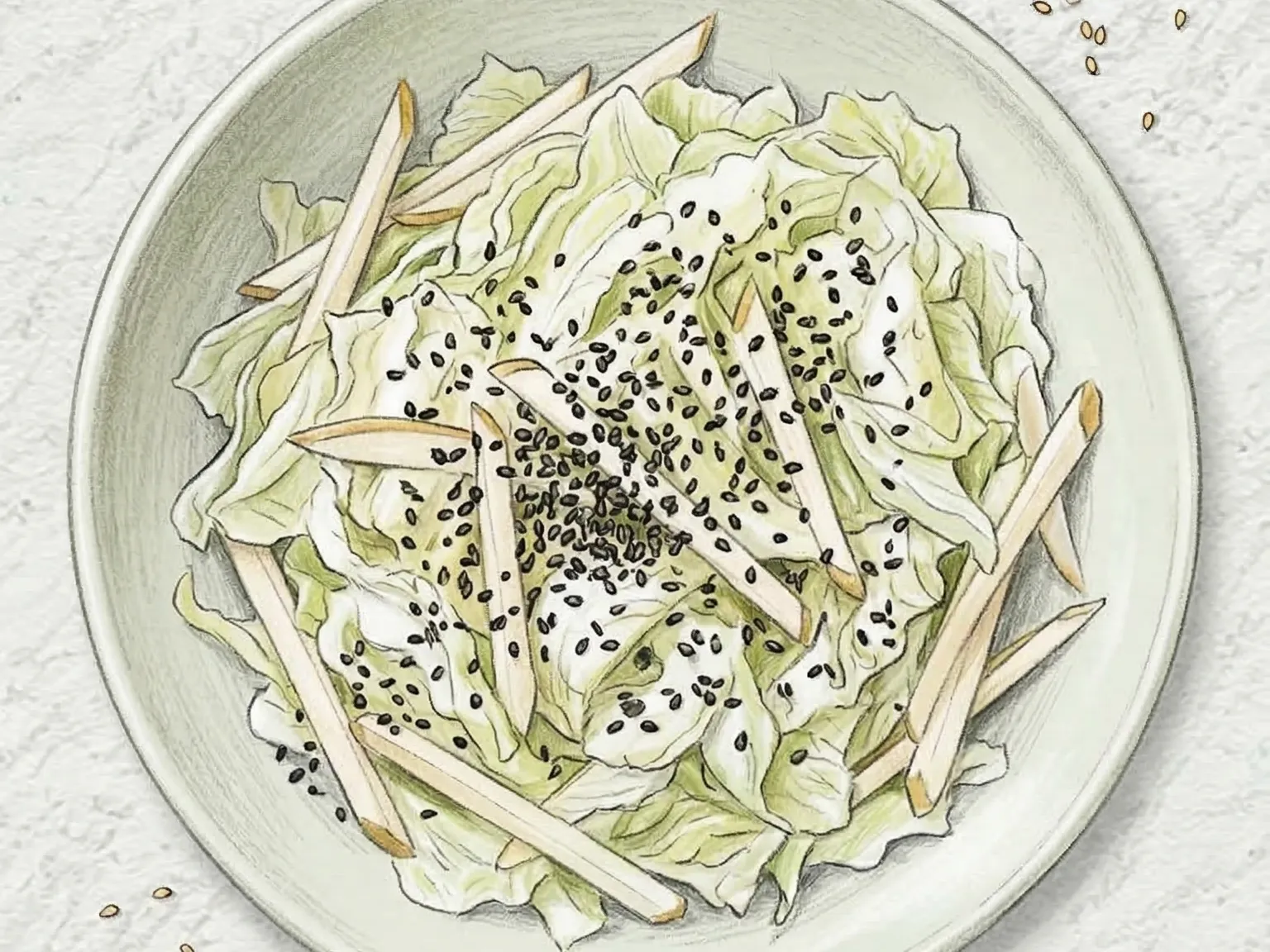
Napa cabbage is shredded fine for maximum crunch, and Korean pear is cut to matching width so its clear sweetness merges seamlessly with the cabbage's mild crispness.

What makes this special

  • Crunchy napa cabbage and Korean pear meet nutty toasted black sesame in this fresh salad.
  • Toasted black sesame bursts nutty richness with each bite
  • Yogurt-rice vinegar-honey dressing stays creamy yet light
Total time
15 min
Level
Easy
Servings
2 servings
Ingredients
8
Calories
185 kcal
Protein
5 g

Key ingredients

napa cabbageKorean pearcarrotblack sesame seedsplain yogurt

Core cooking flow

  1. 1 Shred 180 g napa cabbage finely, avoiding overly thick core pieces so the texture stays even.
  2. 2 Julienne 50 g carrot to about the same width as the cabbage so it mixes evenly instead of clumping.
  3. 3 Warm a dry pan over low heat, add 1 tablespoon black sesame seeds, and toast for about 1 minute.

Napa cabbage is shredded fine for maximum crunch, and Korean pear is cut to matching width so its clear sweetness merges seamlessly with the cabbage's mild crispness. Julienned carrot adds color throughout, while toasted black sesame seeds release a deep nuttiness with each bite. The dressing blends plain yogurt with rice vinegar and honey, staying creamy yet light enough to let the raw ingredients come through without being masked. Salt is kept minimal so the natural sweetness of pear and cabbage leads, making this salad a strong choice as a palate cleanser after a rich or oily main course. Scattering the black sesame seeds just before serving prevents them from absorbing moisture and ensures they retain their satisfying crunch against the soft, juicy pear and crisp cabbage.

Prep 15min 0 2 servings
Recipes by ingredient → carrot honey

Instructions

Read the steps as a cooking flow: prep, heat, seasoning, doneness control, and finish.

6 steps
  1. 1
    Step

    Shred 180 g napa cabbage finely, avoiding overly thick core pieces so the texture stays even.

    Soak it in cold water for 5 minutes, then drain very well until no water pools underneath.

  2. 2
    Prep

    Julienne 50 g carrot to about the same width as the cabbage so it mixes evenly instead of clumping.

    Cut 160 g Korean pear just before tossing to limit browning and keep the pieces juicy.

  3. 3
    Control

    Warm a dry pan over low heat, add 1 tablespoon black sesame seeds, and toast for about 1 minute.

    As soon as they smell nutty, transfer them out so residual heat does not make them bitter.

  4. 4
    Season

    In a bowl, combine 3 tablespoons plain yogurt, 1 tablespoon rice vinegar, 1 teaspoon honey, and 1/4 teaspoon salt.

    Stir until smooth, with no yogurt lumps, and taste for a light tangy balance.

  5. 5
    Prep

    Add the drained cabbage and carrot to the dressing first, lifting and turning gently with chopsticks or tongs so the dressing coats without crushing. Fold in the pear last to keep it intact and fresh.

  6. 6
    Finish

    Let the salad stand for just 2 minutes so the light dressing settles without drawing out too much liquid.

    Plate it, scatter the cooled black sesame seeds right before serving, and serve immediately.

After the steps

Pick a recipe that fits this dish.

Continue with shared ingredients, meal pairings, or a similar method.

Recipes That Go Well With This

More Salads →

Based on shared ingredients and meal pairing

Buchu Beef Mustard Salad (Seared Beef & Chive Mustard Salad)
Shared ingredient: asian pear Salads

Buchu Beef Mustard Salad (Seared Beef & Chive Mustard Salad)

Buchu beef mustard salad sears lean beef round over high heat to char the surface while keeping the center pink, then slices it thick over a bed of garlic chives and shredded red cabbage. Hot mustard dissolved into a soy-vinegar dressing produces a sharp nasal heat that cuts directly through the beef fat with each bite. Julienned Korean pear adds a crisp, clean sweetness that balances the salt and acidity of the dressing, while the garlic chives contribute their pungent, onion-forward aroma as a defining note. Slicing the beef at least 1 cm thick prevents it from toughening as it cools, and resting the seared meat for five minutes before cutting keeps the juices in. The salad comes together in the time it takes the beef to rest.

Bomdong Strawberry Doenjang Salad
Shared ingredient: honey Salads

Bomdong Strawberry Doenjang Salad

Bomdong strawberry doenjang salad combines the crisp leaves of early spring bomdong cabbage with the fruity sweetness of strawberries and the fermented depth of Korean soybean paste. The dressing, built by whisking doenjang with olive oil and vinegar, adds savory richness to the mild bomdong leaves, while the natural acidity of the strawberries neutralizes the saltiness of the paste and brings brightness to every bite. Walnuts introduce crunch and nuttiness, creating textural contrast among the softer components, and cucumber adds moisture that keeps the salad refreshing throughout. Dressing the salad too early draws water from the strawberries, so adding the dressing immediately before serving is essential for maintaining the right texture. Tearing the bomdong by hand rather than cutting it preserves its natural shape without bruising the leaves. The saltiness of doenjang varies between brands, so adding the dressing gradually and tasting as you go prevents overseasoning. Swapping strawberries for blueberries or mandarin segments adapts the salad to other seasons while keeping the doenjang dressing intact. Toasted almond slices or sunflower seeds make a good substitute for walnuts when a lighter crunch is preferred.

Kimchi Tofu Alfredo Farfalle (Creamy Kimchi Bow-Tie Pasta)
Serve together Pasta

Kimchi Tofu Alfredo Farfalle (Creamy Kimchi Bow-Tie Pasta)

Kimchi tofu Alfredo farfalle is a fusion pasta that counters the richness of a cream-and-Parmesan Alfredo sauce with the lactic acidity of well-fermented kimchi. Garlic bloomed in butter forms the aromatic base, then cream, milk, and Parmigiano are combined into the classic Alfredo sauce, after which chopped kimchi is folded in to introduce fermented tang and a layer of umami that a standard Alfredo lacks. Firm tofu cut into cubes and pan-fried until each side is golden provides a mild, neutral protein element with direct textural contrast against the smooth sauce. Farfalle's pinched center holds pockets of sauce against each piece of pasta, delivering a consistent hit of creaminess in every bite, and freshly ground black pepper draws a sharp line through the richness at the finish. The entire dish moves from pan to plate in about 15 minutes.

Tofu Salad (Pan-Seared Tofu on Fresh Greens)
Similar recipe Salads

Tofu Salad (Pan-Seared Tofu on Fresh Greens)

Dubu salad is made by pressing firm tofu to remove excess moisture, then pan-searing it until the outside turns golden and crisp while the inside stays soft and tender. The seared tofu is placed over a bed of baby greens, sliced cucumber, and cherry tomatoes. Wrapping the tofu in two layers of paper towels and setting a weight on top for twenty to thirty minutes draws out enough water so the surface browns properly in the pan without steaming. A dressing of soy sauce, sesame oil, lemon juice, and olive oil moves easily between Korean and Western flavor profiles. The salad is high in plant protein and low in fat, making it a practical and satisfying option when a light, clean-tasting meal is the goal.

Serve with this

Korean Salt-Grilled Beef Tenderloin
Grilled Easy

Korean Salt-Grilled Beef Tenderloin

Beef tenderloin - the leanest, finest-grained cut from the inner loin - is seared in a smoking-hot pan after seasoning with nothing more than coarse salt, black pepper, and a thin coat of olive oil. The high heat locks a dark brown crust onto the surface while the interior stays pink. Butter, crushed garlic cloves, and a sprig of rosemary go into the pan for basting during the final minutes, layering herbal richness across the meat's surface. A squeeze of lemon at the end cuts through the residual fat, and a three-minute rest allows the juices to redistribute so each slice runs clear.

🍺 Bar Snacks ⚡ Quick
Prep 15min Cook 8min 2 servings
Soybean Paste Stew with Clams
Asian Easy

Soybean Paste Stew with Clams

Doenjang jjigae with clams is one of the most frequently made stews in Korean households, built on the combination of fermented soybean paste's deep, earthy flavor and the clean briny umami of manila clams. The clams are purged of sand before being added to a pot of doenjang-laced broth, where they open and release their salty, seawater-flavored liquor directly into the soup. The result transforms the base from something merely savory into something distinctly oceanic and complex. Zucchini softens in the bubbling broth and contributes a natural sweetness as it breaks down, while blocks of soft tofu act as sponges, soaking up the seasoned liquid and releasing it in a burst of hot, flavorful broth when bitten into. Sliced cheongyang chili peppers are added to interrupt the heaviness of the fermented paste and sharpen the overall flavor. The stew is typically served in an earthenware pot while still bubbling, alongside rice. Many Koreans ladle the broth directly over their bowl of rice. The recipe adapts to any season: assembled with leftover summer vegetables from the refrigerator for a lighter version, or cooked piping hot in a stone pot through winter.

🏠 Everyday
Prep 12min Cook 25min 2 servings
Classic Wedge Salad
Western Easy

Classic Wedge Salad

Classic Wedge Salad features crisp iceberg lettuce wedges topped with a rich blue cheese dressing, crispy bacon, and cherry tomatoes. Preparing this dish requires cutting the lettuce into four wedges while leaving the core intact to hold the leaves together. The dressing is made by mixing half of the blue cheese with sour cream, mayonnaise, and lemon juice, leaving a few small cheese chunks, while the rest is kept for topping. Washing the lettuce and shaking out any water between the layers is essential to prevent the dressing from thinning. The bacon is cooked until crisp and drained well on paper towels. The salad is assembled by placing the cold wedges on a plate, pouring the dressing over, and topping with the bacon, halved tomatoes, remaining blue cheese, and sliced chives.

🥗 Light & Healthy ⚡ Quick
Prep 15min Cook 5min 2 servings

Similar recipes

Chamnamul Pear Tofu Salad
Salads Easy

Chamnamul Pear Tofu Salad

Chamnamul pear tofu salad pan-sears firm tofu cubes for 6-8 minutes until the exterior turns golden and crisp while the inside stays soft. Chamnamul is cut into 5 cm lengths to preserve its fragrant mountain-herb character, and Korean pear is julienned thin so its clean juice sweetens each bite. A dressing of perilla oil, lemon juice, and soup soy sauce delivers nuttiness and umami in a single drizzle, and halved cherry tomatoes contribute a pop of acidity. Slicing the pear just before assembly minimizes browning, and toasted sesame seeds scattered on top add a final layer of warm, nutty aroma.

🥗 Light & Healthy ⚡ Quick
Prep 15min Cook 8min 2 servings
Korean Napa Cabbage Pancake
Grilled Easy

Korean Napa Cabbage Pancake

Baechu jeon is a Korean pan-fried pancake made with napa cabbage leaves coated in a thin flour batter. The simplicity of the recipe makes it a practical use-up dish during kimchi-making season, when salted outer cabbage leaves are on hand and need to be eaten quickly before they deteriorate. Outer leaves of medium size work best; the stem end, if too thick, needs to be flattened with the back of a knife so that the batter adheres uniformly and the leaf lies flat during cooking without curling or buckling. The batter is mixed thin - roughly equal parts buchim flour and water - so it forms a light coating rather than a thick shell. A heavy batter masks the cabbage entirely and produces a texture that is doughy rather than crisp. Generous oil in a well-heated pan and steady medium heat are what produce the characteristic result: a thin, crackling exterior while the cabbage inside softens and its natural sweetness intensifies. Napa cabbage's sweetness becomes more pronounced with heat than in its raw state, which is why this pancake, despite its simplicity, tastes distinctly of the vegetable. Each side must be fully golden before flipping - attempting to turn it early, before the batter sets, breaks the pancake. The standard accompaniment is a dipping sauce of soy sauce sharpened with rice vinegar and sliced cheongyang chili, whose acidity and heat provide contrast to the mild, faintly sweet pancake.

🍺 Bar Snacks 🏠 Everyday
Prep 12min Cook 10min 2 servings
Korean Napa Cabbage Tofu Porridge
Rice Easy

Korean Napa Cabbage Tofu Porridge

A gentle Korean rice porridge built from napa cabbage and soft tofu - mild enough for a recovering stomach, substantial enough to be a proper meal. The rice is first stir-fried in sesame oil, coating each grain in a thin film of fat that releases a quiet, nutty fragrance as the grains slowly swell and break down. Minced garlic is added at this stage and cooked through so its raw sharpness disappears into the base. Vegetable stock and finely chopped cabbage follow, and the pot simmers at medium heat, stirring occasionally, until the grains dissolve completely into a thick, uniform porridge. During this process, the cabbage sheds its moisture into the broth, gently sweetening it without any added sugar. Tofu crumbled by hand is stirred in during the last five minutes, dispersing evenly to create a smooth, soft protein layer throughout. Seasoning is deliberately light - just guk-ganjang and salt - to let the cabbage sweetness and the tofu's quiet richness carry the flavor. No heavy oils or pungent spices. This is porridge for days when the body needs something undemanding, or when plain, clean food is exactly what the moment calls for.

🥗 Light & Healthy 🏠 Everyday
Prep 15min Cook 25min 2 servings

Tips

Cut the pear right before serving to prevent browning.
Drain napa cabbage thoroughly so the dressing stays flavorful.

Nutrition (per serving)

Calories
185
kcal
Protein
5
g
Carbs
30
g
Fat
6
g