Tea Rice Bowl (Japanese Green Tea Poured Rice with Salmon)
Rice Easy

Tea Rice Bowl (Japanese Green Tea Poured Rice with Salmon)

Quick answer

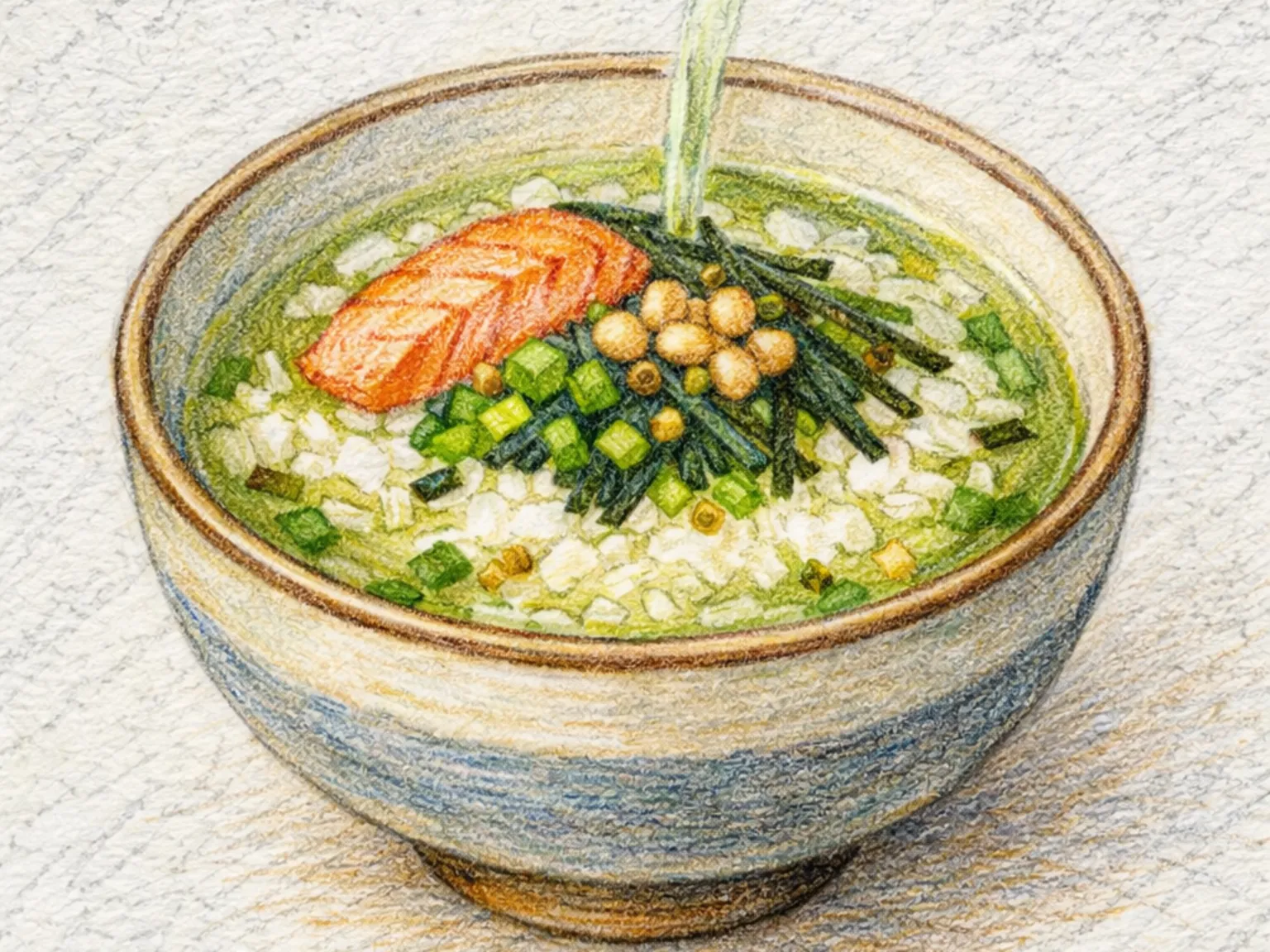
Ochazuke is a Japanese dish of cooked rice topped with grilled salmon flakes, dried seaweed, green onion, and wasabi, over which hot green tea is poured just before eating.

What makes this special

  • Green tea tannin cuts the richness of grilled salmon, leaving a clean finish in ochazuke.
  • Green tea's tannin astringency cuts through salmon's fat, keeping the palate clean throughout
  • Dried seaweed dissolves into the tea, spreading a subtle ocean note through the broth
Total time
20 min
Level
Easy
Servings
2 servings
Ingredients
7
Calories
340 kcal
Protein
18 g

Key ingredients

cooked ricegreen teagrilled salmon flakesseaweed flakeswasabi

Core cooking flow

  1. 1 Brew 500 ml green tea a little stronger than usual and keep it hot.
  2. 2 Check the 100 g grilled salmon for bones and skin, then flake only the flesh into small pieces.
  3. 3 Divide the 2 cups cooked rice between bowls and gently level the surface.

Ochazuke is a Japanese dish of cooked rice topped with grilled salmon flakes, dried seaweed, green onion, and wasabi, over which hot green tea is poured just before eating. The astringent bitterness of the green tea works against the fatty richness of the salmon, cutting through the oil and keeping the palate clean throughout the bowl. Wasabi adds a sharp, nasal heat that punctuates each spoonful differently depending on how much dissolves into the surrounding liquid. A light drizzle of soy sauce provides a salty baseline that ties the ingredients together without overpowering the tea. The seaweed flakes soften and dissolve into the hot liquid, gradually releasing a subtle oceanic aroma that spreads through the broth. As the meal progresses, the rice releases some starch into the tea, thickening the broth slightly and shifting the flavor toward the end. Using dashi stock made from kombu and bonito instead of green tea produces a richer, more umami-forward version. Variations with pickled plum or mentaiko in place of salmon are equally common.

Prep 10min Cook 10min 2 servings

Instructions

Read the steps as a cooking flow: prep, heat, seasoning, doneness control, and finish.

6 steps
  1. 1
    Season

    Brew 500 ml green tea a little stronger than usual and keep it hot.

    Stop steeping once the aroma is clear, because oversteeping can make the tea too bitter for the salmon and rice.

  2. 2
    Season

    Check the 100 g grilled salmon for bones and skin, then flake only the flesh into small pieces.

    Keep the flakes loose and bite-size so they mix easily with the rice and hot tea.

  3. 3
    Heat

    Divide the 2 cups cooked rice between bowls and gently level the surface.

    Do not pack the rice down, since a slightly loose mound lets the hot tea flow through without turning the bowl gluey.

  4. 4
    Season

    Place the salmon over the rice, then scatter 2 tablespoons seaweed flakes and 1 tablespoon green onion evenly on top.

    Spread some seaweed toward the edges so it softens into the tea and seasons the broth.

  5. 5
    Season

    Drizzle 2 teaspoons soy sauce lightly around the rice instead of pouring it in one spot.

    Add 1/2 teaspoon wasabi on the side so it can be dissolved little by little while eating.

  6. 6
    Control

    Just before serving, pour the hot green tea slowly along the edge of each bowl.

    Add only enough to partly cover the rice, stir once or twice, and eat while the tea is still fragrant.

After the steps

Pick a recipe that fits this dish.

Continue with shared ingredients, meal pairings, or a similar method.

Recipes That Go Well With This

More Rice →

Based on shared ingredients and meal pairing

Chicken Curry Rice
Shared ingredient: cooked short-grain rice Rice

Chicken Curry Rice

Chicken curry rice is a Japanese-style curry where bite-sized chicken thigh, potato, carrot, and onion simmer together until the curry roux melts into a thick, glossy sauce. The spice blend is gentle rather than fiery, with a mellow sweetness drawn from the slowly cooked vegetables. Chicken thigh meat stays moist and succulent even after prolonged simmering, absorbing the curry flavor throughout. The potato pieces break down slightly at the edges, thickening the sauce further and giving it a starchy body that clings to each spoonful of rice. A one-pot format makes it easy to scale -- prepare a large batch and the flavor deepens further overnight as everything continues to meld, making it well-suited for family dinners or weekly meal prep.

Pork Rice Bowl (Sweet-Salty Glazed Pork over Rice)
Shared ingredient: cooked short-grain rice Rice

Pork Rice Bowl (Sweet-Salty Glazed Pork over Rice)

Butadon is a Japanese pork rice bowl that originated in Obihiro, Hokkaido, where thin slices of pork belly or shoulder are simmered with onion in a glaze of soy sauce, mirin, and sugar, then laid over a bowl of steamed rice. The soy salt and sugar sweetness balance precisely as the meat absorbs the sauce, while the onion dissolves gradually into the cooking liquid, contributing a natural sweetness that deepens the glaze. Where the pork meets the pan, the edges caramelize into a slightly charred coating that adds a roasted dimension to the otherwise clean, saucy topping. Hokkaido pork, with its firm texture and higher fat content, is traditional, though any well-marbled cut works. The preparation is genuinely simple - one pan, one sauce, no elaborate knife work - which is exactly why it became a staple weeknight meal across Japan.

Kongnamul-guk (Bean Sprout Anchovy Soup)
Serve together Soups

Kongnamul-guk (Bean Sprout Anchovy Soup)

Kongnamul-guk is a clear Korean soup built on bean sprouts, water, soup soy sauce, and garlic, and its central technique is boiling the sprouts with the lid firmly closed for seven minutes. The reason behind the closed lid is a long-standing Korean kitchen belief: the compounds responsible for the raw, beany smell in soybean sprouts are volatile, and if the lid is left open, they do not escape with the steam but instead condense back into the pot. Whether the chemistry fully supports this, keeping the lid closed has been the standard method for generations and consistently produces a clean-tasting broth. Green onion goes in at the very end to keep its bright, mild bite without overcooking. Trimming the fine root tails from each sprout improves the texture and presentation, though it does not change the flavor and is often skipped on weekdays. Adding chili flakes and a cracked egg transforms the soup into a spicy, restorative hangover version, and a handful of clams deepens the broth with extra umami. From start to finish the soup takes about fifteen minutes, which makes it one of the fastest soups in the Korean repertoire, and the directness of its flavor -- clean, cool, and vegetal -- is exactly what makes it worth returning to.

Chicken Soboro Rice Bowl (Ground Chicken and Scrambled Egg over Rice)
Similar recipe Rice

Chicken Soboro Rice Bowl (Ground Chicken and Scrambled Egg over Rice)

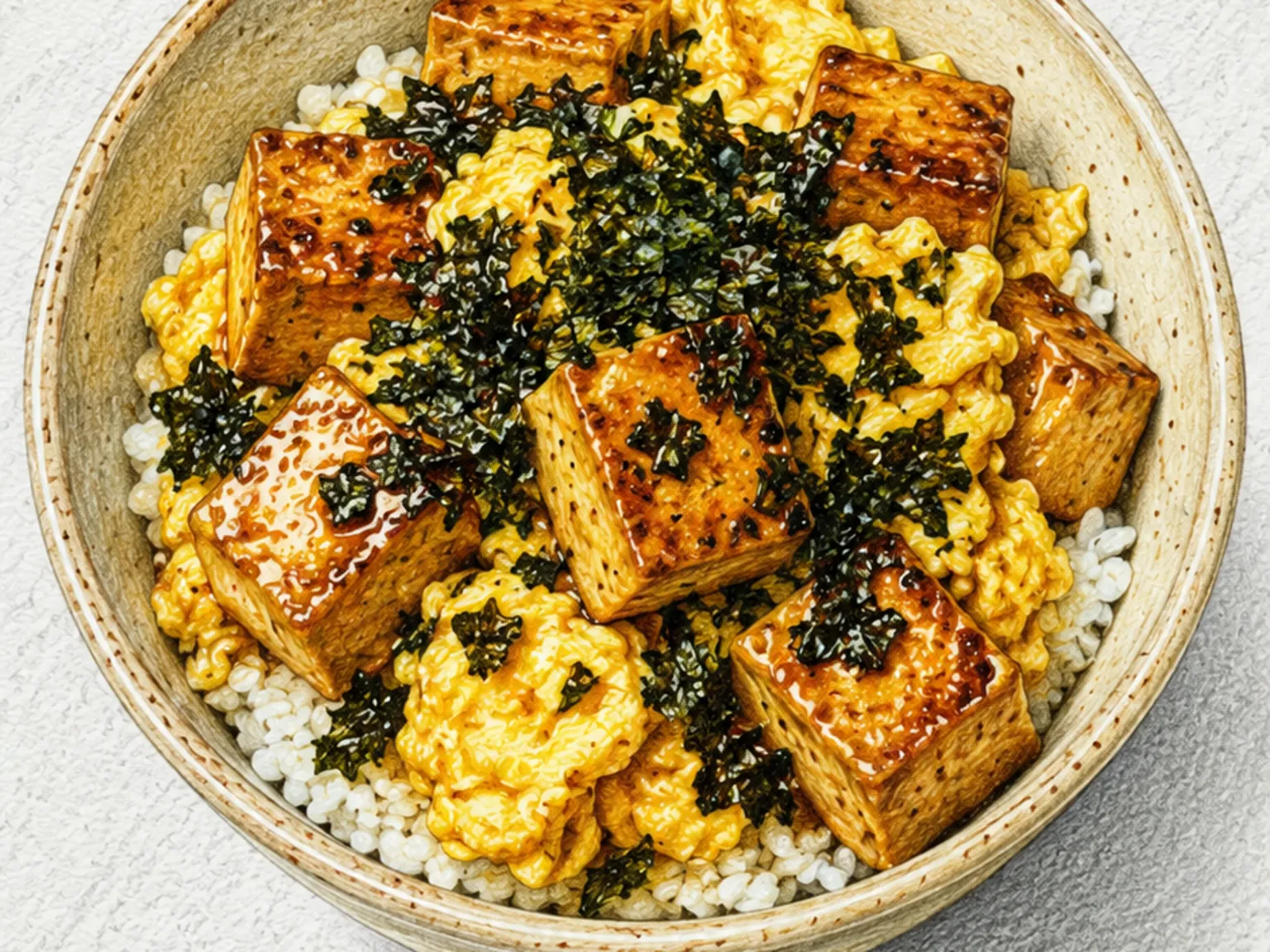
Soboro-don is a Japanese-style rice bowl that tops steamed rice with two side-by-side mounds: savory minced chicken and sweet scrambled egg. The chicken is seasoned with soy sauce, sugar, mirin, and ginger juice, then stirred constantly with chopsticks over medium heat until it breaks into fine, crumbly grains that are individually coated in glaze. The egg is treated the same way - beaten, poured into a pan, and stirred into soft, fluffy curds. Arranged half-and-half on the rice, the brown chicken and bright yellow egg create a visual contrast that makes the bowl inviting. Both toppings share a gentle sweetness balanced by soy umami, and their fine, loose texture means every bite blends effortlessly with the rice beneath.

Serve with this

Korean Perilla Leaf Soft Tofu Stew
Stews Easy

Korean Perilla Leaf Soft Tofu Stew

Kkaennip sundubu jjigae is a mild, gently seasoned stew of soft tofu and perilla leaves simmered in a light anchovy broth. The 350g of sundubu goes in as large, rustic pieces that hold their shape while cooking, then collapse into silky, cloud-like curds on the spoon. Twelve perilla leaves added stem-on release their aromatic oils gradually as the broth comes to a boil, giving the stew a distinctly herbal, faintly anise-like character that sets it apart from standard sundubu variations. Gochugaru and soup soy sauce provide just enough background seasoning to keep the perilla fragrance forward rather than overwhelmed by heat, and a drizzle of sesame oil at the finish adds a nutty warmth. Low in spice and gentle on the stomach, this is a practical choice on days when a soothing, unfussy bowl is what is needed.

🏠 Everyday ⚡ Quick
Prep 10min Cook 12min 2 servings
Chicken Cabbage Wraps
Side dishes Easy

Chicken Cabbage Wraps

Simple chicken tenderloin and cabbage wraps, ideal for a diet-friendly side dish.

🔥 Trending Now ⚡ Quick
Prep 15min Cook 15min 2 servings
Korean Bangwool Yangbaechu Kimchi (Brussels Sprout Kimchi)
Kimchi Medium

Korean Bangwool Yangbaechu Kimchi (Brussels Sprout Kimchi)

Bangwool yangbaechu kimchi is a creative Korean kimchi made from halved Brussels sprouts, brined in salt and dressed with gochugaru, fish sauce, garlic, and apple. Brussels sprouts are denser than napa cabbage and hold their structure after salting, giving each bite a firm crunch that releases a natural sweetness as you chew. The combination of fish sauce and gochugaru builds a spicy-salty depth, while grated apple introduces a fruit sweetness that softens the chili heat without masking it. Scallions contribute a fresh note throughout. Because the sprouts are compact and less watery than cabbage, the kimchi ferments more slowly and stays crisp longer. It can be eaten right away as a fresh kimchi, or left to ferment for several days as the flavors deepen. In season from autumn through early spring, this kimchi suits both traditional Korean meals and modern brunch spreads.

🍱 Lunchbox 🏠 Everyday
Prep 30min 4 servings

Similar recipes

Salmon Brown Rice Power Bowl
Salads Medium

Salmon Brown Rice Power Bowl

Salmon brown rice power bowl sears a salmon fillet four to five minutes per side until the skin crisps and the interior stays moist, then plates it over cooked brown rice with blanched spinach, julienned carrot, and sliced avocado. A sauce of soy sauce, lemon juice, and sesame oil layers umami depth, citrus brightness, and nutty aroma into a single drizzle that ties the mild grain to the rich fish. Brown rice's firm, chewy texture contrasts with the tender salmon flesh, and avocado fills the gap with a smooth, fatty creaminess. Pulling the salmon from heat while the center is still slightly translucent preserves moisture - overcooking causes the proteins to contract and squeeze out the juices.

🥗 Light & Healthy 🏠 Everyday
Prep 20min Cook 15min 2 servings
Chicken and Egg Rice Bowl
Rice Easy

Chicken and Egg Rice Bowl

Oyakodon simmers bite-size chicken thigh and sliced onion in a soy-mirin broth, then binds everything with a soft-set egg before sliding it over steamed rice. The name means 'parent and child,' referring to the chicken and egg sharing the same bowl. Onion goes into the broth first to release its natural sweetness, followed by the chicken, which cooks just until tender. Beaten eggs are poured in a circular motion and the lid goes on briefly, leaving the egg custardy rather than fully set. That half-cooked egg absorbs the savory-sweet broth and coats each grain of rice. Despite using only a handful of ingredients, the layered umami from soy sauce and mirin gives the dish a satisfying depth.

🏠 Everyday ⚡ Quick
Prep 15min Cook 15min 2 servings
Japanese Ginger Soy Braised Chicken
Stir-fry Easy

Japanese Ginger Soy Braised Chicken

Toriniku shigureni is a Japanese-style simmered dish of ground chicken cooked down with julienned ginger, soy sauce, mirin, and sugar until most of the liquid evaporates. The chicken is browned first over medium heat, then ginger is added for its sharp bite before the braising liquid goes in. As the sauce reduces over six minutes, it concentrates into a sweet-salty glaze that clings to the meat. The ginger tames any gamey notes while adding warmth, making this a versatile topping for rice bowls or a compact side dish for packed lunches.

🏠 Everyday 🌙 Late Night
Prep 10min Cook 12min 2 servings

Tips

Use dashi instead of tea for deeper umami.
Try toppings like umeboshi or roe for variation.

Nutrition (per serving)

Calories
340
kcal
Protein
18
g
Carbs
50
g
Fat
7
g