Korean-Style Cucumber Pickle
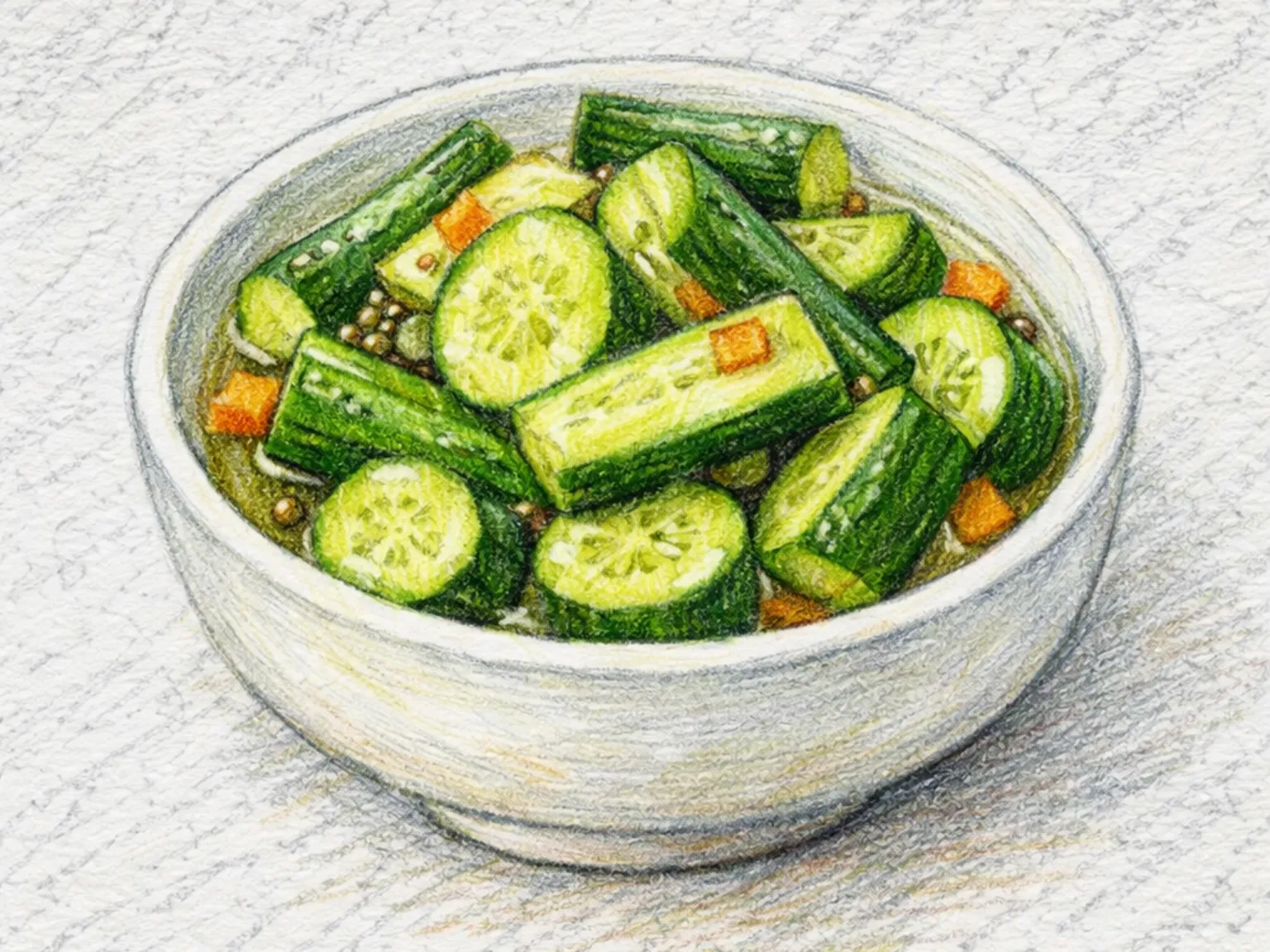
Oi pickle is a Korean-style vinegar-brined cucumber pickle where one-centimeter-thick cucumber rounds are briefly salted, then submerged in a hot brine of vinegar, water, sugar, salt, bay leaf, and whole black peppercorns. The hot brine contracts the cucumber surface on contact, locking in crunch that persists through days of refrigeration. As the pickle sits, the vinegar's sharp acidity mellows and merges with the sugar into a balanced sweet-sour profile. Bay leaf contributes a quiet herbal undertone, and peppercorns add a whisper of heat at the finish that elevates the pickle beyond plain vinegar sourness. Ready after twelve hours of chilling, these pickles are a natural companion to fried or fatty dishes, cutting through richness with clean acidity.
Adjust Servings
Instructions
- 1
Slice cucumbers 1 cm thick, lightly salt for 10 minutes, then pat dry.
- 2
Boil vinegar, water, sugar, salt, bay leaf, and peppercorns.
- 3
Turn off heat and cool brine for 3 minutes once sugar dissolves.
- 4
Pack cucumbers into a sterilized jar and pour over hot brine.
- 5
Cool at room temperature, then refrigerate for at least 12 hours.
As an Amazon Associate, we may earn from qualifying purchases.
Tips
Nutrition (per serving)
More Recipes

Korean-Style Cabbage Pickle
Yangbaechu pickle is a quick Korean-style vinegar pickle made by pouring a hot brine of vinegar, sugar, salt, and whole peppercorns over bite-sized cabbage and carrot pieces. The hot liquid slightly wilts the vegetables while they retain a firm, crisp crunch. Whole black peppercorns add a subtle spiced note that gives the pickle more dimension than a plain vinegar soak. Ready after just one day of refrigeration, it is commonly served alongside fried cutlets, burgers, or other rich dishes to cut through greasiness. Best consumed within a week for peak crunchiness.

Korean Soy Pickled Beet (Vinegar Soy Brine Jangajji)
Beet jangajji is a Korean soy-pickled beet prepared by slicing beets thin and submerging them in a cooled brine of soy sauce, vinegar, and sugar. The vinegar cuts through the beet's earthy undertone, leaving a clean sweetness sharpened by acidity, while onion adds a mellow depth to the pickling liquid. As the brine cools, the beet's vivid red pigment bleeds into the liquid, creating a striking appearance. After at least a day of pickling, the flavor penetrates fully, making this a crisp, refreshing side dish alongside rice or grilled meats.

Korean Soy Pickled Cucumber
Oi jangajji is a Korean soy-pickled cucumber made by slicing cucumbers into one-centimeter rounds, lightly salting them, then packing them into a sterilized jar with garlic cloves and green chilies before pouring over a boiling brine of soy sauce, water, vinegar, and sugar. The hot liquid partially cooks the cucumber surface while the center stays crisp, and two days of cold fermentation lets the sweet-salty-sour brine soak through to the core. The green chilies leave a faint heat at the back of each bite, and whole garlic cloves release their aroma into the brine as they soften. Reboiling and re-pouring the brine once extends the pickle's crunch, making this a practical side dish that keeps well over a week in the refrigerator.

Korean Stuffed Cucumber Kimchi
Oi sobagi is a Korean stuffed cucumber kimchi where salted cucumbers are slit crosswise - base left intact - and packed with a filling of chopped garlic chives, onion, gochugaru, anchovy fish sauce, and plum syrup. Each bite releases the cucumber's cool juice together with the spicy, fragrant stuffing, and the firm flesh contrasts with the softer chive filling inside. Salting for exactly thirty minutes is critical - any longer softens the cucumber past the point where it can hold its shape and crunch. Four hours of room-temperature fermentation followed by refrigeration allows lactic acid to develop overnight, bringing a tangy depth that peaks by the second day. Cutting into three-centimeter pieces just before serving minimizes juice loss from the stuffed interior.

Korean Oi Dubu Bokkeum (Cucumber Tofu Stir-fry)
Oi-dubu-bokkeum stir-fries half-moon cucumber slices and cubed firm tofu with soup soy sauce, garlic, and a light touch of Korean chili flakes. The tofu is pan-fried to golden first to prevent crumbling, then set aside while garlic and onion build flavor in the same pan. Cucumber goes in for just 90 seconds - long enough to warm through but short enough to stay crisp and juicy. The tofu returns for a final toss with sesame oil, creating a dish defined by the contrast between cool, crunchy cucumber and warm, soft tofu under a clean soy-based seasoning.

Korean Seasoned Cucumber Pickle Salad
Oiji-muchim takes oiji - cucumber that has been salt-brined for a month or longer - rinses out the excess salinity, and dresses it in a sweet-sour-spicy sauce. Oiji is a traditional Korean preserved food: summer cucumbers are submerged in a concentrated salt brine and aged until their moisture migrates out, transforming the texture from fresh and crisp into something firm, almost crunchy-chewy - a chew fundamentally different from raw cucumber. If the pickle is too salty, soaking in cold water for thirty minutes to an hour draws the brine down to a palatable level. After thorough squeezing, the cucumber pieces are tossed with gochugaru, vinegar, sugar, sesame oil, minced garlic, and scallion. Vinegar and sugar layer a bright sweet-sour dimension over the pickle's inherent saltiness, balancing it for pairing with rice. Julienned oiji absorbs more dressing and delivers a different eating experience than diagonal-cut slices - each approach has its advocates. Made during the summer cucumber glut, oiji keeps refrigerated for over a month.