Korean Stuffed Cucumber Kimchi
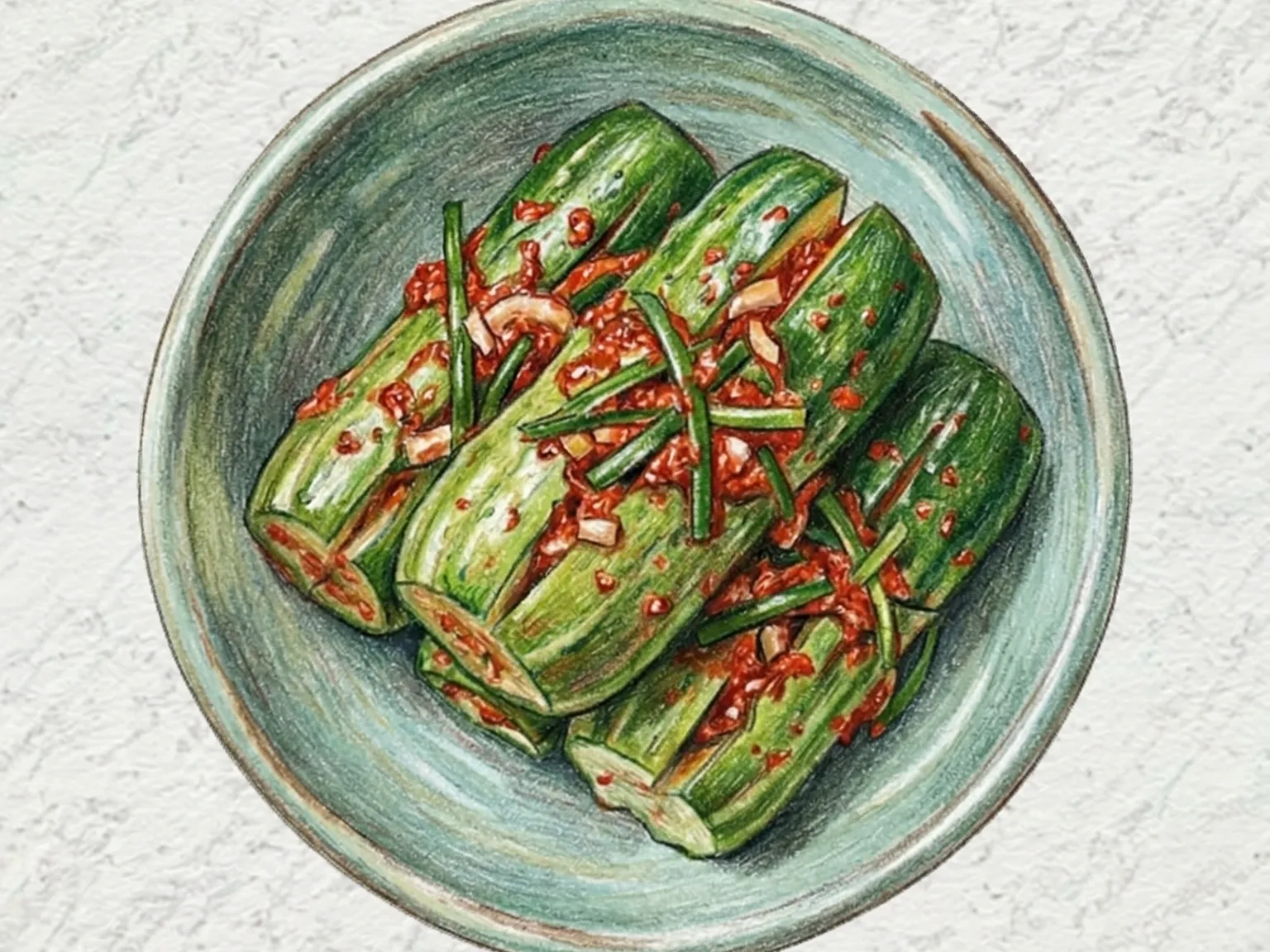
Oi sobagi is a Korean stuffed cucumber kimchi where salted cucumbers are slit crosswise - base left intact - and packed with a filling of chopped garlic chives, onion, gochugaru, anchovy fish sauce, and plum syrup. Each bite releases the cucumber's cool juice together with the spicy, fragrant stuffing, and the firm flesh contrasts with the softer chive filling inside. Salting for exactly thirty minutes is critical - any longer softens the cucumber past the point where it can hold its shape and crunch. Four hours of room-temperature fermentation followed by refrigeration allows lactic acid to develop overnight, bringing a tangy depth that peaks by the second day. Cutting into three-centimeter pieces just before serving minimizes juice loss from the stuffed interior.
Adjust Servings
Instructions
- 1
Trim cucumbers and make cross slits, keeping the base intact.
- 2
Rub with salt, rest 30 minutes, rinse, and drain well.
- 3
Chop chives and onion, then mix with chili flakes, fish sauce, garlic, and plum syrup.
- 4
Stuff the seasoning mixture into each cucumber slit.
- 5
Stand cucumbers upright in a container and spread remaining filling on top.
- 6
Rest 4 hours at room temp, then refrigerate and serve from next day.
As an Amazon Associate, we may earn from qualifying purchases.
Tips
Nutrition (per serving)
More Recipes

Korean Fresh Eggplant Kimchi
Gaji kimchi is a fresh, no-fermentation eggplant kimchi made by steaming eggplant until soft, tearing it along the grain, and tossing it with gochugaru, fish sauce, garlic, and sesame oil. Tearing rather than cutting exposes the fibrous interior so the seasoning reaches deep into every strand. Scallions add a fresh, sharp lift, and sesame seeds provide a nutty finish. Since no fermentation is required, this kimchi can be eaten immediately after preparation, making it especially useful in summer when a quick banchan is needed. Mixed into a bowl of cold leftover rice, the seasoning soaks into the grains for a satisfying one-bowl meal.

Korean Lettuce Kimchi (Quick Leaf Gochugaru Dressed)
Sangchu kimchi is a quick Korean lettuce kimchi made by tearing leaf lettuce into bite-sized pieces, lightly salting for ten minutes to wilt the leaves just enough, then tossing them in a dressing of gochugaru, sand lance fish sauce, minced garlic, vinegar, and sugar. The lettuce absorbs the seasoning and softens, but eating it before it fully collapses preserves a slight crispness at the leaf edges. Fish sauce's fermented depth adds weight to the lettuce's otherwise mild green flavor, and vinegar leaves a clean, tangy finish. Sesame seeds contribute a toasted accent with each chew. Thorough drying after salting is essential - residual water dilutes the seasoning rapidly, turning the kimchi bland within hours.

Korean Seasoned Cucumber Pickle Salad
Oiji-muchim takes oiji - cucumber that has been salt-brined for a month or longer - rinses out the excess salinity, and dresses it in a sweet-sour-spicy sauce. Oiji is a traditional Korean preserved food: summer cucumbers are submerged in a concentrated salt brine and aged until their moisture migrates out, transforming the texture from fresh and crisp into something firm, almost crunchy-chewy - a chew fundamentally different from raw cucumber. If the pickle is too salty, soaking in cold water for thirty minutes to an hour draws the brine down to a palatable level. After thorough squeezing, the cucumber pieces are tossed with gochugaru, vinegar, sugar, sesame oil, minced garlic, and scallion. Vinegar and sugar layer a bright sweet-sour dimension over the pickle's inherent saltiness, balancing it for pairing with rice. Julienned oiji absorbs more dressing and delivers a different eating experience than diagonal-cut slices - each approach has its advocates. Made during the summer cucumber glut, oiji keeps refrigerated for over a month.

Korean Zucchini Kimchi (Summer Fresh Gochugaru Quick)
Hobak kimchi is a Korean summer zucchini kimchi where half-moon or thin-cut slices are lightly salted, then tossed with gochugaru, fish sauce, garlic, garlic chives, and plum extract. Minimal salting preserves the zucchini's natural crunch and gentle sweetness, and plum extract provides a rounded sweetness without added sugar. Garlic chives tie the flavors together with their aromatic, grassy note, and onion adds an extra layer of savory depth. This is a no-fermentation kimchi meant to be eaten immediately after preparation, making it an efficient seasonal banchan when fresh summer zucchini is at its peak.

Korean Chilled Cucumber Soup
Oi-naengguk is a Korean chilled cucumber soup served in summer as a cold alternative to the hot soups (guk) that normally accompany Korean meals. When midsummer heat makes a steaming bowl of doenjang-guk unappealing, this icy broth takes its place at the table. Cucumber is sliced paper-thin and submerged in a broth of water seasoned with rice vinegar, soup soy sauce, salt, and sugar - a higher vinegar ratio intensifies the refreshing, palate-clearing sharpness. Ice cubes floated on top or at least thirty minutes of refrigeration are essential to achieve the chilling effect that defines the dish. Thinly sliced garlic infuses a mild pungency into the broth, and sesame seeds sprinkled on top add a nutty accent. Some versions include rehydrated dried seaweed, whose slippery texture contrasts with the cucumber's crisp snap. Alongside bibimbap or spicy banchan, oi-naengguk serves as a cooling counterbalance that tempers chili heat between bites.

Korean-Style Cucumber Pickle
Oi pickle is a Korean-style vinegar-brined cucumber pickle where one-centimeter-thick cucumber rounds are briefly salted, then submerged in a hot brine of vinegar, water, sugar, salt, bay leaf, and whole black peppercorns. The hot brine contracts the cucumber surface on contact, locking in crunch that persists through days of refrigeration. As the pickle sits, the vinegar's sharp acidity mellows and merges with the sugar into a balanced sweet-sour profile. Bay leaf contributes a quiet herbal undertone, and peppercorns add a whisper of heat at the finish that elevates the pickle beyond plain vinegar sourness. Ready after twelve hours of chilling, these pickles are a natural companion to fried or fatty dishes, cutting through richness with clean acidity.