Charim

2686 Korean & World Recipes

2686+ Korean recipes, clean and organized. Ingredients to instructions, all at a glance.

Salt-Brined Korean Cucumber Pickles
KimchiEasy

Salt-Brined Korean Cucumber Pickles

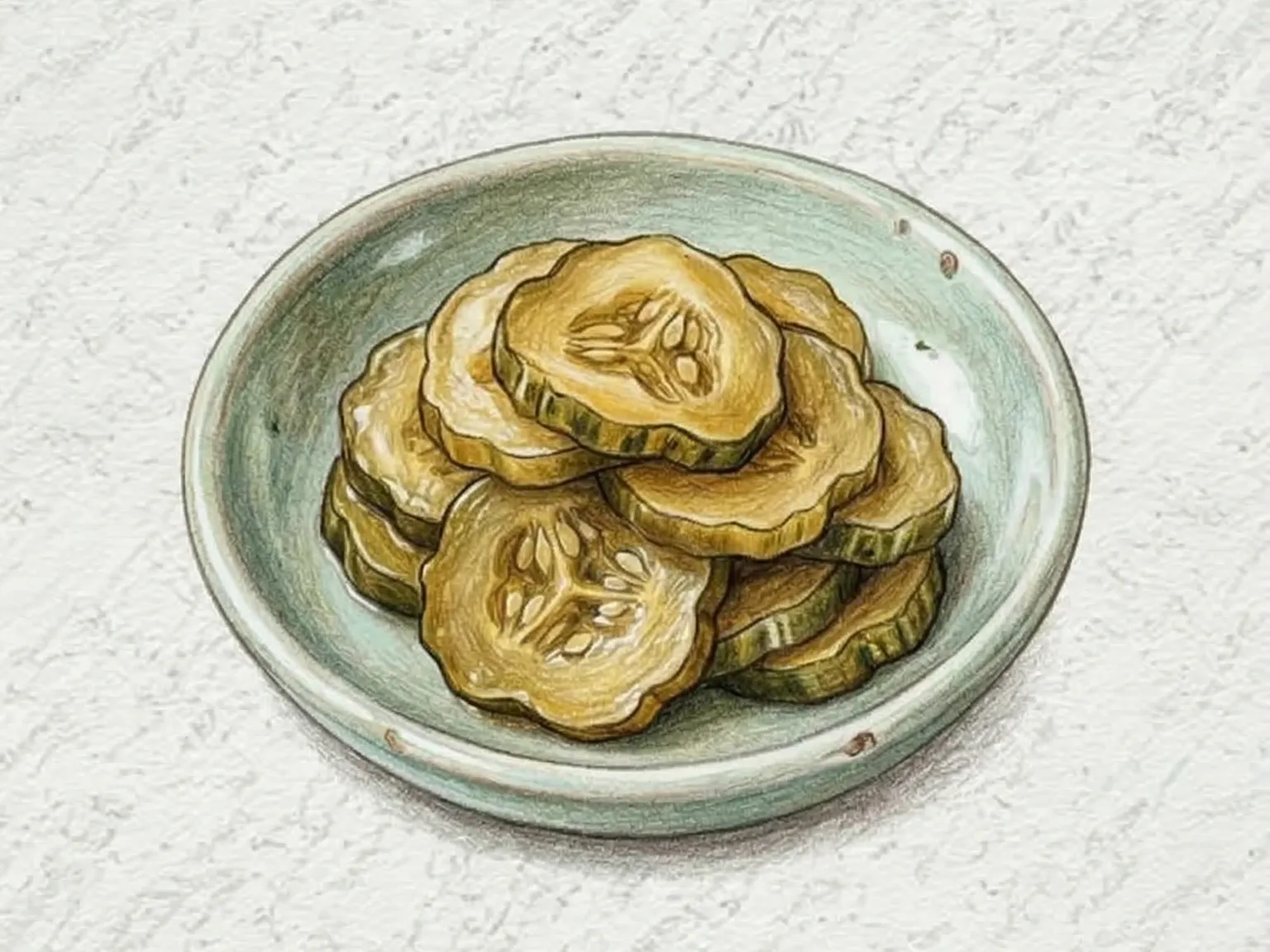
Oiji is a traditional Korean long-fermented cucumber pickle made by submerging whole cucumbers in a boiled brine of water, coarse salt, sugar, and a touch of vinegar, then weighting them down so they stay fully immersed during at least five days of cold storage. Whole garlic cloves added to the jar release their aroma gradually into the brine. As the days pass, osmotic pressure draws moisture from the cucumbers while salt penetrates inward, producing a uniformly salty, firm pickle that retains its crunch far longer than quick-pickled varieties. Before serving, the oiji is sliced thin and soaked briefly in cold water to temper its saltiness, then dressed with sesame oil and gochugaru as a side dish, or dropped into a chilled broth for a refreshing summer soup.

Prep 20minCook 10min4 servings

Adjust Servings

2servings
servings

Instructions

  1. 1

    Wash cucumbers, dry them, and trim the ends.

  2. 2

    Boil water, salt, sugar, and vinegar to make brine.

  3. 3

    Place cucumbers and garlic in a sterilized jar and pour hot brine.

  4. 4

    Cool fully, then weigh down so cucumbers stay submerged.

  5. 5

    Refrigerate for at least 5 days, then slice before serving.

🛒Shop Ingredients on Amazon

As an Amazon Associate, we may earn from qualifying purchases.

Tips

Keep cucumbers submerged to maintain firmness.
Soak briefly in water before serving to reduce saltiness.

Nutrition (per serving)

Calories
45
kcal
Protein
2
g
Carbs
9
g
Fat
0
g

More Recipes

Korean Seasoned Cucumber Pickle Salad
Side dishesEasy

Korean Seasoned Cucumber Pickle Salad

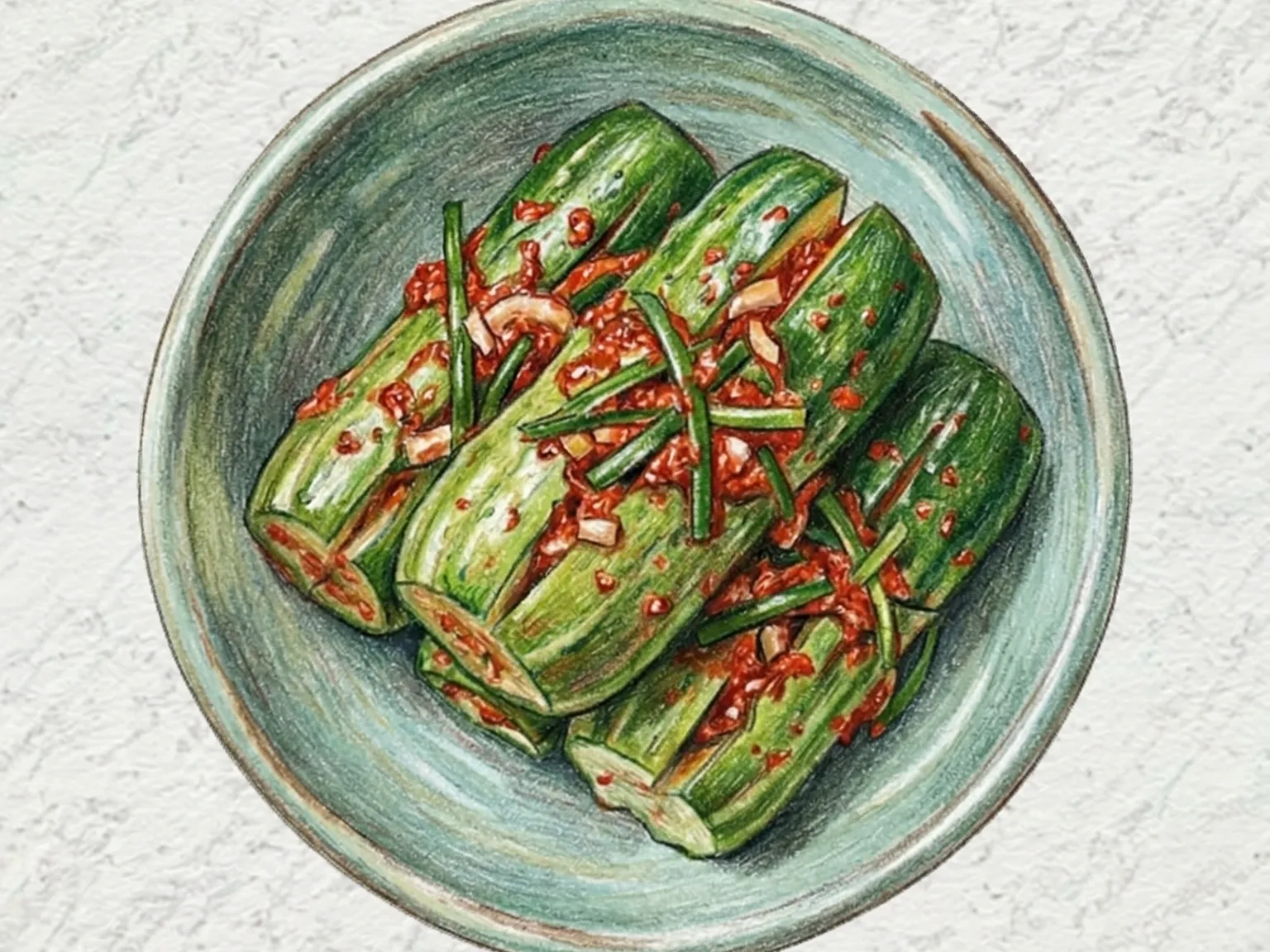
Oiji-muchim takes oiji - cucumber that has been salt-brined for a month or longer - rinses out the excess salinity, and dresses it in a sweet-sour-spicy sauce. Oiji is a traditional Korean preserved food: summer cucumbers are submerged in a concentrated salt brine and aged until their moisture migrates out, transforming the texture from fresh and crisp into something firm, almost crunchy-chewy - a chew fundamentally different from raw cucumber. If the pickle is too salty, soaking in cold water for thirty minutes to an hour draws the brine down to a palatable level. After thorough squeezing, the cucumber pieces are tossed with gochugaru, vinegar, sugar, sesame oil, minced garlic, and scallion. Vinegar and sugar layer a bright sweet-sour dimension over the pickle's inherent saltiness, balancing it for pairing with rice. Julienned oiji absorbs more dressing and delivers a different eating experience than diagonal-cut slices - each approach has its advocates. Made during the summer cucumber glut, oiji keeps refrigerated for over a month.

🏠 Everyday🍱 Lunchbox
Prep 15min4 servings
Korean-Style Cucumber Pickle
KimchiEasy

Korean-Style Cucumber Pickle

Oi pickle is a Korean-style vinegar-brined cucumber pickle where one-centimeter-thick cucumber rounds are briefly salted, then submerged in a hot brine of vinegar, water, sugar, salt, bay leaf, and whole black peppercorns. The hot brine contracts the cucumber surface on contact, locking in crunch that persists through days of refrigeration. As the pickle sits, the vinegar's sharp acidity mellows and merges with the sugar into a balanced sweet-sour profile. Bay leaf contributes a quiet herbal undertone, and peppercorns add a whisper of heat at the finish that elevates the pickle beyond plain vinegar sourness. Ready after twelve hours of chilling, these pickles are a natural companion to fried or fatty dishes, cutting through richness with clean acidity.

🍱 Lunchbox
Prep 20minCook 10min4 servings
Korean Salted Oyster Jeotgal
KimchiHard

Korean Salted Oyster Jeotgal

Gul jeotgal is a traditional Korean fermented seafood condiment made by curing fresh winter oysters in solar salt with gochugaru, garlic, ginger, and plum extract, then aging at low temperature. Salt draws moisture from the soft oyster flesh, concentrating its marine umami into a potent, briny paste. Gochugaru adds color and a spicy dimension, while plum extract suppresses any fishiness that develops during fermentation and contributes a balancing acidity. Beyond serving as a banchan on its own over rice, gul jeotgal is commonly folded into napa cabbage kimchi filling, where it elevates the kimchi's savory depth by an order of magnitude.

🎉 Special Occasion🍱 Lunchbox
Prep 25min4 servings
Korean Soy Pickled Cucumber
KimchiEasy

Korean Soy Pickled Cucumber

Oi jangajji is a Korean soy-pickled cucumber made by slicing cucumbers into one-centimeter rounds, lightly salting them, then packing them into a sterilized jar with garlic cloves and green chilies before pouring over a boiling brine of soy sauce, water, vinegar, and sugar. The hot liquid partially cooks the cucumber surface while the center stays crisp, and two days of cold fermentation lets the sweet-salty-sour brine soak through to the core. The green chilies leave a faint heat at the back of each bite, and whole garlic cloves release their aroma into the brine as they soften. Reboiling and re-pouring the brine once extends the pickle's crunch, making this a practical side dish that keeps well over a week in the refrigerator.

🏠 Everyday🍱 Lunchbox
Prep 20minCook 10min4 servings
Korean Melon Pickle (Korean Melon Soy Vinegar Brine)
KimchiEasy

Korean Melon Pickle (Korean Melon Soy Vinegar Brine)

Chamoe jangajji is a Korean summer pickle made from firm Korean melon, seeded and sliced into thin half-moons, then cured in a brine of soy sauce, vinegar, and sugar. Salting the melon slices for fifteen minutes draws out excess moisture and prevents the brine from becoming diluted, helping the fruit hold its crunch over time. Sliced ginger added to the jar layers a warm, spicy note beneath the melon's naturally cool, sweet fragrance. After two days of refrigeration the sweet-sour-salty balance settles in, making this a refreshing seasonal banchan that works well on its own with rice or as a tangy topping for summer salads.

🍱 Lunchbox
Prep 20minCook 12min4 servings
Korean Chilled Cucumber Soup
Side dishesEasy

Korean Chilled Cucumber Soup

Oi-naengguk is a Korean chilled cucumber soup served in summer as a cold alternative to the hot soups (guk) that normally accompany Korean meals. When midsummer heat makes a steaming bowl of doenjang-guk unappealing, this icy broth takes its place at the table. Cucumber is sliced paper-thin and submerged in a broth of water seasoned with rice vinegar, soup soy sauce, salt, and sugar - a higher vinegar ratio intensifies the refreshing, palate-clearing sharpness. Ice cubes floated on top or at least thirty minutes of refrigeration are essential to achieve the chilling effect that defines the dish. Thinly sliced garlic infuses a mild pungency into the broth, and sesame seeds sprinkled on top add a nutty accent. Some versions include rehydrated dried seaweed, whose slippery texture contrasts with the cucumber's crisp snap. Alongside bibimbap or spicy banchan, oi-naengguk serves as a cooling counterbalance that tempers chili heat between bites.

🏠 Everyday🍱 Lunchbox
Prep 10minCook 2min4 servings
More Kimchi