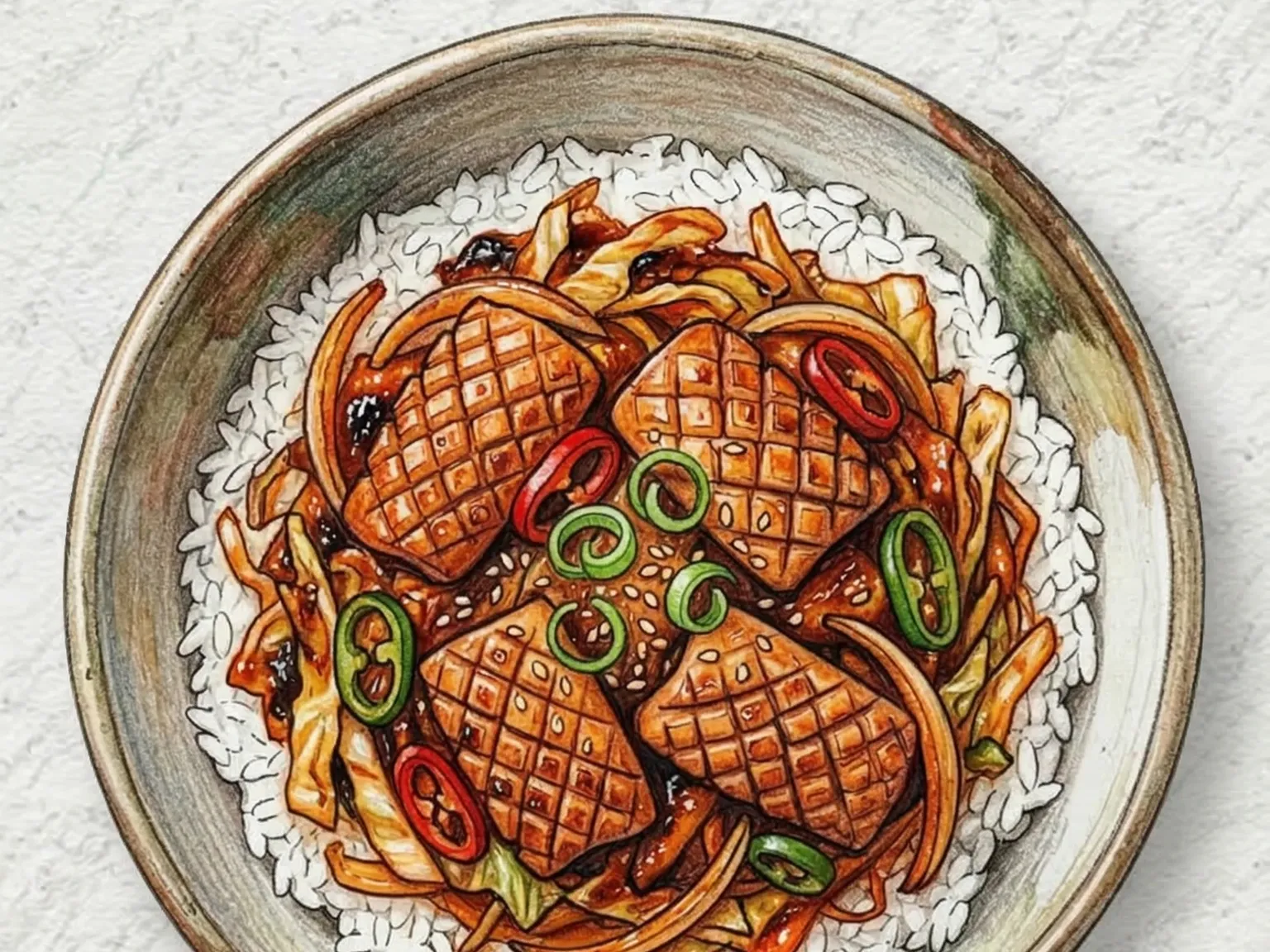
Korean Spicy Stir-Fried Squid Rice Bowl
Rice Medium

Korean Spicy Stir-Fried Squid Rice Bowl

Quick answer

Scored squid, onion, cabbage, and scallion are stir-fried together in a gochujang-based sauce over high heat and served on a bowl of steamed rice.

What makes this special

  • Crosshatch scoring lets squid curl and absorb more gochujang sauce in this spicy rice bowl.
  • Crosshatch scoring makes the squid curl and thicken while letting the sauce soak into the cuts
  • Vegetables dehydrated first, then squid stir-fried 3-4 minutes on high to avoid rubbery texture
Total time
27 min
Level
Medium
Servings
2 servings
Ingredients
12
Calories
540 kcal
Protein
28 g

Key ingredients

cooked ricesquidonioncabbagescallion

Core cooking flow

  1. 1 Pat 300 g squid dry, then score the inside of the body in a shallow crosshatch pattern.
  2. 2 Slice 120 g onion, 100 g cabbage, and 40 g scallion into similar thicknesses.
  3. 3 Mix 1.5 tablespoons gochujang, 1 tablespoon gochugaru, 1 tablespoon soy sauc...

Scored squid, onion, cabbage, and scallion are stir-fried together in a gochujang-based sauce over high heat and served on a bowl of steamed rice. Cutting a crosshatch pattern into the squid before cooking causes each piece to curl into a compact cylinder as it hits the heat, producing a thick, bouncy texture while giving the sauce more surface area to cling to. Because squid turns rubbery in a matter of minutes if left on the heat too long, the vegetables go into the pan first to drive off their moisture, and the squid is added only for the final three to four minutes over maximum heat. The sauce, built from gochujang, gochugaru, soy sauce, sugar, and sesame oil, caramelizes quickly against the hot pan and coats both the vegetables and the squid in a glossy, deep-red glaze. The natural sweetness of the onion and cabbage tempers the chili heat and keeps the dish balanced rather than one-dimensionally spicy. Leaving a small pool of sauce in the pan when plating allows it to soak into the rice, making the whole bowl worth mixing together before eating.

Prep 15min Cook 12min 2 servings

Instructions

Read the steps as a cooking flow: prep, heat, seasoning, doneness control, and finish.

6 steps
  1. 1
    Season

    Pat 300 g squid dry, then score the inside of the body in a shallow crosshatch pattern.

    Cut it into bite-size pieces so the pieces curl neatly and hold sauce when they hit the hot pan.

  2. 2
    Prep

    Slice 120 g onion, 100 g cabbage, and 40 g scallion into similar thicknesses.

    Cut any thick cabbage core thinner so the vegetables soften at the same pace without leaving hard pieces in the bowl.

  3. 3
    Season

    Mix 1.5 tablespoons gochujang, 1 tablespoon gochugaru, 1 tablespoon soy sauce, 1 teaspoon sugar, and 1 tablespoon minced garlic.

    If the paste is too stiff to spread, loosen it with just one spoonful of water.

  4. 4
    Control

    Heat the pan well over high heat, add 1 tablespoon cooking oil, then stir-fry the vegetables for about 2 minutes.

    Keep them moving until excess moisture reduces and the onion edges look slightly translucent.

  5. 5
    Season

    Add the squid and sauce, keeping the heat high, and stir-fry quickly for only 3 to 4 minutes.

    Stop once the squid curls and the sauce turns glossy, before the squid tightens and becomes tough.

  6. 6
    Finish

    Turn off the heat and drizzle in 1 teaspoon sesame oil to keep its aroma clear.

    Spoon the squid and the slightly loose sauce over 2 bowls of cooked rice, then mix and serve while hot.

After the steps

Pick a recipe that fits this dish.

Continue with shared ingredients, meal pairings, or a similar method.

Recipes That Go Well With This

More Rice →

Based on shared ingredients and meal pairing

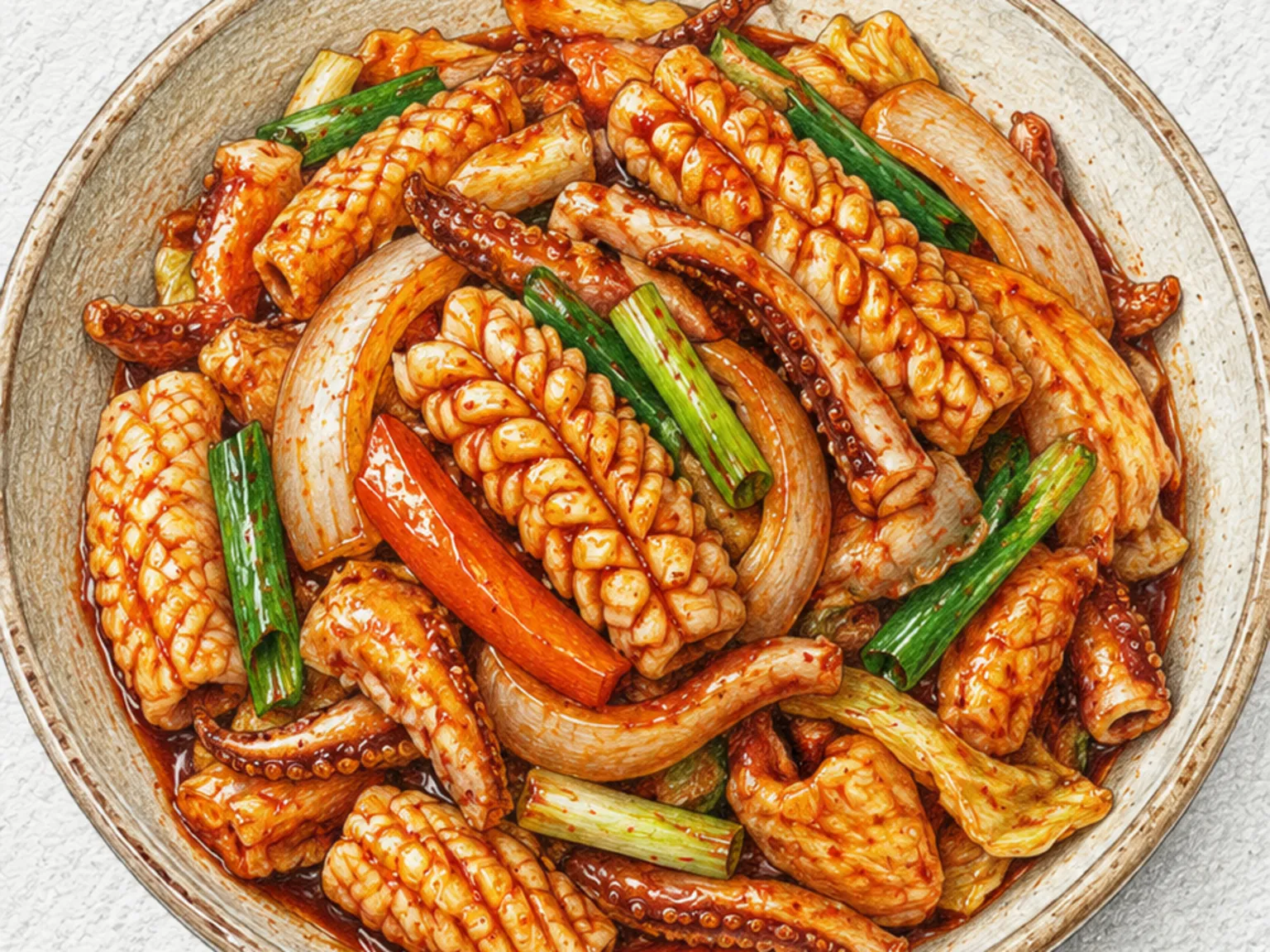
Korean Spicy Stir-fried Squid
Shared ingredient: whole squid Stir-fry

Korean Spicy Stir-fried Squid

Ojingeo-bokkeum is one of Korea's most popular spicy stir-fries, featuring scored squid bodies and tentacles tossed over high heat with onion, carrot, cabbage, and scallion in a gochujang-gochugaru-soy-sugar sauce. Crosshatch scoring on the squid allows the thick, spicy sauce to penetrate deeply, ensuring consistent flavor in every bite. The entire stir-fry takes only a few minutes on maximum heat - essential for keeping the squid springy rather than rubbery. Cabbage and carrot go in near the end to retain their crunch, and a final sesame oil drizzle ties the smoky wok char to the bold red seasoning.

Korean Pork Belly Kimchi Fried Rice
Shared ingredient: cooked short-grain rice Rice

Korean Pork Belly Kimchi Fried Rice

Pork belly is diced small and rendered in a hot pan until golden, producing enough fat to cook the entire dish without additional oil. Aged kimchi and onion go into that rendered fat, where the kimchi's sharp tang softens into the pork's richness. Gochujang and soy sauce season the rice as it joins the pan, and aggressive high-heat stir-frying keeps each grain distinct rather than clumpy. Day-old cold rice works best because its lower moisture content yields a drier, crispier result, and a fried egg on top provides a creamy counterpoint when the yolk breaks.

Korean Stir-fried Butterbur Stems
Serve together Side dishes

Korean Stir-fried Butterbur Stems

Meowi-namul-bokkeum stir-fries boiled butterbur stems in perilla oil, adding a cooking step that distinguishes it from the cold-dressed muchim version. While the muchim blanches and seasons immediately without further heat, the bokkeum takes the boiled stems into a pan with soup soy sauce and water for five minutes or more, driving the seasoning deep into the plant fibers. This additional cooking time also volatilizes more of the butterbur's bitter compounds, producing a milder flavor compared to the cold preparation. Perilla oil, though more prone to oxidation than sesame oil, is the traditional choice because its earthy, grassy aroma harmonizes with the herb's character in a way sesame oil cannot. Adding perilla seed powder in the last minute causes its starch to partially gelatinize, giving the sauce a thicker consistency, but leaving it on the heat too long makes the dish chalky and heavy. Timing this final step precisely is what separates a well-made version from an overcooked one. This banchan appears on spring mountain-village tables alongside gondeure-namul and chwinamul as part of the seasonal wild greens spread that marks the transition out of winter.

Korean Spicy Stir-Fried Octopus Rice Bowl
Similar recipe Rice

Korean Spicy Stir-Fried Octopus Rice Bowl

Spicy stir-fried baby octopus in a gochujang sauce is served over a bowl of steamed rice. The octopus delivers a satisfying chew, coated alongside onion and cheongyang chili in a well-seasoned glaze that makes each bite of rice deeply flavorful. Stir-frying on high heat for just a few minutes keeps the octopus springy rather than tough, and scrubbing it with flour before rinsing ensures a clean taste free of any sliminess. Adding a layer of bean sprouts under the stir-fry introduces a contrasting crunch.

Serve with this

Korean Cherry Tomato Jangajji
Kimchi Easy

Korean Cherry Tomato Jangajji

Peeling cherry tomatoes by hand serves as the foundation for creating tomato jangajji, a Korean soy-preserved dish. Removing the skins allows the brine of soy sauce, rice vinegar, and sugar to permeate the flesh quickly and consistently. A critical step involves boiling the liquid and then letting it cool to room temperature before combining it with the fruit. This cooling period prevents the tomatoes from softening or becoming soggy, ensuring they remain firm throughout the pickling process. Thinly sliced onions included in the jar absorb the liquid, contributing a savory and tangy character. Fresh basil leaves introduce an herbal scent that distinguishes this preparation from standard soy pickles. One full day of refrigeration helps the acidity of the vinegar settle and highlights the natural sweetness of the tomatoes. This side dish functions effectively alongside rice or grilled meats, where its tartness acts as a cleanser for the palate after eating oily foods. The texture remains intact for about a week when kept cold. For a different profile, small amounts of cinnamon or star anise can be added to the brine to provide a warm spice fragrance. It also pairs well with cheese and crackers as an unconventional snack or finger food.

🍱 Lunchbox 🏠 Everyday
Prep 25min Cook 8min 4 servings
Korean Seafood Hot Pot Soup
Soups Medium

Korean Seafood Hot Pot Soup

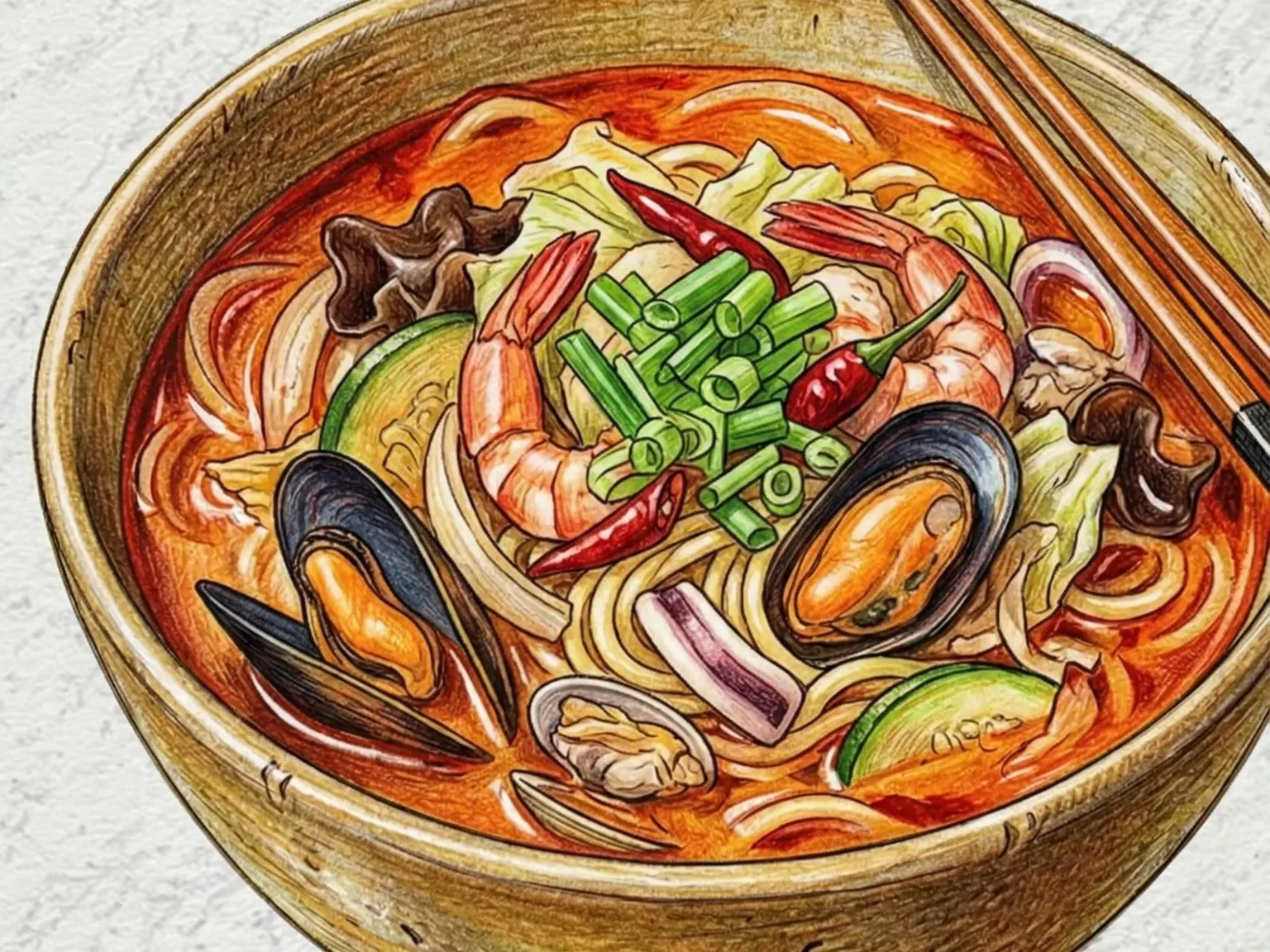
Haemul-tang is a Korean seafood hot pot that throws together crab, shrimp, clams, and squid in a fiery, brick-red broth. The liquid starts with gochugaru and plenty of garlic, building a spicy base that the seafood then amplifies with its own briny juices. Radish chunks soften as the pot bubbles, thickening the broth slightly and adding a cool sweetness behind the heat. Green onions and cheongyang peppers go in toward the end for a sharp, vegetal bite. The magic of haemul-tang lies in the convergence of flavors: crab shells release a sweet, crustacean stock; clams open to spill their liquor; shrimp and squid contribute distinct textures from snappy to chewy. The pot is brought to the table still at a rolling boil, and diners pick through the shells and tentacles while the broth continues to concentrate.

🏠 Everyday 🎉 Special Occasion
Prep 25min Cook 30min 4 servings
Korean Ham-Packed Budae Jjigae
Stews Easy

Korean Ham-Packed Budae Jjigae

This version of budae jjigae is built around a generous load of Spam and Vienna sausages, simmered alongside well-fermented kimchi in a wide pot of anchovy or dashi stock. Gochujang and Korean chili flakes build layered heat while the kimchi's sourness cuts through the salt of the processed meats and keeps the overall flavor from becoming one-dimensional. Adding a bundle of ramen noodles toward the end allows them to absorb the deeply seasoned broth as they cook. With 900ml of stock, this is a communal pot meant to be shared at the table. Budae jjigae originated in the years after the Korean War, when surplus American military rations such as ham and sausage were combined with Korean staples near military base towns. The ham-forward version puts the salty, meaty character of the processed ingredients at the center of the dish.

🍺 Bar Snacks 🏠 Everyday
Prep 15min Cook 20min 2 servings

Similar recipes

Korean Spam Fried Rice (Crispy Spam Cubes with Egg and Rice)
Rice Easy

Korean Spam Fried Rice (Crispy Spam Cubes with Egg and Rice)

Spam bokkeumbap is a Korean fried rice built around crispy cubes of pan-seared Spam, whose salty, caramelized edges give the dish an addictive quality. The Spam is diced small and dry-fried without added oil - its own rendered fat crisps the outside while keeping the inside moist and savory. Onion and scallion go in next for aromatic depth, followed by cold leftover rice that is tossed over high heat until every grain picks up the salty pork flavor left in the pan. Beaten egg is scrambled into the rice, coating the grains in a thin, soft layer. A splash of soy sauce and a drizzle of sesame oil finish the dish with umami and nuttiness. The whole thing comes together in under ten minutes, making it one of the fastest comfort meals in the Korean home-cooking repertoire.

⚡ Quick 🏠 Everyday
Prep 5min Cook 10min 2 servings
Korean Stir-fried Squid and Bean Sprouts
Stir-fry Easy

Korean Stir-fried Squid and Bean Sprouts

Ojingeo-sukju-bokkeum stir-fries bite-size squid pieces and bean sprouts in a gochujang-gochugaru sauce over very high heat, capturing smoky wok flavor. Garlic and the chili paste cook first to bloom their heat, then squid and onion go in for a fast sear. Bean sprouts are added only in the final minute or two, keeping them crisp and preventing the dish from becoming watery. Scallion joins at the same time for a sharp finish. The contrast between the squid's firm, chewy body and the sprouts' light crunch defines the texture, while the bold seasoning makes this a natural match for steamed rice.

🏠 Everyday 🌙 Late Night
Prep 15min Cook 10min 2 servings
Korean Gochujang Chicken Mayo Rice Bowl
Rice Easy

Korean Gochujang Chicken Mayo Rice Bowl

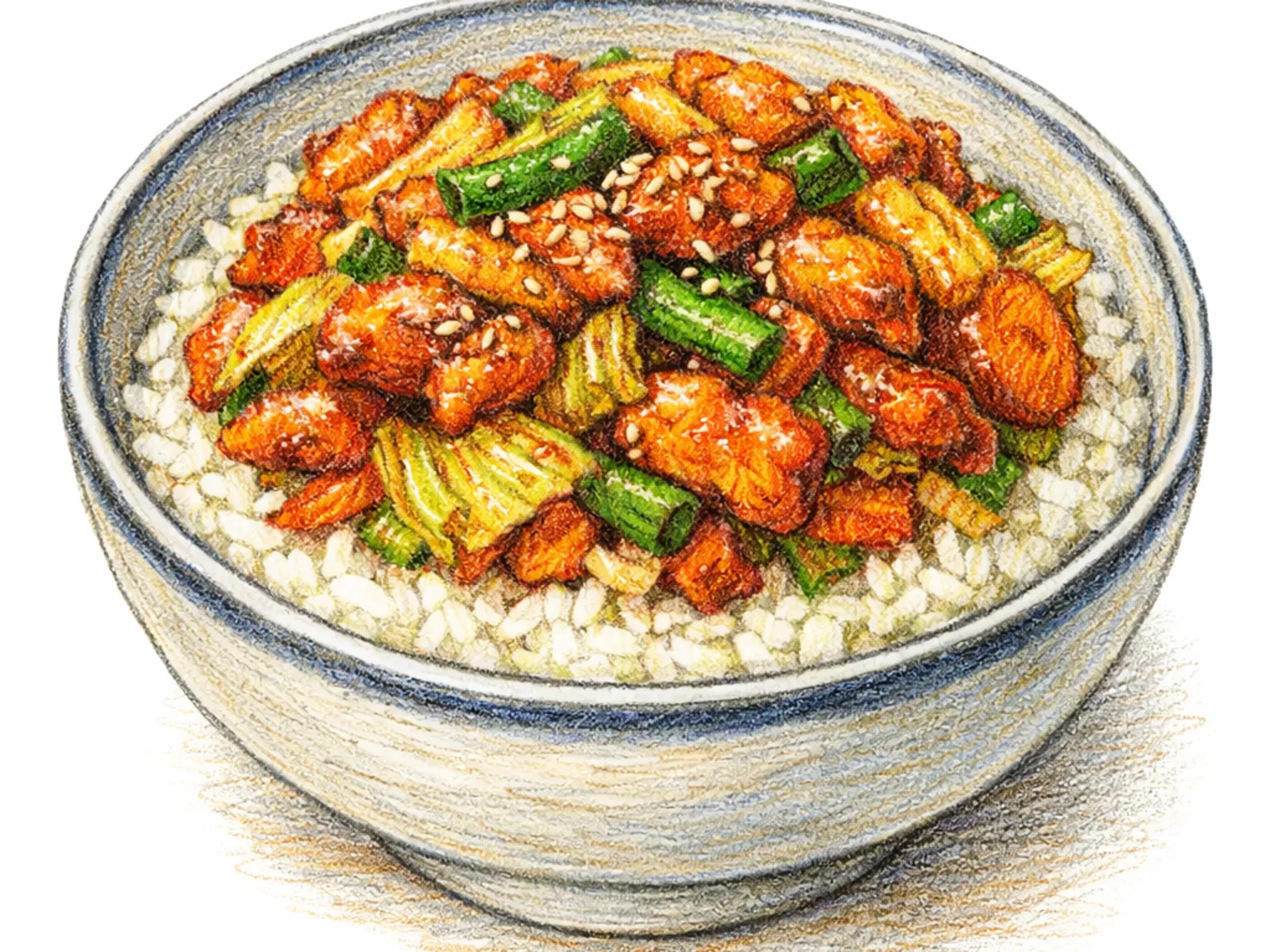
Gochujang chicken mayo deopbap pairs stir-fried chicken thigh glazed in a fermented chili sauce with a drizzle of creamy mayonnaise over warm steamed rice. Boneless chicken thigh cut into bite-sized pieces is stir-fried over high heat in a sauce built from gochujang, soy sauce, sugar, and minced garlic until a glossy, sticky glaze coats every surface and the edges of the chicken begin to caramelize. The sauced chicken goes directly onto the rice, and mayonnaise is zigzagged across the top in strips, creating alternating lines of red and white that fold together at the table. The combination works because gochujang contributes fermented, slow-building heat while the mayo provides a cool, fat-rich creaminess that extends each bite and carries the sauce deeper into the rice. Onion cooked alongside the chicken breaks down into the glaze, rounding the sauce's edges with a natural sweetness, while a scattering of sliced green onion on top adds a fresh, sharp contrast. Thigh meat is the correct choice over breast - its fat content means it retains moisture through the high-heat stir-fry rather than turning dry or stringy. A variation that has gained popularity layers a slice of processed cheese beneath the chicken, letting the residual heat melt it into a creamy middle layer between rice and glaze.

🏠 Everyday 🍺 Bar Snacks
Prep 15min Cook 20min 2 servings

Tips

Cook squid briefly over high heat to avoid toughness.
Leave a little sauce in the pan so it mixes well with rice.

Nutrition (per serving)

Calories
540
kcal
Protein
28
g
Carbs
78
g
Fat
12
g