Squid Naengi Chojang Salad
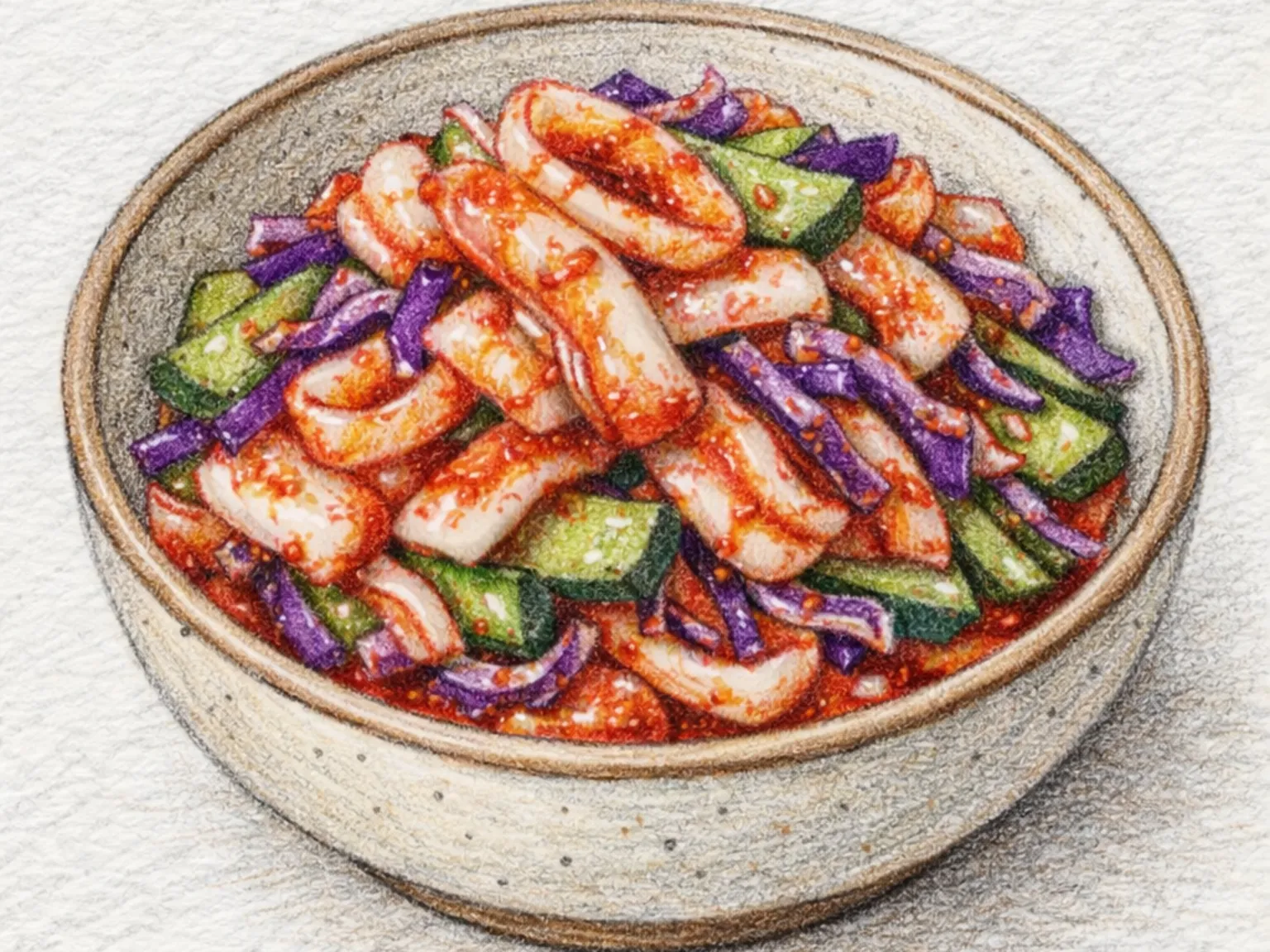
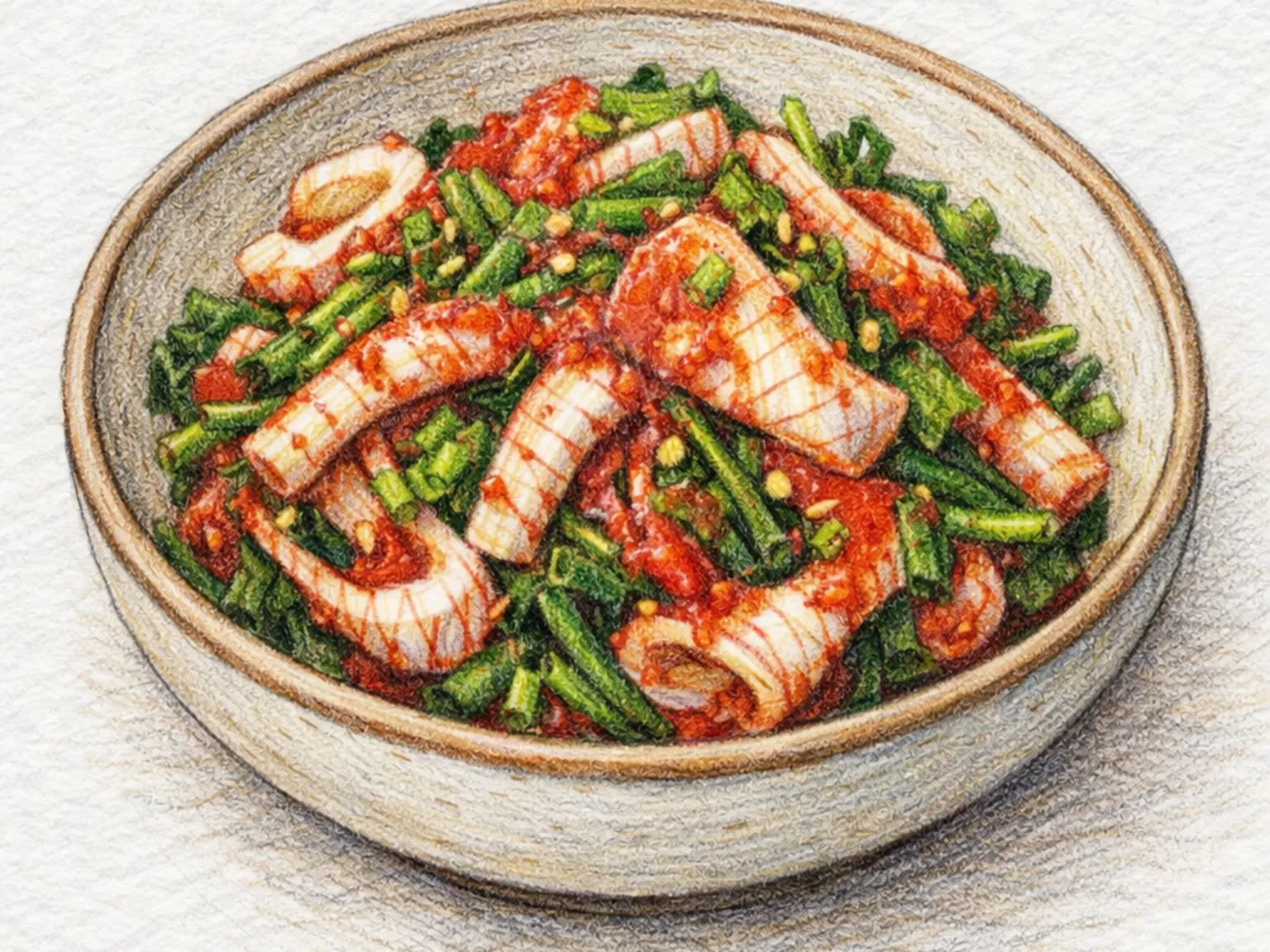
Squid is dipped into boiling water just long enough to reach peak chewiness, then paired with fragrant naengi for a distinct spring note. Lettuce and cucumber create a crunchy foundation sharpening the textural contrast against the tender squid. The chojang dressing layers gochujang with vinegar and oligosaccharide syrup for spicy umami with gentle sweetness. Sesame oil and minced garlic pull the aromatics together, making this a seasonal specialty best served cold during naengi season.
Adjust Servings
Instructions
- 1
Score and cut squid into bite-size pieces, blanch for 1 minute 30 seconds, then chill in ice water.
- 2
Wash naengi roots thoroughly, blanch for 15 seconds, rinse cold, and drain well.
- 3
Tear lettuce into large pieces and slice cucumber into half-moons.
- 4
Mix gochujang, vinegar, syrup, minced garlic, and sesame oil to make the chojang dressing.
- 5
Combine vegetables, naengi, and squid, then toss with dressing right before serving.
As an Amazon Associate, we may earn from qualifying purchases.
Tips
Nutrition (per serving)
More Recipes

Naengi Scallop Yuja Salad
Scallops are seared in butter until golden-brown outside and translucent-tender inside. Blanched naengi contributes an earthy bitterness that contrasts the scallop's sweetness, and arugula adds peppery depth. The dressing dissolves yuja marmalade into white wine vinegar and olive oil for a bright citrus note that complements both seafood and spring greens. Orange segments on top introduce another tier of sweet acidity, making this a clean, aromatically vivid plate suited as a first course or guest dinner centerpiece.

Naengi Beef Salad (Shepherd's purse)
Fresh naengi - shepherd's purse - is blanched to mellow its earthy bite while keeping the fragrance intact. Beef sirloin is sliced thin and seared quickly so the surface chars lightly and the center stays moist. Julienned Korean pear bridges the beef's richness and the naengi's mild bitterness with clean sweetness. A dressing of soy sauce, vinegar, sesame oil, and plum extract balances salty, sour, and subtly sweet, while red onion and toasted sesame seeds finish with sharpness and nutty crunch.

Naengi Doenjang Mushroom Salad
Naengi is briefly blanched to soften its earthy bitterness while preserving its spring fragrance, and oyster mushrooms are dry-seared to concentrate their savory depth. A dressing of doenjang dissolved with yuja marmalade and vinegar provides a rich fermented base lifted by citrus brightness. Baby greens and halved cherry tomatoes lighten the heavy paste flavor with tenderness and bursting juice. Sesame oil and toasted sesame seeds add a nutty finish, making the salad most compelling with freshly foraged naengi in early spring.

Buchu Beef Mustard Salad (Seared Beef & Chive Mustard Salad)
Buchu beef mustard salad sears lean beef round over high heat to char the surface while keeping the center pink, then slices it thick and fans it over a bed of fresh garlic chives and shredded red cabbage. Hot mustard dissolved into a soy-vinegar dressing delivers a sharp nasal heat that cuts through the rendered beef fat with each bite. Julienned Korean pear tossed through the salad contributes a crisp, refreshing sweetness that balances the dressing's salt and acid. The garlic chives bring their own pungent, onion-like aroma that gives the plate a distinctly Korean character. Slicing the beef at least 1 cm thick prevents it from toughening as it cools.

Korean Shrimp Jeon (Egg-Battered Pan-Fried Shrimp Pancake)
Saeu-jeon is a Korean shrimp pancake where peeled, deveined medium shrimp are butterflied, seasoned with salt and pepper, dredged in flour, dipped in beaten egg, and pan-fried for one to two minutes per side over medium heat. Butterflying flattens each shrimp so heat transfers evenly across the surface, and the flour layer between the shrimp and egg acts as adhesive that keeps the coating from sliding off. Shaking excess flour through a sieve before dipping ensures an even egg coat and uniform thickness across every piece, and medium heat is essential-too high and the egg scorches while the shrimp inside stays undercooked. The shrimp should be removed the moment the flesh turns pink; any additional time on the heat contracts the protein and turns the texture tough.

Korean Steamed Shrimp
Saeu jjim is a Korean steamed shrimp dish where whole shrimp are placed over a bed of onion, green onion, and garlic in a steamer. The aromatic vegetables infuse the shrimp as it cooks, while a splash of rice wine neutralizes any off-odors. Steaming with the shells on minimizes moisture loss, keeping the flesh firm and naturally sweet. A squeeze of lemon juice just before serving lifts the flavor with bright acidity. The entire process takes under ten minutes, producing a high-protein dish that needs no dipping sauce to taste satisfying.