Korean Corn Cheese Pot Rice
Rice Easy

Korean Corn Cheese Pot Rice

Quick answer

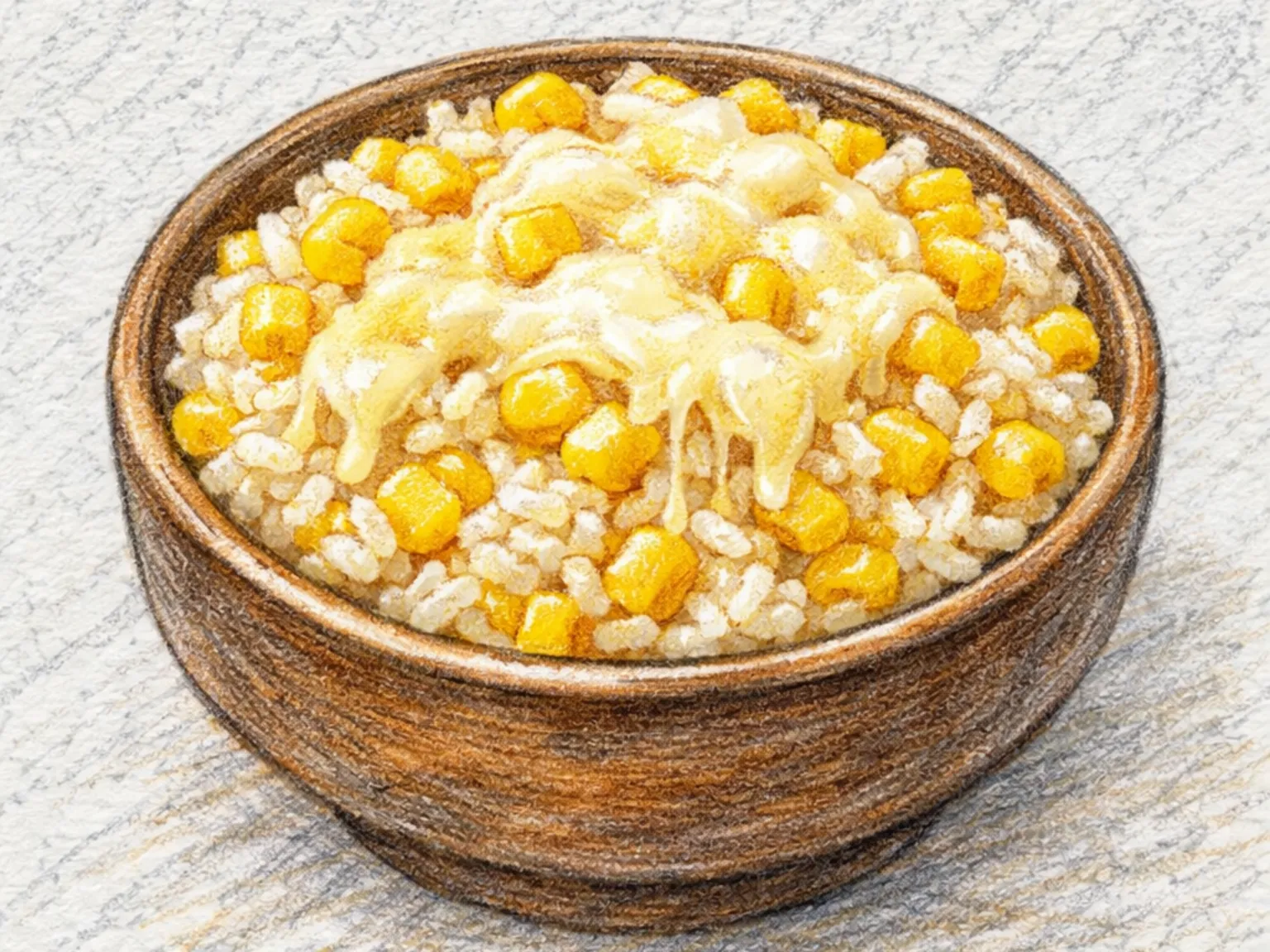
Oksusu cheese sotbap is a Korean pot-cooked rice dish built on butter-sauteed onions and corn that infuse the grains with sweetness as the rice steams, then topped with m...

What makes this special

  • Residual steam melts mozzarella over sweet corn and rice for a stretchy, savory finish.
  • Mozzarella placed on top after the heat is off melts gently from residual steam without browning
  • Half the water replaced with milk gives the rice a creamy, richer body throughout
Total time
32 min
Level
Easy
Servings
2 servings
Ingredients
10
Calories
560 kcal
Protein
16 g

Key ingredients

short-grain ricecorn kernelsmozzarella cheeseonionbutter

Core cooking flow

  1. 1 Rinse 1.5 cups short-grain rice until the water runs mostly clear, then soak...
  2. 2 Set a heavy pot over medium-low heat and melt 1 tablespoon butter.
  3. 3 Add the drained rice and stir over medium-low heat for about 1 minute so the...

Oksusu cheese sotbap is a Korean pot-cooked rice dish built on butter-sauteed onions and corn that infuse the grains with sweetness as the rice steams, then topped with mozzarella placed on after the heat is cut so it melts into long, stretchy strands rather than browning. Each spoonful delivers the pop of individual corn kernels alongside the soft, creamy pull of melted cheese, with butter coating every grain in a glossy richness. Replacing part of the cooking water with milk deepens the creamy texture and gives the finished rice a density and smoothness that plain water cannot achieve. With the lid closed for two to three minutes after the heat is off, the residual steam inside the pot is sufficient to melt the cheese completely without any additional heat. The combination of sweet corn, buttery rice, and stretchy mozzarella lands in a flavor register that needs no side dishes to feel complete, and it appeals across a wide age range without effort.

Prep 10min Cook 22min 2 servings

Instructions

Read the steps as a cooking flow: prep, heat, seasoning, doneness control, and finish.

6 steps
  1. 1
    Prep

    Rinse 1.5 cups short-grain rice until the water runs mostly clear, then soak it for 20 minutes and drain well.

    Finely chop 50 g onion, and drain 160 g corn kernels so extra moisture does not make the rice soggy.

  2. 2
    Control

    Set a heavy pot over medium-low heat and melt 1 tablespoon butter.

    When the bubbling calms, add the onion and corn, then saute for about 2 minutes until the onion smells sweet and the corn looks lightly glossy.

  3. 3
    Control

    Add the drained rice and stir over medium-low heat for about 1 minute so the grains are coated with butter.

    When the edges look slightly translucent, pour in 1.2 cups water, 0.5 cup milk, and 0.7 teaspoon salt.

  4. 4
    Control

    Stir once across the bottom so the rice does not stick, then raise the heat to medium and bring it to a boil.

    As soon as large bubbles appear around the edges, reduce to low and cover the pot.

  5. 5
    Control

    Cook over low heat for 13 minutes without opening the lid, since escaping steam can leave the center undercooked.

    When the bubbling sound quiets and the milk smells nutty, turn off the heat and spread 90 g mozzarella evenly on top.

  6. 6
    Control

    Cover again and rest for 5 minutes so residual heat melts the cheese without browning it.

    Sprinkle with 0.2 teaspoon black pepper and 1 teaspoon parsley, then gently fold from the edges so the rice grains stay intact.

After the steps

Pick a recipe that fits this dish.

Continue with shared ingredients, meal pairings, or a similar method.

Recipes That Go Well With This

More Rice →

Based on shared ingredients and meal pairing

Korean Burdock Beef Pot Rice
Shared ingredient: short grain rice Rice

Korean Burdock Beef Pot Rice

Beef is marinated in soy sauce to build savory depth, then placed on top of rice with crisp-cut burdock root and cooked together in a heavy pot. The marinated beef releases its juices during cooking, and they soak into the rice so each grain carries flavor without any extra sauce. Burdock retains its firm texture even after pot-cooking, releasing an earthy sweetness with every chew. Adding carrot brings a gentle sweetness and color that rounds out the bowl. Adding seasoning in stages makes it easier to adjust saltiness, sweetness, and heat without covering the base ingredients.

Korean Chwinamul Pot Rice
Shared ingredient: short grain rice Rice

Korean Chwinamul Pot Rice

Chwinamul sotbap is a Korean pot rice made by layering lightly seasoned wild chwinamul greens over soaked rice and cooking everything together in kelp stock until done. The greens release their distinctively herbal, faintly bitter fragrance directly into the rice as it steams, filling the room with an earthy mountain scent when the lid is lifted. Mixed at the table with a soy-sesame sauce, the initial bitterness softens into a pleasant background that makes each spoonful layered and grounding. It is best prepared in spring when chwinamul is freshly picked, offering the sharpest aroma and the most tender stems. Dried chwinamul, soaked and squeezed before use, extends the recipe across all four seasons, though the fresh version carries a vitality and brightness that dried leaves cannot fully replicate.

Korean Crispy Glazed Tofu Bites
Serve together Side dishes

Korean Crispy Glazed Tofu Bites

Dubu gangjeong applies the double-coating logic of Korean fried chicken to tofu, pressing each cube dry before dredging in potato starch, frying until the shell turns shattering crisp, then tossing in a concentrated sticky glaze. The dish originated in temple cuisine as a meatless adaptation of gangjeong and has since become a staple anju in Korean bars. Pressing the tofu is non-negotiable: at least twenty minutes under a heavy weight wrapped in paper towels removes enough moisture to prevent oil from splattering and allows the starch coating to adhere evenly. Potato starch produces a noticeably thinner and more translucent crust than wheat flour, which cracks cleanly rather than bending when bitten. The glaze is made by boiling gochujang, soy sauce, sugar, and rice syrup together until large bubbles break on the surface, signaling that the mixture has concentrated and will cling rather than pool. Pouring the hot glaze over the fried tofu and tossing quickly coats every surface in an even, lacquer-like finish. The defining quality of a well-made dubu gangjeong is the contrast between the caramelized shell with its slight chew and the soft, almost custard-like interior. Once made, it must be eaten within ten minutes before the coating absorbs moisture and goes soft.

Korean Shrimp Porridge (Creamy Rice Porridge with Shrimp Broth)
Similar recipe Rice

Korean Shrimp Porridge (Creamy Rice Porridge with Shrimp Broth)

Saeu-juk is a Korean shrimp porridge that simmers rice with shell-on shrimp to draw out a gentle oceanic broth. The heads and shells are cooked down to build a flavorful stock, while the shrimp meat is minced and stirred in separately so each spoonful carries bursts of umami. Diced zucchini and carrot add mild sweetness that balances the seafood character. Soaked rice is first toasted in sesame oil before the liquid goes in, which gives the finished porridge a nuttier base and slightly thicker consistency. The result is a light, nourishing bowl with a clean finish - commonly served as a gentle breakfast or a recovery meal, where the warmth and mild flavor are as important as the nutrition.

Serve with this

Korean Acorn Jelly Cold Broth Bowl
Soups Easy

Korean Acorn Jelly Cold Broth Bowl

Dotori-muksabal is a chilled Korean acorn jelly broth bowl where thinly sliced acorn jelly sits in a cold, tangy-sweet seasoned broth. Acorn jelly carries a distinctly earthy, mildly astringent aftertaste and a firm, bouncy texture that becomes noticeably more pronounced once it has chilled thoroughly. The broth, a mixture of stock seasoned with soy sauce, vinegar, and sugar, must be cold before pouring over the jelly to keep that cool snap alive from the first bite to the last. Chopped kimchi adds fermented heat and a pungent sourness, while julienned cucumber contributes a clean crunch, and both ingredients cut through the jelly's neutral flavor with sharp contrasts that make the bowl far more lively than its simple appearance suggests. A spoonful of gochugaru-spiked seasoning ties the components together. The dish is notably low in calories and rich in dietary fiber, making it an appealing light meal on hot days.

🥗 Light & Healthy 🏠 Everyday
Prep 20min Cook 10min 2 servings
Korean Soy Pickled Radish Cubes
Kimchi Easy

Korean Soy Pickled Radish Cubes

Mu jangajji is a fundamental Korean soy-pickled radish made by cutting radish into 1.5 cm cubes, packing them in a sterilized jar with dried chili, and pouring over a boiled brine of soy sauce, vinegar, and sugar. The radish's firm flesh absorbs the sweet-salty brine gradually while maintaining its crisp bite, and the dried chili adds a gentle warmth and aroma to the liquid. Pouring the brine while still hot is important because the heat briefly opens the cell walls of the radish, allowing the seasoning to penetrate more evenly throughout. Vinegar balances the soy's saltiness with a clean tang, and using dense winter radish yields the best texture. This is one of the most versatile Korean pickles, appearing alongside gimbap, bibimbap, and gukbap as a reliable everyday table companion.

🍱 Lunchbox 🏠 Everyday
Prep 20min Cook 10min 4 servings
Korean Soybean Paste Stew with Clams and Zucchini
Stews Easy

Korean Soybean Paste Stew with Clams and Zucchini

Bajirak aehobak doenjang jjigae is a Korean soybean paste stew that draws its distinctive clean depth from littleneck clams cooked alongside zucchini, potato, and tofu in rice-rinse water. As the clams open during cooking, they release their briny, slightly sweet liquor directly into the doenjang broth, deepening the fermented base with a layer of ocean salinity that soybean paste alone cannot produce. Potato breaks down gradually as the stew simmers, adding a subtle body to the broth without turning it starchy. Tofu and zucchini provide contrasting textures, the tofu soft and custardy while the zucchini retains a gentle resistance. Onion and minced garlic supply the sweet, aromatic foundation of the broth, and a Cheongyang chili introduces a clean, sharp heat that prevents the flavors from becoming too heavy. The pairing of the clams' saline, briny character with the earthy fermented depth of doenjang is what gives this particular version of the stew its reputation as one of the most satisfying everyday versions, served with a bowl of plain steamed rice.

🏠 Everyday
Prep 15min Cook 20min 2 servings

Similar recipes

Korean Dakgalbi Fried Rice
Rice Easy

Korean Dakgalbi Fried Rice

Dakgalbi bokkeumbap is a fried rice made by stir-frying gochujang-marinated boneless chicken thigh with cabbage and onion over high heat, then adding day-old rice to the pan and frying until every grain absorbs the sweet-spicy marinade. The dish originated from the Chuncheon tradition of finishing a dakgalbi meal by stir-frying the leftover sauce and scraps with rice, effectively turning what remains in the pan into a second course. Day-old rice is essential: fresh rice holds too much moisture and clumps together, while refrigerated rice separates cleanly on the hot surface and makes sufficient contact with the pan to develop slightly charred bits at the bottom. These caramelized patches add a smoky crunch that contrasts with the sauced grains above and elevate the dish beyond a simple fried rice. Cabbage and perilla leaves added at the very end of cooking retain a faint crunch that cuts through the richness of the gochujang marinade. Plating the rice with a few perilla leaves laid on top and a scatter of sesame seeds over the surface finishes the dish without requiring anything further.

🏠 Everyday ⚡ Quick
Prep 12min Cook 14min 2 servings
Korean Mushroom Dumpling Hot Pot
Stews Easy

Korean Mushroom Dumpling Hot Pot

Mandu jeongol is a generous hot pot of twelve large dumplings simmered with napa cabbage, shiitake mushrooms, oyster mushrooms, and bok choy in anchovy-kelp stock. The two varieties of mushroom add layers of umami to the clear broth, while the cabbage and bok choy soften and release their natural sweetness as they cook. The dumplings cook directly in the simmering stock, their wrappers gradually turning chewy as the filling flavors seep into the surrounding liquid. Soup soy sauce and garlic provide a clean, understated seasoning that keeps the broth from overshadowing any single ingredient. The right moment to eat is when the vegetables have wilted and the dumplings float to the surface, signaling they are cooked through. The absence of any spice or strong seasoning makes this one of the more universally approachable hot pots, suited for all ages. Leftover broth absorbs cooked rice or soaked glass noodles easily, turning what remains into a satisfying finish to the meal.

🏠 Everyday 🎉 Special Occasion
Prep 15min Cook 20min 4 servings
Korean Kimchi Cheese Gimbap
Street food Easy

Korean Kimchi Cheese Gimbap

Kimchi cheese gimbap rolls seasoned rice, stir-fried kimchi, mozzarella cheese, and pickled daikon radish in sheets of dried seaweed. The kimchi must be stir-fried until all the moisture has evaporated before rolling: this concentrates the tangy fermented flavor and prevents the released liquid from softening the rice and making the seaweed tear during and after rolling. The fat in the mozzarella wraps around the kimchi's sharp heat and moderates it, and the pickled radish adds sweet-sour crunch that varies the texture across each bite. Keeping the cheese in a single narrow line down the center of the roll is the key technique for tight rolling and a clean cross-section: too much cheese makes the roll thick and causes the seaweed to split. Sliced processed cheese can be used in place of mozzarella and melts similarly. Brushing the outside of the finished roll lightly with sesame oil gives it a glossy surface and seals the seam.

🧒 Kid-Friendly ⚡ Quick
Prep 20min Cook 10min 2 servings

Tips

Drain thawed frozen corn well to avoid soggy rice.
Let cheese melt during resting before stirring for better texture.

Nutrition (per serving)

Calories
560
kcal
Protein
16
g
Carbs
79
g
Fat
19
g