Charim

2686 Korean & World Recipes

2686+ Korean recipes, clean and organized. Ingredients to instructions, all at a glance.

Korean Mustard Greens Pickle

Korean Mustard Greens Pickle

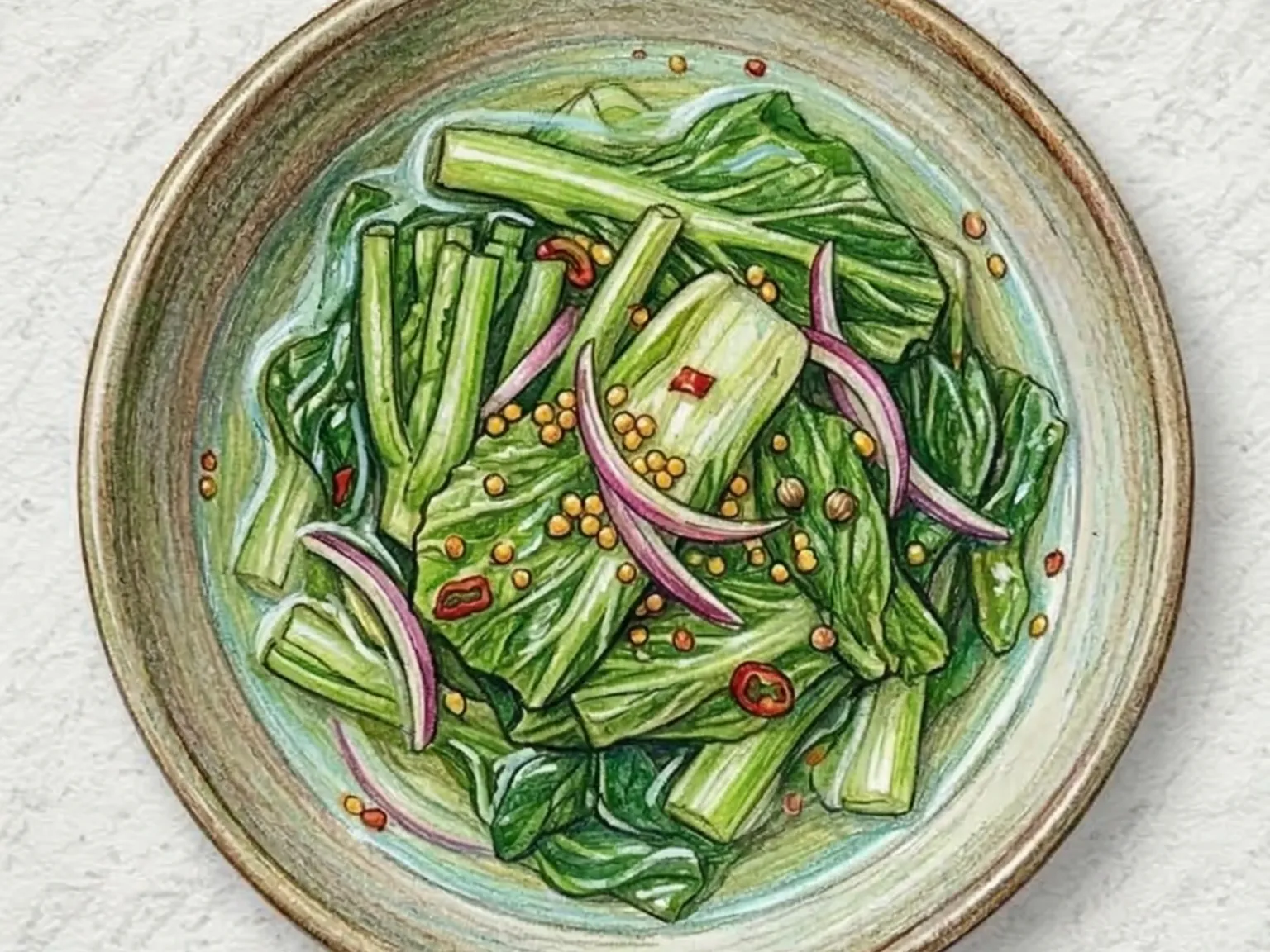
Paeju mustard pickle is a quick vinegar preserve where mustard greens are cut into four-centimeter pieces, packed into a jar with sliced garlic, and covered with a hot brine of vinegar, water, sugar, salt, and lemon juice. The mustard greens retain some of their natural peppery bite even after pickling, giving each piece a sharp, nasal kick alongside the brine's tangy acidity. Lemon juice stirred in after the heat is turned off adds a bright citrus note that would evaporate if boiled. Thicker stems pickle more slowly than leaves, so separating them and salting the stems first produces a more even texture. Ready after twelve hours of refrigeration, these pickles are especially effective next to fatty meats, where their sharp acidity and peppery warmth cleanse the palate between bites.

Prep 12min Cook 6min 2 servings

Adjust Servings

2servings
servings

Instructions

  1. 1

    Wash mustard greens, cut into 4 cm pieces, and dry.

  2. 2

    Place greens and sliced garlic into a jar.

  3. 3

    Boil vinegar, water, sugar, and salt.

  4. 4

    Turn off heat and stir in lemon juice.

  5. 5

    Pour brine into jar, cool, then seal.

  6. 6

    Refrigerate and serve after 12 hours.

🛒Shop Ingredients on Amazon

As an Amazon Associate, we may earn from qualifying purchases.

Tips

If stems are thick, pickle stems first.
Excellent in sandwiches for peppery kick.

Nutrition (per serving)

Calories
71
kcal
Protein
2
g
Carbs
15
g
Fat
0
g

More Recipes

Korean-Style Cabbage Pickle
KimchiEasy

Korean-Style Cabbage Pickle

Yangbaechu pickle is a quick Korean-style vinegar pickle made by pouring a hot brine of vinegar, sugar, salt, and whole peppercorns over bite-sized cabbage and carrot pieces. The hot liquid slightly wilts the vegetables while they retain a firm, crisp crunch. Whole black peppercorns add a subtle spiced note that gives the pickle more dimension than a plain vinegar soak. Ready after just one day of refrigeration, it is commonly served alongside fried cutlets, burgers, or other rich dishes to cut through greasiness. Best consumed within a week for peak crunchiness.

🍱 Lunchbox
Prep 15minCook 8min4 servings
Korean Soy Pickled Beet (Vinegar Soy Brine Jangajji)
KimchiEasy

Korean Soy Pickled Beet (Vinegar Soy Brine Jangajji)

Beet jangajji is a Korean soy-pickled beet prepared by slicing beets thin and submerging them in a cooled brine of soy sauce, vinegar, and sugar. The vinegar cuts through the beet's earthy undertone, leaving a clean sweetness sharpened by acidity, while onion adds a mellow depth to the pickling liquid. As the brine cools, the beet's vivid red pigment bleeds into the liquid, creating a striking appearance. After at least a day of pickling, the flavor penetrates fully, making this a crisp, refreshing side dish alongside rice or grilled meats.

🍱 Lunchbox
Prep 20minCook 10min2 servings
Korean-Style Cucumber Pickle
KimchiEasy

Korean-Style Cucumber Pickle

Oi pickle is a Korean-style vinegar-brined cucumber pickle where one-centimeter-thick cucumber rounds are briefly salted, then submerged in a hot brine of vinegar, water, sugar, salt, bay leaf, and whole black peppercorns. The hot brine contracts the cucumber surface on contact, locking in crunch that persists through days of refrigeration. As the pickle sits, the vinegar's sharp acidity mellows and merges with the sugar into a balanced sweet-sour profile. Bay leaf contributes a quiet herbal undertone, and peppercorns add a whisper of heat at the finish that elevates the pickle beyond plain vinegar sourness. Ready after twelve hours of chilling, these pickles are a natural companion to fried or fatty dishes, cutting through richness with clean acidity.

🍱 Lunchbox
Prep 20minCook 10min4 servings
Korean Fresh Eggplant Kimchi
KimchiEasy

Korean Fresh Eggplant Kimchi

Gaji kimchi is a fresh, no-fermentation eggplant kimchi made by steaming eggplant until soft, tearing it along the grain, and tossing it with gochugaru, fish sauce, garlic, and sesame oil. Tearing rather than cutting exposes the fibrous interior so the seasoning reaches deep into every strand. Scallions add a fresh, sharp lift, and sesame seeds provide a nutty finish. Since no fermentation is required, this kimchi can be eaten immediately after preparation, making it especially useful in summer when a quick banchan is needed. Mixed into a bowl of cold leftover rice, the seasoning soaks into the grains for a satisfying one-bowl meal.

🍱 Lunchbox
Prep 20minCook 10min2 servings
Korean Stir-Fried Leafy Greens
Side dishesEasy

Korean Stir-Fried Leafy Greens

Baby bok choy stir-fried with garlic - five minutes from board to table. Removing all surface water before the greens hit the pan is essential; residual moisture turns stir-frying into steaming. Garlic sautés low for twenty seconds, then greens go in over high heat. Soup soy sauce and salt season without adding liquid, and sesame oil off-heat gives a glossy finish. This mild, clean-tasting side works alongside virtually any Korean main course.

🏠 Everyday🍱 Lunchbox
Prep 8minCook 5min2 servings
Korean Kohlrabi Fresh Salad (Saengchae)
Side dishesEasy

Korean Kohlrabi Fresh Salad (Saengchae)

Kolabi-saengchae is a fresh Korean salad of julienned kohlrabi dressed in gochugaru, vinegar, and fish sauce. Though it resembles mu-saengchae (radish salad), the two differ significantly in texture and flavor. Kohlrabi is a brassica vegetable eaten for its swollen stem base - firm on the outside but juicy and almost pear-like within. The thick outer rind must be peeled away generously to remove the fibrous layer, and cutting matchstick-sized strips around 4 to 5 cm long produces the signature crunch with every bite. Slicing too thin causes rapid wilting as the strands absorb the dressing. Fish sauce adds marine umami to kohlrabi's mild sweetness, while vinegar slows moisture release to preserve crispness. This banchan is commonly served alongside grilled meat as a palate cleanser. Peak kohlrabi seasons in spring and fall produce the sweetest, crunchiest results.

🏠 Everyday🍱 Lunchbox
Prep 15minCook 5min4 servings
More Kimchi →